The Best Places to Live in the London Borough of Southwark in 2026
Southwark is one of London’s most compelling and most contradictory boroughs — a place where medieval history, industrial heritage, regeneration ambition, and genuine community tension coexist within a few postcode sectors of each other. It is, in early 2026, the most expensive borough in south-east London, with an average house price of £589,000 — higher than its near neighbours Lewisham, Greenwich, and Bromley — while simultaneously containing some of London’s most deprived areas and a housing crisis that estate agents and community activists describe in dramatically different terms.
Understanding Southwark as a residential destination requires holding both of these realities at once: it is a borough of genuinely extraordinary variety, where Dulwich Village averages £1.69 million and Rotherhithe is among the borough’s most accessible markets; where Bermondsey has become one of inner London’s most fashionable postcodes and where local residents in Peckham are being priced out of communities where their families have lived for generations. The five areas in this guide reflect this diversity — each offering something distinct, each with its own price point, its own character, and its own trajectory.
1. Bermondsey
Bermondsey has completed one of London’s most striking neighbourhood transformations of the past two decades. Once a working-class area of factories, warehouses, and tanning yards — the leather industry that gave the area its historical identity — it is now firmly established as one of inner London’s most desirable addresses for young professionals, creative workers, and buyers who want the combination of urban energy and genuine architectural character that the area’s Victorian and Edwardian industrial heritage provides.
The Character of the Neighbourhood
The axis of contemporary Bermondsey life runs along Bermondsey Street — a pedestrianised strip of independent restaurants, galleries, bars, and boutiques that has become one of south London’s premier neighbourhood high streets. The White Cube gallery, the Fashion and Textile Museum, and the concentration of creative businesses along the street give Bermondsey a cultural weight that extends well beyond its residential scale. The Saturday Bermondsey Square Market — a continuation of the long tradition of antiques and curio trading in this part of London — draws visitors from across the city.
Bermondsey’s transport connections are exceptional. The Jubilee line at Bermondsey station (and the proximity of London Bridge, with its National Rail, Jubilee, and Northern line services) makes the City, Canary Wharf, and the West End all within 10–15 minutes. This connectivity has been a significant driver of price growth.
The Property Market
Bermondsey’s property market is dominated by flats — warehouse conversions, purpose-built modern developments, and Victorian terraced conversions — with houses commanding significant premiums when they do appear. The conversion of former industrial buildings has created some of the most architecturally distinctive residential stock in south London, with high ceilings, original features, and layouts that bear no relation to the standard London new-build template. Typical flat prices in Bermondsey range from approximately £450,000–£650,000 for two-bedroom properties; houses, where available, typically exceed £800,000.
2. Elephant and Castle
Elephant and Castle is in the midst of its most significant transformation since the post-war reconstruction that created the roundabout, the shopping centre, and the concrete towers that defined the area for sixty years. The demolition of the shopping centre (completed in 2020) and the ongoing Elephant Park development — one of the largest urban regeneration projects in London — are reshaping this historically disadvantaged node into a mixed-income neighbourhood whose character is still being written.
A Neighbourhood in Transition
The Elephant and Castle of 2026 is neither the place it was a decade ago nor yet the place its developers intend it to become. The incoming mid-range and premium residential developments — Elephant Park alone will deliver approximately 3,000 new homes when complete — sit alongside existing social housing and long-established communities, creating the familiar London tension between regeneration ambition and displacement concern.
For buyers, the investment case centres on precisely this transition. Properties purchased now in the established streets around Elephant and Castle are priced below the incoming new-build stock and below comparable areas further north. The regeneration momentum — the Tube connections (Northern and Bakerloo lines), the proximity of King’s College London and the University of the Arts London, the improving retail and food offer — provides a trajectory that buyers are weighing against the current rougher edges of the neighbourhood.
Transport and University Appeal
Elephant and Castle’s two Tube lines and its National Rail connections make it genuinely central — ten minutes to London Bridge, fifteen to Waterloo, twenty to the City. The presence of major university campuses in and around the area generates consistent rental demand and produces a mix of students, early-career professionals, and young families in the residential population. For first-time buyers at the south London entry level, Elephant and Castle remains one of the more accessible starting points within Zone 1/2.
3. South Bank and Borough
The South Bank is less a conventional residential neighbourhood than a linear strip of cultural institutions, hotels, office space, and high-density residential development running from Waterloo to London Bridge — but the residential population that does live here occupies some of the most dramatically located apartments in London, with direct Thamesside views, walkable access to the Tate Modern, the Globe, the Southbank Centre, and Borough Market, and transport connections that no other part of the borough can match.
Living on the Thames
Borough Market — one of London’s oldest and most celebrated food markets, operating on the current site since 1756 — is the neighbourhood’s most important community asset. For residents of The Borough and the streets immediately surrounding it, the market is not a weekend tourist attraction but a daily resource: a place to buy exceptional produce, to eat breakfast at a stall, and to participate in a food culture that is genuinely unique in London.
The area’s conservation status and the heritage character of its streets — the Victorian railway viaducts, the Georgian and Victorian commercial buildings, the medieval street pattern around Borough High Street — provide an authenticity that new-build riverside developments cannot replicate, and which the planning system has preserved more successfully here than in many parts of inner London.
The Price of the Premium Position
Residential property in the South Bank and Borough area commands some of the highest prices in Southwark. New-build apartments with Thames views can reach £1 million+ for a two-bedroom flat; older conversions and terraced houses in the streets behind Borough Market typically achieve £700,000–£1 million. The SE1 postcode, which covers this area, includes some of the most expensive residential real estate in south London. For buyers who can access this market, the quality of daily life that the location provides — the cultural programming, the food market, the riverside — is genuinely incomparable. For most buyers, it is a market to aspire to rather than to enter.
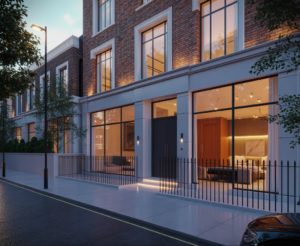
4. Dulwich
Dulwich is Southwark’s premium residential district — a south London neighbourhood that operates, in terms of its social character, its school provision, and its property market, in a different register from most of the borough. The combination of Dulwich Village’s extraordinary preservation (the estate is managed by the Dulwich Estate, which has protected the area’s historic character with unusual consistency), the presence of Dulwich College, Alleyn’s School, and James Allen’s Girls’ School among the country’s most academically distinguished independent schools, and the remarkable green space of Dulwich Park and the surrounding open land makes this one of inner London’s most coveted addresses.
Dulwich Village and Its Neighbours
Dulwich Village is the apex of the Southwark market — with an average price of approximately £1.69 million, it is by some distance the most expensive area within the borough. The Georgian and Victorian houses that line the village streets, the pond, the gallery (Dulwich Picture Gallery, England’s oldest public art gallery), and the overall sense of a village environment that has been preserved within the city create a residential environment that genuinely has no equivalent in south London.
East Dulwich, immediately adjacent, offers a more accessible version of the Dulwich character — the Lordship Lane high street, with its concentration of good restaurants, independent shops, and cafes, serves a community of families and young professionals who have chosen East Dulwich for precisely the combination of neighbourhood quality and relative (relative, in London terms) affordability. Three-bedroom terraced houses in East Dulwich typically achieve £750,000–£1 million; semis and larger houses command considerably more.
Schools as the Principal Market Driver
As with Southwark’s other premium areas, the school factor is significant and visible in pricing. The presence of outstanding state primary and secondary schools in the Dulwich catchment, alongside the independent school concentration that makes this one of the most educationally intensive parts of London, generates demand from family buyers that sustains prices even in broader market downturns. For buyers whose priority is educational quality alongside quality of neighbourhood, Dulwich — and East Dulwich as the more accessible entry point — is one of south London’s most compelling destinations.
5. Peckham
Peckham is the Southwark neighbourhood that has attracted the most attention in the past decade — described by international media as “the coolest neighbourhood in the world” at various points, and generating a level of cultural interest, gentrification commentary, and genuine community tension that makes it simultaneously fascinating and uncomfortable to write about. The truth about living in Peckham in 2026 is, as always with London’s regenerating neighbourhoods, somewhere between the estate agent’s enthusiasm and the community activist’s alarm.
A Neighbourhood in Its Own Image
What cannot be disputed is that Peckham has developed one of London’s most distinctive neighbourhood cultures. The concentration of independent bars, restaurants, galleries, and creative businesses — many of them in the railway arches and repurposed industrial spaces that give the area its characteristic aesthetic — attracts visitors and new residents from across London. Frank’s Café on the top of the Peckham multi-storey car park, the Bussey Building arts complex, and the independent food scene along Rye Lane have made Peckham a genuine destination that its residents use as much as its visitors.
The street art that characterises parts of Peckham’s public realm is not cosmetic decoration but the output of a genuine creative community that has made the area its home — often in spaces and at rents that the neighbourhood’s rising prices are beginning to make difficult to sustain.
The Market and Its Tensions
Property prices in Peckham have risen sharply as the neighbourhood’s profile has grown. The proposed Aylesham Centre redevelopment in the heart of Peckham — which projects new flat values at approximately £850 per square foot, or over £600,000 for an average apartment — represents the frontier of this change, and has generated significant community opposition from residents who note that the average income in Peckham is approximately £34,100 per year. Southwark is among the top ten most deprived areas in London even as it is simultaneously among the fastest-appreciating property markets in south-east London — a contradiction that its politics and its planning debates are still working through.
For buyers approaching Peckham in 2026, the market offers a genuine range: Victorian terraced houses in the residential streets east of Rye Lane from approximately £550,000–£750,000; flats in new developments from £400,000+; and the cultural and social energy of one of London’s most genuinely interesting neighbourhoods as the context for daily life. For buyers who value neighbourhood vitality over neighbourhood polish, and who are comfortable with a community that is actively debating its own future, Peckham offers something that more settled Southwark addresses cannot.
Southwark in 2026: A Borough of Exceptional Diversity
The five neighbourhoods in this guide cover a price range from Peckham flats at £400,000+ to Dulwich Village houses at £1.69 million average — a spread that makes Southwark one of the most internally diverse property markets in inner London. What they share is the borough’s extraordinary transport infrastructure (multiple Tube lines, the Overground, National Rail, and excellent bus networks), its proximity to the cultural and economic core of London, and its position on the right side of the river for an increasing number of buyers who find south-east London’s combination of neighbourhood character and relative value (relative, again, to Zone 1 north of the river) increasingly compelling.
In January 2026, Southwark’s average house price was £589,000 — up 1.2% from January 2025, while across London average house prices fell 1.7% over the same period. That modest positive divergence — the borough outperforming London as a whole — reflects a market that has genuine fundamentals: the regeneration pipeline (Canada Water, Old Kent Road, Elephant Park), the transport connectivity, the school quality in its premium areas, and the neighbourhood energy in its emerging ones. Southwark in 2026 is not a market for the casual or the budget-constrained buyer, but for those who can engage with it properly, it is one of inner London’s most rewarding.
About the Author