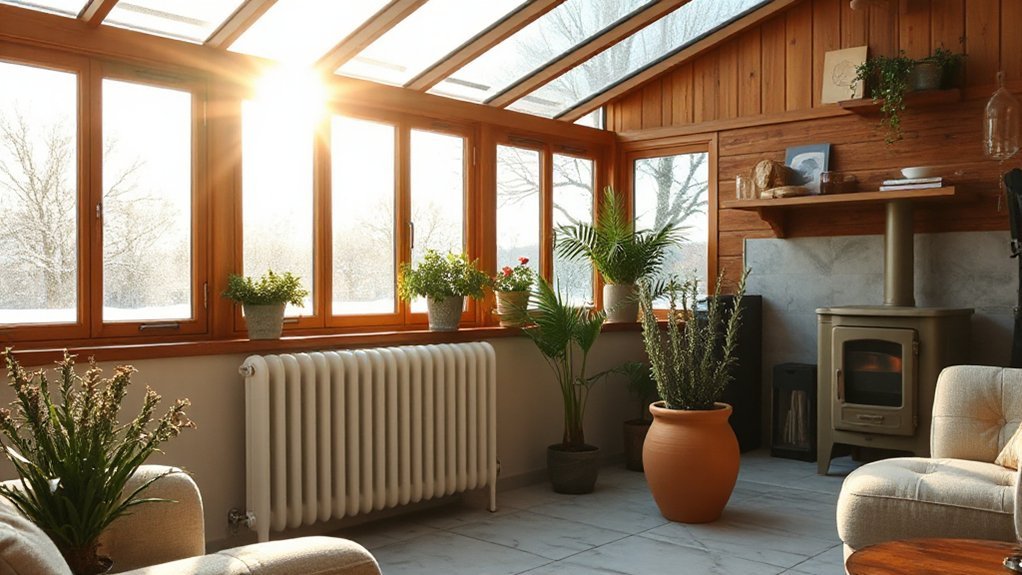
Light drips through the conservatory like a thin blanket you can feel but not fully trust. You’ll want fast warmth from electric heaters, steady comfort from well-insulated panels and heat pumps, and high-capacity bursts from gas when needed. Each option stacks differently on cost, efficiency, and safety, so you’ll balance upfront install, running costs, and room use. With the right mix, winter stays predictable in a space that’s otherwise prone to drafts and heat loss. Here’s how to choose.
Why Conservatories Are Hard to Heat (and How to Tackle It)
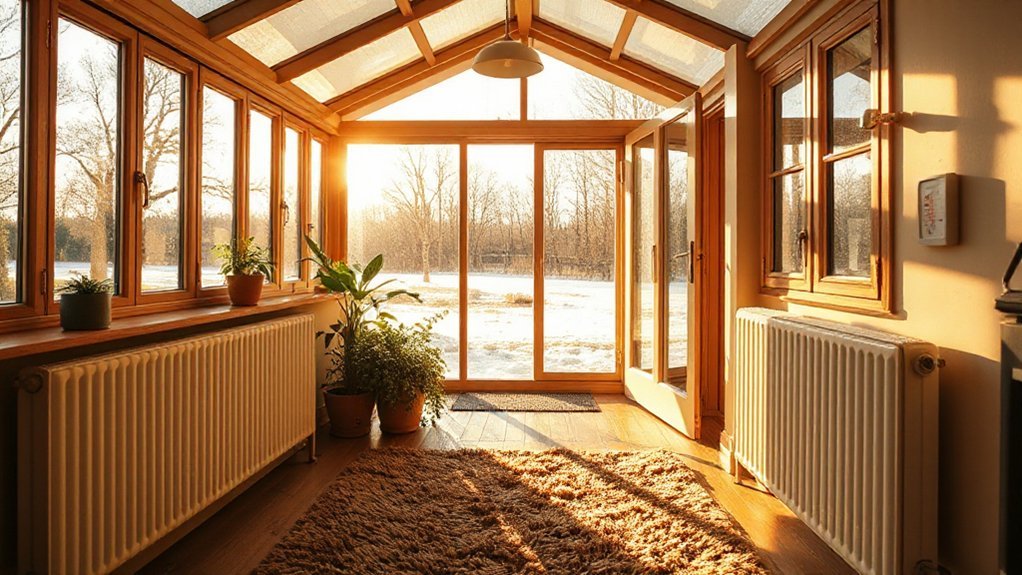
Conservatories heat poorly because a large amount of glass and lightweight framing lets heat escape and external conditions dominate interior temperatures. You’ll reduce losses by identifying thermal bridges and improving insulation around doors, panels, and sidelights.
Start with Sunlight optimization: orient windows to maximize winter solar gain while shading glare in peak sun hours, and select glazing with low U-values to limit heat flow. Seal gaps with weatherstripping and cavity-insulation where feasible.
Implement Seasonal maintenance: clean seals, verify operability of vents, and inspect flashing for leaks after storms. Use controlled ventilation to balance humidity without cooling efficiency.
Consider radiant barriers or low-emissivity coatings on interior surfaces to reflect heat inward at night. Document performance changes and adjust upgrades based on monitored indoor temperatures.
Fast Heat With Electricity: Pros, Cons, and When to Use It
Electric heating can warm a conservatory quickly, but it’s a trade-off between speed and operating costs. You’ll get rapid temperature rise with electric heaters, yet running costs can be higher than other options, especially during long cold spells.
Choose low-mass, high-output devices for fast heat without excessive energy use, and avoid oversized units that cycle on and off, wasting electricity.
Electric efficiency hinges on using programmable controls, thermostats, and intermittent operation rather than continuous full power.
Safety considerations matter: keep clearances, use purpose-built outdoor-rated units where applicable, and install fan-assisted models with built-in overheat protection.
In practice, reserve electric heat for short-term comfort boosts or temporary heating, and pair it with improved insulation strategies later.
Monitor energy use and adjust settings to maintain steady comfort without spikes.
Insulation-Driven Heating: Panels, Boilers, and Heat Pumps
Insulation drives the efficiency of heating in a conservatory, so panels, boilers, and heat pumps should be evaluated not just on output but on how well they minimize heat loss. You’ll prioritize systems that integrate high-contrast insulation with low thermal bridging, and you’ll plan for proper zoning to avoid overconditioning.
Panels provide rapid surface heat with controlled distribution, while boilers offer reliable standby heat for peak loads. Heat pumps deliver efficient heat at modest outdoor temps when paired with proper insulation.
Consider solar ventilation to recover heat from daylight and radiant barriers to reduce radiant heat transfer through glazing. Assess tarp and shutter options for seasonal sealing, and compare controls that modulate to interior setpoints without overshoot.
Choose equipment that maintains steady, uniform temperatures with minimal furnace-like cycling.
Gas Heating and Alternatives: Costs, Safety, and Efficiency
Gas heating remains a common baseline for conservatories, but it brings cost, safety, and efficiency trade-offs that you should weigh against alternatives. You’ll compare running costs, fuel resilience, and combustion risks with electric options.
Gas systems offer rapid heat with high peak output, yet installation, venting, and maintenance add complexity. Safety considerations include proper venting, leak detection, carbon monoxide monitoring, and clear zoning to avoid overheating glasswork or perimeter edges.
Efficiency hinges on boiler size, radiant vs. convective output, and system controls. Smart thermostats optimize duty cycles, monitor outdoor conditions, and reduce energy spikes.
Zoned heating concentrates warmth where you spend time, improving comfort and reducing waste. Alternatives like heat pumps or infrared panels can complement gas, balancing overall cost and reliability.
Plan Your Winter-Warmth Setup: Step-by-Step Installation and Budget
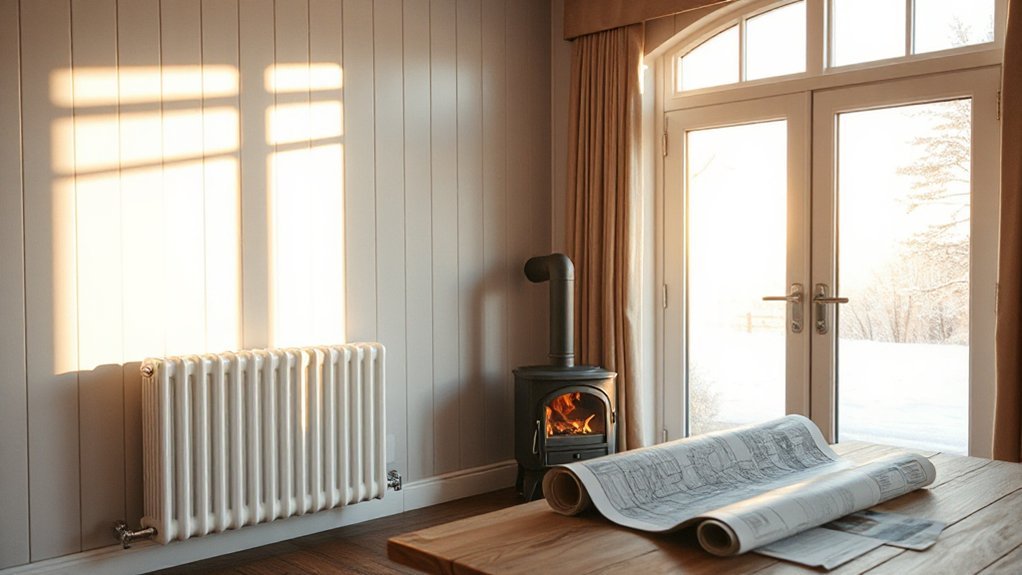
To plan your winter-warmth setup, start by outlining a clear, phased installation and budgeting timeline that matches your conservatory’s size, glass area, and daily use. You’ll map sequences for insulation, heat source placement, and control integration, then assign costs to equipment, labor, and contingencies.
Assess thermal loads with simple calculations: estimate heat loss, peak demand, and standby requirements for cold snaps, adjusting as you add glazed area. Prioritize fuel or power efficiency, then set milestones: procurement, rough-in, commissioning, and performance verification.
Plan for plant placement to avoid thermal interference and maintain airflow, and decide window treatments that minimize glare while supporting insulation. Establish maintenance routines, warranty coverage, and a review cadence to refine your budget against real performance.
Frequently Asked Questions
Can Solar Gain Help Maintain Comfort in a Cold Conservatory?
Solar gain can help, but you’ll need careful design. You optimize solar efficiency with high-performance glass technology, proper orientation, and shading. You’ll monitor insulation, venting, and thermal mass to maintain comfort in fluctuating cold conditions.
What Maintenance Schedule Keeps Heating Equipment Efficient Year-Round?
You should implement a seasonal maintenance schedule to keep heating equipment efficient year-round. Perform regular inspections, filter changes, and belt/ignition checks; apply energy efficient upgrades where needed, and document milestones for ongoing energy performance tracking and cost savings.
Are Zone-Based Thermostats Effective for Conservatory Heating?
Yes, zone-based thermostats are effective for conservatories. With proper thermostat placement and zoning control, you can target heat precisely, reduce waste, and maintain comfort. Make sure sensors aren’t blocked by furniture and avoid direct sunlight interference.
How Do Humidity Levels Affect Comfort and Heat Loss Indoors?
Humidity levels impact your comfort by altering perceived warmth; high humidity lowers heat feel, while low humidity can cause dry discomfort. Maintain humidity control and moisture management to reduce condensation, improve heat retention, and stabilize indoor temperature efficiently.
Which Insulation Types Deliver the Best ROI for Conservatories?
Insulation materials like polyiso, mineral wool, and rigid boards deliver the best ROI for conservatories by reducing heat loss and boosting energy efficiency. Prioritize high R-values, air sealing, and compatible glazing to maximize overall energy efficiency.
Conclusion
You’ll want warmth without waste, so plan a practical, precise pairings approach. Prioritize insulation, then pick a pragmatic mix: powerful electric quick-heats for sudden cold snaps, a well-sized heat pump for steady comfort, and a propane/gas option only if vents and safety standards are satisfied. Budget, booed by big bills, becomes manageable when blended with panels and boilers. Build a balanced, budget-friendly plan, bring warmth with wit, and enjoy consistently cozy conservatory comfort.
About the Author