Coastal extensions demand durability and thoughtful integration with a marine environment, so you start with corrosion-resistant cladding, stainless fasteners, and high-performance glazing for salt spray and wind. Elevate foundations, tackle drainage, and weave coastal landscaping into your design to buffer exposure. Then balance expansive views with privacy and low maintenance. You’ll want to explore how materials, layout, and finishes come together before you commit to a path that could redefine your home—and your summer plans.
Coastal Extensions 101: Why Weather Shape Your Design
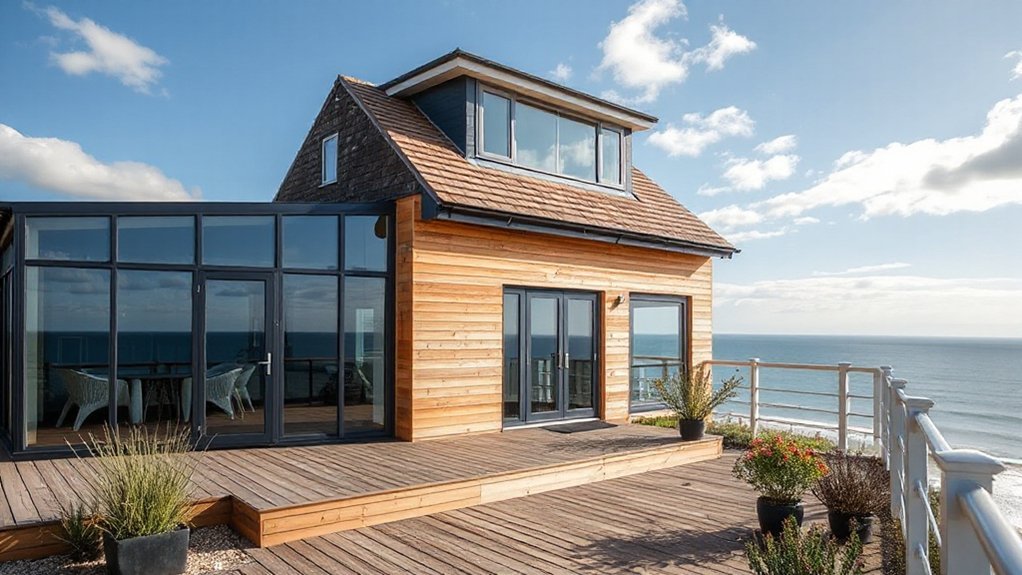
Coastal weather isn’t just background noise—it’s the design driver. You’ll design extensions that respond to wind, salt, and rain, not fight them. Start with your envelope: continuous seals, corrosion-resistant hardware, and wind-rated glazing to minimize drafts and glare.
Material choices matter most when storms are routine: choose storm-resilient framing, low-void decking, and elevated harness points so you can resist surge and gusts without sacrificing access or light. Plan drainage that channels moisture away quickly, and consider coastal landscaping that buffers wind while reflecting heat.
Local microclimates shape shade and ventilation strategies, so you’ll tailor placement to reduce heat gain and cold spots. Storm resilience isn’t an afterthought—it’s the baseline. Your design becomes practical, durable, and situational.
Conservatory vs Glass-Walled Wrap: A Decision Framework for Coastlines
Consider how Conservatory Pros and Cons stack up against Glass-Walled Wraps Tradeoffs as you weigh coastal reliability, maintenance, and cost.
We’ll map Coastal Climate Considerations to each option’s performance, energy, and durability so you can pick the framework that fits your site and budget.
This discussion starts with practical criteria you can compare—materials, ventilation, and protection from storms—to guide a confident choice.
Conservatory Pros and Cons
A conservatory can expand your living space and light, but it also brings trade-offs compared with a glass-walled wrap. You’ll gain brighter rooms and a connection to outdoors, yet you may face higher heat loss in winter and heat gain in summer if insulation isn’t up to par.
Consider frame materials, roof type, and glazing alone, because these determine comfort more than size. When planning conservatory design, factor in prevailing coastal winds, glare, and potential dampness from sea spray, so you don’t end up with drafty corners or condensation.
For energy efficiency, choose double or triple glazing, solid foundations, and intelligent shading. Weigh maintenance needs, integration with existing spaces, and resale value as you refine your coastal home extension strategy.
Glass-Walled Wraps Tradeoffs
Glass-walled wraps can offer a sleeker silhouette and uninterrupted views, but they come with distinct tradeoffs compared with conservatories. You’ll trade some warmth and sound buffering for a modern, panoramic feel, especially along the coast where glare and wind are constant considerations.
Expect higher heat gain in summer without careful shading and targeted ventilation; you’ll need integrated blinds or low-E coatings to maintain comfort. Seaside privacy becomes trickier with full glass, so plan oblique layouts, frosted panels, or strategically placed sidelights to maintain discretion while preserving marine aesthetics.
Maintenance is simpler in principle, yet glass requires regular cleaning and seal checks to prevent streaks and leaks. If you prioritize views and a contemporary vibe, glass-walled wraps suit you—provided you invest in shading, insulation, and privacy solutions.
Coastal Climate Considerations
Coastal climates demand that you weigh heat, wind, and moisture alongside views. When choosing between a conservatory and a glass-walled wrap, you evaluate how each handles sun exposure, heat gain, and salt spray.
Prioritize shading strategies, operable vents, and high-performance glazing to minimize overheating during long summers and chilly nights. Consider low-maintenance framing that resists corrosion, while ensuring weather tightness in storms.
For seaside landscaping, plan plantings that tolerate salt spray and wind, creating microclimates around your extension. Include coastal flora that thrive in bright, humid conditions to anchor views without sacrificing energy efficiency.
Align materials with your roofline and glazing choice so the structure blends with the landscape and supports durable, year-round comfort.
Durable Coastal Materials: Withstanding Salt Air and Wind
You’ll prioritize salt-resistant cladding options, from aluminum and fiber cement to engineered composites, to keep finishes looking fresh in coastal exposure.
Pair these with corrosion-resistant fasteners—hot-dip galvanized, stainless steel, or polymer-coated—to prevent rust at every connection.
Consider wind-driven ventilation strategies that balance moisture control with energy efficiency, ensuring durable performance without compromising comfort.
Salt-Resistant Cladding Options
Salt-resistant cladding options are essential for durability in coastal homes, where wind, humidity, and salt spray corrode traditional materials. You’ll want finishes and substrates that resist corrosion, staining, and moisture ingress, all while keeping curb appeal.
Look for materials with proven salt-air performance, such as aluminum composites, fiber cement, and enamel-coated metal panels, paired with non-corrosive fasteners. Color and texture choices should hide weathering yet stay modern, aligning with Brighton’s relaxed coastal vibe.
Maintenance matters: choose coatings with UV and salt spray resistance, and plan for periodic inspections. Consider cladding systems that allow drainage and thermal movement, minimizing damp pockets.
Pair these with proper ventilation gaps behind siding to deter mold. When choosing, note marine flora tendencies and salt spray exposure to guide long-term resilience.
Corrosion-Resistant Fasteners
Choosing the right fasteners matters just as much as picking the cladding, because corrosion resistance hinges on material and installation details.
In coastal homes, you’ll want corrosion resistant fasteners that stand up to salt air and wind-driven moisture. Favor coated stainless steel or hot-dip galvanized options designed for exterior use, and confirm compatible coatings with your cladding material.
Use stainless alloys (A2 or A4) for lightweight panels, or coated carbon steel for heavier siding, ensuring the coating isn’t compromised during installation. Pre-drill correctly to avoid micro-cracking, and drive with steady, controlled torque to prevent loosening over time.
Check for corrosion protection on every batch, and store fasteners dry. With these practices, fastener longevity supports durable, low-maintenance extensions.
Wind-Driven Ventilation Strategies
Wind-driven ventilation is essential for coastal homes, where salt-laden air and strong winds demand reliable airflow without inviting moisture intrusion. You’ll pair operable windows with strategically placed vents to capture prevailing breezes while minimizing rain ingress.
Prioritize airtight yet breathable assemblies, using corrosion-resistant hardware and low-porosity claddings that stand up to salt spray. Consider wind-tunnel-informed placement for vents and intakes to reduce pressure differentials that push moisture indoors.
Roof overhangs, clerestory gaps, and under-eave louvers channel fresh air without direct exposure to high-salt gusts. Use exterior shading to curb overheating, preserving material longevity.
For ventilation effectiveness, test in both onshore and offshore wind conditions, then adjust dampers and sealants accordingly. Track airflow optimization over seasons to maintain comfortable, energy-efficient indoor environments.
Light, Privacy, and Views: Balancing Openness With Seclusion
Balancing openness with seclusion means you’ll trade some view breadth for usable privacy without sacrificing light. In practice, design for natural light while controlling lines of sight with strategically placed screens, frosted glass, or cleated glazing.
Focus on a privacy balance that preserves frontal views from living spaces but softens glare and over-visibility from street or adjacent terraces. Use setback screens and permeable fencing to frame horizons without enclosing you.
Choose adjustable treatments—louvered shutters, movable shades, and high-contrast blinds—that adapt seasonally. Materials should resist coastal salt spray yet stay warm to the eye; think timber tones or neutral composites.
Align window placement with outdoor seating to extend the sense of space, not compartmentalize it. This keeps interiors bright, private, and visually expansive.
Sizing Coastal Extensions: Proportion, Flow, and Scale
You’ll want proportions that fit your site’s rhythm, balancing existing volumes with new mass.
Guarantee flow aligns with adjacent rooms and exterior spaces so every shift feels deliberate rather than jarring.
Keep scale consistent across zones, so sizes read as a cohesive whole rather than a patchwork.
Proportions That Fit
Proportions that fit matter as much as function when sizing coastal extensions; misjudging scale can make a new addition feel cramped or out of place. You’ll want a design that reads as an extension, not a disruption, by aligning visual weight with your existing structure.
Start with a modest footprint and step up only where necessary, using vertical accents or a shallow pitch to mirror the home’s language. Consider window proportions, door placements, and rooflines to preserve rhythm along the façade.
For seaside landscaping, connect outdoor spaces with proportional doors and railings that frame views without crowding sightlines. In marine flora zones, select low, dense plantings that soften edges without blocking light.
Keep materials consistent, textures restrained, and changeover deliberate for a cohesive, durable result.
Flow With Existing Volumes
Where flow matters, your extension should glide from the existing mass rather than clash with it. You’ll prioritize seamless sightlines and smooth progressions between indoors and outdoors, so rooms feel connected rather than fragmented. Match ceiling heights, align wall planes, and use continuous materials to reduce visual breaks.
Consider window rhythms that echo the home’s original uno, balancing Seaside privacy with daylight. Avoid abrupt corners; soften edges with gentle chamfers or glazing that reflects the coast’s light without overpowering the panorama.
Scale individual volumes to preserve established silhouettes, ensuring furniture footprints respect corridor width and circulation paths. For Ocean views, position primary living spaces to frame the horizon while secondary rooms minimize external exposure.
Maintain restrained color palettes and durable finishes for coastal resilience.
Scale Across Spaces
As you extend coastal spaces, scale becomes the thread that ties new rooms to the original silhouette. You balance proportion by mirroring rooflines, window heights, and material palettes to avoid disjointed junctures.
Consider sightlines: align door scales so rooms read as a cohesive sequence rather than isolated bays. Flow is about rhythm—vary ceiling heights subtly and place transitional zones that gently lead you forward.
In seaside contexts, choose materials with restrained texture and a light tonal range to maintain coherence with existing architecture. Incorporate marine flora-inspired accents in trims or tiling, ensuring they don’t overpower the scheme.
Address seaside acoustics by planning softer surfaces in critical zones, preventing dull or hollow echoes while preserving an airy, coastal feel.
Wind, Drainage, and Structural Considerations
When designing coastal extensions, you’ll prioritize wind loads, drainage performance, and structural resilience to harsh conditions. You’ll choose framing that’s rated for marine exposure, with corrosion-resistant fasteners and sealants that stand up to salt air.
Plan for positive drainage gradients and robust guttering to prevent ponding near foundations. Install continuous vapor barriers and moisture-control layers, ensuring ventilation to avoid damp.
Seaside landscaping around the structure should direct airflow and reduce wind uplift, while grading directs runoff away from the footprint.
In terms of insulation, marine insulation products resist salt exposure and maintain warmth with slim profiles. Align materials with maintenance cycles to minimize upkeep while preserving performance.
This approach supports longevity, safety, and comfort in coastal living.
Low-Muss, Low-Maintenance Choices for the Coast
To keep coastal extensions low-maintenance, choose durable, low-muss materials and simple, robust systems that stand up to salt air and wind. You’ll favor proven, weathered options like steel, composite decking, and concrete that resist corrosion and fading.
Specify slip-resistant surfaces and tight-sealed joints to deter moisture intrusion. For coatings, select breathable, moisture-tolerant finishes that dry quickly after rain.
Plan for efficient drainage, accessible gutters, and minimalist mechanicals to reduce upkeep.
Landscape plans should emphasize Seaside flora with salt-tolerant varieties and native grasses that stabilize sand and require little irrigation.
Integrate Coastal landscaping into the layout to minimize lawn and herbicide use.
Choose modular components for easy repair or replacement, keeping extensions functional without frequent overhauls.
Coastal Aesthetics: Color, Texture, and Finishes That Last
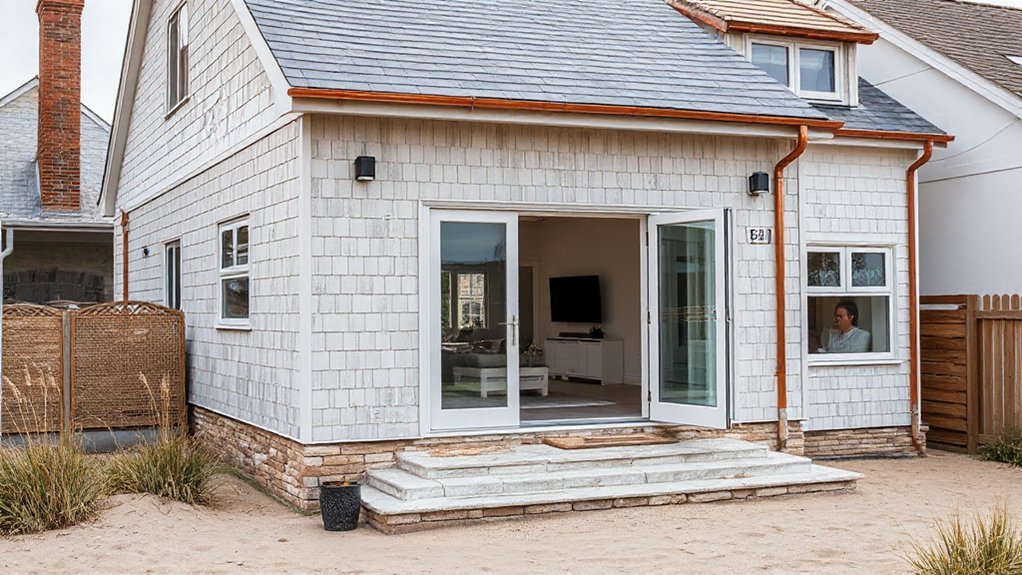
Coastal aesthetics hinge on color, texture, and finishes that endure salt spray and wind, so you’ll choose palettes and materials that stay true year after year. You’ll prefer low-gloss paints in seafoam, oyster, and slate, plus weathered timber and textured plaster that resist peeling. Emphasize finishes that tolerate humidity and sun without frequent touch-ups.
For Seaside landscaping, pair durable stone pavers with gravel accents to manage salt damp and maintain clean lines. Opt for coastal lighting fixtures with UV-resistant coatings and corrosion protection, ensuring glow remains even after spray.
Use materials that harmonize with the horizon—cool blues, warm beiges, and charcoal accents. Prioritize simplicity and repeat textures across exterior details to create a cohesive, lasting look.
Indoors–Outdoors: Access and Layout for Seamless Living
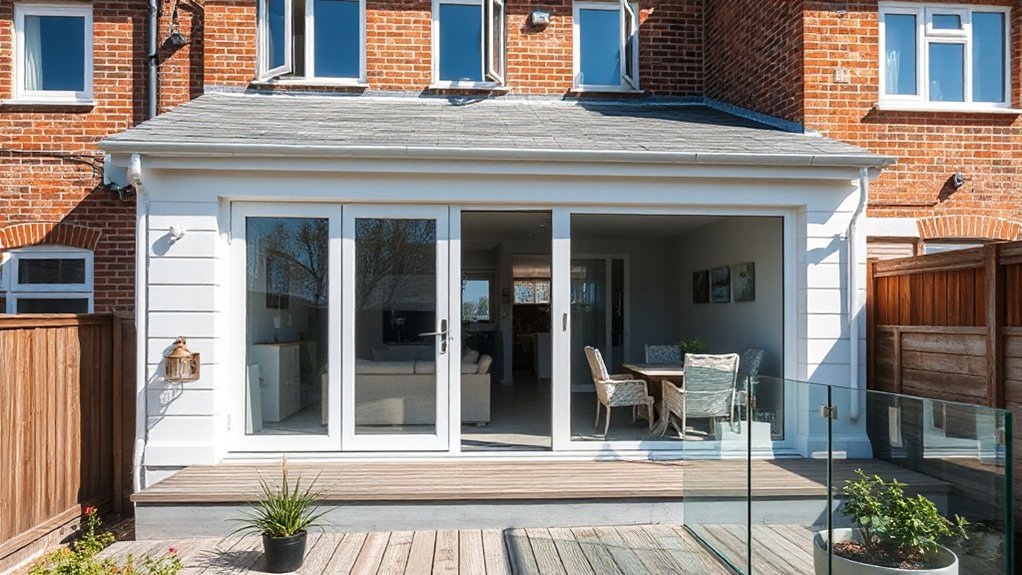
Seamless indoors–outdoors access starts with deliberate flow: wide, unobstructed sightlines from living spaces to exterior rooms and decks, and doors that stack or pocket smoothly to minimize barriers. You’ll prioritize fluid passage where large sliders or bi-folds blur indoor and outdoor thresholds, so furniture placement doesn’t block paths.
Maximize outdoor connectivity by linking kitchens, lounges, and dining zones to decks or patios with consistent flooring and weatherproof thresholds. Consider operable windows that double as pass-throughs, reducing steps between prep and alfresco dining.
Maintain indoor harmony with neutral, durable finishes indoors that echo exterior textures, and use shading that remains gentle on breezes. Thoughtful acoustics and scent control seal the experience as cohesive, practical, and inviting.
Budgeting Coastal Extensions: Costs, Phases, and Value
Balancing your coastal extension budget starts with clarity: outline project scope, identify optional features, and set realistic cost bands for each phase. You’ll map costs across design, approvals, materials, and labor, then build in a contingency for coastal wind, salt, and damp exposure.
Prioritize cost-effective upgrades that preserve value without overbuilding, like energy-efficient glazing, slimline foundations, and modular components. Phase costs transparently: feasibility and planning, permit and documentation, procurement, and construction.
Track changes in scope to prevent spiraling spend and schedule delays. Planning permissions influence timelines and fees, so know your local thresholds early.
Value isn’t just price—consider longevity, maintenance, and resale impact. Revisit the budget after each milestone to ensure alignment with your long-term coastal living goals.
Frequently Asked Questions
How Do Coastal Setbacks Affect Extension Placement Decisions?
Coastal setbacks limit how close you can place an extension to the Seaside landscape, guiding you to preserve views and sun; integrally, you’ll prioritize Coastal privacy, align massing with wind patterns, and guarantee drainage without sacrificing character.
What Is the Best Roof Type for Salt Air Durability?
For salt air durability, metal or concrete roofs with protective coatings offer best salt corrosion resistance and wind resistance, while interlocking metal panels reduce uplift. Consider corrosion-resistant fasteners, proper sealing, and regular maintenance to extend lifespan.
Can I Add Solar Shading Without Blocking Views?
Yes, you can add solar shading without blocking views by opting for low-profile screens or exterior solar shading that preserves sightlines, integrates with solar panel layouts, and complements window tinting for glare reduction and energy efficiency.
How Should Rainwater Be Managed on Coastal Roofs?
You should plan rainwater harvesting and implement proper gutter maintenance to manage coastal roof runoff. Install filtered collection, secure storage, and seasonal checks; guarantee downpipes divert away from foundations. Regularly clear debris, and monitor salt-related corrosion and seals.
What Permits Are Typical for Seaside Home Extensions?
You’ll typically need planning permission or permitted development rights, depending on size and location, with checks for coastal setbacks. Consider cultural influences and aesthetic considerations to align with local style, while complying with building regs and flood-related requirements.
Conclusion
In short, coastal extensions aren’t magic recipes, they’re weatherproof pragmatics dressed up as style. You’ll want durable cladding, stainless fasteners, and glazing that laughs at salt spray. Elevate foundations, master drainage, and a splash of coastal landscaping to tame the wind without killing the view. Balance openness with privacy, plan for low maintenance, and choose finishes that age gracefully. If you can pull off all that, you’ll enjoy stylish, sustainable spaces that politely endure the sea’s moods. Satire optional, practicality essential.
About the Author