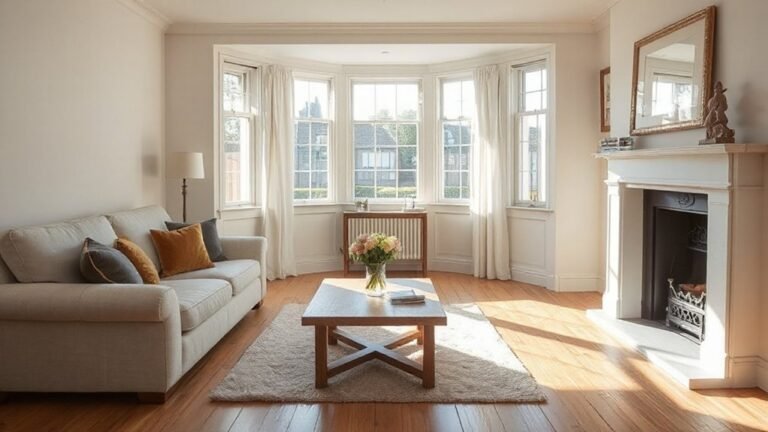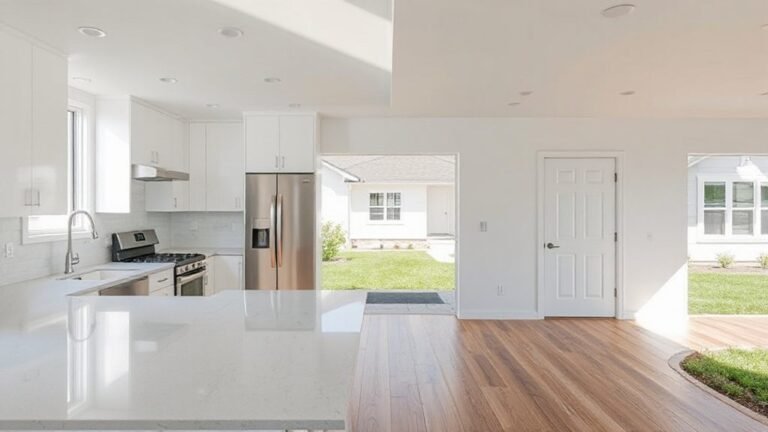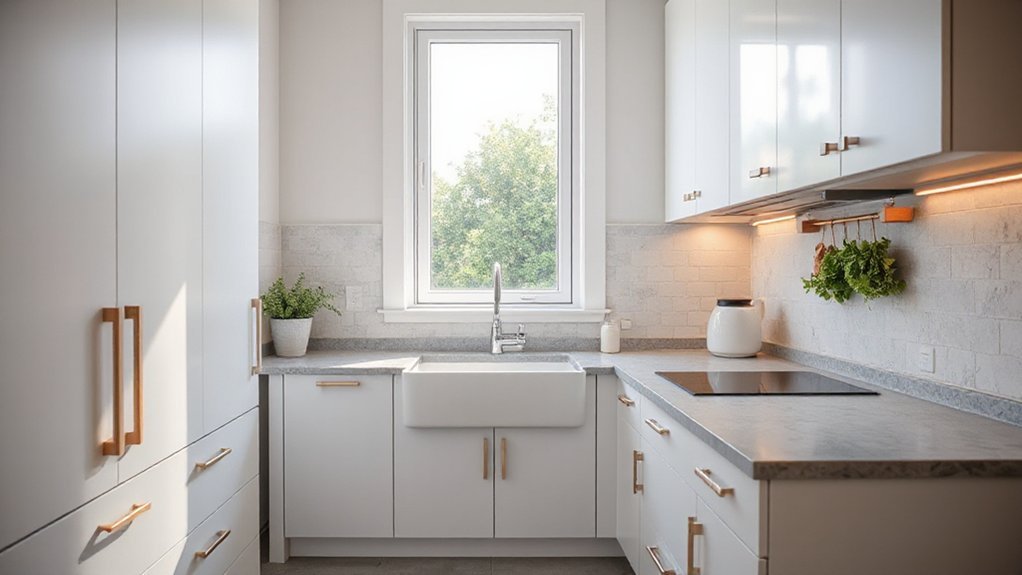
You can transform a small kitchen with smart layout tweaks, vertical storage, and seamless surfaces that feel calm and cohesive. Free up counter space with wall racks and shallow, handle-free cabinets, then choose quartz or solid-surface counters for easy cleaning. Create clear prep, cook, and serve zones, and use uniform flooring and lighting to expand the space. It’s about efficient moves and thoughtful details—the kind that make you want to explore the next steps.
Assess Your Space: Measure, Mirror, and Plan

Before you sketch a single cabinet, measure every inch of your kitchen and note the layout. You’ll map door swings, appliance footprints, and elbow room, then validate every decision against real space.
Use precise measurement techniques: walls, base cabinets, ceiling height, and clearance near doors. Create a simple grid to visualize traffic flow and work zones, then compare against your goals for space utilization.
Photograph fixed features, then annotate with dimensions for quick reference. Mirror technique by tracing layouts on graph paper or a digital app, swapping elements to test feasibility without heavy investment.
Prioritize sightlines, turning radii, and accessibility, ensuring each centimeter earns purpose. With accurate data, you’ll plan efficient storage, ergonomic layouts, and a cohesive, stylish kitchen.
Layout Tweaks That Make a Small Kitchen Feel Bigger
Maximize corridor clearance to keep traffic flowing and edges unobstructed, so every move feels instinctive.
Lean on vertical storage to free counter space—think tall cabinets, open shelving, and hanging grids that draw the eye upward.
These tweaks create a sense of airiness while boosting function without sacrificing style.
Corridor Clearance Maximized
What single move can open up your kitchen’s flow? Reframe corridors as breathable paths, not walls. Start with generous toe-clearance in any doorway, and keep the threshold sleek to minimize perceived obstruction.
Opt for continuous finishes that visually extend the space, such as uniform flooring and a single light source along the run. Choose shallow, handle-free cabinets or open shelving at eye level to reduce visual bulk, and keep appliances tucked behind tall, slim cabinetry to preserve line of sight.
Prioritize clear zones: prep near the window, cooking near the sink, service near the entrance. This reduces clutter buildup and promotes efficient trips.
Finally, use narrow doorways strategically, not as design excuses, to sustain airy movement throughout the corridor.
Vertical Storage Gains
Vertical storage isn’t just a space saver—it’s a visual upgrade. You’ll maximize every inch by choosing wall mounted racks that keep essentials within reach and out of the main counters.
Install a strategic mix of open shelves and hooks to create a lean, organized facade you can actually maintain. Consider hanging baskets for fruit, herbs, or small snacks; they add texture and a tactile cue to keep surfaces clear.
Prioritize vertical gravity: place items you use daily at eye or chest height, reserve lower shelves for bulk or infrequently used gear.
Tension between function and form matters—select materials and finishes that echo your kitchen’s color story. This approach makes the space feel taller, cleaner, and effortlessly cohesive.
Smart Storage Hacks That Actually Free Up Real Space

Smart storage isn’t about adding more stuff—it’s about reclaiming real space with smart, practical tweaks. You’ll transform a compact kitchen with purpose-built ideas that feel invisible yet impactful.
Start with hidden compartments integrated into counters and islands, letting you stash seldom-used gadgets without crowding the main surface.
Fold away furniture isn’t just a gimmick; it’s a disciplined habit to clear work zones and free up floor space for prep.
Use vertical dividers, magnetic strips, and pull-out organizers to turn unused gaps into functional storage.
Opt for multifunctional items—measuring tools that nest, a cutting board that becomes a lid—so you reduce clutter without sacrificing accessibility.
The result is a calmer, more capable kitchen that reads larger than it is.
Durable, Easy-Clean Surfaces for Small Kitchens
Durable, easy-clean surfaces are essential in a small kitchen, where every square inch and every spill matters. You’ll prioritize materials that resist heat, stains, and daily wear without demanding constant upkeep.
Consider a thin, solid-surface layer over cabinetry to reduce seams, or engineered quartz for a seamless, nonporous feel that wipes clean in a snap. When selecting countertop materials, think about refinishability and consistent color throughout to hide minor scratches.
Favor matte or satin finishes to mask fingerprints while still appearing high-end. For backsplashes, opt for ceramic or glass tiles with generous grout space for easy replacement, or a continuous panel that minimizes joints.
Prioritize stain resistance, easy maintenance, and cohesion with your overall aesthetic to maximize small-kitchen efficiency.
Color Schemes and Lighting to Open Up a Compact Space
Color can make a small kitchen feel larger, so choose light, neutral palettes as a base and sprinkle personality with accents that reflect your style. You’ll harness color psychology by pairing cool neutrals with warm highlights to guide mood and perception.
Keep wall colors airy, and use reflective surfaces or glass-front cabinets to bounce light. Implement ambient lighting as a layered strategy: a bright ceiling light for tasks, softly diffused under-cabinet lamps for depth, and a warm-toned fixture to create coziness without shrinking space.
Choose bulbs in 2700–3000K for a cohesive, open feel. Maximize natural light with sheer window treatments and minimal obstructions. Limit bold, dark contrasts; instead, let subtle color shifts and lighting work together to visually expand the room.
Best Smart and Multi-Function Appliances for Tiny Kitchens
Tiny kitchens thrive on efficiency, and smart, multi-function appliances are the fastest route to expand capabilities without expanding footprint. In small spaces, you’ll prioritize compact form factors that deliver more than one function.
Look for smart appliances that integrate cooking, heating, and timing features in a single unit, reducing counter clutter and power cords. Multi functional gadgets streamline meal prep, such as combination air fryer and oven or a microwave with convection and steamer modes, letting you replace several devices with one.
Choose modular systems that nest or stack, freeing cabinet real estate and enabling seamless workflows. Prioritize intuitive interfaces, energy efficiency, and reliable connectivity.
Your aim is cohesive design, minimized maintenance, and consistent performance that elevates everyday cooking.
Budget-Friendly Upgrades That Look High-End
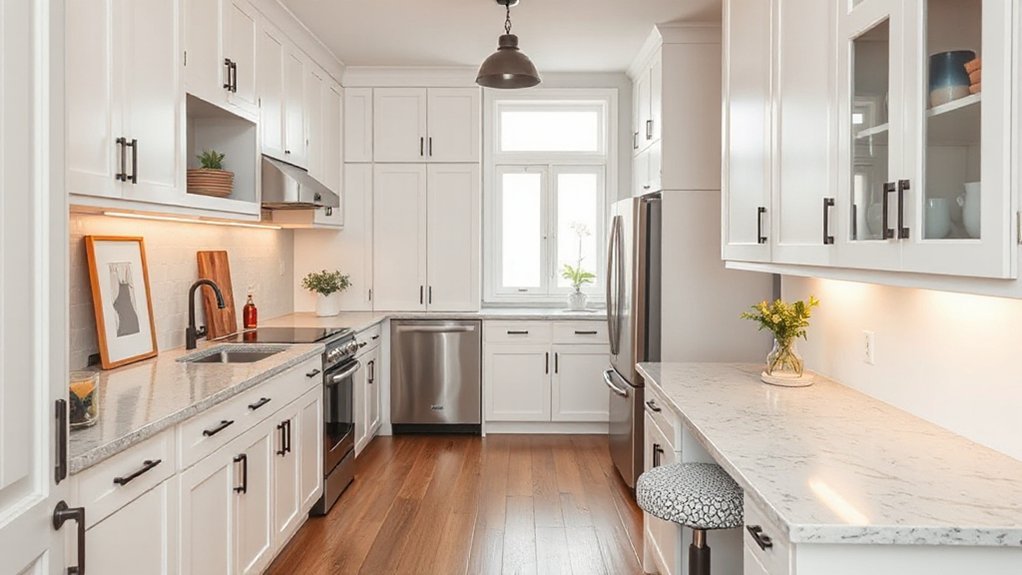
If you’re after a high-end look on a budget, start with finishes and smart placement that punch above their price tag. Choose durable, upgraded materials in small doses to maximize impact without overspending.
A decorative backsplash frames your workspace and elevates style; keep it cohesive with cabinet tones and countertop veining to avoid busy contrasts.
Add statement lighting that doubles as sculpture—think a bold pendant or streamlined track lights to draw the eye upward.
For cabinetry, refinish existing pieces rather than replace; a fresh stain or matte paint makes rooms feel newer.
Hardware matters: switch pulls and hinges to brushed brass or matte black for instant polish.
Finally, declutter surfaces and curate accents to maintain a luxe, calm, purposeful kitchen rhythm.
Frequently Asked Questions
How Do I Measure for a Truly Functional Small Kitchen?
You measure by mapping work zones, then tally door clearances and appliance placement for flow. Assess corridor widths, countertop depths, and storage solutions; guarantee you can reach everything. Prioritize efficient triangle paths, and incorporate adjustable shelves and smart storage tricks.
Can I Install a Fold-Down Dining Option in a Tight Space?
Yes, you can install a fold-down dining option in a tight space. It hides neatly when folded, and you gain hidden storage beneath the table. Use compact furniture paired with integrated shelves for a cohesive, aesthetic setup.
What Are the Best Lighting Tricks to Hide Clutter?
You can hide clutter with strategic lighting: use decorative fixtures and hidden lighting to sculpt zones, softly illuminate shelves, and create perception of depth, so glare stays away and surfaces appear sleek, organized, and visually expansive.
Which Under-Cabinet Appliances Save the Most Space?
Under-cabinet appliances save the most space when you prioritize compact storage and seamless appliance integration. Choose slim microwaves, under-counter beverage centers, and integrated dishwashers; you’ll keep lines clean, maximize usable counter space, and maintain a cohesive, aesthetic look.
How Can I Budget for High-End Looks on a Tight Budget?
You can budget for high-end looks by prioritizing luxury finishes as focal points and pairing them with cost effective upgrades like smart lighting, hardware accents, and_updated countertops. Plan a flexible palette, invest strategically, and accessorize with tasteful, budget-conscious details.
Conclusion
You’ve got the blueprint to turn a tight kitchen into a showroom of space and ease. Think of it as a design relay: smart layouts handing off efficiency, hidden storage pulling weight off counters, and seamless surfaces reflecting every inch brighter. With vertical storage, uniform tones, and clever appliances, small becomes grand. Move fast, stay intentional, and let the space breathe—like a well-tuned instrument where every note, every nabbed inch, sings efficiency and style.
About the Author