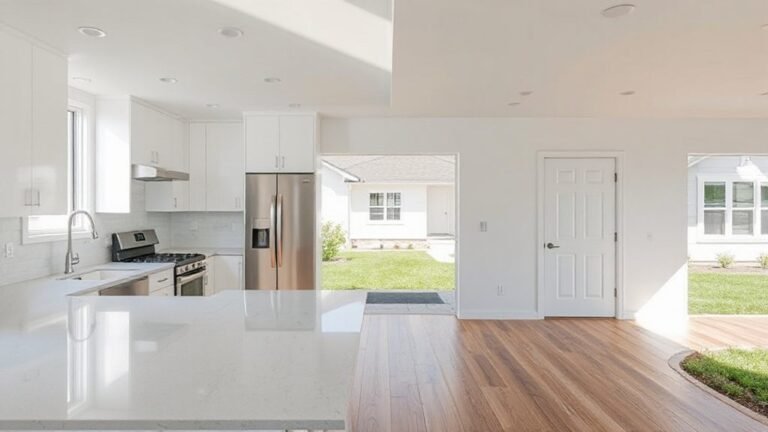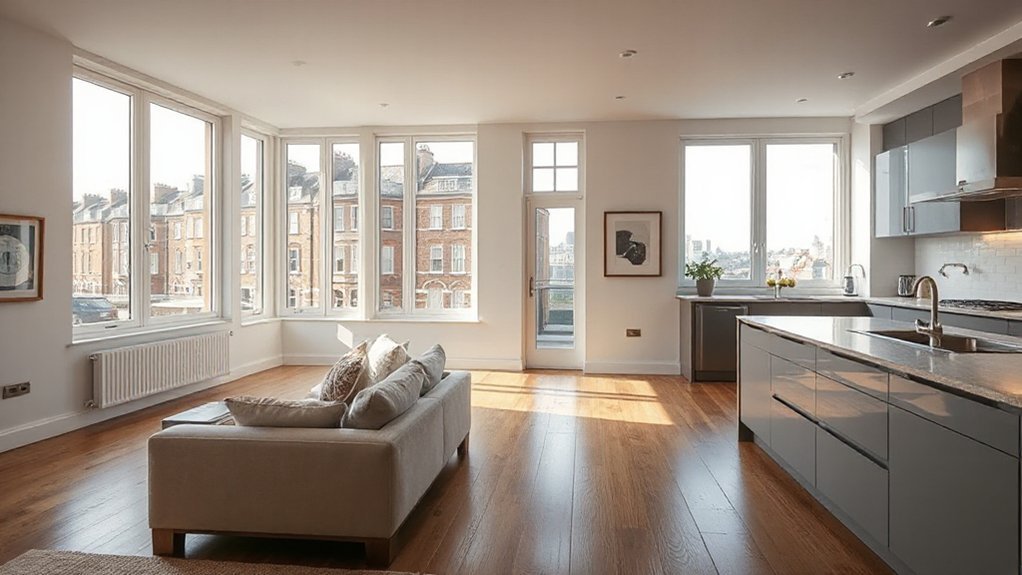
You’ll notice a coincidence: the latest market data often points to small, well-executed upgrades delivering bigger boosts than big renovations. You should focus on budget-friendly kitchens and bathrooms, smart space layouts, and easy energy fixes, all chosen with current trends in mind. Exterior curb appeal matters too, as buyers form first impressions quickly. Get ready to weigh ROI by flat type and keep a sharp eye on ongoing market shifts—there’s more to optimize than you might expect.
Market-Driven ROI Framework for London Flats
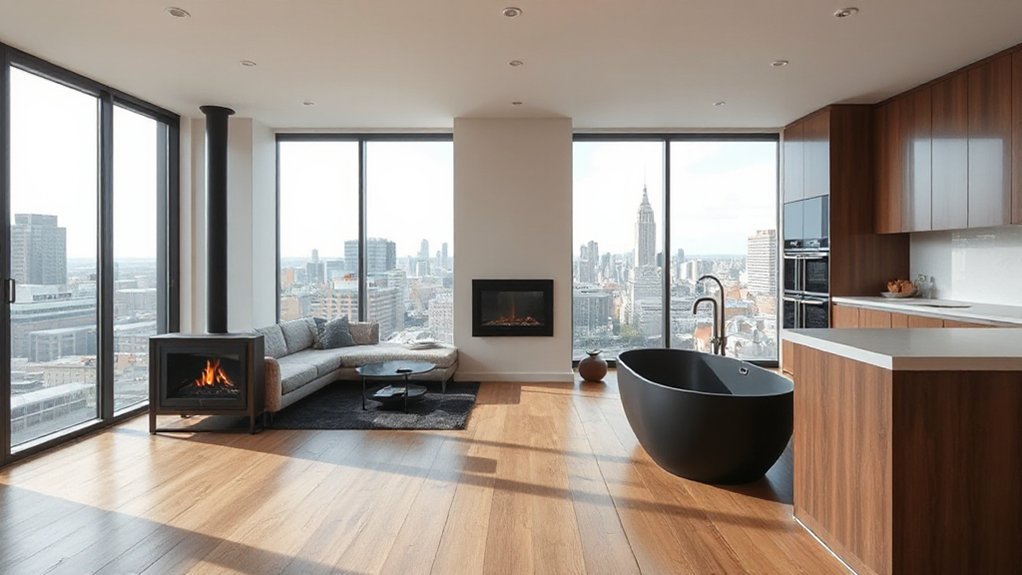
A Market-Driven ROI Framework for London Flats prioritizes selling-price and rent growth signals over cosmetic improvements alone. You’ll focus on objective data, tracking price trajectories, yield patterns, and vacancy rates to guide decisions.
Historical trends reveal cycles in demand, seasonality, and policy shifts that shape returns, so you align increments with enduring benchmarks rather than trendy fixes. Your approach blends market intelligence with prudent risk assessment, ensuring investment strategies consider capital deployment, leverage, and time horizons.
Instead of chasing aesthetics, you optimize features tied to documented value drivers, like location quality, transit access, and regulatory context. You’ll continuously test assumptions, iterate on portfolio mix, and communicate expectations transparently, fostering trust with partners.
This framework prioritizes measurable outcomes and committed, informed actions.
Refresh Kitchens and Bathrooms on a Budget
Could you refresh kitchens and bathrooms on a budget to reveal value without overcapitalizing? In London flats, you can boost appeal by targeted updates that deliver visible impact without breaking the bank. Focus on durable finishes, scalable upgrades, and efficient fixtures to maximize resale appeal and daily comfort.
Eco-friendly materials can reduce lifecycle costs while signaling sustainability, a growing buyer preference across boroughs. Consider cost-per-welcome-increment: new cabinet fronts, refreshed hardware, and professional whitening or re-grouting to reclaim brightness without full refits.
For bathrooms, choose compact vanity upgrades, low-flow fittings, and heat-efficient lighting to improve usage metrics. Vintage restoration elements—like reconditioned mirrors or period-appropriate tiles—add character without heavy investment.
Track ROI with project costs, tenant demand, and time-to-sell to validate decisions.
Maximize Small Spaces With Smart Layouts
Smart layouts maximize limited square footage by prioritizing flow, multifunctional furniture, and clearly defined zones. You’ll see value where an open floor plan fosters social interaction while maintaining distinct work, living, and sleep areas.
In London flats, choose furniture that transforms, such as a sofa bed or storage ottoman, to reduce clutter without sacrificing function. Prioritize wall-mounted shelves and hover-free corners to keep sightlines clean and rooms breathable.
Section off zones with area rugs, lighting, and subtle color shifts rather than rigid walls. Measure traffic patterns to ensure doorways remain unobstructed and natural light isn’t blocked.
Open floor concepts, combined with modular pieces, support flexible living as needs evolve. This approach aligns with market demand for efficient, contemporary spaces that feel inclusive and thoughtfully curated.
Cut Bills With Easy Energy Upgrades

Cut bills with easy energy upgrades by prioritizing high-impact, low-cost fixes that beat short-term payback. You’ll see quicker savings by tightening your home’s envelope, then smartly layering tech.
Start with smart thermostats to optimize heating and cooling on a schedule you actually use, reducing waste without sacrificing comfort. Insulation and draft-proofing, juntas with efficient lighting, deliver measurable reductions across seasons.
Consider solar panels if you have suitable roof exposure and long tenancy plans; even partial installations can cut energy bills and increase property appeal.
Track performance monthly to confirm payback timelines and ROI. The market increasingly rewards homes that combine comfort with efficiency, signaling belonging to a forward-thinking, value-conscious community.
These upgrades align cost savings with long-term London living goals. Smart thermostats, Solar panels.
Boost Curb Appeal for Quick Impact
Fresh facade tweaks and strategic lighting attract buyers by boosting first impressions, a quick metric-backed lift that often translates to higher offers. You’ll see faster interest when the entrance reads polished and the facade signals modern upkeep, supported by data on buyer preferences in urban markets.
Start with curb-appeal tweaks that are visible from the street, then measure impact with inquiry rates and view-throughs to guide subsequent upgrades.
Fresh Facade Tweaks
Many London flats can gain immediate curb appeal with targeted facade tweaks that fail to break the bank. You’ll notice impact from simple, scalable changes that align with market preferences and cost data.
Fresh facade tweaks focus on durable, low-effort updates you can track over time, not one-off gimmicks. Prioritize facade maintenance routines that prevent peeling paint, cracked render, and weather damage, because upkeep correlates with perceived value and tenancy stability.
Choose color schemes grounded in regional trends and buyer sentiment, favoring cohesive palettes that broaden appeal without sacrificing character. Small contrasts—shutters, planters, and door accents—signal modernity while remaining within budget.
Measure effect through inquiries and view-to-offer ratios, then refine choices to sustain momentum without overinvesting. Belonging grows when your exterior feels intentional and welcoming.
Lighting Attracts Buyers
Are you leveraging lighting to boost curb appeal fast? In London flats, lighting translates to perception of safety, warmth, and polish—key drivers of buyer confidence.
Prioritize layered lighting: ambient fixtures that create a welcoming baseline, task lighting for entry and hallways, and accent lighting to highlight architectural features.
Smart hometech can automate scenes—dimmed tones for evenings, brighter reads for showings—while conserving energy.
Exterior lighting should extend visibility along paths and entrances, reducing hesitation at first glance.
Consider a curated spectrum: warm whites (2700–3000K) for living spaces, cooler whites (3500–4000K) for kitchens and baths.
Integrate luxury amenities such as sensor-activated lighting and app control to signal modern living.
Data shows homes with cohesive lighting packages close faster and realise higher sale premiums.
Prioritize Upgrades: A Flat-Type Market Checklist
To maximize ROI, you’ll prioritize flat-type upgrades that align with current market demand and price points.
Use a market-driven checklist to weigh durability, cost, and appeal, focusing on features that consistently move flats in London today.
This short framework keeps decisions data-forward, avoiding over-investment while targeting value that sellers and buyers both recognize.
Prioritize Flat-Type Upgrades
Flat-type upgrades should be prioritized because market demand and return on investment tend to favor compact, efficient living spaces. You’ll see higher value from optimizing layouts, storage, and flexibility across studios and one-bedroom flats.
Aim for space-maximizing features that buyers perceive as turn-key luxury without overspending. Prioritize high-impact improvements: smart storage solutions, efficient heating, and cohesive finishes that read as modern and durable.
In the segment, luxury fixtures add perceived value without enlarging footprint, while ensuring maintenance remains simple.
Consider outdoor terraces where feasible; even small, well-designed outdoor spaces boost desirability and offer a rare edge in central markets.
Align upgrades with building constraints, planning permissions, and the local vibe to reinforce belonging and appeal.
Market-Driven Value Checklist
You’ll want a market-driven checklist that translates those flat-focused upgrades into measurable value signals. In this flat-type market, track concrete metrics: price per square meter, time on market, and comp-adjusted value deltas after upgrades.
Prioritize changes with documented appeal, like interior design refinements that boost perceived quality without overhauling layout. Weight projects by return evidence from recent London sales—kitchens, bathrooms, and storage improvements commonly move prices faster.
Include eco-friendly features that resonate with buyers seeking efficiency and sustainability, yet quantify lifecycle cost savings and resale value. Use standardized scores for finish quality, materials, and energy performance to compare options.
Guarantee your plan aligns with local demand signals, investor appetite, and building constraints, so the checklist remains realistic, repeatable, and belonging-focused for buyers.
Frequently Asked Questions
How Long Do Upgrades Typically Take to Recoup Costs in London Flats?
Typically, you’ll recoup costs within 5–10 years in London flats. Renovation timelines matter; efficient projects shorten payback. Cost recovery periods vary by area and quality, but data shows strong value retention when upgrades align with market demand and belonging.
Are Permit or Leasehold Restrictions Common for Upgrades in London?
Like a city map guiding roads, permit restrictions and leasehold limitations are common in London. You’ll encounter permit restrictions and leasehold limitations, so plan approvals early, align upgrades with market demand, and stay compliant to protect value.
Which Upgrades Have the Highest Resale Value by Flat Type?
You’ll see Kitchen remodels and Bathroom upgrades deliver the strongest resale lift, especially in 1–2 bedroom flats; your impact varies by market segment, but well-executed, modern basics consistently attract buyers seeking value and belonging.
Do London Buyers Place More Value on Open-Plan Living or Storage?
Open plan preferences lean slightly ahead, but storage importance balances demand; you’ll win buyers by combining open spaces with smart, accessible storage, creating a belonging feel that signals practical, modern living—data shows both matter, with balanced emphasis.
How Do Seasonal Fluctuations Affect Upgrade ROI in London Markets?
Seasonal demand swings can trim ROI; in London, you’ll see sharper returns when renovation timing targets peak demand periods. A 12% average price uptick accompanies timely upgrades, so align projects with market cycles to maximize value and belonging.
Conclusion
You’ll see the strongest returns when upgrades align with London’s buyer demand: refreshed kitchens and bathrooms, smart layouts for compact spaces, and energy-efficient touches that cut bills. Focus on durable, budget-friendly finishes and curb-appeal tweaks that spark early interest. A quick objection might be, “these updates aren’t worth it in a slow market.” Data says otherwise: ROI remains solid when renovations target value-driving features and market trends, speeding sale without overinvesting.
About the Author