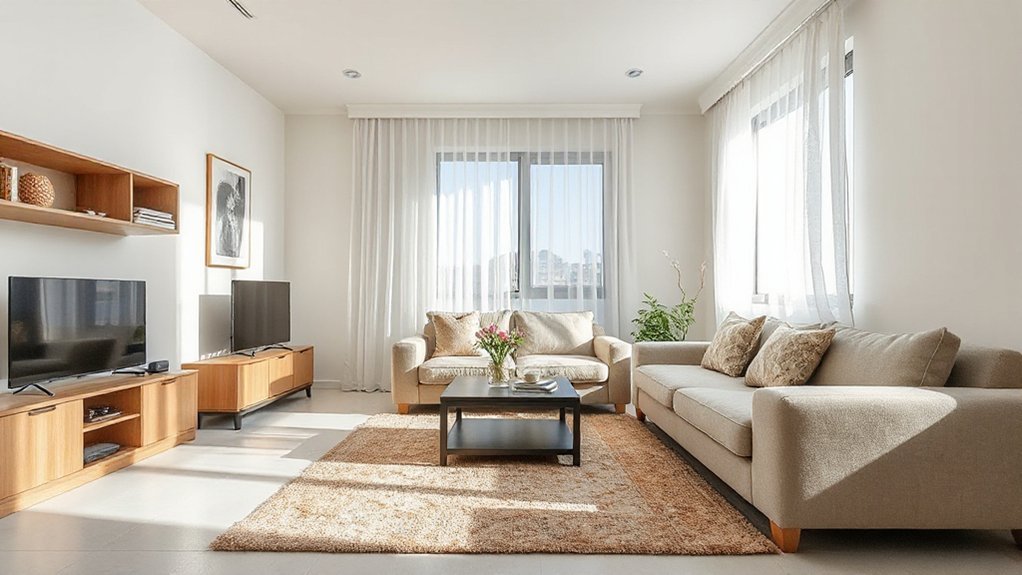
Imagine you swap bold borders for a pale palette and matte finishes, and your living room instantly feels airier. You’ll want smart storage that hides clutter and slim, built-in furniture to keep floors clear. Strategic lighting and mirrors can fool the eye into more space, while rugs define zones without walls. It’s a practical approach, but a few details may surprise you about balance and coherence—keep going to see how small tweaks add up.
Open up a Small Space With the Right Palette
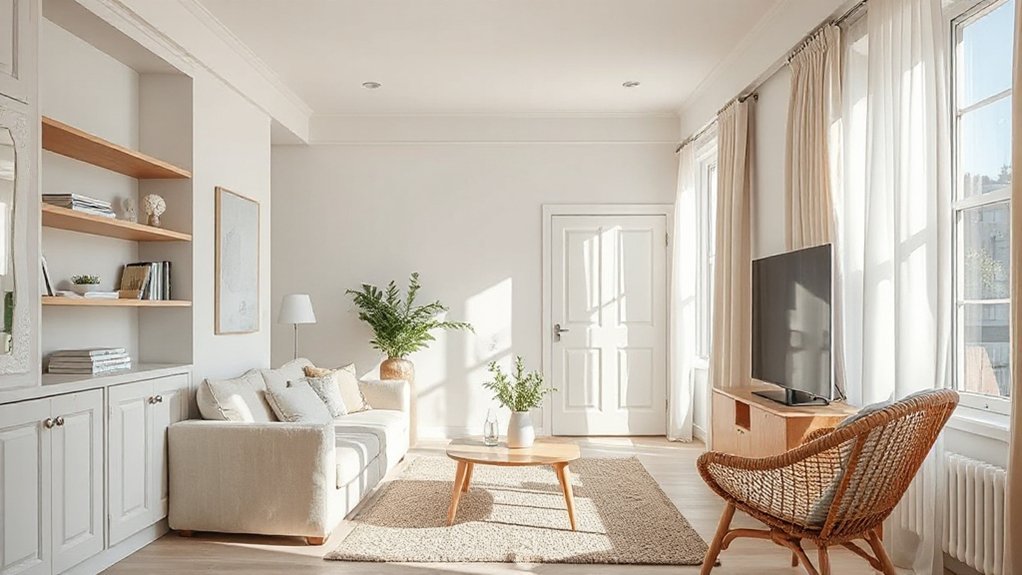
Bright, light colors reflect more of the room’s natural and artificial light, making a small space feel airy rather than cramped. You’ll choose a cohesive palette with low-contrast tones to avoid visual clutter and make walls recede.
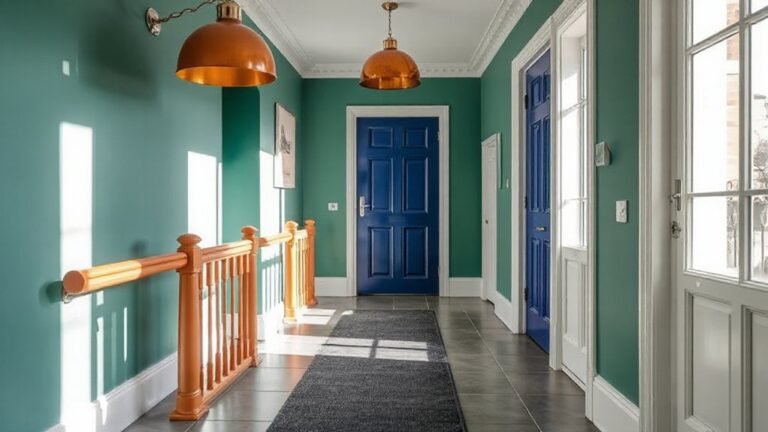
Use light neutrals on walls and ceiling to maximize brightness, then introduce accents sparingly to prevent fragmentation. Color contrast should be intentional: keep furniture within the same tonal family and reserve darker, focused elements for key points, such as a doorway or architectural feature, to guide the eye.
Ceiling height matters too; emphasize vertical lines with tall, slender shelving and elongated curtains to create the impression of more space.
Opt for matte finishes on large surfaces to minimize reflections, and test swatches in multiple lighting moments to confirm the open, calm feel.
Smart Storage That Frees Floor Space
Smart storage can drastically free floor space by moving items out of sight and into on-wall or hidden compartments. You optimize every inch by choosing furniture with built-in storage that serves dual purposes. Look for beds, sofas, and coffee tables with drawers or lift-top sections to conceal daily clutter.
Implement vertical storage to keep floors clear: wall-mounted shelves, tall bookcases, and peg boards draw the eye upward and create organized zones. Use hidden compartments in ottomans, chests, or bed bases to stash infrequently used items.
Keep accessories minimal and grouped, so storage doesn’t feel like clutter. Label or categorize contents for quick retrieval. Regularly reassess what truly needs to stay visible, and rotate items to maintain a calm, spacious feel.
Lighting That Makes Rooms Feel Bigger
You can instantly make a room feel bigger by brightening with mirrors that reflect light and space.
Use layered ambient lighting to eliminate deep shadows and create a cohesive glow, while sticking to white light to keep surfaces crisp.
Balance these elements to maximize perceived height and openness without glare.
Brighten With Mirrors
Mirrors bounce light around a room, making it feel brighter and more expansive. You leverage this by placing mirrors opposite windows to double natural light, or near a dark corner to erase shadows.
Choose wall mounted decor with mirrored glass or metallic frames for a sleek, space-enhancing effect. Keep edges clean and reflections uncluttered to avoid visual chaos.
Opt for vertical mirrors to stretch ceilings, or wider shapes to widen walls. Position mirrors to reflect daylight rather than harsh lamps, balancing ambient and task lighting.
Use multiple smaller mirrors instead of one large pane for flexibility and reduced weight. Incorporate strategic window placement in your plan, ensuring reflections don’t reveal clutter.
This approach preserves flow, enhances brightness, and preserves usable space.
Layered Ambient Lighting
Layered ambient lighting softens shadows and fills a space with depth, making a small room feel bigger without adding clutter. You’ll use a mix of sources at different heights: ceiling troughs or recessed cans, floor lamps, and wall sconces to create continuous, diffuse brightness.
Aim for a subtle ambient glow that balances task light without glare, preventing harsh edges. Combine dimmable fixtures and warm tones to preserve intimacy while expanding perception.
Place lights to illuminate corners and under-shelves, avoiding single-point radiance that narrows the room. Layer illumination with practical accents—under-cabinet strips or bedside uplights—that contribute to a cohesive atmosphere.
White Light Maximums
White light can make a space feel larger, so choosing the right maximums matters. You’ll optimize ceilings and walls by limiting glare and hot spots, using fixtures that distribute even, ambient brightness. Aim for a color temperature around 2700–3000K for a warm base, then raise to 3500K in work zones if needed, while avoiding harsh contrasts.
Use dimmers to adjust intensity from day to night, matching natural sunlight as it shifts. Keep luminaires compact and unobtrusive so they reflect off light-colored surfaces, enhancing perceived depth.
Favor minimalist decor with simple lines to prevent visual clutter, letting light do the lifting. Prioritize daylight design: large windows, sheer treatments, and strategic placement to maximize natural sunlight without overlighting.
Balance ceiling, wall, and task lighting for a cohesive, open-air effect.
Small-Space Furniture That Scales
When you’re dealing with limited floor space, choose furniture that scales to the room and serves multiple purposes. Small, modular pieces adapt as you rearrange, expanding usability without crowding sightlines. Look for multifunctional furniture that combines seating, storage, and surface area in one unit, so each item earns its keep.
Think sofa beds with built‑in drawers, coffee tables with hidden compartments, and tv consoles that conceal cables while offering extra shelves. Prioritize vertical storage to reclaim floor space; tall bookcases, wall-mounted hooks, and slim wardrobes draw the eye upward, creating airiness.
Opt for light finishes and legged bases to enhance perceived openness. Avoid bulky silhouettes, and measure before purchasing to ensure scale aligns with your room’s proportions and flow.
Define Zones Without Walls
You can define zones without walls by using light to separate areas.
Create tiny niches and color-coded boundaries to guide flow and function.
Keep choices simple and purposeful to make each space feel distinct yet cohesive.
Zone It With Light
To define zones without walls, use light to carve out distinct areas: brighter lighting signals the kitchen or work nook, while softer, warmer tones cue the living or relaxation zone. You create clear cues by layering light sources and focusing on function, not fixtures alone.
Start with ambient layering: evenly lit ceilings for general visibility, task lighting at desks and counters, and accented lights to highlight seating or displays. Use dimmers to adjust mood quickly, preventing harsh shifts.
Natural illumination matters: position work areas near windows and pair with sheer coverings to diffuse glare. Color temperature matters too; cooler tones boost alertness in chores, while warmer hues invite unwinding in lounges.
Test zones at different times, then refine placement to avoid cluttered shadows. This approach keeps spaces cohesive and visually expansive.
Define Tiny Niches
Tiny niches can define zones without walls by using strategic cues and smart placement. You separate functions with subtle shifts in depth, lighting, or texture, not borders. Create a hidden corner by tucking a narrow shelf into an alcove or under a sloped ceiling, turning it into a decorative niches display that signals a changeover rather than a barrier.
Use furniture offsets and area rugs to imply different zones without interrupting sight lines. Mount mirrors to expand perceived space and reflect activity across the room. Choose built-in storage that blends with walls, so it reads as architecture, not clutter.
Keep decorative accents cohesive—matching metals, woods, and tones unify disparate zones. The result: fluid, airy space that still feels organized and intentional.
Color-Coded Boundaries
Color-Coded Boundaries: use color as a subtle line between zones without walls. You label areas with color zones to define function without adding bulk. Choose two or three hues that contrast lightly with your base palette, so transition feels fluid rather than jarring.
Apply boundary markers—painted stripes, rugs, or furniture accents—along clear paths to guide movement and signal purpose. Use color to distinguish zones like living, dining, and work areas, then repeat the cue in lighting or textiles for cohesion.
Keep markers slim and centered to avoid crowding; avoid heavy patterns that shrink spaces. Test in daylight, adjust saturation, and guarantee accessibility.
This approach creates defined, flexible space with minimal footprint.
Finishing Touches for a Larger Feel
Even small finishing touches can make a big difference; you’ll notice the effect when you avoid clutter and choose purposeful accents. You choose wall art to steer focus and add depth without crowding floors. Opt for a compact gallery with uniform frames or a single statement piece above a sofa to create vertical height.
Decorative accents should echo a restrained palette, repeating a couple of colors to unify spaces. Place mirrors strategically to reflect light and widen a room, but avoid oversized panels that overwhelm.
Layer textures—soft throws, tactile cushions, a woven rug—to add warmth without bulk. Keep surfaces clear and organized, so every object earns its place.
Finish with subtle lighting and cohesive hardware for a polished, spacious feel.
Frequently Asked Questions
How Can Color Evoke Height in a Tiny Room?
Color psychology guides you: use light, cool tones to create perceived height, and reserve darker shades for accents. Choose shade selection carefully, balance with white ceilings, and avoid heavy patterns to make a tiny room feel taller.
What Mirror Placements Maximize Perceived Depth?
Placing a mirror opposite a doorway or along a long wall enhances depth. Use wall mounted art to reflect light, and position corner shelving diagonally to draw the eye inward, maximizing perceived space and visual continuity.
Can Ceiling Design Trick the Eye in Small Spaces?
Yes, ceiling design can trick the eye. Use ceiling illusions and bold lines to elongate rooms. You’ll create visual tricks by lighter tones up top, reflective surfaces, and subtle shading that widen perception without clutter.
Do Color Coatings Affect Acoustics in Compact Flats?
Color coatings can influence acoustics in compact flats. They affect sound absorption through material choices, textures, and finishes. Use lighter hues strategically; minimize harsh contrasts. Remember color psychology shapes perception, while practical materials optimize sound control for clearer, calmer spaces.
Which Small Details Dramatically Alter Spatial Perception?
Yes—small details dramatically alter spatial perception. You improve it with smart furniture arrangement and lighting techniques, keeping pathways clear, using multipurpose pieces, and choosing slender silhouettes to visually extend walls and amplify height.
Conclusion
You can cultivate calm and clarity, creating a deceptively spacious feel. Pick palettes that pop light, keep surfaces spotless, and push things upward with vertical storage. Pair practical, compact furniture with hidden compartments, and plan smart lighting that multi-tasks shadows and space. Define zones with rugs, not walls, and mirror-magic moments to multiply daylight. Maintain minimal margins, match modest motifs, and weave cohesive décor. With deliberate detail, you’ll stretch space, soothe sight, and savor serene, spacious living.
About the Author