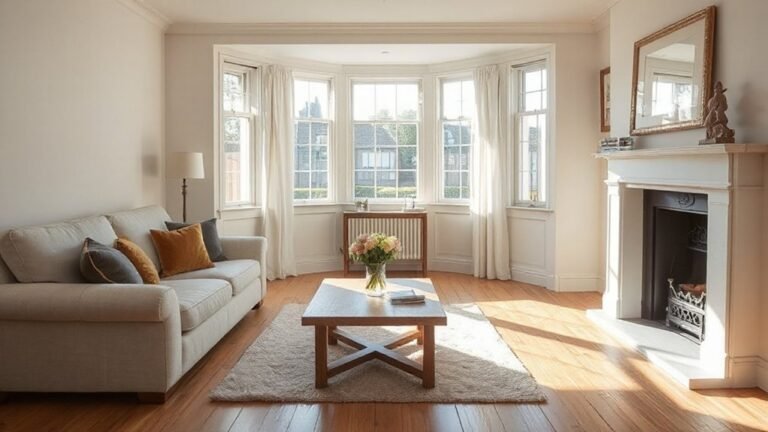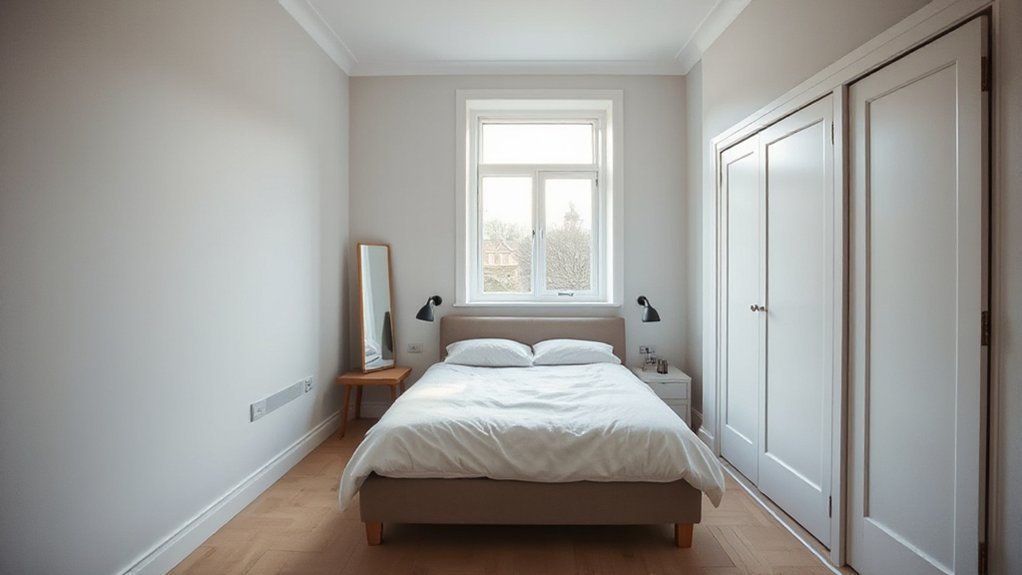
Did you know that the way you frame light can make a room feel twice as large? In a small UK bedroom, you’ll get the most impact by pairing sheer curtains with strategic mirrors and glass accents, while keeping walls pale and furniture slim. You’ll also want thoughtful layout and multi-functional pieces that don’t crowd the space. Curious what combo of color, light, and storage will actually open up your room? Let’s explore the approach.
Choose the Bed Height to Maximize Space
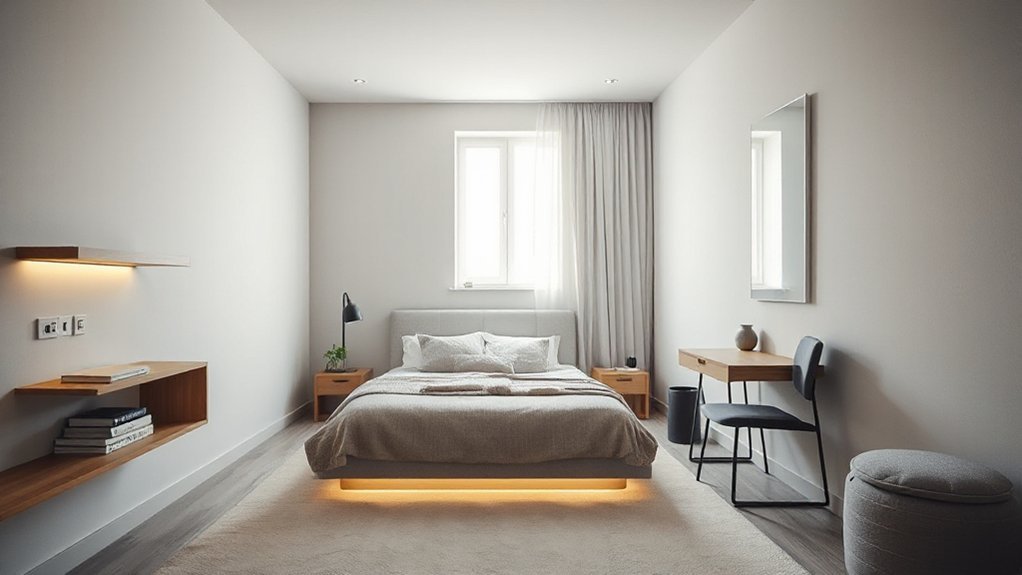
Choosing the right bed height can instantly free up feel of space. You’ll notice a cleaner silhouette when the bed sits at a thoughtful height, revealing more floor beneath.
Aim for a low to mid approach, so you don’t cast heavy shadows or trap dust under the frame. Consider your mattress height and how it pairs with bedframe styles to keep lines clean and proportional.
If you value storage, a platform or low-footprint frame preserves visual air, while a taller frame can echo ceiling height and echo color accents.
Keep colors subtle and cohesive to enhance openness.
Test with a tape measure: sleep surface, clearance, and accessibility, then choose a height that feels calm, practical, and balanced.
Rearrange for Better Flow in a Small UK Bedroom
If you rework the layout, you’ll improve traffic flow from room entry to everyday zones.
Align the path to the bed and main storage so you never thread through clutter.
Zone the sleep area and open space for movement, color cues guiding each function.
Optimize Traffic Flow
Rearranging for better flow in a small UK bedroom is all about clear pathways and accessible zones. You map traffic patterns first, noting where people walk without squeezing past furniture. Keep doorways and the bed aisle free of obstructions so movement feels effortless, not forced.
Prioritize simple furniture placement that creates open routes around the room rather than through it. Choose low-profile pieces with slim silhouettes to preserve sightlines and air, avoiding bulky wardrobes that trap momentum.
Place the bed away from the door when possible, aligning main pathways with natural steps you take daily. Use vertical storage to reduce floor clutter, and make certain switches and outlets are reachable from mattress level.
The result is calm, intuitive navigation that makes the space feel larger and more welcoming.
Zone The Sleeping Area
Center the bed in a clear, unobstructed zone that anchors the room’s flow. You’ll create calm by defining the sleeping area as a distinct, zoned space within the overall layout.
Place the bed so you can enter and exit smoothly, with bedside surfaces coordinating in a restrained color palette. Choose bed linen and a headboard in cool neutrals or soft pastels to keep the room feeling open.
Limit visual clutter on all surfaces to preserve depth and light. Use subtle lighting—one overhead and a pair of wall lamps—to emphasize the zone without overwhelming it.
Align furniture to the bed’s axis for symmetry, reinforcing the bed placement as the room’s quiet center. This approach creates zoned areas while maintaining a breathable, cohesive feel.
Lighten the Room: Colour and Surfaces That Feel Airier
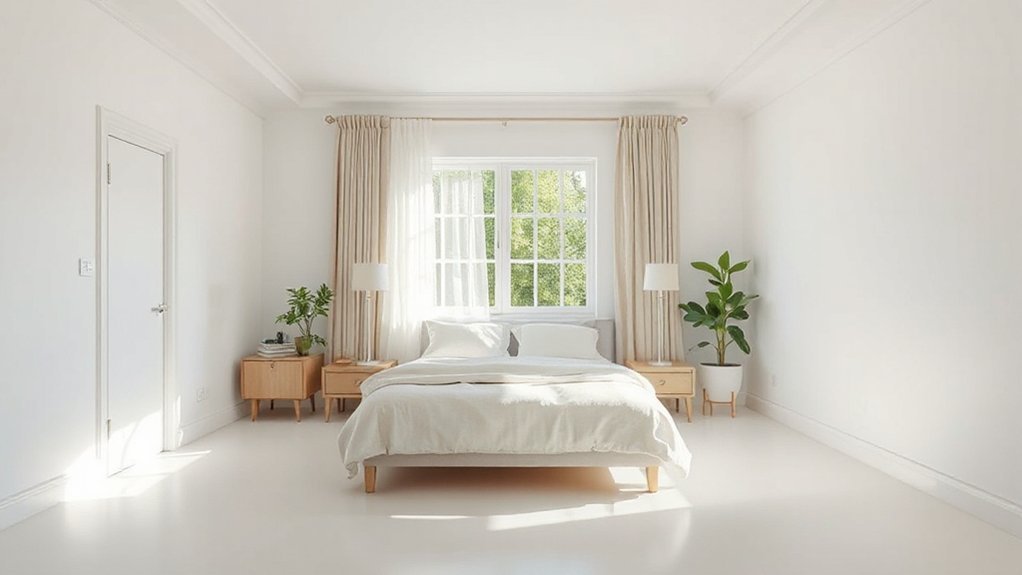
Lighten the room with pale walls, airy finishes, and reflective surfaces that bounce light around. You’ll feel more space when color is restrained, with soft neutrals as the base and cool whites for contrast.
Choose wall colors that read light in all moods; avoid heavy saturation that narrows sightlines. Wall textures should be subtle—think matt plaster, silk, or a fine linen sheeting finish—to add depth without weight.
Maximize window treatments to filter glare while keeping airiness; opt for light, sheer fabrics or narrow drapes that skim the top of windows.
Reflective surfaces matter: a glass or high-gloss bedside lamp, a mirrored tray, or polished timber accents amplify illumination.
Keep furniture legs visible and ceilings bright to maintain an open feel.
Storage Solutions That Free Up Floor Space
Maximize every inch with vertical and hidden storage that keeps the floor clear. You’ll reclaim space without clutter by choosing furniture that hides stuff and stacks efficiently.
Start with under bed storage to tuck seasonal clothing, shoes, or bulky linens out of sight yet within reach. Use low-profile bins or rolling drawers that slide quietly, keeping a clean line along the baseboard.
Integrate vertical shelving to draw the eye upward and store everyday items at arm’s reach, freeing surface surfaces for careful décor only. Opt modular units that adapt as your needs change, avoiding dead zones.
Favor light, uniform tones and matte finishes to keep the room feeling airy, organized, and calm while staying visually precise and intentional.
Illuminate With Natural and Artificial Light
Natural light should lead the room’s rhythm, with windowsished mornings and carefully placed mirrors guiding the gaze.
You optimize brightness by prioritizing window treatments that diffuse glare while preserving daylight. Choose sheer casings and light, neutral fabrics to soften without washing color.
When possible, position furniture to maximize sun reach, creating a luminous flow from window to opposite wall.
Artificial light should complement the scene, not overwhelm it; select light fixtures with clean lines and warm color temperatures for a cozy, true-to-tone palette.
Use layered layers of light—ambient, task, and accent—to adjust mood without clutter.
Keep cords hidden, and opt for integrated LED options that save space.
A restrained, color-aware approach delivers clarity and perceived room height.
Visual Depth: Mirrors, Panels, and Subtle Paneling
Mirrors do the heavy lifting here: place one opposite a window to bounce daylight deep into the room and create an illusion of more space.
You’ll amplify this effect with panels that read as architectural depth rather than decoration. Use frosted glass panels to blur boundaries softly, letting light pass while maintaining privacy and a clean line.
Integrate wall-mounted shelving as a slim vertical element; it draws the eye upward and keeps the floor clear, reinforcing a sense of openness.
Choose panels with matte finishes in cool neutrals to preserve brightness without glare. Keep frames minimal, color-matched to walls, so panels dissolve into the backdrop.
This combination subtly expands perceived size while supporting a calm, cohesive palette throughout your compact bedroom.
Multi-Functional Furniture for UK Rentals
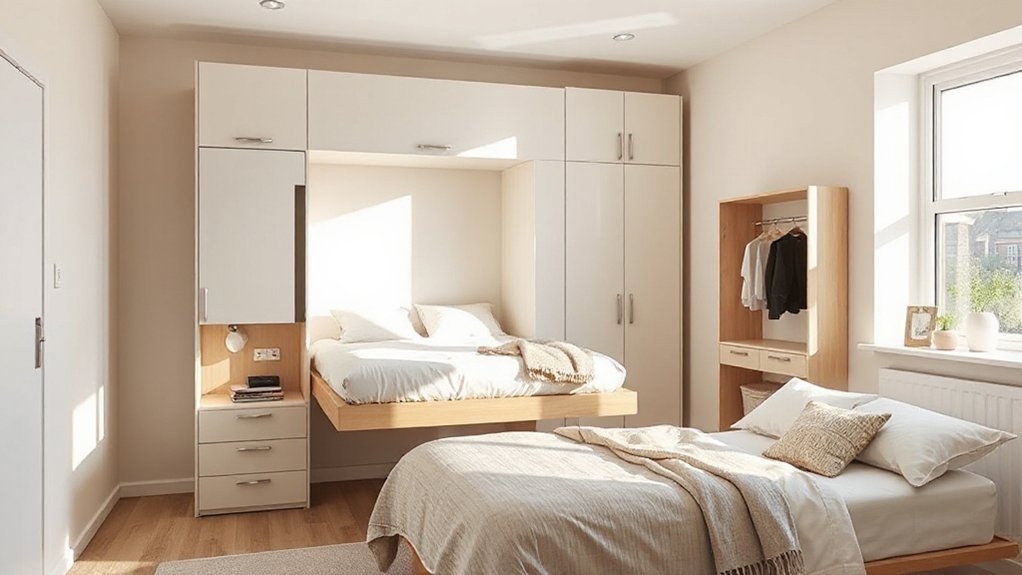
You’ll want furniture that toggles between living and storage without stealing space. Think sofa beds, folding desks, and stackable units that stay tidy with a quick rearrange.
Choose versatile pieces in calm tones to keep the room feeling airy and cohesive.
Multifunctional Space Savers
Multifunctional furniture is essential in UK rentals, where every square metre counts. You choose pieces that serve two roles: storage and display, seating and sleeping, or work and relaxation.
Opt for clean lines and muted tones to keep visual clutter at bay, allowing color accents to guide the eye rather than overpower the room. A platform bed with integrated drawers offers under bed storage, reducing wardrobe pressure while preserving floor space.
Custom headboards introduce personality without bulk, delivering a focal point that still reads as low profile. Consider a slim desk that folds away when not in use, or modular seating that reconfigures for guests.
Prioritize durability, easy maintenance, and a cohesive palette to maintain calm, open perception.
Flexible Living Essentials
In compact UK spaces, furniture that serves more than one role keeps rooms calm and usable. Flexible living essentials adapt to daily needs, letting you swap function without crowding. Choose pieces that combine storage with seating, or a bed frame that doubles as a desk.
Prioritize flexible furniture that hides clutter behind doors or drawers, revealing clean surfaces when you need them. Opt for light, neutral tones accented with color where it counts, so furniture reads as portable rather than permanent.
Aim for modular layouts: pieces that slide, fold, or stack to reframe a room in moments. Embrace smart storage that’s accessible yet unobtrusive, and select dual-purpose units for flexibility over time.
Your space stays organized, breathable, and ready for any use.
Finishing Touches: Texture, Art, and Colour Harmony
Texture, art, and color harmony are the finishing touches that seal the room’s mood. You tune the space with deliberate contrasts: a soft throw against a clean bed, a single bold pattern on a pillow, a restrained art piece.
Choose textured throws to add depth without crowding the visual field, keeping the palette cohesive. Limit bold patterns to one or two accents to preserve calmness and avoid visual noise.
The art should echo your duvet or curtain hues, reinforcing cohesion rather than competing for attention. Lighting matters: warm, ambient glow makes colors intimate and inviting.
Keep textures varied yet quiet—matte surfaces beside a subtle sheen—to create dimension without clutter. In sum, let texture, art, and color harmony guide restraint and clarity.
Frequently Asked Questions
How Can I Maximize Ceiling Height Perception in a Small Room?
To maximize ceiling height perception, use lighting techniques that cast upward glows and wall color choices in light neutrals. You’ll feel more vertical space as you reflect daylight, while keeping accents minimal and color-aware.
What Bed Frame Options Save the Most Floor Space?
Stack your bed with slim, wall-mounted options to save floor space. You’ll wonder how much you gain as you watch furniture arrangement and color coordination tighten the room’s feel, increasing openness and contrast with precise, minimalist calm.
Do Window Treatments Affect Room Perceived Size?
Yes, window treatments affect room size perception. You’ll gain more window light by choosing light, sheer fabrics, and keep curtain styles streamlined; avoid heavy drapes. Opt minimal, color-aware curtains that mirror walls to expand perceived space.
Can Smart Storage Under Stairs Help a Bedroom?
Under stair storage helps a bedroom by freeing floor space and concealing clutter. You’ll gain calm, hidden compartments, plus color-aware, minimalist organization. It’s practical: you use the space wisely, keeping walls open and visually larger.
Which Textures Make a Compact Room Feel Bigger?
Textures that feel bigger come from Decorative wall coverings and textured fabrics. You should choose light, reflective surfaces, subtle patterns, and cool tones, aligning with minimalist color awareness to create depth without clutter in a compact room.
Conclusion
Ready to transform your small UK bedroom? You’ve got the tools: light hues, sheer curtains, mirrors, and slim, multi-functional furniture that frees floor space. Maximise ceiling height, layer lighting, and keep clutter at bay. Colour and surfaces reflect brightness; textures add depth without heaviness. Will you embrace vertical storage and fluid layouts to create air and flow where there was little? Focus, simplify, and layer thoughtfully—your room will feel larger, calmer, and somehow more you.
About the Author