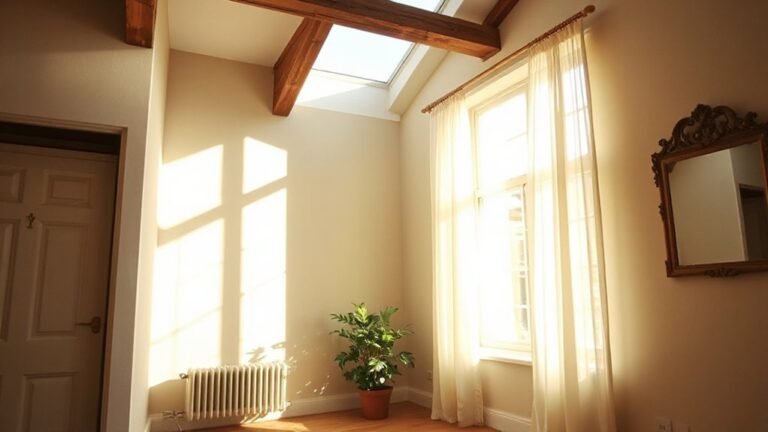
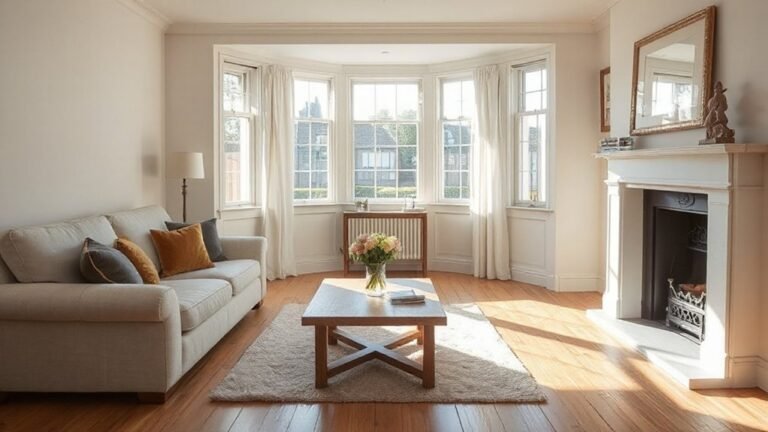
Like a quiet curtain slipping shut on a busy day, your window treatments frame privacy with intention. You’ll balance light, texture, and tone to shape a room that feels both calm and styled. Layering—sheer, shade, and solid—offers flexible control, while durable fabrics and hidden hardware keep the look clean and modern. Curious how to mix budget-friendly options with luxe details and still keep longevity in mind? Let’s explore the best choices for you.
Choose Window Treatments: Privacy, Light, and Style
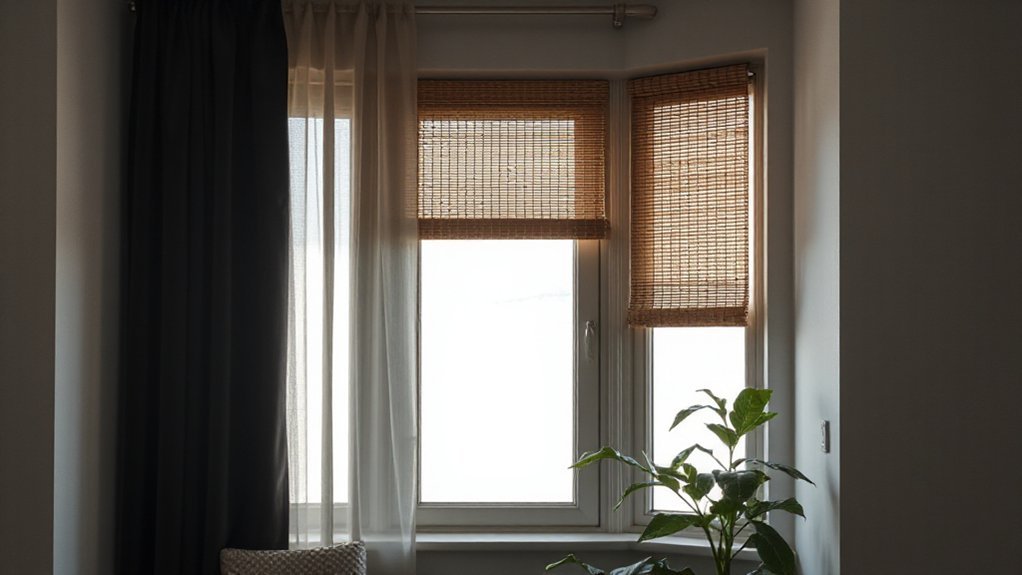
When choosing window treatments, balance privacy, light control, and style to suit every room’s mood and function. You weigh purpose and atmosphere before selecting fabrics, hardware, and installation.
Look at window size, orientation, and activity—do you read, cook, or entertain? Consider how daylight shifts through the day and how your choice affects glare and warmth.
Ground your decision in window treatment trends, then honor timelessness with nods to historical styles that resonate with your home’s character.
Opt for scalable solutions: adjustable louvers, layered sheers, or bold drapery panels that can flip from cozy to dramatic.
Keep hardware minimal for sleek modernism or decorative for vintage charm. You’ll create harmony by aligning texture, color, and scale with every room’s function.
Layering for Privacy: Sheer, Shade, and Solid Combos
Layering your privacy starts with a smart mix: sheer for light, shade for control, and solid panels for blocking more when you need it. You’ll balance translucence with texture, tuning each layer to suit the room and moment.
This approach gives you flexible light management and a cohesive, polished look.
Layering For Privacy
To maximize privacy without sacrificing light, combine a sheer layer with a shade and a solid drape to create flexible, customizable coverage. Layering this trio gives you control, letting daylight filter in when you want and retreating behind a denser screen when you need it.
You’ll tailor opacity by adjusting each component, preserving sightlines yet softening glare. Choose a sheer for ethereal diffusion, a fabric shade for versatile light modulation, and a solid drape for complete enclosure during quiet moments or movie nights.
Prioritize practical durability and easy care, then align with window treatment trends that favor coordinated palettes. Consider eco-friendly fabrics to boost sustainability without sacrificing style.
This approach equips you with adaptable privacy that remains elegant and timeless.
Sheer, Shade, Solid Mix
A smart mix of sheer, shade, and solid fabric gives you flexible privacy that still welcomes light. Layering with intentionality lets you tailor visibility: glassy sheers filter glare, shaded panels soften brightness, and solid drapes seal the view when you want total seclusion.
Use this trio to choreograph morning sun, midafternoon glow, and bedtime darkness without sacrificing style. Keep tones cohesive for a polished look, balancing opacity and transparency in harmony with your room’s palette.
Decorative window films can add a subtle, nonintrusive privacy layer that complements fabric combos rather than competing with them.
For a custom feel, select Custom curtain designs that mirror architectural lines and fabric textures, ensuring the mix remains purposeful, not decorative clutter. Your windows become adaptable, elegant focal points rather than fixed barriers.
Smart Window Light Control
Ever wondered how to tailor daylight and privacy with one smart move? You can orchestrate light like a conductor, pairing sheer diffusion, shade control, and solid blocks for precise ambience.
Smart lighting helps your room transition into day or night without a single manual adjustment. Automated shades respond to time, mood, or occupancy, dialing brightness up or down in seconds.
You’ll blend layers for flexible privacy while preserving views, using low-profile fabrics that soften glare and maintain color integrity. Schedule routines that mimic sun patterns, or trigger scenes with a tap, voice, or sensor.
The result is tailored clarity: instant glow for work, subdued hush for evenings, and consistent privacy without sacrificing style. Streamlined, intentional, and beautifully quiet.
Materials, Textures, and Color: Calm vs. Dramatic
Consider how a calm texture palette guides eyes with soft neutrals and subtle sheens, inviting quiet elegance without shouting.
Now contrast that with dramatic material contrasts—bold fabrics with tactile punch or unexpected sheen—to create focal moments and energy.
Which approach fits your space, mood, and need for privacy best, and how might you blend calm and drama for balance?
Calm Texture Palette
Calm textures and thoughtful materials create a serene backdrop, gently balancing light and shade to abuse no visual noise. You’ll notice how subtle weaves, matte weaves, and soft fibers work in quiet harmony, letting natural light breathe without distraction.
In this Calm Texture Palette, texture combinations matter more than bold patterns; they guide perception, not overwhelm it. Pair cottons with flax for a breathable, understated tactility, or blend abaca with linen for a muted grain that reads as warmth.
Color coordination stays refined: neutrals, pale ash, and cooled taupes keep you grounded, while small pops of misty blue or sage provide gentle contrast. Your goal is cohesive calm, not showy drama, so opt for restrained textures and purposeful layering.
Dramatic Material Contrast
Dramatic material contrast jolts a space from quiet to expressive, using tactile pairings that sharpen perception and weight to the foreground. You explore how alternating surfaces—velvet, linen, metal, wood—play off each other, creating a deliberate tension that guides the eye.
In practice, choose a calm base and introduce one bold material as a visual and tactile focal point, then let it repeat sparingly to sustain balance. Material pairing becomes an intentional dialogue, revealing how light interacts with texture and color.
Visual contrast emerges not just in hue, but in sheen, weave, and depth. Keep the pairing purposeful: a single dramatic element anchors the room, while complementary textures soften edges and preserve refined sophistication.
The result is privacy that feels thoughtfully curated, not crowded.
Mounting and Installation: Hidden Hardware, Seamless Look
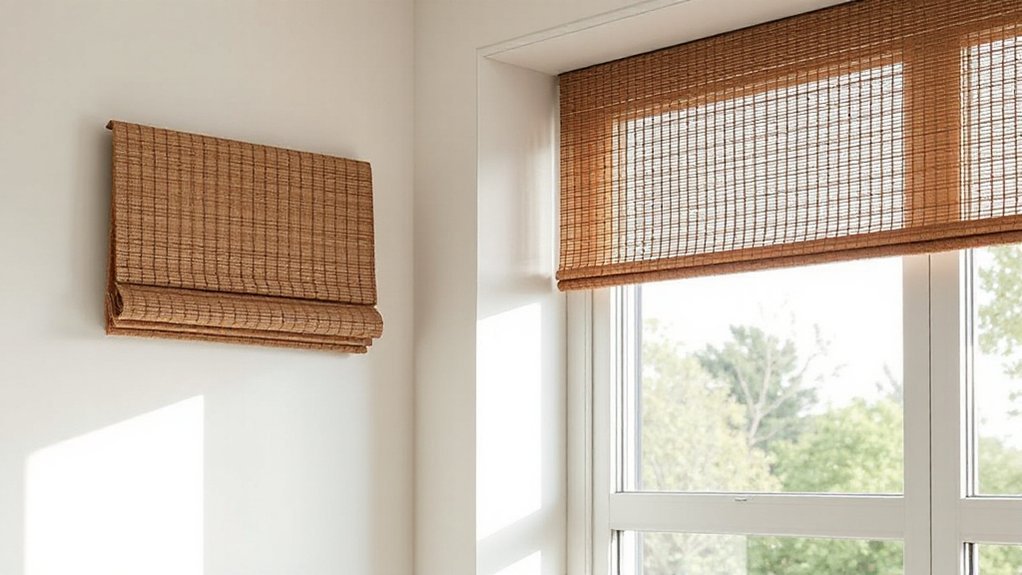
Mounting and installation lean toward invisibility: when hardware stays out of sight, the fabric floats with a clean, uninterrupted line. You’ll prioritize concealed mounting so brackets tuck neatly into walls or discreet tracks, preserving the fabric’s edge-to-edge silhouette.
Choose hardware that disappears against your window frame, so the treatment reads as one continuous plane. For a truly seamless installation, align roller or rod systems precisely, then test fabric movement to avoid snagging or sag.
Use recessed or ceiling-mounted solutions when possible, reducing visual clutter without compromising support. Sneak in smart mounting with minimal visible screws, and select color-matched components to vanish into the background.
The payoff is a refined, hotel-like look where the focus stays on texture, light, and form.
Budget-Friendly Privacy That Looks Luxe
Budget-friendly privacy that looks luxe begins with smart, affordable fabric choices and simple upgrades that elevate texture and depth. You can achieve a premium feel without a premium price by selecting woven textures, subtle sheen, and soft drapes that softly diffuse light.
Opt for neutral palettes with rich undertones, then layer panels for dimension and privacy, keeping hardware minimal to preserve elegance. Look to budget-friendly roller or roman shades with tight hems and clean lines to control glare while maintaining a tailored silhouette.
Incorporate eco-friendly fabrics whenever possible, like untreated cotton blends or recycled-poly blends, to honor sustainability without sacrificing luxury. Stay current with window treatment trends by mixing textures and finishes—matte metals, wood tones, and sheer overlays—to craft a luxe, affordable statement.
Measure, Fit, and Maintain for Longevity
Before you lift a finger, measure twice and plan once: accurate measurements are the backbone of a clean fit and long-lasting window treatments. You’ll guarantee precise mounting, balanced aesthetics, and fewer repairs later.
Start with window width, height, and depth, noting trim intrusions and hardware positions. Use a steel tape for exact numbers, and account for hardware clearances and overlapping fabric.
Fit isn’t just about size—it’s about tension and alignment. Choose compatible tracks, brackets, and supports to match your chosen material, and confirm that mounting surfaces are sturdy.
Develop a simple cleaning routine: gentle dusting, periodic spot cleaning, and light vacuuming to preserve sheen.
Prioritize material durability by selecting fibers and coatings designed for longevity, resisting fading and abrasion under daily use.
With careful measure, fit, and maintenance, your window treatments endure beautifully.
Roller, Roman, and Zebra Shades: Which Is Right for You?
Roller, Roman, and Zebra shades each offer distinct vibes and benefits, so picking the right one hinges on how you value light control, privacy, and style. You’ll choose based on how you want to filter daylight: rollers are clean and versatile, Romans add softness and texture, while Zebra shades balance light with view-through.
Consider fabric patterns and how they echo or contrast your decor, because texture and color shift the room’s mood. For privacy, you’ll assess opacity options—solid, semi-sheer, or room-darkening.
Window shapes matter too: rounded arches or tall, narrow panes may influence stacking and visibility. Your final decision blends function and aesthetics, ensuring the shade you select complements furniture, walls, and patterns without sacrificing practicality.
Frequently Asked Questions
How Do You Balance Privacy With Natural Light Throughout the Day?
Yes—balance light and privacy with smart light control, switching between sheer curtains for daytime brightness and opaque drapes as needed. Use layered Privacy solutions like adjustable blinds, while keeping sensors or timed shades for constant control.
Which Window Treatments Are Best for Allergy Sufferers?
You should choose allergy friendly fabrics and hypoallergenic materials for window treatments, because they minimize irritation and dust buildup. Opt for tight-weave textiles, cleaning-friendly blinds, and easily washable coverings to keep your space comfortably allergy-friendly.
Can Treatments Affect a Room’s Acoustic Comfort?
Sound insulation improves your room’s acoustic comfort; window treatments can curb noise and echo. Like a soft, absorbent curtain swallowing chatter, they cut noise reduction and reverberation, helping you enjoy calmer, clearer conversations and focused, peaceful spaces.
Do Children or Pets Influence Safe Privacy Options?
Yes, children and pets influence safe privacy options. You’ll opt for Childproof locks on cords and Pet safe fabrics, choosing cordless or motorized blinds, and sturdy, washable coverings to reduce hazards while preserving privacy and style.
How Often Should You Replace or Refresh Window Treatments for Longevity?
You should refresh window treatments every 3–7 years, give or take, to keep longevity. With exceptional material durability, you’ll notice fewer issues; schedule minimal maintenance frequency, and you’ll enjoy consistently stylish, privacy-rich views without frequent replacements.
Conclusion
You’ll finish with window treatments that feel effortless and luxe, like a quiet, tailored suit for your rooms. By layering sheers, shades, and solids, you’ll control privacy and light with ease while adding texture and depth. Choose durable, easy-care fabrics in calming tones—or go bold with tactile accents. Hidden hardware keeps lines clean, and smart options add modern convenience. Measure, install, and maintain carefully, and your spaces will look timeless, polished, and perfectly private, like a silhouette in motion.
About the Author