Think of bifold door projects as a quiet, regulated passage you must map carefully ahead of time. You stand to determine whether planning permission or permitted development rights apply, and you’ll assess building regulations for safety, thermal performance, and structural integrity. You’ll need to verify permits, coordinate stakeholders, and prepare the required documents before work begins. The consequences of missteps are not merely delays—they can require costly changes, so you’ll want to align closely with the rules from the outset.
Planning Permission Basics for Bifold Doors
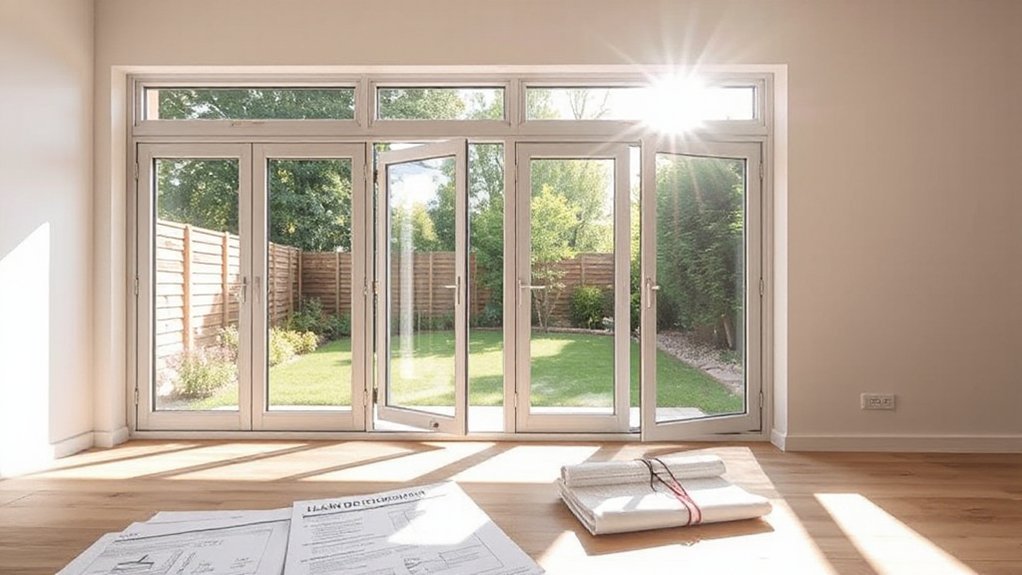
Planning permission for bifold doors depends on your location and the door’s size, configuration, and installation context. You assess whether you require consent, building notice, or permitted development rights before proceeding. Consult the local planning authority or a qualified planner to determine constraints, such as site boundaries, potential overhangs, and impact on neighbours. When evaluating options, consider Material options to balance performance, durability, and cost, and how these choices influence compliance with glazing area and structural provisions. Aesthetic considerations also matter, including alignment with existing architecture and any required conservation or listed-building safeguards. If your installation affects fire safety routes, access, or ventilation, document relevant details for approval. Prepare schematics, elevations, and product specifications to support your application.
Building Regulations You Must Meet for Bifold Doors
Building regulations set the minimum standards your bifold door installation must meet, covering structural integrity, thermal performance, weatherproofing, and fire safety. You must verify compliance with applicable UK or regional building codes, guaranteeing each element integrates with the building envelope and maintains overall safety.
- Material durability: Select components that withstand climate exposure, resist corrosion, and retain performance over the door’s lifecycle.
- Thermal performance and air tightness: Ensure appropriate U-values, solar gain control, and proven airtight seals to minimize heat loss.
- Aesthetic integration: Align frame profiles, glazing, and finishes with architectural intent and neighboring façades without compromising compliance.
Adhere to documented test results, installation instructions, and certification requirements to demonstrate continuous regulatory conformity.
When You Can Replace a Door Without Consent
You may replace a door without consent when the changes are cosmetic or minor, do not affect structural elements, and comply with applicable regulations. In this scenario, you’re evaluating whether the modification preserves the building’s character and weight-bearing capabilities. Historical styles should guide the selection of finishes and profiles to maintain visual coherence with surrounding façades, even when the change is internal. Material considerations matter: choose components whose dimensions, performance, and tolerances align with existing assemblies to avoid compromising safety or fire resistance. Confirm the alteration does not alter door thresholds, linings, or jambs in ways that affect ventilation, insulation, or occupancy. When in doubt, consult manufacturer specifications and verify that no building code or planning constraint is breached.
Do You Need Permission? How to Check Your Extension

Before proceeding with an extension, verify whether permission is required by checking applicable permits, planning codes, and local regulations. You must determine statutory thresholds, design constraints, and any heritage or conservation considerations that could affect approval. Assess how color coordination and material durability align with regulatory expectations to avoid later changes. You should also confirm setbacks, floor area limits, and notification requirements to prevent penalties or delays.
- Verify permits, planning codes, and local regulations for your project scope.
- Check thresholds, setbacks, and notification requirements relevant to your area.
- Confirm color coordination and material durability meet approved standards and guidelines.
Step-by-Step Plan Approval: Who to Notify, What to Submit, Timelines
To obtain plan approval efficiently, you must identify the officials and departments to notify, specify the documents to submit, and adhere to established timelines. You shall compile a complete submission package, including site plans, elevation drawings, and detailed specifications for bifold door installations. Guarantee material selection is documented, with product datasheets, certifications, and compliance statements. Verify heritage or conservation constraints where applicable, and attach evidence of aesthetic considerations aligning with local planning guidance. Submit a formal planning application or notification as required by your authority, accompanied by a proportional fee and a timetable for responses. Track amendments and clarify requests promptly to avoid delays. Maintain clear records of communications. Timeliness, accuracy, and adherence to guidance safeguard approval while respecting regulatory standards.
Designing Bifold Doors to Satisfy Fire and Safety Rules
You must consider fire-resistant finishes and safe egress design when configuring bifold doors to meet compliance. Guarantee finishes meet fire-rated performance and do not compromise smoke control or compartmentalization, and verify that egress paths remain unobstructed during operation. This initial assessment sets the baseline for meeting applicable fire and safety standards.
Fire-Resistant Finishes
Are fire-resistance requirements driving your design decisions for bifold doors? You must select fire resistant finishes and safety coatings that meet relevant standards and installation conditions. Guarantee product labels indicate tested performance, including fire rating, smoke development, and durability under door motion. Apply finishes compatible with hardware tolerances, frames, and facade materials to preserve seal integrity and labeling compliance. Document compliance steps for building records and inspections to avoid delays.
- Verify material compatibility with door hardware and seals.
- Confirm fire rating and installation instructions align with local regulations.
- Maintain durable, non-sagging coatings that resist impact and cleaning regimes.
Safe Egress Design
How can bifold doors be designed to guarantee safe, rapid egress while meeting fire and safety regulations? You should guarantee clear, unobstructed paths to exits, with doors that resist impact and do not obstruct egress during operation. Specify compliant hardware, including self-closing mechanisms and finger-protection features, to prevent accidental closures or injuries. Maintain accessible door apertures that align with applicable fire ratings and building codes, and provide clear signage and lighting for occupants. Consider door aesthetics in the context of safety, ensuring visuals do not impair visibility or introduce tripping hazards. Material durability is essential; select robust frames and tracks that withstand frequent use and environmental exposure. Integrate regular maintenance schedules to sustain performance, reducing failure risks during emergencies.
Permitted Development Routes and Official Exceptions
You’ll start by identifying the permitted development scope applicable to bifold door installations and how it constrains alterations to your property. Next, you’ll review official exceptions that may modify standard requirements and what evidence or approvals are needed. This opening sets the frame for a precise discussion of regulatory boundaries and compliant pathways.
Permitted Development Scope
Permitted Development Scope defines the boundaries within which bifold door installations may proceed without full planning permission, clarifying eligible routes, limits, and official exceptions. You assess whether your project falls under permitted development, ensuring compliance with size, location, and use criteria. This scope governs both residential and certain non-residential contexts, restricting extensions, materials, and installation height to protect local standards. You must consider interior aesthetics and material durability when choosing profiles and finishes, ensuring compatibility with existing facades. Adherence to documented routes avoids consent delays or enforcement actions. The following items summarize key elements you must verify before proceeding.
1) Route eligibility and permissible alterations
2) Size, height, and location limits
3) Official exceptions and documentation requirements
Official Exceptions Overview
Official Exceptions Overview: This section identifies the permitted development routes and official exceptions that govern bifold door installations, detailing when planning consent is not required and which criteria must be met. You assess applicability through site boundaries, dimensions, and materials, guaranteeing conformity with regulatory thresholds. Permitted development routes fluctuate by jurisdiction, including restrictions on vertical extensions, glazing area, and door configurations, which, if exceeded, trigger the need for planning permission. Official exceptions address built heritage, conservation areas, and special control zones, where additional conditions apply. Historic preservation and aesthetic considerations guide approval, balancing functional access with historic fabric sensitivity. You guarantee construction aligns with prescribed setbacks, daylighting, and fire safety standards, documenting compliance to avoid post-installation remediation. Where uncertainty persists, you seek formal guidance before proceeding.
Common Documents to Gather for Approvals
Before submitting approvals for bifold door installations, gather the essential documents that verify compliance with design, safety, and permitting standards. You will compile evidence demonstrating adherence to technical specifications, material quality, and structural impact. Prepare as well the documentation that supports regulatory review, including declarations of conformity and party-wall or planning notes as applicable. This corpus should enable evaluators to assess risks, guarantee fire and security provisions, and confirm correct installations. Include clear references to scope, dimensions, and workmanship. Material options and cost estimates must be documented in a transparent manner to facilitate comparison and budgeting. Ascertain all items are current, legible, and organized for rapid assessment.
- Design and technical drawings
- Structural and safety certifications
- Material options with cost estimates
Tracking Regulation Changes and Approval Timelines

Staying current with evolving building codes, design standards, and permitting requirements is essential; you should establish a systematic process to monitor updates, assess their impact on bifold door installations, and adjust project plans accordingly. Tracking regulation changes and approval timelines requires formal governance, clear responsibilities, and traceable records. Maintain a centralized regulatory log with publication dates, jurisdictional notes, and disposition statuses to guarantee timely responses. Regularly review amendments from planning authorities, building control, and safety regulators, prioritizing changes that affect material selection and installation methods. Align procurement and contract milestones to approval windows, avoiding overrun penalties. Document justification for deviations, where necessary,, and communicate promptly with stakeholders. Consider aesthetic considerations alongside compliance when selecting components, ensuring consistent design intent.
Pre-Installation Checklist to Avoid Delays
Before you begin installation, confirm that your Permit Review Checklist is complete and all approvals are current to prevent project holds. Make certain site access essentials—authorized personnel, entry timing, and secure work zones—are clearly defined and communicated to the crew. Align these elements with items on the Site Access Essentials to mitigate delays and maintain a compliant installation timeline.
Permit Review Checklist
To proceed with permit review efficiently, make sure you complete the Pre-Installation Checklist to avoid delays. This Permit Review Checklist guides you through compliance criteria, ensuring documentation aligns with Building Regs and planning requirements. You will address material selection and aesthetic considerations, confirming that chosen components meet performance and appearance standards. Adherence reduces review cycles and mitigates revision requests, preserving project timelines.
- Verify submitted drawings reflect accurate dimensions, hardware details, and material selections, with notes on aesthetic considerations.
- Include manufacturer specifications, test reports, and compliance certificates for all glazing, framing, and seals, ensuring conformity to applicable standards.
- Attach energy performance data and fire-safety documentation, plus any local authority approvals required for bifold systems and opened configurations.
Site Access Essentials
Site Access Essentials sets the groundwork for an on-schedule installation by ensuring contractor coordination, sufficient space, and unobstructed routes before work begins. You must confirm access permissions, delivery windows, and on-site safety procedures prior to any disturbance. Assess entry points to prevent door assemblies from colliding with walls or fixtures, and designate a dedicated staging area for materials to minimize disruption to interior aesthetics. Verify that floors, thresholds, and stairs are protected, and that hoists or lifting equipment comply with applicable regulations. Establish communications with the installation team, architect, and client representative to document contingency steps for weather or access delays. Emphasize material durability in the chosen components, ensuring alignment with project requirements and warranty obligations. Complete the checklist before permits finalization to avoid delays.
Frequently Asked Questions
Do I Need Planning Permission for Internal Bifold Doors?
Yes, you typically don’t need planning permission for internal bifold doors. However, you must comply with building regulations, and consider interior aesthetics and material choices to guarantee compliance and achieve your desired look.
Are There Height Restrictions for Bifold Door Installations?
Yes, you must meet door height standards in installations, adhering to installation guidelines. You should verify precise measurements with local regulations, ensuring compliance with fixed minimums and any doorway-specific exceptions, documenting deviations and seeking approvals where necessary.
What Fire Safety Standards Apply to Exterior Bifold Doors?
Exterior bifold doors must comply with fire safety regulations and exterior door standards. You should guarantee rated fire resistance, proper smoke/thermal seals, and emergency egress accessibility, while adhering to applicable building codes and manufacturer installation instructions.
How Do Windows and Extensions Affect Permitted Development Rights?
Windows and extension changes can affect your permitted development rights; you must review window regulations and extension permissions for your area to guarantee compliance before planning any work. You may require prior approval or notifications depending on specifics.
Can I Install Without Notifying Neighbors or Authorities?
You cannot install without neighbor notifications and adhering to building regulations; you must notify neighbors where required and obtain approvals as applicable, ensuring compliance with statutory obligations and local planning guidelines before proceeding.
Conclusion
In conclusion, you must verify planning permission and building regulations before installing bifold doors, ensuring compliance with location, size, and structural requirements. Confirm permits, notify relevant authorities, and compile necessary documents to prevent delays. Use a stepwise plan submission timeline and stay abreast of any regulatory changes that affect your project. An illustrative figure: homes with updated bifold installations report a 22% reduction in post-installation compliance issues when permits and regs are followed diligently.
About the Author