You may not realize that many 1930s bricks and plaster can breathe yet still trap moisture if the cavity isn’t properly ventilated. As you consider retrofitting, you’ll weigh wall integrity, moisture risks, and heritage constraints before any fill. The choice of materials matters for reversibility and breathability, especially at junctions and external detailing. Stay focused on long-term performance, then anticipate how this approach affects comfort, drafts, and maintenance—and what to verify before you commit.
Is Cavity Insulation Right for a 1930s Home?

Cavity insulation can reduce heat loss in many 1930s homes, but its suitability depends on wall construction and condition. You assess wall thickness, mortar joints, and existing plaster versus hollow cores, recognizing that retrofit options vary by cavity width and brick type. If the shell shows signs of moisture, rot, or efflorescence, address these issues before any insulation decision. Exterior paint can inform substrate condition, while landscaping design influences moisture management and foundation exposure, both affecting long-term performance. You should determine whether a true cavity exists and remains open, or if mortar-filled or solid walls predominate. In many cases, a controlled pipe or blower-based test clarifies air paths. Based on findings, decide if insulation aligns with energy goals, ventilation needs, and seasonal comfort targets.
Assess Plaster and Wall Integrity Before Insulating
Assess plaster and wall integrity before insulating by first verifying that the exterior and interior plaster are sound. You’ll inspect for delamination, cracking, and damp-induced damage that could compromise retrofit performance. Document visible movements at joints, corners, and around openings, noting patterns that suggest structural concern rather than cosmetic flaws. Tap tests and moisture meters help distinguish benign hairline cracks from active deterioration. Assess the condition of exterior rendering as a substrate for insulation, checking for loose render, efflorescence, or bulging areas that indicate water ingress. Review interior finishes for signs of damp staining, spalling, or gypsum board distress near old plaster. Address defects or moisture sources prior to insulation to preserve thermal gains and avoid trapped moisture that can undermine long-term wall integrity.
Decide If Insulation Can Keep Walls Breathable
To determine if insulation can keep the walls breathable, evaluate how the chosen insulation interacts with existing moisture pathways and vapor control layers. You assess the permeability of the insulation relative to interior finishes and the exterior cladding, making certain no unintended moisture stagnation. Verify that vapor retarders or barriers align with climate, wall assembly, and likely condensation zones, preventing trapped moisture behind finishes. Consider capillary action within masonry joints and the role of drainage gaps, making sure an unobstructed path for humidity to evacuate. Analyze temperature gradients to avoid cold bridges that could drive condensation. Document material compatibility with interior finishes and exterior cladding, confirming long-term performance and maintenance needs. Ensure testing supports breathable behavior without compromising structural integrity or insulation effectiveness.
Heritage-Friendly Insulation Options for Brick and Plaster

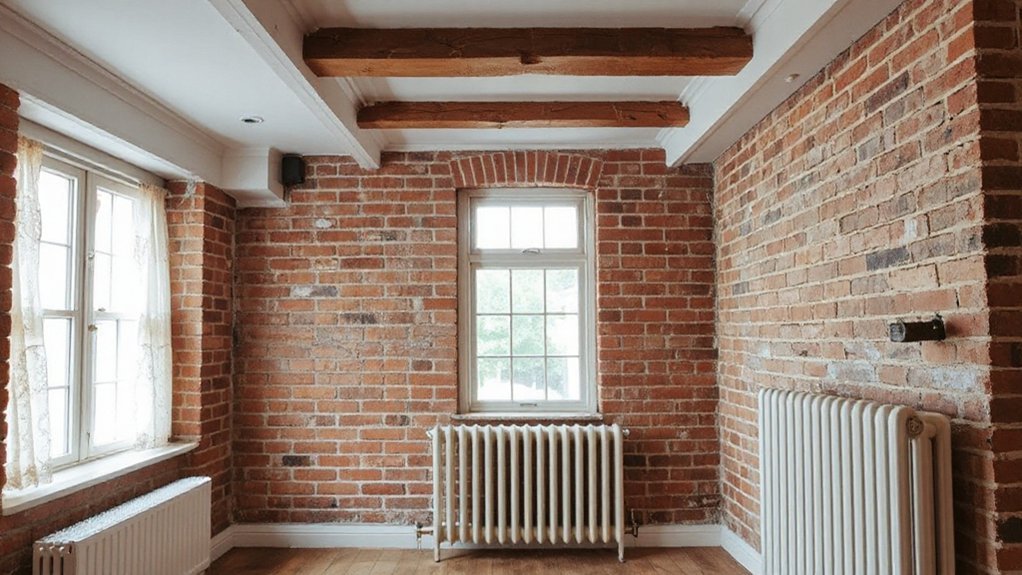
Heritage-friendly insulation for brick and plaster focuses on preserving historic fabric while improving thermal performance. You evaluate options for brick and lime-plaster assemblies that minimize disruption to original textures and structural features. You prioritize breathable materials and assemblies that respect historical workmanship, avoiding rigid, moisture-trapping systems. Choose insulation approaches with proven compatibility to lime-putty, cementitious plaster, and limecrete substrates, reducing risk of delamination, salt migration, or capillary rise. You compare fiberboard, open-cell mineral wool, and specially formulated breathable mineral products, appraising installation adjacencies, joint details, and fixing methods that don’t compromise plaster keys or brickwork depths. You document material compatibility and long-term performance, aligning choices with heritage preservation goals while achieving measurable thermal gains and serviceability.
Manage Damp and Moisture Risks During Retrofit
You should assess moisture pathways and set baseline drying rates before installing cavity insulation. Coordinate ventilation improvements with drying potential to prevent trap moisture and mold growth. Prioritize moisture management strategies that maintain predictable air exchange while preserving thermal performance.
Moisture Management Strategies
Moisture management during retrofit centers on identifying and controlling damp risks that can arise when external moisture is altered by insulation changes. You assess existing moisture sources, drainage patterns, and surface condensation potential, then implement targeted controls that preserve indoor comfort and structural integrity. Priorities include reducing condensation on cold surfaces and minimizing thermal bridging to limit dew point shifts that drive damp. You monitor moisture pathways, anticipate latent humidity changes from tighter envelopes, and verify performance through measurements and follow-up checks. Effective strategies protect indoor air quality and preserve timber elements, brickwork, and plaster from deterioration caused by moisture cycling. Plan for gradual acclimation of assemblies and document deviations from baseline conditions to support ongoing durability.
- Identify moisture sources and drainage paths early
- Mitigate thermal bridging to reduce dew point shifts
- Align controls with indoor air quality goals
Ventilation and Drying Rates
Ventilation and drying rates determine how retrofit changes affect damp risk, so you must quantify how air exchange and surface drying respond to added insulation and altered airtightness. You assess air changes per hour (ACH) with the installed insulation materials and quantify how reduced thermal bridges shifts surface temperature, affecting surface drying potential. Measure ventilation effectiveness under occupancy and weather variability; use orifice or tracer gas methods to establish baseline and post-retrofit rates. Consider that thermal transfer is reduced by insulation materials, yet seal integrity can impede moisture exit from walls, increasing interstitial moisture risk if ventilation is insufficient. Track surface moisture over time, using calibrated hygrometers, to confirm that improved insulation does not suppress drying cycles. Document thresholds for acceptable damp risk and maintain targeted humidity control strategies.
Best Practices for Installing in Period Homes
You must balance historic fabric integrity with updated insulation standards, prioritizing materials and techniques that accommodate original masonry and timberwork. Address moisture risk by tailoring installation technique adaptations to the house’s construction era, detailing ventilation, air sealing, and cavity behavior. Consider preservation priorities alongside moisture management, ensuring any retrofit respects historic fabric while enabling effective performance.
Historic Fabric Considerations
Careful assessment of historic fabric is essential before retrofitting 1930s cavity walls; you must identify wall construction, bonding, and porous materials to determine compatible insulation approaches. In practice, you evaluate plaster types, lime/cement mortars, brick bond gaps, and timber framing where present, ensuring interventions respect structural logic and reversibility. Prioritize Historical preservation and aesthetic compatibility by choosing materials and finishes that harmonize with original aesthetics and patina. Document existing defects and historical significance to guide decisions and approvals. Use non-invasive tests to confirm moisture status and carbonation risk before any install. Maintain ventilation pathways behind finishes where feasible and select breathable, compatible products.
- Assess construction logic and bonding for compatibility
- Prioritize reversible, breathable materials that respect fabric
- Align with historical preservation goals and site aesthetics
Moisture Risk Management
Moisture risk management for installing cavity wall insulation in period homes requires a disciplined, proactive approach: assess and control moisture sources at every stage, from exterior weather exposure to interior hygroscopic dynamics, before, during, and after retrofit. You identify external envelope defects, capillary rise, and condensation pathways, then implement targeted controls. Use diagnostic tests to map moisture transport, ensuring chosen insulation materials tolerate exposure without moisture accumulation. Prioritize continuous drainage, proper flashing, and airtight but breathable detailing to balance vapor diffusion with ventilation. Address thermal bridging near lintels and studs, minimizing cold bridges that drive condensation. Select materials with proven hygrothermal performance and low capillary conductance, verify installation with seal integrity checks, and plan for post‑retrofit moisture monitoring to confirm stabilization.
Installation Technique Adaptations
When retrofitting cavity walls in period houses, install techniques must respect historic fabric while guaranteeing performance. You’ll prioritize compatibility with original masonry, minimize disturbance, and verify cavity integrity before any fill. Use retrofit methods that preserve exterior finishing and avoid visible alterations that erode historical accuracy. Select sealants and insulation with low vapor permeability when appropriate, and document junctions to support future maintenance. Conduct leak testing after installation and ensure signage aligns with building regulations. Keep workmanship tight around quoins, cornices, and reveals to maintain historical accuracy. Coordinate with plaster or render contractors to prevent trapping moisture. Materials, workmanship, and detailing should reflect period aesthetics while delivering energy savings and long-term durability.
- Exterior finishing compatibility and safeguarding historical accuracy
- Targeted cavity inspection and controlled installation sequencing
- Documentation and inspection criteria for performance and provenance
How Cavity Insulation Changes Comfort and Drafts
Cavity insulation changes comfort and drafts by reducing convective heat losses through the wall cavity, which lowers heat transfer and stabilizes indoor temperatures. You’ll notice fewer cold spots near internal walls and more uniform surface temperatures, especially during non-peak heating periods. The reduction in draft intensity occurs as circulating air within the cavity slows, diminishing cross-ventilation paths that drive heat loss. Thermal mass effects remain largely unchanged; the key benefit is improved perimeter efficiency of your heating system. Color choices and aesthetic considerations influence the perceived warmth of a room, so select finishes and trims that complement the new thermal profile without compromising insulation performance. Maintain ventilation strategy separately, focusing on occupant comfort, not blanket air sealing.
Controlling Air Leakage After Retrofit
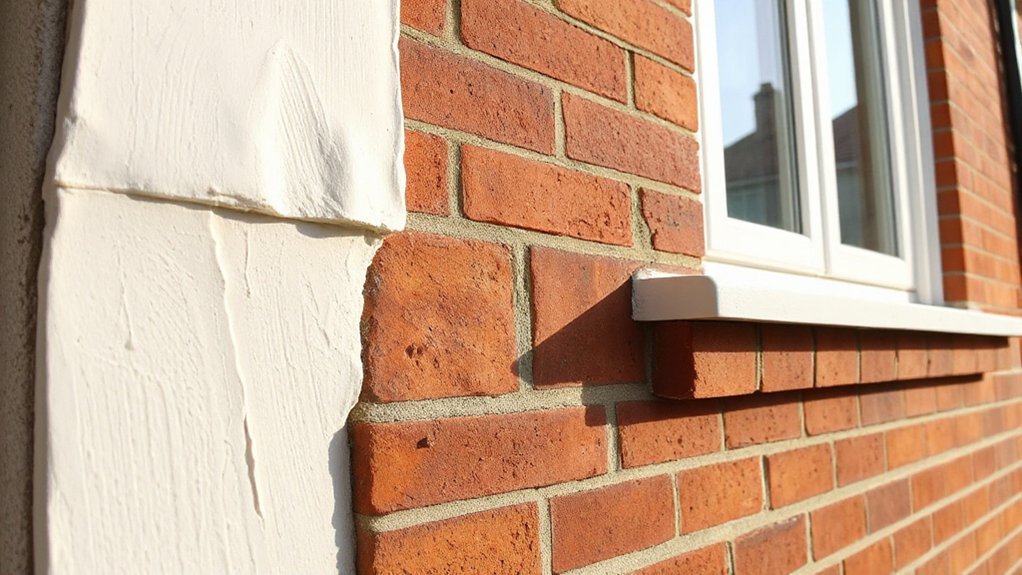
Air sealing after retrofit targets the critical leakage points to preserve insulation performance. You’ll identify air-sealing after retrofit, map air leakage critical points, and align ventilation balance adjustments with the new envelope. This discussion sets objectives for targeted sealing, measured improvements in airtightness, and appropriate ventilation changes to maintain indoor air quality.
Air-Sealing After Retrofit
Effective air sealing after retrofit targets remaining leakage paths to guarantee the insulated shell performs as designed. You’ll focus on securing joints, penetrations, and progressions without compromising ventilation needs. Use compatible insulation materials and detailing to close gaps around outlets, pipes, and cables, preventing thermal bridging from undermining performance. Inspect and seal cavity edges at window and door bucks, and treat the sill line to minimize convection loops. Avoid over-compaction that degrades material performance; assure seals tolerate movement and humidity. Validate airtightness with measurement, then document locations for future maintenance. Maintain a balance between airtightness and breathable vapor control to prevent moisture buildup.
- Target critical junctions and penetrations for seals
- Check compatibility of insulation materials with existing assemblies
- Verify sustained airtightness and moisture control over time
Air Leakage Critical Points
To minimize drafts after retrofit, focus on the critical leakage points that most undermine performance. You must verify envelope continuity at mid-wall junctions, window and door perimeters, and traditional mortar joints, since these areas commonly bypass dense cavity fills. Prioritize penetrations for services (pipes, cables, flues) and any historic chimneys or flue spaces that may create short-circuit paths. Pay attention to band joists and floor-to-wall interfaces where thermal bridging intensifies heat loss and condensation risk, compromising indoor air quality. Seal gaps with compatible materials that won’t degrade insulation performance, and test air leakage rates before and after sealing. Document leakage paths and maintain service accessibility; a targeted, data-driven approach yields durable improvements without introducing inadvertent moisture or comfort issues.
Ventilation Balance Adjustments
After retrofitting, balance ventilation becomes essential to manage air leakage without compromising comfort or moisture control. You’ll fine-tune air paths to keep indoor air quality high while preventing condensation risk, using controlled supply and exhaust adjustments based on the retrofit scope. Monitor pressure differences, and set balanced flows to minimize drafts and heat loss, yet maintain adequate fresh air. Prioritize systems that respond to occupancy and humidity, not just static rates, to sustain thermal comfort across rooms. Use air leakage tests and temporary seals to verify performance before final sealing. Document changes for future maintenance and occupant awareness.
- Target balanced ventilation rates aligned with indoor air quality and thermal comfort
- Verify with pressure tests; adjust supply/exhaust under real-use conditions
- Avoid over-sealing; leave controlled leakage paths for moisture management
Compliance, Warranties, and Professional Qualifications
Compliance, warranties, and professional qualifications are essential to guarantee safe, effective cavity wall insulation retrofits for 1930s houses. You engage certified installers who follow recognized standards, assuring documented methods for material selection, installation sequencing, and defect remediation. Warranties cover workmanship and product performance, with defined warranty periods and conditions for triggering claims. You verify contractor accreditations, insurance coverage, and adherence to local building regulations to mitigate liability and guarantee traceability. Detailed project specifications establish permissible insulation materials, compatibility with existing masonry, and measures to manage thermal bridging. You assess installer competency through evidence of training, field supervision, and quality control checks. You consider energy efficiency implications, guaranteeing performance testing, post-installation inspections, and clear communication of limitations. This disciplined approach minimizes risk and supports durable, compliant results.
Maintaining Retrofitted Cavity Walls for Longevity
Even with a proper retrofit in place, ongoing maintenance is essential to guarantee cavity walls perform as intended and remain durable over time. You should implement a routine inspection schedule to detect moisture ingress, gaps, and thermal bridging early, preventing costly damage. Regularly test for air tightness and verify that venting and drainage are functioning, especially around eaves and window penetrations. Address any signs of damp, mold, or brickwork deterioration promptly to protect historical preservation goals and assure long-term performance without compromising aesthetic integration. Document changes and align upkeep with material compatibility to avoid unintended reactions with insulation or plaster.
- Schedule biannual inspections focusing on moisture, gaps, and drainage
- Repair promptly, prioritizing materials compatible with historic preservation and aesthetic integration
- Maintain records to track performance and guide future retrofits
Frequently Asked Questions
How Long Can Cavity Insulation Last in 1930S Walls?
You can expect cavity insulation in 1930s walls to last decades, but its life hinges on moisture control and thermal performance; if moisture intrudes, insulation degrades, reducing effectiveness and requiring assessment or retrofit sooner than typical, maybe 20–40 years.
Are There Color or Finish Implications After Retrofitting?
Yes, you’ll see paint finish and color options change slightly after retrofit, and you’ll optimize them by preparing surfaces, selecting breathable finishes, and testing samples—consistent, precise, pragmatic, and aligned with measured, parallel steps.
Can Retrofit Affect Wall Sound Transmission Differently?
Yes, retrofit can affect wall sound transmission differently. You’ll notice soundproofing improvements with denser insulation and seals, improving acoustic performance, especially for air gaps. You should anticipate altered transmission paths, and verify with practical, field-tested measurements.
Which Trades Should Inspect Cavities During Retrofit?
You should have qualified trades perform cavity inspections, focusing on Cavity inspection techniques and ensuring Trade qualifications requirements are met. You’ll coordinate structural, damp proofing, and insulation specialists, verifying access, integrity, and potential moisture risks throughout the retrofit process.
Do Insurers Require Specific Cavity Insulation Standards?
Insurers don’t mandate universal standards; coverage depends on your policy. Validate that insulation complies with current safety regulations, manufacturer specs, and installation guidelines to avoid voided claims and guarantee adequate Insurance coverage.
Conclusion
You’ve weighed wall integrity, breathability, and heritage needs, and chosen a cavity retrofit that’s reversible and moisture-conscious. The theory that “more insulation always beats damp risk” isn’t universal: if you trap moisture or ignore junction details, you undo gains. Your best path blends breathable materials, careful detailing at edges, and ongoing testing. With professional guidance, you’ll improve comfort and prevent cold bridges while preserving character—then monitor performance to sustain long-term durability.
About the Author