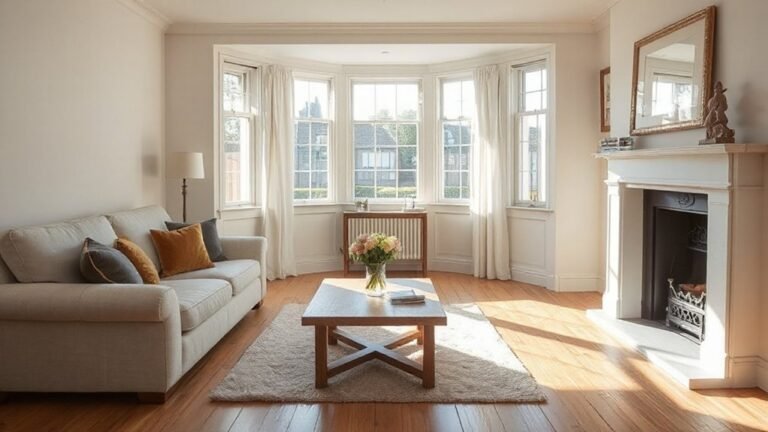
You step into a room that feels like sea air and stillness, then notice the grit of weathered boards beneath soft whites. You’ll shape a calm palette of sandy neutrals with muted blues, layering linen textures and gauze drapes to catch the breeze. You’ll weave driftwood, shells, and coastal art into durable, low-maintenance finishes that stand up to humidity. Keep shaping the space, and you’ll discover how much more there is to explore beyond the surface.
What Defines a Coastal Interior? Core Criteria

Coastal interiors center on a sense of place—light, air, and a touch of sea-salt texture that feels effortless rather than fussy. You’re defining a coastal interior by intent: seaside architecture that emphasizes clean lines, natural textures, and generous daylight. You’ll notice how Seaside architecture guides scale, proportion, and horizon views, while your palette stays anchored in soft whites, stone, and muted blues. Coastal flora appears in crafted details—woven grasses, driftwood accents, and low-maintenance greenery that thrives in bright rooms. Function follows form: open sightlines, humid-friendly textiles, and practical storage that keep spaces organized without shouting. You align objects with the coast’s rhythm—calm, curated, and tactile—ensuring every element reads like a shoreline breeze rather than a staged vignette.
Choose Salt-Toned Finishes for Coastal Interiors
To evoke salt-tinted shores, start with finishes that read as sun-washed and seaworthy: driftwood neutrals, sea-glass greens, and sandy stone that soften architectural lines. Choose salt-toned surfaces you’ll live with daily, focusing on undertones that harmonize rather than shout. Salt finishes lean toward matte or low-sheen, preserving coastal calm while resisting glare. Introduce mineral textures—soft plaster, tadelakt-like plasters, or brushed concretes—to add depth without heaviness. Pair these with ceramics in pale blues, ivory, and oyster hues to mirror foamy crests. Consider concrete-look walls as a neutral canvas, then layer with textiles in subtle grays and sea-green accents. Balance gloss-free finishes with textured fabrics for tactile interest, ensuring every element reads cohesive, fresh, and beach-inspired.
Bring in Weathered Wood and Natural Textures
Weathered wood brings instant warmth and a sense of timeless calm, so layer it in where it reads as sun-bleached and seaworn. You’ll notice the grain’s character, not just its color, guiding how you pair it with coastal tones. Choose weathered wood for tabletops, shelving, and trim accents to anchor the room without overpowering the view. Introduce natural textures through woven rugs, sisal mats, and jute wall panels that echo shoreline fibers. Keep a light, airy palette—stone, dove gray, and pale blue—to let the wood breathe. Balance tactile variety by mixing smooth varnish with rough-hewn surfaces, ensuring contrast feels intentional. Avoid heavy, glossy finishes; instead, celebrate matte, sun-faded tones. Weathered wood, natural textures; these elements create depth, warmth, and a cohesive coastal rhythm.
Layer Breezy Fabrics to Create Airy Rooms
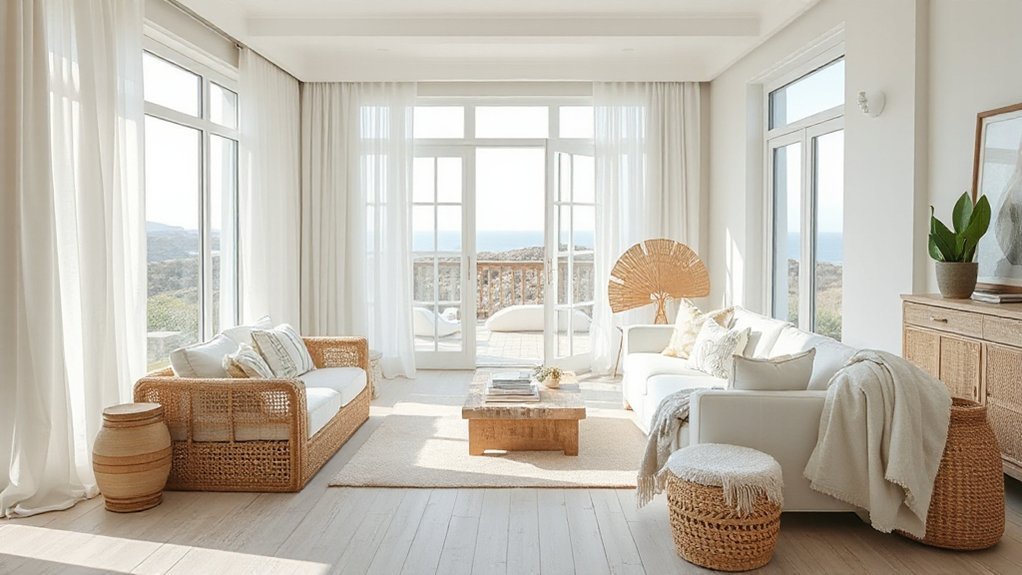
Layer breezy fabrics to softly filter light and create airier rooms. You’ll layer sheer drapes with lighter-weight textiles to add texture and movement while keeping colors coastal and crisp. This approach highlights airy room textures and light-filtering materials that feel fresh, bright, and inviting.
Breezy Fabric Layers
Sunlight spills softly through sheer curtains, and you can feel the breeze weave through light, breathable fabrics to create an airier room. Breezy fabric layers let coastal light diffuse gently, while you keep color in check with crisp whites, seafoam, and sand tones. Pair gauze panels with cotton-blend drapes to soften glare without dulling the view. The layering invites movement, texture, and a sense of open space, perfect for a seaside-influenced retreat.
- Seaside inspired patterns on pillows or throws for focal pops
- Marine themed artwork that anchors the palette
- Lightweight curtains paired with sheer panels for depth and flow
Airy Room Textures
Toss in airy textures by layering breezy fabrics in varying weights to coax a room into calmer, more expansive vibes. You’ll feel the coastal air as linens, gauzes, and voile soften harsh lines without weighing down the space. Choose light neutrals as a base to reflect sunlit tones, then weave in Seaside botanicals through printed cushions and delicate curtains that mimic beach grasses. Introduce Nautical motifs sparingly—a stitched rope trim, a small conical lamp shade, or a subtle chart-inspired pillow—to anchor the look without crowding it. Focus on thread counts and drape to guarantee fabrics float rather than pool. Keep windows clear and reflectivity low; textures should breathe. This approach creates an open, breathable room that reads effortlessly coastal.
Light-Filtering Materials
To coax an airy room, choose light-filtering fabrics that drape gracefully and let the coastline glow in. You’ll balance privacy with pale luminosity, layering textures that echo seafoam and sky. Opt for breathable options like linen blends and voile that soften harsh glare without dulling color. Consider subtle patterns inspired by Seaside gardens to add depth, while keeping coastal dining spaces feeling open and inviting.
- Choose fabrics with 2–3 percent transparency to preserve daylight
- Favor cool, neutral tones with airy undertones that mirror surf and sand
- Pair sheer panels with light wood or rattan accents for coastal cohesion
This approach maintains a luminous, calm atmosphere, supporting gentle progressions from window to room. It keeps color-conscious details aligned with a coastal dining spaces aesthetic.
Elevate Spaces With Ocean-Inspired Accents
Ocean-inspired accents can instantly elevate a room by weaving coastal texture, color, and mood into every detail. You’ll curate pieces that echo the shoreline without shouting, balancing contrast and calm. Focus on tactile materials—linen, jute, and weathered finishes—that read as casual sophistication. Integrate color thoughtfully: seafoam greens, sandy beiges, and slate blues to deepen spaces without overpowering them. Seashell arrangements act as natural focal points, adding organic rhythms and a tactile shimmer under light. Driftwood sculptures provide sculptural balance, introducing organic line and warmth. Store-ahead tip: mix small, medium, and statement items to avoid visual clutter while preserving cohesion. Finish with subtle textiles and accessories that repeat marine hues, ensuring your room feels connected, serene, and intentionally ocean-inspired.
Pick Coastal-Safe Materials and Surfaces
Choose materials and finishes that stand up to salty air and sun, prioritizing durability, low off-gassing, and easy maintenance. You’ll select coastal-safe surfaces that resist moisture, fading, and mildew while keeping interiors bright and inviting. Think low-odor finishes, UV-resistant fabrics, and composite decking that mimics wood without warping. Opt for Marine inspired furniture and Seaside inspired artwork that survive coastal conditions while letting color pop.
- Marine inspired furniture with water-repellent fabrics
- Seaside inspired artwork on UV-stabilized canvases
- Durable, easy-care surfaces in light, sand, and seafoam tones
Coastal Lighting for Bright, Sunny Ambiance
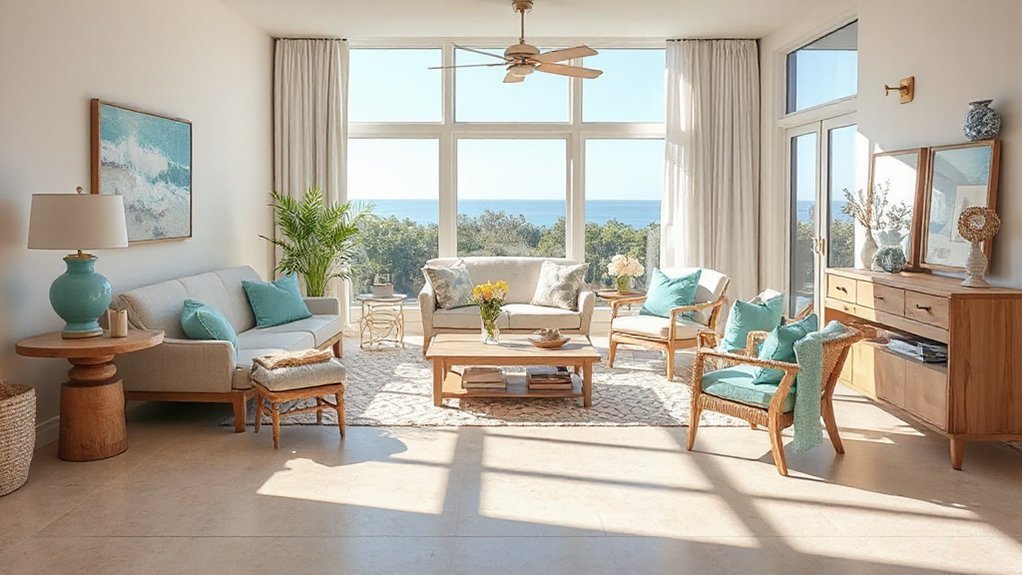
Now that you’ve pinned down coastal-safe materials and surfaces, channeling that same practical, sun-loving mindset into lighting will brighten every room with a seaside glow. You’ll choose lighting that floods spaces with natural warmth while preserving a breezy, beachy feel. Favor fixtures in driftwood tones, whitewashed metals, and glass that sparkles like sunlight on water. Position lamps to amplify daylight—near windows, in corners, and above seating for welcoming pools of light. Integrate marine inspired motifs in subtle accents: sculpted shells, reef-inspired silhouettes, or rope detailing that echoes tides. Favor Seaside color schemes—soft sand, crisp blues, and seafoam greens—to maintain cohesion without overpowering architectural lines. Ensure switches and dimmers support gradual illumination for versatile, bright, coastal ambiance.
Plan a Coastal Color Palette for Every Room
Start with coastal base neutrals as your foundation, then layer in oceanic accent hues to echo sky and sea. Choose light-reflection finishes to keep rooms bright and perceived airiness, from glossy to linen-sheens that bounce daylight. Plan room-by-room palettes that balance the neutrals, the blues and greens, and the subtle shimmer of polished surfaces for a cohesive, breezy feel.
Coastal Base Neutrals
A calm coastal palette starts with three core neutrals that set the mood for every room: airy whites, warm sands, and weathered gray-blue. You’ll build balance by anchoring walls, floors, and textiles in these versatile tones, then layering with subtle warmth and texture. This base keeps spaces light yet grounded, so accents read clearly and feel cohesive across zones.
- Seaside inspired artwork provides a focal point without overpowering
- Nautical themed decor choices reinforce the theme with restraint
- Textural elements (linen, jute, rug fibers) add depth while preserving calm
With these neutrals as your backbone, you can introduce color accents strategically, ensuring each room remains serene, cohesive, and visitor-friendly.
Oceanic Accent Hues
To keep the coastal calm intact, choose oceanic accent hues that read as fresh yet sophisticated, balancing pops of color with your base neutrals. You’ll layer sea glass tones against sandier neutrals to echo shoreline light without overpowering walls. Introduce marine life-inspired accents through accessories, fabrics, and art that pull the eye toward airy contrasts rather than loud statements. For rooms that get afternoon sun, opt cooler blues and muted teals to prevent glare, then anchor with deeper navy or slate as needed. In smaller spaces, use subtle sea glass hues in pillows or a throw to create depth without overwhelming. Consider metallic warmth—brass or antique gold—to mimic sunlit surfaces. The palette remains cohesive, allowing texture and pattern to carry personality.
Light-Reflection Finishes
From here, you’ll harness light-reflection finishes to amplify coastal color palettes in every room. In this section, you’ll pair airy neutrals with subtle sheens to mimic Seaside reflections and Marine shimmer, brightening walls, floors, and accents without overpowering scenery. Use glazes and pearlized paints on trim to mirror sunlit surf, then balance with matte textiles to prevent glare. Keep finishes consistent across spaces to unify the palette and enhance depth.
- Choose pearl or satin sheens for walls to bounce daylight without glare
- Apply metallic or glassy accents to capture Marine shimmer on hardware and décor
- Use low-luster fabrics near windows to preserve contrast and calm
This approach delivers cohesive, breathable rooms that feel open, fresh, and resort-like.
Design for Year-Round Coastal Living
Planning for year-round coastal living means designing spaces that stay bright, breathable, and resilient, no matter the season. You’ll prioritize materials that withstand humidity and sunlight without waddling into over-wrought maintenance. Choose low-maintenance fabrics in sunwashed hues and sealable finishes on cabinetry to reduce wear from salt air. Create zones that function in all months: a sunlit reading nook, a dining area that remains cool, and a textile closet with seasonal swaps. Integrate Seaside flora in subtle, durable accents—faux or preserved greenery, botanical prints, and wreaths that echo dune paths without clutter. Display Maritime artwork thoughtfully, balancing size, texture, and color to amplify light without overpowering views. Keep palettes cool and cohesive, letting natural textures steer the room’s rhythm and longevity.
Accessorize With Personal Shoreline Stories
Bring your space to life with Personal Shoreline Tales that echo your favorite beach days. Curate Souvenir Storytelling Details—driftwood, shells, photos—in colors that mirror the sea and sand. Let Coastal Memory Displays thread your rooms with memories, guiding every texture and shade you choose.
Personal Shoreline Tales
Sunlight slides over matted shells and weathered driftwood as you weave personal shoreline tales into your space, turning memories into a living texture you can touch. Each object anchors a moment, from a weathered buoy to a seashell collage, inviting you to revisit sites of Seaside flora and Maritime history with quiet confidence. You curate color as you narrate, choosing sun-washed blues, sand-dusted beiges, and coral accents that echo shoreline horizons. The room breathes with personal lore, not loud declarations, letting light play on surfaces and foster calm focus.
- Echo a favorite voyage with a small, labeled artifact
- Pair botanical prints with driftwood frames
- Create a muted palette that highlights coastal textures
Souvenir Storytelling Details
Souvenir storytelling Details invite you to curate a pocket of memory that travels with the room. You select beachside souvenirs and nautical memorabilia that echo your shoreline adventures, then arrange them with deliberate rhythm. A weathered lighthouse postcard anchors a shelf, its faded colors pulling blue and sand tones into the scene. Shells, small driftwood, and a thrift-store compass become tactile anchors, each item paired with a caption in a slim, handwritten font. You group pieces by story rather than size, creating micro-narratives that guide eye movement from window to seating. Subtle repetition of coral pinks, sea-glass greens, and slate grays keeps the palette cohesive. This tactile collection enriches atmosphere, letting guests sense your coast without clutter or overstatement.
Coastal Memory Displays
Coastal memory displays turn your shoreline stories into deliberate accents that feel both personal and intentional. You curate fragments—shells, driftwood, old photos—into a cohesive vignette that echoes your coastal routine. Choose pieces that tell a quiet truth: the color of a sunrise, a tide-washed texture, a scent of salt air. Pair Beachfront furniture with Seaside artwork to anchor the room in place and mood. Let each item speak in a subtle tempo, avoiding clutter while inviting touch and memory. Maintain a palette of sand, seaweed green, and muted aqua to keep the space calm and cohesive.
- Curate shells and driftwood for texture
- Hang seaside artwork at eye level
- Integrate Beachfront furniture with light, breathable fabrics
Frequently Asked Questions
How Can I Balance Coastal Colors With Bold Room Accents?
You balance coastal colors with bold accents by layering neutrals with Beach inspired palettes and punctuating rooms with Nautical decor. Add pops of navy or teal through textiles and art, keeping a airy backdrop for calm, readable contrast.
What Budget-Friendly Coastal Upgrades Yield Lasting Impact?
Upgrade on a budget: swap in Seaside lighting and driftwood decor to create lasting impact without overhauling. You’ll brighten spaces, echo coastal tones, and keep color-conscious balance as you refresh with texture, warmth, and simple, durable accents.
Which Fabrics Resist Salt Air and Humidity Effectively?
You’ll want Marine grade textiles and salt resistant materials; they shrug off salt air and humidity. Like sunlit sea glass, they keep colors true, resist mildew, and stay fresh-washed. You’ll enjoy durable, ocean-hued fabrics that endure coastal life.
How Do I Avoid a Cluttered Coastal Look?
To avoid a cluttered coastal look, curate with intention: limit seashell decor and driftwood accents to focal points, store extras, and mix textures softly with whites and sea-glass blues for a calm, breathable, color-conscious space.
What Maintenance Routines Protect Coastal Finishes Long-Term?
Coastal finishes stay pristine; you maintain them with routine cleaning, humidity control, and humidity-friendly upkeep. Ironically, you’ll love marine hardware and salt resistant paint, double-checking seals, resealing coastal stains, and guarding wood against salt-air wear.
Conclusion
Embrace a coastal interior that breathes with you. You’ll layer light textures, carry soft blues, and weave sandy neutrals into every room. You’ll choose weathered woods, driftwood, and shells to tell your shoreline story. You’ll balance breezy fabrics with durable finishes, crafting spaces that stay serene and resilient. You’ll invite sunlight, air, and texture to mingle. You’ll anchor color, texture, and detail in harmony, and you’ll live coastfully—calm, bright, and endlessly inviting.
About the Author