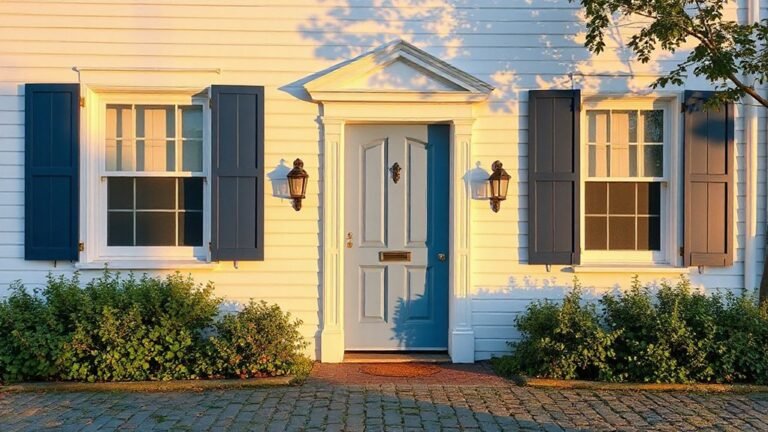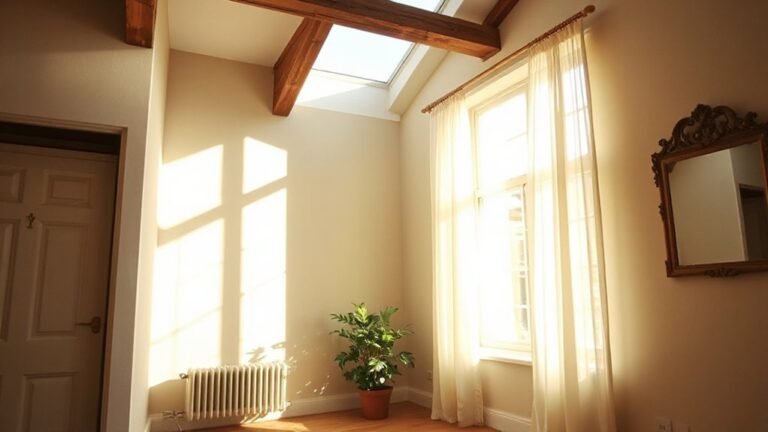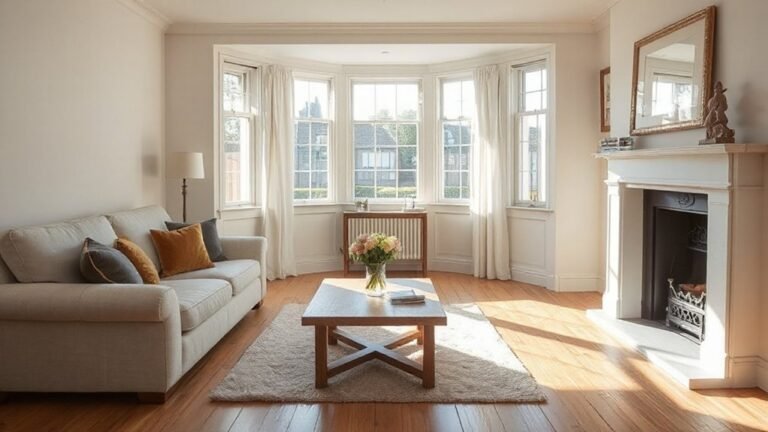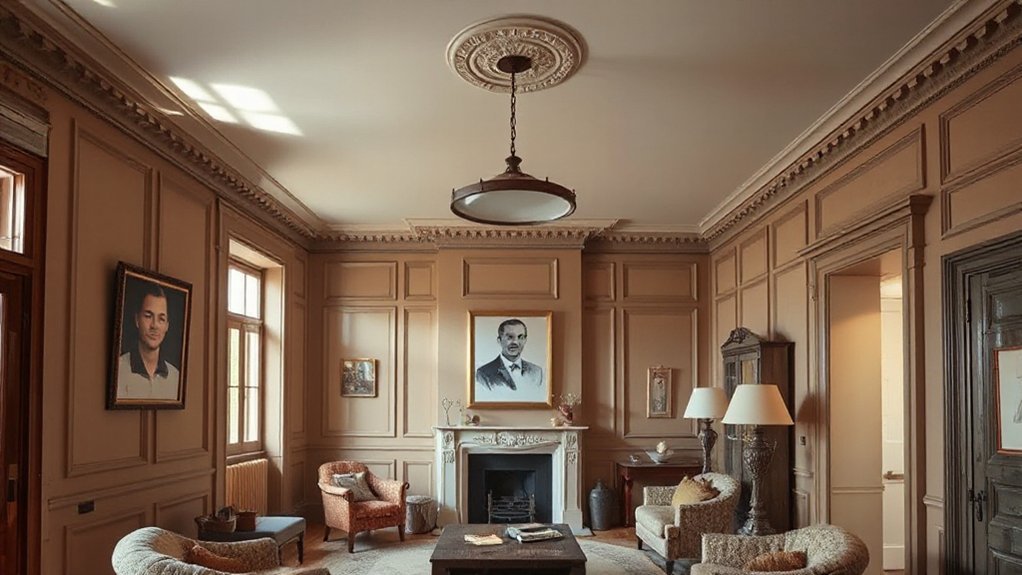
You approach a period property with a careful, preservation-minded eye, valuing original plasterwork, timber, and moldings as your guide. You plan authentic materials, reversible updates, and discreet modern comforts that respect the era. You’ll analyze layouts, palette, and textures so they echo history without feeling dated, while protecting work as you go. The balance you seek hinges on thoughtful decisions that invite you to explore further, even as you weigh every choice against its heritage.
Identify the Original Character Worth Preserving
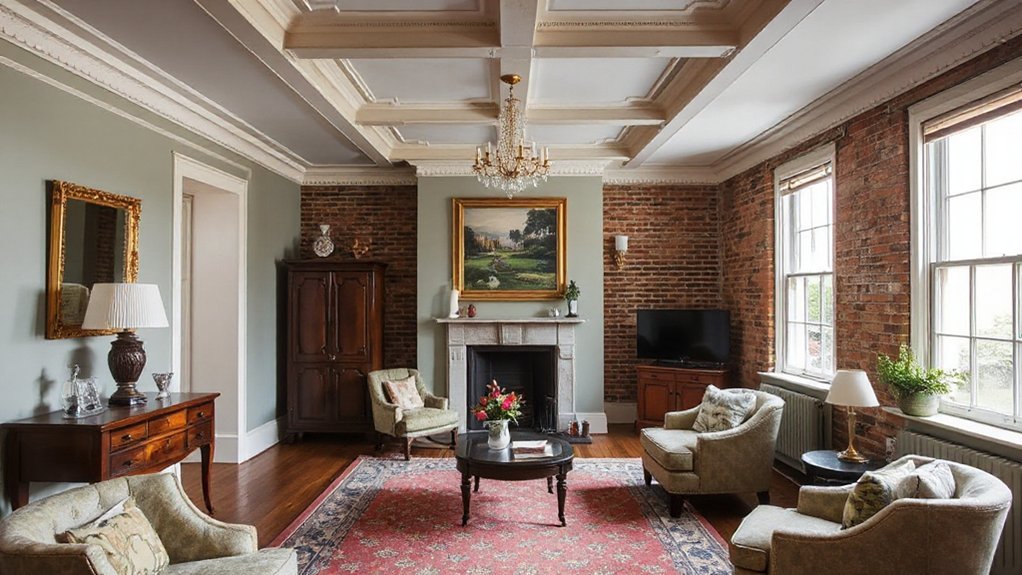
Before you change a thing, identify what in the house earns preservation. You look for Architectural details that endure, not just charm. Note the layout, plasterwork, moldings, stairs, and periods of workmanship that reveal how spaces were meant to flow. Ask what remains legible under later alterations and what stories the walls tell about prior occupants. Distill the essence of Historical significance: why this room, this window, this cornice, mattered in its era. If a feature embodies craftsmanship, function, or local material practice, it likely deserves care. Catalog items you’d defend in a conservation plan, and distinguish those that fear modern updates. Your aim isn’t to freeze every surface, but to honor the character fundamentals that define the property’s identity.
Prioritize Authentic Materials and Proven Finishes
Prioritizing authentic materials and proven finishes means choosing what the builders actually used, not what modern suppliers claim to resemble. You’ll trace original construction methods, sourcing materials whose textures, densities, and patinas match the period. Focus on timber joints, stone, lime plaster, and limewash, resisting factory-made imitations that degrade history’s truth. When you encounter finishes, test their aging, not just their color, to guarantee they breathe with the fabric of the walls. Vintage textiles inform upholstery and drapery choices with authentic weight and hand. Seek Antique hardware for hinges, latches, and screws, preserving the mechanical character that defines rooms. Document repairs, maintain joinery, and avoid over-sanitizing surfaces that tell your property’s true story.
Read Period Layouts for Modern Living Needs
You’ll explore period-appropriate layouts that balance flow with restraint, so modern living needs feel natural rather than forced. Think about preserving historical sightlines, room proportions, and entry sequences while accommodating open storage, flexible workspaces, and efficient circulation. In doing so, you’ll aim for a timeless style that respects the past while meeting today’s practical demands.
Period-Appropriate Layouts
Period-appropriate layouts balance historical typologies with contemporary needs, ensuring circulation, light, and privacy align with how rooms were used in their era while accommodating today’s routines. You assess a plan by tracing sightlines and defaults—where a doorway invites flow, where a hearth anchors sociability. In Victorian interiors, consider Victorian ornamentation as a cue for focal points, not clutter; place seating to honor conversations around a central feature. In Georgian spaces, pursue symmetry to achieve balance, aligning windows, doors, and mantelpieces for formal reception. Adapt alcoves and service nooks with discreet storage that respects scale and proportion. Avoid overloading corridors; preserve clear, purposeful routes. Your aim is a coherent, legible plan that honors character while supporting modern cadence and quiet, everyday use.
Modern Needs, Timeless Style
When translating period layouts into modern living needs, you balance inherited proportions with contemporary routines, ensuring circulation remains fluid, lighting feels natural, and storage is discreet. You approach each room with preservation-minded clarity, prioritizing original doors, cornices, and chimney placements while snugly fitting contemporary fixtures. You seek a rhythm that respects historical sequencing—entry, service, family spaces—yet accommodates daily demands: quieter work zones, accessible storage, and adaptable furniture. Vintage charm appears in restrained detailing and authentic textures, never overpowering the space. Contemporary functionality emerges through discreet technology, smart lighting, and modular seating that respects sightlines. You test circulation before finishes, ensuring thresholds remain comfortable and doors swing without obstruction. The result blends timeless style with practical, modern life.
Choose Palettes That Honor History Without Feeling Dated
To honor history without feeling dated, start by selecting color palettes that reflect a building’s era while allowing for modern livability. You’ll favor historically informed schemes—think subdued, authentic bases paired with restrained accents that echo original work without shouting. Let color psychology guide choices: warm neutrals can amplify light in dark interiors, while cooler tones in galleries or libraries temper ornate detailing. Use sustainable materials as the palette’s backbone—reclaimed wood, lime plaster, or natural stone—so color rests on a conscientious surface. Limit bold contrasts to room-defining moments, such as entryways or hearth surrounds, to preserve readability across rooms. Test samples in natural light at different times of day, ensuring ceilings, molding, and archives of color remain harmonious with preserved character.
Select Finishes and Textures That Read as Period-Appropriate
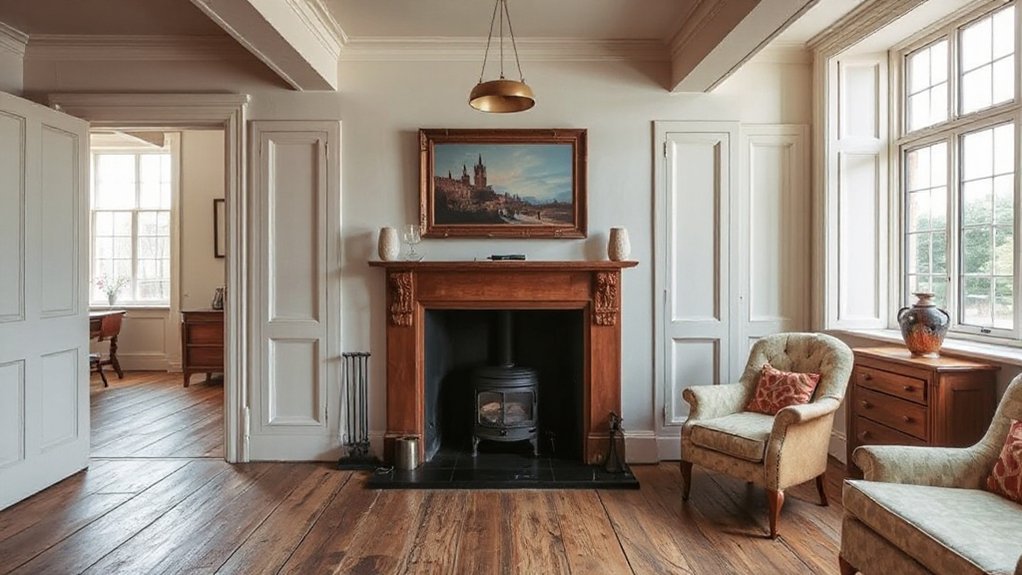
You’ll aim for textures and finishes that read as authentic to the period, prioritizing grain, patina, and handcraft over slick modernity. Choose materials that pair well with historic details—like plaster, wood, and brick—while honoring traditional workmanship and scale. By focusing on period-appropriate textures, authentic finishes, and careful historic material pairings, you establish a believable, preservation-minded baseline for every room.
Period-Appropriate Textures
Selecting finishes and textures that read as period-appropriate starts with understanding a building’s era-specific vocabulary. You’ll translate that vocabulary into tactile cues that read as history, not pastiche, by choosing surface textures that glow with authenticity. Here are textures that read true to form:
- Velveted wall hangings and damask-backed panels to evoke Victorian textiles without overpowering spaces
- Textured plaster with subtle burlap or limewash undertones, suggesting handmade walls from earlier centuries
- Linen or cotton-backed paint finishes that mimic sedate, period-appropriate plaster sheens
- Subdued, softly brushed wood veneers and faded waxed surfaces that resemble aged family furniture
Georgian wallpapers should feel calm and refined, never glossy, while Victorian textiles inspire warmth through moderated pattern scale.
Authentic Finishes Choices
Authentic finishes begin with choosing textures and sheens that mirror the era’s hands-on methods and natural materials. You’ll prioritize limewash, milk paint, and traditional oil-based varnishes over modern coatings that read as pastiche. Opt for matte or low-sheen surfaces to reflect historically accurate patinas, avoiding slick enamel or high-gloss plastics. Surface preparation matters: hand-scraped plaster, lime plaster, or lime-based plasters reveal subtle tooling marks that convey age. Use breathable coatings so historical walls can “breathe” without trapping moisture. Color palettes should echo period palettes, favoring earths, clay whites, and sedimentary hues rather than ultra-saturated tones. Authentic finishes contribute to Historical authenticity, ensuring the space reads as lived-in rather than redecorated. Document finish choices for future conservation and maintain removable, reversible applications whenever feasible.
Historic Material Pairings
When pairing materials for a period property, match finishes and textures to the era’s construction methods and tools, not merely to aesthetic taste. You’ll create cohesion by aligning joinery, patina, and surface bias with historical practice, guiding readers toward authenticity.
- Vintage wallpapers with period-appropriate plaster seams to suggest original walls.
- Timber floors finished to age with nail marks and shellac, not ultra-smooth coats.
- Antique hardware set against authentic metal patinas to echo period ergonomics.
- Wall textures and lime plasters that read as handmade, resisting modern smoothing.
This approach honors craft, reduces visual dissonance, and preserves the property’s story. Avoid faddish contrasts; prioritize continuity. Vintage wallpapers and Antique hardware anchor the reader in time, while careful material pairing reinforces provenance.
Integrate Modern Comfort Without Damaging the Architecture
Integrating modern comforts into a period property requires a careful balance: you should meet today’s standards without compromising the building’s historic fabric. You approach upgrades with a preservation-minded eye, prioritizing discreet solutions that respect original structures. Consider hidden infrastructure—conduits, vents, and controls—concealed within existing cavities or behind period-appropriate finishes. Choose low-profile, energy-efficient systems that minimize footprint and noise, preserving interior rhythm and wall textures. When evaluating materials, favor breathable substrates and compatible mortars to avoid compromising historic assemblies. Restore rather than replace primary features, integrating underfloor heating beneath existing flooring where feasible, or upgrading insulation behind plaster in a reversible, non-invasive manner. The aim is Vintage charm and contemporary comfort working in concert, so enhancements feel seamless, respectful, and definitely not intrusive.
Pick Furniture and Details That Complement Original Features
To select furniture and details that complement original features, you’ll prioritize pieces and finishes that echo the era’s materials, scale, and craftsmanship while staying clearly sympathetic to the historic fabric. You’ll craft a curated ensemble that respects proportion, patina, and line, avoiding overpowering profiles. Include Vintage textiles and Antique lighting to deepen authenticity without competing with carved plaster or timber.
- Choose chairs with timber legs and carved backrests that mirror period proportions.
- Layer Vintage textiles in cushions or drapery using muted palettes and natural weaves.
- Opt for lighting with warm bulbs and brass or bronze finishes evocative of history.
- Select cabinets and mirrors that reflect traditional joinery and glasswork.
Maintain restraint; let originals breathe while your updates read as informed, not imitative.
Renovation: Protect Woodwork and Plaster While You Work
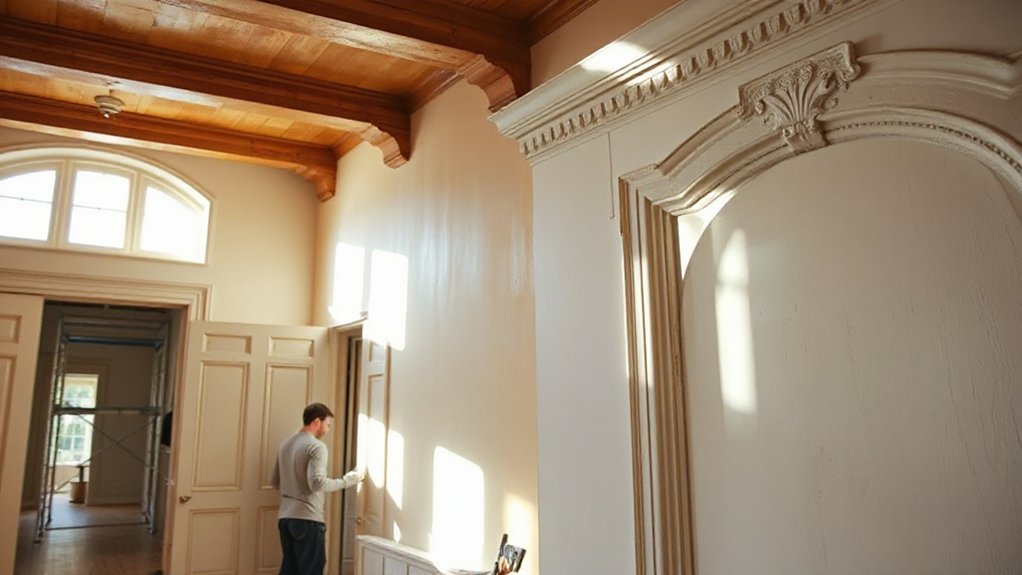
Protecting woodwork and plaster during renovation begins with careful planning and unobtrusive methods. You assess walls, moldings, and finishes to determine what must stay untouched, and you map routes that minimize contact with delicate surfaces. Use dust barriers, corner guards, and secured drop cloths to shield plaster and timber from debris and spills. When measuring, cut with minimal scraping and avoid chisels that mar delicate profiles; use gentle masking techniques for adjacent paintwork. Pad doors and trim with breathable materials to prevent moisture trapping. Choose low-VOC paints and traditional lime washes where feasible, applying them with restrained, even strokes to honor original textures. For high-traffic zones, schedule tasks to limit fresh exposure, and document updates to support future conservation. wood preservation and plaster protection.
Troubleshoot Common Restoration-Modern-Use Conflicts
When restoration meets modern use, conflicts often arise from competing demands for accessibility, safety, and code compliance without sacrificing historic integrity. You’ll align Historical accuracy with practical needs by prioritizing reversibility and documented decisions, so future researchers can trace choices. Seek unobtrusive solutions that respect craftsmanship and material limits, then codify them in a brief rationale for stakeholders.
- Assess essential modern requirements first, then chart minimal, reversible options.
- Prefer historically informed materials and finishes that mimic original textures without invasive alteration.
- Integrate discreet safety measures—fire, egress, and moisture control—without prominent alterations.
- Test adaptations for long-term durability, documenting outcomes for future Modern adaptations.
Through disciplined planning, you preserve character while meeting contemporary standards.
Frequently Asked Questions
How Do I Budget Without Compromising Original Finishes?
You should allocate funds for discreet updates, prioritizing historic paint and antique lighting, to preserve finishes while upgrading essential systems. Budget with a contingency, document provenance, and select period-appropriate materials to maintain fidelity and value.
What Permits Affect Period-Appropriate Renovations?
Permits vary by locale, but you’ll need approvals for structural, electrical, and cosmetic changes to protect historical accuracy. Like a careful conservator, you weigh Preservation techniques and Historical accuracy, ensuring compliant work before projects, inspections, and ongoing stewardship.
Can I Mix Eras Without Clashing Styles?
Yes, you can mix eras, but stay cohesive: choose an overarching palette and authentic materials; balance bold accents with traditional furnishings, maintain intact layouts, and plan interior color schemes and furniture placement to honor the period’s rhythm.
How to Repair Damaged Plaster Without Replacing It?
You can repair damaged plaster by patching with lime-putty, matching texture, and sealing with breathable finish, preserving cultural heritage. You’ll restore surface integrity, maintain aesthetic harmony, and guarantee long-term cultural preservation, while you thoughtfully respect historical materials and techniques.
Which Modernization Updates Are Safe for Historic Woodwork?
You should pursue safe modernization by preserving structure, trim, and woodwork while upgrading only essential systems; opt for reversible improvements. Embrace antique furniture and vintage lighting to harmonize period charm with functional updates, enhancing authenticity and value.
Conclusion
In truth, your best outcome arrives when chance nudges you toward restraint: you discover, coincidentally, that the easiest fixes align with the original craft you’re protecting. You’ll notice limewash catching light just as you planned, and a discreet brass hook echoes a century of use that wasn’t meant to disappear. By honoring the past, you invite modern comfort that belongs here, not dominates. Preserve plaster, timber, and rhythm, and the house quietly rewards your patience.
About the Author