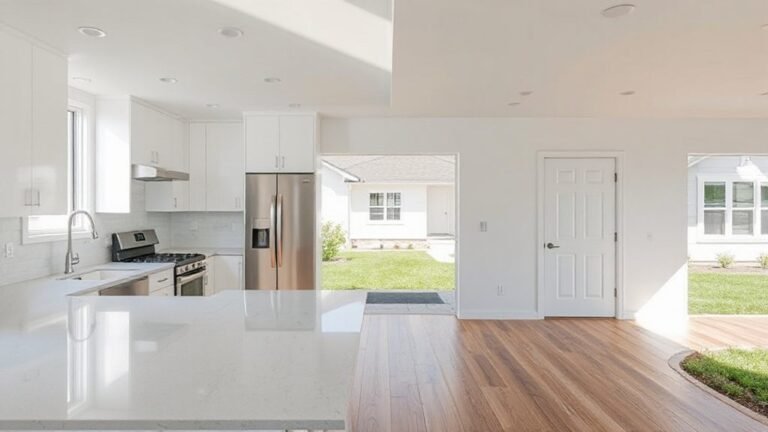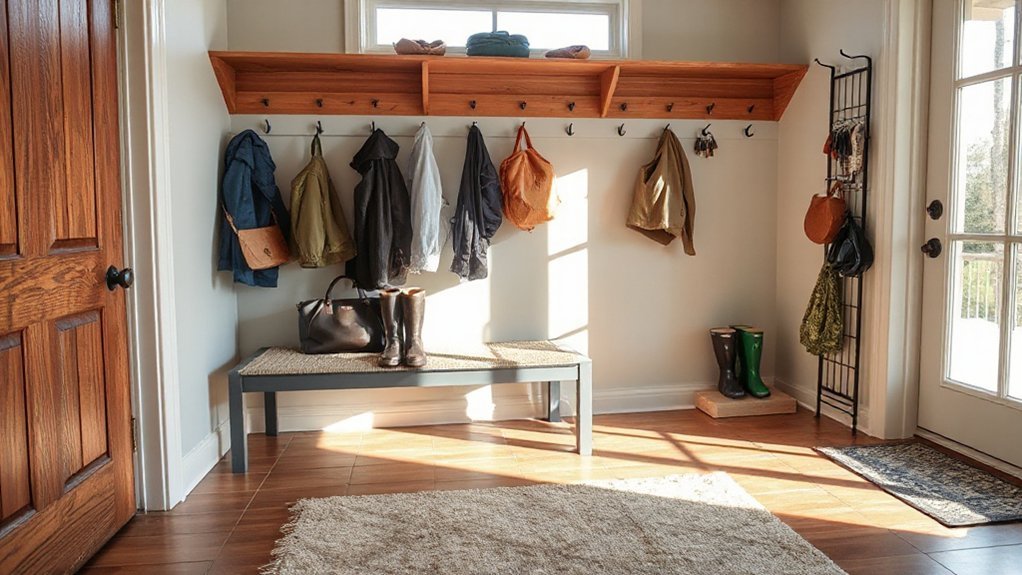
Like a quiet doorway to order, a well-planned mudroom starts with you seeing the space and what it can become. You’ll sketch simple, budget-smart storage—built-ins, wall hooks, labeled bins—so everyday items vanish into place rather than pile up. You’ll balance function with style, using a bench for seating and under-seat storage, plus color-coded zones to guide habits. Ready to shape a practical, inviting entry that keeps itself tidy? Let’s map your plan next.
Assess Your Mudroom Needs: What to Measure First

When planning a mudroom makeover, start by measuring what matters most: the space you’ll actually use. You’ll translate needs into dimensions, so you don’t overbuild or underfit key functions.
Begin with traffic paths: allow at least a 36-inch aisle for doors and movement, and note where you’ll step in with bags, coats, and shoes.
Measure vertical space for hooks, cubbies, and shelving, ensuring clearance for jackets and hoods.
Identify lighting needs as you map zones, because entryway lighting affects visibility and mood.
Plan rug placement to define zones without crowding walkways.
Confirm surface durability and mat sizes that handle daily wear.
Finally, document measurements in a simple sketch, then compare with product options to optimize storage, seating, and turnout—without guesswork.
Budget-Friendly Storage Foundations for Small Entries
Stretch your mudroom potential without busting your budget by locking in smart, under-25-dollar storage foundations that make daily routines smoother. You can start with stackable crates or a slim, tall caddy to corral keys, mail, and gloves without crowding floor space.
Look for modular bins that snap into a shallow bench or a slim wall shelf, giving you dedicated pockets for shoes, hats, and scarves. Add a compact, labeled tray for receipts and coupons to keep entry chaos under control.
Choose affordable hooks or peg strips for coats and bags, keeping surfaces clear and practical. This setup supports Mudroom decor that feels cohesive, while thoughtful Entryway lighting—like a small, warm-toned lamp—brightens paths and options.
Your entry becomes calm, inviting, and ready.
Wall-Mounted Organizers That Maximize Foot Traffic Space
A smart wall-mounted system can turn tight entryways into organized, high-traffic zones. You’ll love how wall mounted organizers free floor space while guiding daily routines. Install slim cubbies, hooks, and tray rails at varying heights to serve kids, guests, and adults without crowding the doorway.
Prioritize accessibility: place everyday items—keys, mail, coats—at arm level, then tuck seasonal gear higher up. Use modular pieces so you can reconfigure as needs shift, keeping foot traffic flowing smoothly.
Choose durable materials and a cohesive finish to blend with your mudroom vibe. Label zones discreetly to reduce decision fatigue and speed up entry.
For best foot traffic optimization, combine magnetic catch-all bins with pegboard accessories to maximize vertical real estate without clutter.
Benches for Shoes and Bags: Practical, Drop-Seat Solutions
A practical bench transforms seating into a smart seating-and-storage combo, making shoe time and bag drop-offs feel effortless. You’ll love drop seat benches that flip open to reveal hidden storage for shoes, gloves, and keys, keeping the floor clear and the mudroom tidy.
Choose a height that invites you to sit briefly, not to strain your back, and pair it with a sturdy top that handles daily wear. Opt for compartments or cubbies that separate family members’ footwear, so everyone knows where to park their shoes.
Attach a simple, durable understorage for bags or backpacks, and add a small hook or rail nearby for quick grab-and-go items. With thoughtful shoe storage, your mudroom becomes calm, organized, and inspiring.
Clear Labeling Systems for Mail, Keys, and Accessories
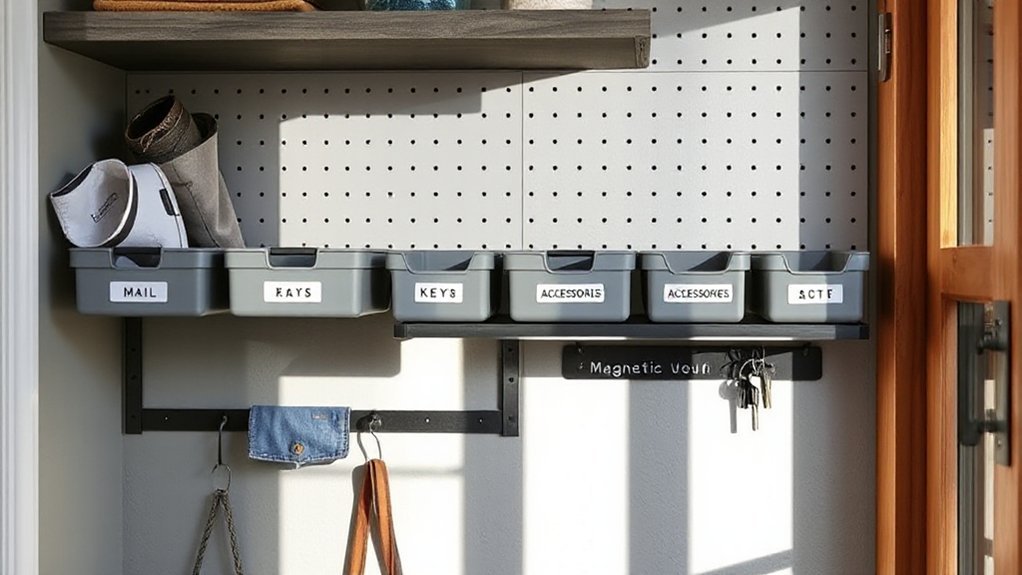
Clear labeling turns clutter into calm you can trust. When you set up a simple system, you’ll know exactly where to drop mail, keys, and accessories the moment you walk in.
Use bold, legible labels on bins, hooks, and tray dividers, matching fonts and colors for quick scanning. For mail organization, designate a folder or slot and clearly mark it with date, prompt action, and recipient.
For keys, assign a dedicated hook with labeled tags or icons so everyone in the household returns them to the same spot. For accessories, group by item type and label containers accordingly.
You’ll reduce rummaging time, boost efficiency, and enjoy a cleaner entry that supports daily habits. Consistency over time builds lasting organization.
Modular Upgrades: Easy, Scalable Customization
Think modular upgrades let you tailor your mudroom with simple, scalable pieces. Start with flexible layout options, add storage you can expand, and swap in new modules as needs change.
You’ll stay practical, stay inspired, and keep upgrading without overhauling the whole space.
Modular Layout Options
Modular layouts let you adapt your mudroom on the fly, swapping in hooks, cubbies, or benches as your needs change. You’ll design a core framework that holds up over seasons, then add modules as life shifts—sport gear, kids’ backpacks, or pets’ essentials—without a full redo.
Choose a consistent height system, so items land where you expect them to. Use Weatherproof coatings on any exposed wood or metal to keep surfaces durable and wipe-clean.
Install a row of hooks at kid height for quick access, and pair them with cubbies for shoes and accessories.
Decorative accents, like labeled bins or a slim wall planter, brighten the space without clutter.
This approach stays flexible, organized, and inspiring as your routines evolve.
Scalable Storage Solutions
Scalable storage solutions let you upgrade your mudroom without a full remodel. You’ll start with modular cubes, hanging organizers, and adjustable shelves that snap into place as your needs grow.
Use stackable bins for quick access and label-friendly fronts to keep seasonal items tidy. As you add rails and hooks, your mudroom aesthetics improve with cohesive finishes and purposeful spacing.
The system flexes with family rhythm—weekend gear, daily gloves, and sports equipment all find a home without clutter. When seasons shift, expand with additional modules or dual-purpose benches that conceal footwear while providing seating.
This approach champions seasonal organization, so you retain calm, clear entryways year-round while preserving room for future upgrades.
Easy Customization Steps
To tailor your mudroom without a full remodel, start with simple, modular upgrades you can snap into place this weekend. You’ll keep momentum by choosing pieces that fit your space and flow, then swap or tweak as needs shift.
Begin with magnetic hooks, a peg rack, and labeled bins for easy access. Add a slim bench that doubles as storage, and install a wall-mounted cubby system to separate shoes from coats.
For a quick refresh, layer in decorative wall art at eye level and update hardware on cabinets to match your chosen color scheme. Keep everything scalable by leaving room for future modules or accessories.
The result is a practical, aspirational space that adapts as your routines evolve.
Upcycling for Mudroom Storage: Cheap, Creative Hacks
Upcycling is where budget meets personality in mudroom storage, turning everyday scraps into clever, functional organizers. You’ll transform isosceles boxes into cubbies, turn wooden pallets into a shoe rack, and reline jars as small-item bins.
Recycling crafts empowers you to collage labels, caps, and lids into a cohesive system that’s easy to maintain. Creative repurposing means choosing versatile pieces you already own, then tailoring them with paint, hardware, or fabric for a fresh look.
Think peg rails from scrap wood, tin can holders, and a chalkboard panel for quick notes. Keep it simple: group items by use, store seasonal gear separately, and label clearly. Your mudroom gains charm and efficiency without breaking the bank.
Vertical Space Hacks for Tiny Mudrooms
Even in a tiny mudroom, vertical space can be your secret weapon: stack, hang, and tuck belongings up high to free floor real estate without sacrificing accessibility. You’ll maximize efficiency with smart vertical stacking: tall shelves, slim cabinets, and labeled bins that fit narrow gaps.
Use ceiling hooks to suspend coats, bags, and tools, keeping the floor clear for daily routines. Install a wall-mounted broom and mop rack to reclaim baseboard real estate without clutter.
Add a peg rail for quick-release items like keys, hats, and leashes, then couple it with magnetic strips for metal accessories. Consider a slim corner ladder for reaching high shelves, ensuring safety while you organize.
With deliberate placement, tiny spaces feel expansive and organized.
Maintenance Habits to Keep Your Mudroom Orderly
Keeping your mudroom tidy starts with a quick daily declutter routine, so clutter never has a chance to pile up. Pair that with a consistent cleaning schedule—wipe surfaces, shake out mats, and put items back in their spots at the same time each day.
When you stay on top of small, steady habits, you create a practical, aspirational space you’re excited to use.
Consistent Cleaning Schedule
Creating a consistent cleaning schedule is your first line of defense against clutter and chaos in the mudroom. You’ll transform daily errands into smooth rituals by dedicating short, dedicated blocks for maintenance tasks.
Set a weekly cadence for sweeping, wiping surfaces, and checking footwear mats, so grime never builds up. Turn maintenance into momentum: tie chores to small triggers like returning shoes to racks or placing bags on hooks.
Use simple cleaning routines that fit your flow—no overhauls, just steady progress. Keep a printable calendar or checklist visible, with target days and quick notes.
The payoff is clear: order fuels efficiency, and consistency reinforces better organization tips. With regular cadence, you’ll enjoy a cleaner, calmer entry that supports your busy life.
Quick Daily Declutter Habits
Small daily moves add up fast. You can keep the mudroom in check by carving quick, repeatable actions into your daily routines. Start by a 60-second reset each evening: grab items left out, return them to their spots, and wipe any smudges. This tiny routine prevents clutter triggers from taking over tomorrow.
Keep a small basket for shoes at the entry and a bin for stray accessories, so you don’t hunt for essentials later. Batch tasks like coats, bags, and keys into zones, so you know exactly where to drop them.
Prefer simple rules: if it doesn’t belong, it goes out, if it’s not used weekly, consider removing it.
Consistency builds momentum, and order follows.
Room-by-Room Mudroom Makeover Plan
Start by surveying your daily workflow: what activities happen in and around the mudroom most often, and where do clutter and bottlenecks tend to creep in? You’ll map a room-by-room plan that highlights smooth passages, defined zones, and accessible storage.
Begin with a boot-and-coat station, a drop zone for bags, and a tidy laundry hook-up if possible.
Then design an entry pivot point: a bench with cubbies, hooks at arm height, and labeled bins for odds and ends. Use color coordination for bins, mats, and hooks to quick-recognize zones, reducing search time.
Prioritize adaptable storage that grows with seasons—shoe cubbies, hanging organizers, and a fold-down surface.
Add seasonal decor as a finishing touch to keep the space inviting and motivating.
Frequently Asked Questions
How Can I Measure for a Snug Mudroom Fit Without Remodeling?
You can measure for a snug fit by using measuring techniques like outlining wall-to-wall clearance, door swing, and ceiling height, then visualize space optimization with grids. You’ll map every nook, ensuring furniture fits without remodeling, confidently.
What’s the Cheapest Way to Add Hidden Storage Options?
Did you know 60% of hidden storage rewards comes from underutilized corners? You can add hidden compartments with inexpensive panels and organizers, making it cost effective solutions. You’ll maximize space, stay tidy, and achieve practical, aspirational organization.
Which Wall Height Is Best for Kid-Friendly Organizers?
Wall height should be kid-friendly around eye level or slightly lower, and organizer placement stays accessible on lower shelves and hooks. You’ll foster independent, tidy habits, avoid clutter, and enjoy a practical, aspirational entryway that’s comfy to use.
How Often Should I Rotate Seasonal Items to Stay Organized?
Rotate seasonal items every 3–4 months to stay organized. Use a simple schedule, label boxes, and swap as needed. Seasonal rotation keeps clutter down, boosts efficiency, and gives you clear organization tips you can actually maintain.
Do Color Codes Improve Daily Mudroom Efficiency?
Color coding can boost daily mudroom efficiency, you’ll notice items easier to locate, saving minutes each day. In fact, studies show organized spaces cut decision fatigue by 20%. You’ll feel calmer, faster, and more purposeful with color coding.
Conclusion
Imagine stepping into your mudroom and feeling a calm, organized pulse guiding your day. With labeled bins, built‑in cubbies, and a bench that hides your clutter, every item lands exactly where it should. You’ll see color‑coded zones, fresh hooks, and tiny hacks that keep chaos at bay. Each morning becomes smoother, each return home lighter. You’ve created a practical, aspirational entryway that’s easy to maintain and truly inviting. Your organized mudroom is yours to enjoy.
About the Author