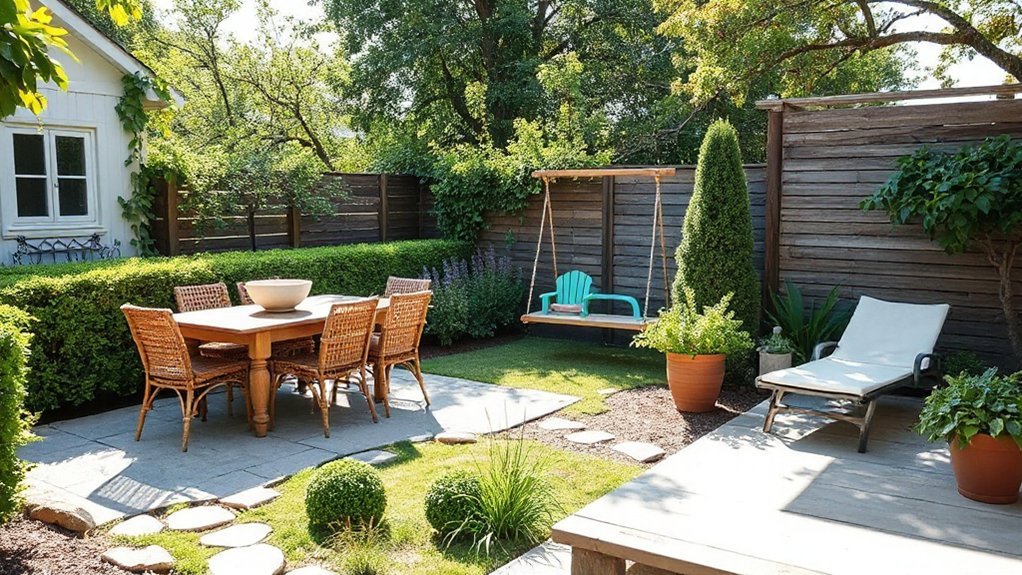
A single spark can untie a garden into three connected spaces: dining, play, and relaxation. You’ll pick a sunny nook for year-round meals, layered with shade and seasonal framing, then carve a safe play zone with soft surfacing and clear sightlines. Nearby, a quiet relaxation corner invites calm lighting and low-maintenance plants. When you tie it all together with cohesive materials and thoughtful paths, the flow and balance say you’ve got more than a yard—you’ve got a plan that invites you back.
Define Your Garden Goals and Criteria
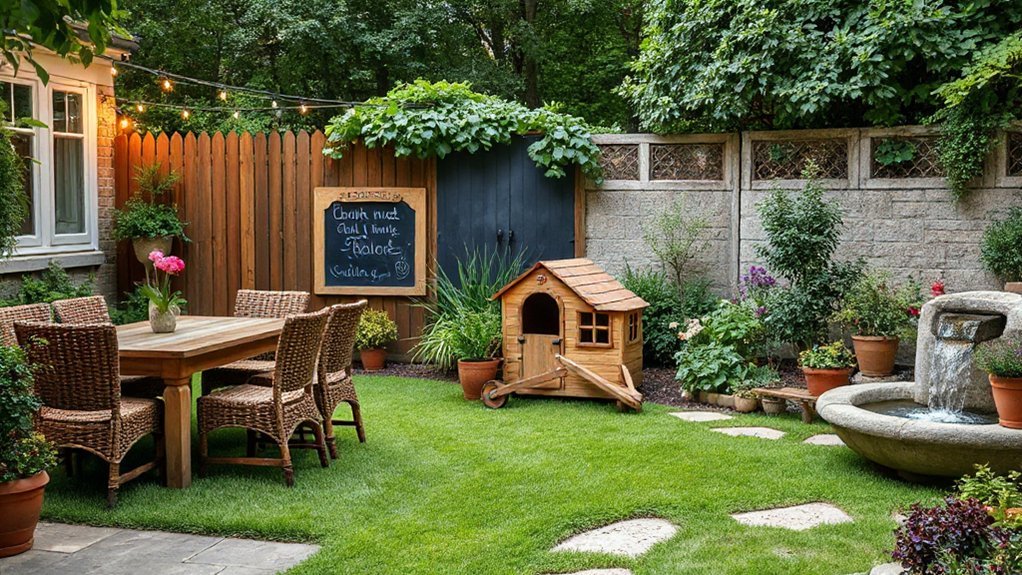
Ask yourself what you want most from your garden: edible yields, year-round interest, low maintenance, or a space for relaxation. Defining your goals starts with clarity about function and mood. List primary uses for each zone, then set measurable criteria you can track: yield targets, growth rates, maintenance intervals, and seasonal appeal. Consider landscape planning constraints like sunlight, soil, drainage, and microclimates, then align crops and features accordingly. Identify privacy screening needs early to shape sight lines and noise considerations, avoiding crowding and future-obsolescence. Prioritize safety, accessibility, and scale to fit your lot and budget. Once goals are mapped, draft rough zoning with flexible placeholders, knowing adjustments are easier when you start with concrete criteria rather than vague hopes. Revisit and refine annually for steady progress.
Design a Dining Nook That Works in All Seasons
A dining nook that works in every season adapts to light, temperature, and traffic. You’ll design it with flexible seating, compact storage, and a clear flow from kitchen to yard. Choose a shady or sunny spot based on climate, and layer light with a roll-down shade, trellis, or pergola to regulate glare. Seasonal plant choices frame the area, offering color and fragrance while shading when needed and inviting year-round interest. Weather resistant furniture stays sturdy through rain, sun, and wind, with finishes that resist fading and moisture. Opt for a compact table that expands when guests arrive, plus cushions kept dry with removable covers. Keep ventilation steady, touch-screens handy for weather updates, and seasonal decor minimal for effortless shift.
Create a Safe, Flexible Play Zone for Kids and Pets
Designing a safe, flexible play zone lets kids and pets explore without slowing down daily life. You map a boundary that’s inviting yet contained, separating high-traffic paths from play zones and pet rest areas. Start with sturdy, low-profile interactive fencing that defines edges without blocking sightlines. Choose soft surface options—rubber mulch, Cushioned turf, or foam tiles—to minimize slips and provide comfort during roughhousing or tumbling. Create versatile zones with modular, knot-free play mats and movable barriers so you can reconfigure for guests or weather shifts. Store outdoor toys in weatherproof bins near the zone, and add shade, wind protection, and easy-clean surfaces. Prioritize slip resistance, gentle landscaping, and clear sightlines for supervision, ensuring safety without sacrificing freedom.
Craft a Quiet Relaxation Corner With Lighting and Plants
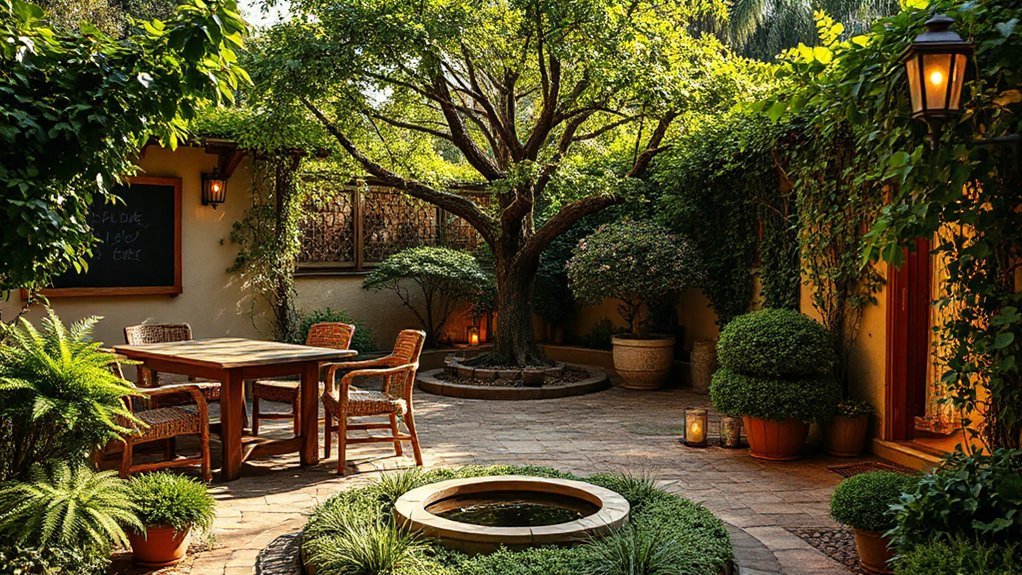
Create a quiet relaxation corner by using soft lighting, comfortable seating, and living plants that breathe life into the space. You’ll design this nook for pause, not bustle, so keep the footprint intimate and accessible. Choose ambient lighting—a dimmable lamp, a string of warm LEDs, or a small lantern—to create atmosphere without glare. Pick one comfortable chair or a compact settee and add a throw for texture. Bring in lush greenery that thrives indoors: a pothos, snake plant, or a low-maintenance fern. Place plants where they can be seen from the seat to maximize the sense of calm. Use a small side table for tea, a book, or a diffuser, and keep surfaces clutter-free for effortless mindfulness.
Tie It All Together: Flow, Materials, and Year-Round Interest
Bringing the space together starts with a clear flow: arrange paths that invite movement from relaxing nooks to functional zones, so sightlines stay calm and connected. Tie it all together by selecting materials that repeat across zones, creating unity while marking progression. Choose durable, weather-ready surfaces that still feel tactile underfoot, and layer textures through wood, stone, and plant screenings to soften edges. Use landscape architecture principles to balance scale, rhythm, and focal points—a central dining area, a playful perimeter, and quiet corners should read as a single garden story. Incorporate year-round interest with evergreen structure, seasonal color, and smart drainage. Prioritize garden aesthetics in every choice, ensuring cohesive color, form, and function across the space.
Frequently Asked Questions
How Do I Budget for Garden Zoning Ideas Overall?
Yes, you budget by mapping zones, estimating each area’s needs, and adding 10% for surprises. Track costs, prioritize essentials, compare vendors, and seek cost effective solutions; Budget planning helps you maximize value without overreaching.
What Safety Considerations Apply to Outdoor Electricals?
Electrical safety is vital: inspect outdoor wiring regularly, use GFCI outlets, keep cords away from water, and weatherproof connections. Guarantee outdoor-rated enclosures, proper clearance, and professional inspections after changes to reduce shock and fire risks.
Which Timber Treatments Last in Year-Round Weather?
You should choose timber with long-lasting protection: look for timber preservation and weather resistant finishes, like pressure-treated or naturally durable species, plus coatings that resist UV and moisture, ensuring your outdoor timber stays sturdy through year-round weather.
How Can I Block Noise in Outdoor Seating Areas?
Soundproof barriers drop noise fast; you can block noise in outdoor seating areas effectively. Install solid screens, add noise reducing plants, and position planters to absorb sound, creating intimate, calmer spaces you’ll enjoy.
What Plants Thrive With Low Maintenance in Shaded Zones?
Shade tolerant plants thrive in your shaded zones with low maintenance greenery. You’ll enjoy lush cover, minimal care, and consistent beauty, while you keep watering simple and pruning light. It’s practical, concise, and perfectly suited for you.
Conclusion
You’ll see how dining, play, and relaxation weave naturally into one cohesive outdoor living space. When you design with year-round shading, soft play surfacing, and tranquil lighting, every corner feels inviting and safe. An interesting stat to hook readers: homes with well-planned outdoor zones report 20–30% higher usable living space value. By tying pathways, materials, and plantings together, you create flow, balance, and seasonal interest that invite frequent, joyful use—all year long.
About the Author