Choosing the right countertops starts with your daily routines and style goals, then tests durability, maintenance, and cost against that vision. You’ll weigh quartz, granite, marble, and laminate for heat tolerance, scratches, and stains, while keeping cabinets and lighting in harmony. Consider long-term value and repairability, not just upfront price. Start with a practical test, weigh trade-offs, and map out a quick decision path—you’ll see where your kitchen’s balance lies, and what matters most next.
Define Your Countertop Criteria
To define your countertop criteria, start by clarifying how you’ll use the space, how much you value durability, and which materials fit your style and budget.
You’ll balance daily prep, spills, and heat with surface performance, so prioritize countertop longevity without overcomplicating maintenance. Assess resistance to scratches, stains, and moisture, then translate preferences into specs like thickness, edge profile, and installation method.
Consider color, veining, and texture for visual flow with cabinets and flooring, ensuring a cohesive look.
Compare eco-friendly options that meet durability and cost targets, and verify warranty terms.
Map timelines, installation lead times, and service accessibility to avoid surprises.
With clear criteria, you’ll choose surfaces that blend function, aesthetics, and long‑term value.
Understand Your Kitchen Use and Needs
Think about your daily routines and how you actually move through the kitchen, from prep to cleanup. Your habits shape what materials will hold up, clean easily, and look cohesive with color and style.
Kitchen Habits Assessment
Start by mapping how you actually use your kitchen: when you cook, prep, entertain, or multitask, and where the effort tends to cluster. In this Kitchen Habits Assessment, you identify your patterns to choose countertops that fit flow, durability, and aesthetics.
Observe how long you stand at prep zones, where spills occur, and how you shift between tasks. Consider your Cooking habits and how you prioritize quick cleans versus elaborate meals.
Map peak times, storage access, and what surfaces tolerate heat, knives, and moisture. Your Cleaning routines matter for maintenance, stain resistance, and edge care.
Translate these insights into material choices, textures, and color palettes that reduce friction and enhance joy in daily use, without sacrificing resilience or style.
Practical Material Needs
Understanding your practical material needs starts with a clear map of how you actually use your kitchen: where you cook, prep, and serve, and which tasks cluster around certain zones. You’ll align surface choices with workflow, durability, and ease of maintenance, while aiming for a cohesive aesthetic.
Consider how heat, knives, and liquids interact with each material’s edge and porosity, and how seams affect cleanups. Prioritize zones where clutter accumulates, choosing materials that tolerate daily use without showing wear.
Eco-friendly options can balance performance with low environmental impact. Do a cost comparison across options, factoring in installation, maintenance, and projected lifespan.
Your goal: a practical, beautiful workspace that stays resilient under real-world demands.
Meet the Big 4: Quartz, Granite, Marble, Laminate
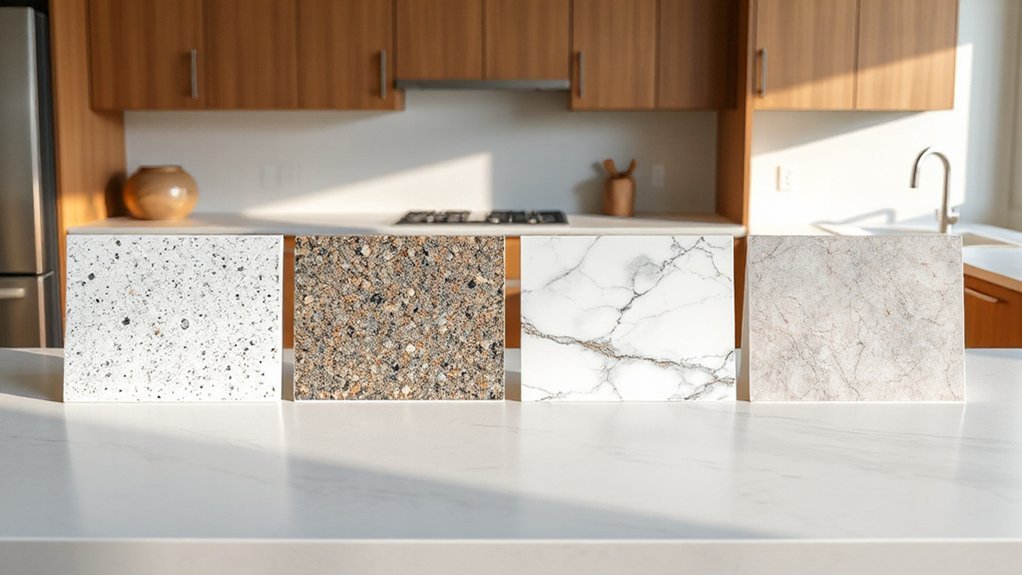
When choosing kitchen countertops, the big four—quartz, granite, marble, and laminate—offer distinct blends of durability, aesthetics, and budget, so you can pick the material that fits regarding how you cook, entertain, and live in your space.
You’ll notice quartz brings consistent color and engineered strength, while granite delivers natural variation and texture. Marble offers timeless softness but requires planning for patina, and laminate provides cost-effective versatility with bold color options.
Think about innovative design and practical execution: profiles, edge treatments, and seamless backsplashes.
Color coordination matters—pair light surfaces with warm woods or cool tones with stainless accents for balance.
Each option serves different workflows, storage needs, and visual goals, helping you craft a kitchen that’s both functional and aesthetically cohesive.
Compare by Durability, Maintenance, and Stain Resistance
Durability varies by material and use, so you’ll weigh hardness, heat tolerance, and impact resistance as you compare options.
Maintenance and stain resistance matter just as much—expect differences in sealing needs, cleaning routines, and how foods or dyes cling over time.
This practical lens helps you balance lasting performance with ease of care, while keeping color and texture goals in view.
Durability Variations Explained
Durability varies widely across countertop materials, and understanding those gaps helps you choose what survives spills, heat, and daily wear. You’ll compare options by scratch resistance, impact tolerance, and flex under heavy use, so you pick surfaces that stay level and true.
Granite offers natural strength, quartz blends resist chipping, and solid surface provides seamless repairs. Laminate keeps costs down but wears visibly over time, while concrete gains character yet can crack if unsupported.
Maintenance matters, yet durability also ties to how you seal, protect, and clean. Material comparisons benefit from practical tests—hot pans? spills? heavy pans?—and color-conscious choices that hide minor marks.
Consider Environmental impact as you weigh long-term performance, aesthetics, and lifecycle.
Maintenance and Stain Insights
Maintenance and stain resistance go hand in hand with how durable a countertop feels in daily use; choosing surfaces that balance upkeep with performance keeps spills from becoming permanent marks.
When evaluating materials, consider maintenance needs, frequency of sealing, and how scratches show wear. Quartz resists staining but still benefits from a routine wipe-down, while solid surface offers seamless cleaning with gentle cleaners.
Granite demands periodic sealing to maintain stain resistance, whereas laminate remains simple but less forgiving with heat.
Cleaning tips should be practical: use a soft cloth, mild detergent, and avoid abrasive pads. Stain prevention hinges on prompt spill cleanup and avoiding harsh cleaners.
For color-conscious kitchens, choose hues that mask minor marks yet reflect your style, ensuring longevity through mindful maintenance.
Budget and Total Cost: Upfront and Long‑Term Value
When budgeting for countertops, you should weigh upfront costs against long-term value, including maintenance, resale appeal, and lifespan. A practical cost analysis helps you separate premium options from affordable realities, predicting yearly upkeep and service intervals.
Consider installation flexibility, warranty, and compatibility with your plumbing and cabinetry, then translate these into total cost of ownership over 15–20 years.
Material longevity matters: granite or quartz may justify higher upfronts with lower repair needs, while laminate saves cash but incurs sooner replacements.
Balance aesthetics with durability, choosing colors and textures that hide wear and harmonize with your kitchen’s rhythm.
Remember, the best choice aligns upfront affordability with enduring performance, maximizing resale value and daily satisfaction without unexpected spikes.
Focus on value, not just price.
Aesthetic Pairing: Cabinets, Flooring, and Tone
Choosing countertops with an eye for value naturally leads you to how they interact with your cabinets, flooring, and overall tone. You’ll aim for color coordination that ties elements together without competing with standout features.
Pair lighter cabinets with countertops that add warmth or subtle contrast, preserving brightness while avoiding chalkiness. For dark cabinets, choose countertops with depth or a slight sheen to prevent heaviness and to reflect light.
Flooring should echo a shared undertone—warm woods with creamy veining, or cool tiles with gray flecks—to reinforce style harmony. Consider undertones in both materials, not just surface color.
The goal is a cohesive, balanced palette where every surface supports function and mood, delivering timeless appeal rather than fleeting trends.
Practical Tests: Heat Tolerance, Scratches, Cleaning
Practical tests reveal how countertops hold up under real use, guiding you to materials that balance performance with style. You’ll assess heat tolerance by noting scorch marks, warping, or discoloration from hot pots, pans, or kettles. Scratches reveal surface hardness and maintenance needs—how easily you’ll see wear and whether you can buff or reseal.
Cleaning practicality matters: target residues, streaks, and how many passes each material requires for a spotless surface. Compare repairability and edge-inset durability to avoid surprise damage in busy weeks.
Eco friendly options matter, not just aesthetics, so weigh solar- or recycled-content materials and emission footprints. Cost effective solutions emerge from long-term lifespan and minimal upkeep.
Choose a countertop that stays practical, beautiful, and resilient through daily, imperfect use.
Real-World Trade‑Offs: Pros, Cons, and Common Pitfalls
Real-world trade-offs become obvious once you compare how materials perform day to day: one option may resist heat but show fingerprints, another nails durability yet costs more upfront. You’ll weigh aesthetics against maintenance, and batch variation against predictable results.
Color coordination matters: a radiant slab can clash with cabinets or lighting if you ignore undertones, so sample in your space.
Durability flags are tempered by edge profiles; a thick, precise edge can enhance practicality yet complicate installation.
Common pitfalls include assuming low maintenance equals zero effort, or chasing novelty over proven performance.
Practical choice blends function and feel: pick a surface you won’t tire of, anticipate repair needs, and align edge profiles with usage.
Final wins balance longevity, budget, and visual harmony.
Quick Decision Template: A Step‑by‑Step Evaluation
To decide quickly and confidently, follow a structured steps-and-criteria routine that fits your space and budget. Start with a quick inventory of color options that align with cabinets, walls, and lighting.
Narrow to three top contenders, then compare thermal resistance, porosity, maintenance needs, and scratch tolerance to your real-life use. For each, estimate installed cost and lead time, plus required support and edge profiles.
Check installation considerations: substrate compatibility, seam visibility, and required underlayment or backsplash integration. Visualize maintenance routines and season-to-season durability in your kitchen’s climate.
Rate each option on aesthetics, resilience, and budget impact, then pick the strongest overall fit. Use your decision matrix to justify final choice, ensuring it harmonizes function, style, and long‑term satisfaction.
Frequently Asked Questions
How Long Do Different Countertop Materials Last in Everyday Use?
You’ll find material durability varies, with quartz lasting 15–20+ years and granite 20–40, while laminate wears faster, around 10–15. Consider maintenance requirements, resealing needs, and color-considerate aesthetics for practical, technical, durable results.
Which Countertop Resists Stains From Common Kitchen Spills Best?
A spill fights back like a dragon; you tame it best with quartz, which resists stains. You’ll love Color options, Maintenance requirements, and practical upkeep—easy, durable, and aesthetic, giving you a resilient, visually cohesive kitchen retreat.
Are DIY Install Products Reliable for Long-Term Performance?
DIY installation can be reliable short-term, but product reliability varies; you’ll want high-quality kits, accurate prep, and proper curing. You’ll improve results by researching brands, following instructions, and testing adhesion, flex, and stain resistance before committing.
How Do You Estimate Total Cost Including Installation and Lifespan?
You’ll estimate total cost by adding material price, installation, and maintenance over time, then compare lifespan across options. Do a material comparison and factor in countertop maintenance needs to curb long-term expenses while preserving aesthetics and function.
Do Countertops Affect Home Resale Value Significantly?
Countertop durability matters: yes, it can influence resale value, especially when you pair durable surfaces with cohesive kitchen style coordination. If you look timeless, buyers notice; a 5–7% premium isn’t unusual when aesthetics meet performance.
Conclusion
So you pick a countertop and suddenly your kitchen becomes a runway show for spatulas. You balance heat, scratches, and stains like a tightrope walker, all while your budget plays party-pooper in the corner. But hey, with the right blend of durability, maintenance, and style, you’ll actually enjoy cooking there. Trade-offs happen; choose wisely, test practicably, and pair with cabinets and light. The result isn’t just a surface—it’s your daily design brief, somehow both practical and quietly beautiful.
About the Author