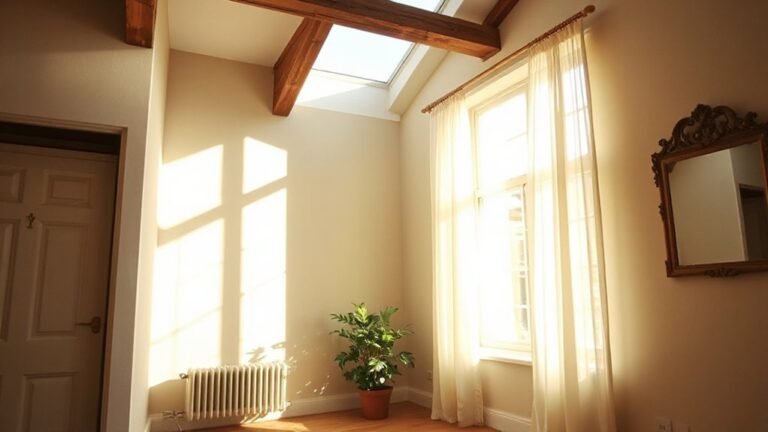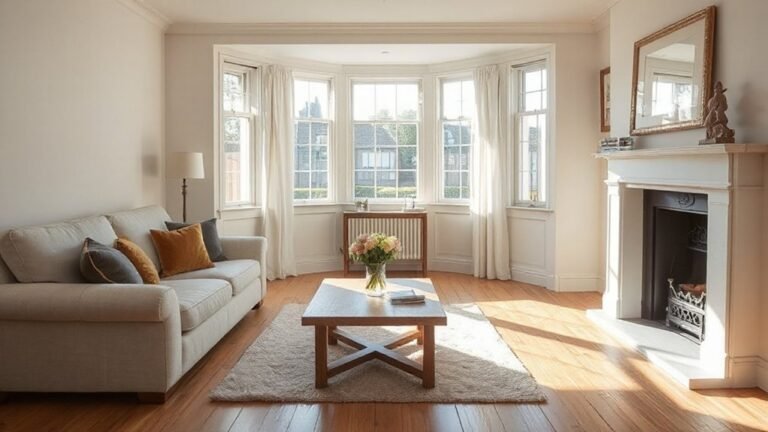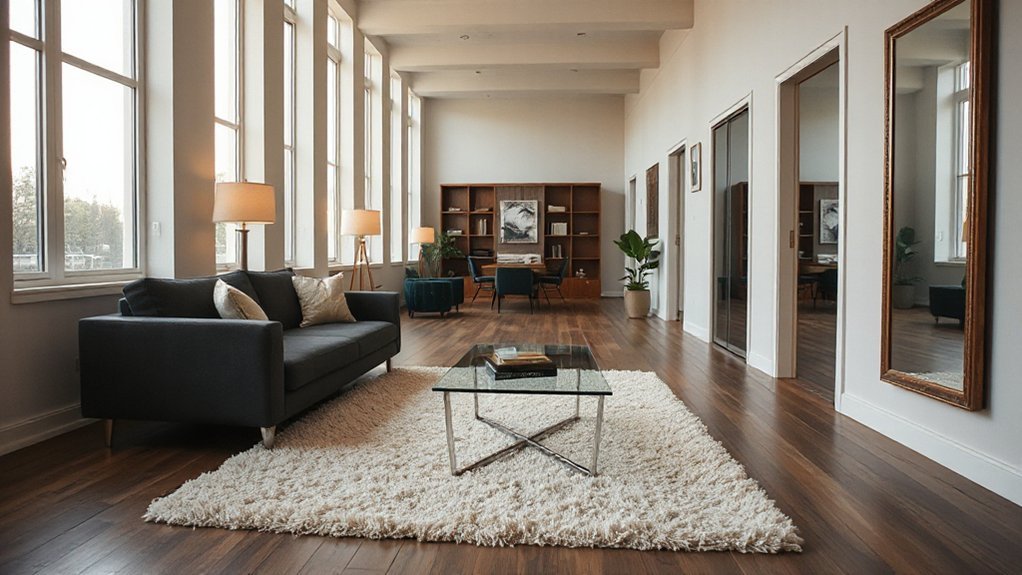
A narrow room can feel wide-stretched yet still feel intimate when you plan with intention. You’ll map a clear path, define zones, and choose furniture that’s slim, leggy, and multi-functional to keep sightlines open. As you balance light, color, and texture, you’ll create moments that draw you in without crowding, with mirrors and smart storage quietly expanding the space. Keep moving choices around and the space will start telling you what it needs next.
Define Your Goals for a Narrow Living Room
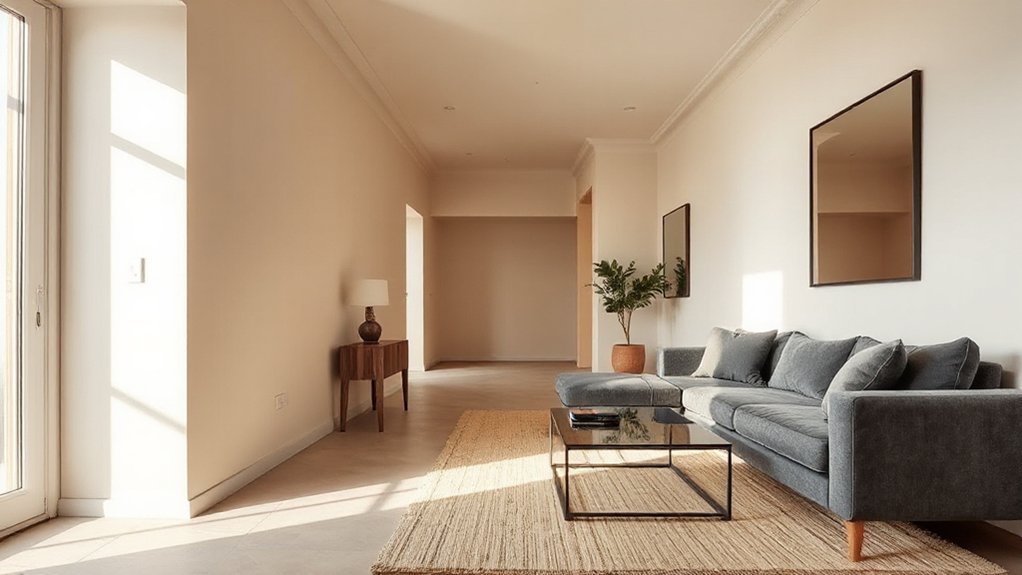
When you decorate a narrow living room, start by clarifying what you want the space to do for you and your daily life. You’ll set goals that shape every choice, from scale to placement. Define functions first: the room where you relax, entertain, work, or read. Map how you need to move through the space without friction, and identify must-haves vs. luxuries. With clarity, you’ll guide furniture placement and lighting so each zone serves a purpose without crowding walls. Prioritize color coordination to create continuity, depth, and mood—soft neutrals with a few bold accents can visually expand. Plan to balance form and function, ensuring surfaces stay easy to clean and maintain. Your goals become the compass for practical, cohesive, visionary decorating.
Plan Layout: Create Flow and Functional Zones
Plan layout by carving the room into clear, interconnected zones that support your daily rhythms. You’ll guide traffic, define use, and keep sightlines open, so every area feels purposeful rather than cramped. Start with a subtle main path from entry to seating, then anchor each zone with sight, sound, and texture. Use rugs and curtains to softly define edges without walls. Position seating to foster conversation and easy movement, while leaving floor space for flow.
- Establish a central seating cluster that invites conversation and works with traffic patterns.
- Separate a quiet nook for reading or work using curtains or furniture placement.
- Create a display zone for artwork and accessories that doesn’t interrupt paths.
- Use scalable lighting and soft textiles to unify zones.
Color and Lighting to Visually Widen the Space
Light colors keep walls and ceilings feeling airy, while bright spaces reflect more light to expand the feel of the room. You’ll layer lighting—from ambient to task to accent—to eliminate shadows and visually push the edges outward. By balancing hues and glow, you create a cohesive, practical path that makes a narrow living room feel wider and more inviting.
Light Colors, Bright Space
Color and lighting play a crucial role in making a narrow living room feel open and inviting. You’ll learn to harness light tones and reflective surfaces to expand perceived space without overhauling architecture.
1) Choose airy neutrals and whites on walls, ceilings, and trim to bounce daylight across the room.
2) Pick lighting with high lumen output but soft color warmth to avoid glare and keep the space inviting.
3) Integrate accent walls sparingly, using light textures or a pale hue to add depth without narrowing the view.
4) Place decorative rugs strategically to define zones, add warmth, and reinforce the sense of width.
This approach feels practical and visionary, guiding you toward a brighter, calmer, more expansive living area. Accent walls, decorative rugs.
Layered Lighting Effects
Layered lighting can transform a narrow living room by blending ambient, task, and accent layers to widen perception. You’ll start with an even ambient glow from ceiling fixtures or wall sconces that wash walls softly, reducing shadows and creating spatial depth. Pair this with task illumination at seating areas, using adjustable floor or table lamps so you direct light where you read or chat, not glare into the room’s core. Add accents—behind art, under shelves, or along architectural features—to carve focal points without crowding sightlines. Choose warm, cohesive temperatures that blend across layers, avoiding contrast that pulls the eye into corners. By balancing brightness, color, and direction, you visually expand the space while keeping it intimate and intentional.
Layer Textures for Cozy, Clutter-Free Depth
Layer textures add depth without clutter by layering finishes you actually touch—soft throws, woven rugs, and tactile curtains. You’ll balance coziness with clean lines, so surfaces stay inviting yet uncluttered. Start by pairing one plush element with two smoother textures to create subtle, cohesive depth.
Layered Textures for Depth
Texture is your secret weapon for depth in a narrow living room; start by mixing tactile surfaces—soft wool throws, a nubby jute rug, smooth leather, and matte wood—so eye travels naturally from one layer to the next. You’ll create textural contrast across zones, guiding attention without crowding space. Build a rhythm with deliberate, tactile layering that reads as cohesive, not cluttered.
- Layer a plush throw over a sleek sofa to emphasize contrast and comfort.
- Pair a textured rug with flat-woven pillows for visual depth.
- Add a leather accent to sharpen edges against soft fabrics.
- Introduce matte wood finishes to ground the palette and unify layers.
Cozy, Clutter-Free Surfaces
Cozy, clutter-free surfaces start with thoughtful restraint: choose a few tactile textures that feel intentional rather than decorative. You’ll layer quality materials in a restrained palette to keep the eye focused and the room calm. Select one or two vintage accents to anchor the look without shouting; a weathered tray, a leather strap, or a brass knob can read as curated detail. Pair these with statement artwork placed above seating to draw the eye without crowding surfaces. Keep surfaces near seating clear: remove nonessential items and store extras out of sight. Use open shelving sparingly, with a single run of items per shelf. Finish with soft textiles that add warmth, not overwhelm, creating depth through measured texture and cohesive color.
Pick Focal Points That Ground the Room
In a narrow living room, choosing a focal point helps the space read as deliberate rather than cramped. You’ll anchor the eye with deliberate choices, then build the rest around them for room grounding and cohesion.
- Choose a strong anchor like a recessed fireplace, art, or a sculptural sofa profile to define the primary line.
- Use complementary colors and textures to support the focal point without competing for attention.
- Align the arrangement so seating faces the focal point for natural conversation and flow.
- Let lighting emphasize the center—spotlights, wall washes, or a striking floor lamp—to reinforce focal point selection.
With this approach, you guide perception, create rhythm, and preserve openness.
Smart Storage to Reduce Visual Bulk
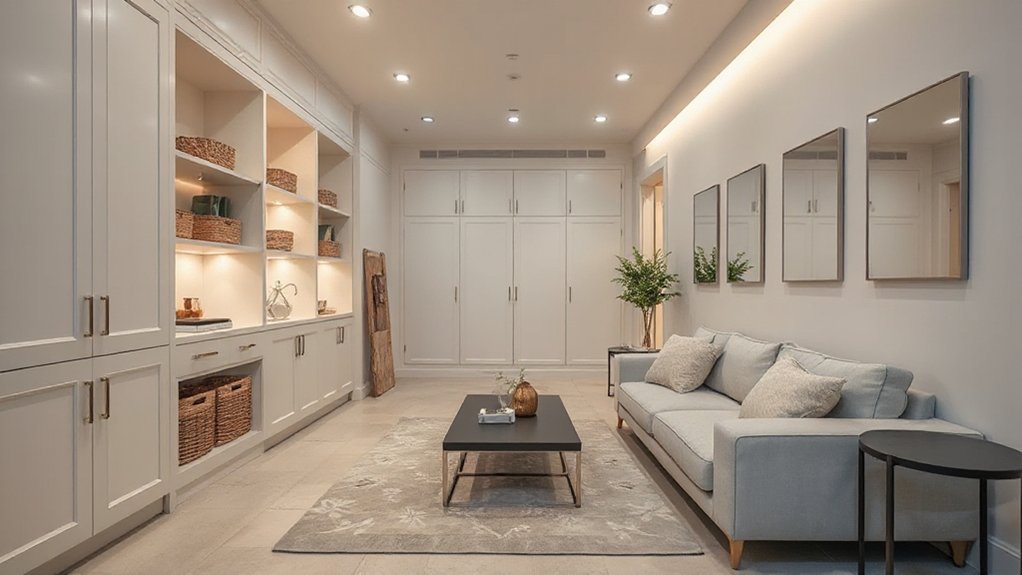
Smart storage keeps a narrow living room from feeling cluttered by tucking away essentials and visual distractions. When you plan, think vertical and under-furniture options that hide everyday items without shouting for attention. Choose hidden storage within coffee tables, benches, or wall-mounted cabinets to keep surfaces clean and lines uninterrupted. Multipurpose furniture becomes your ally: a console that opens to reveal board games, a sofa bed with integrated bins, or ottomans that store throws and magazines. Label containers and group similar items to simplify visibility, so you’m not chasing clutter all day. Keep cords managed with slim, recessed runs and magnetic strips inside closet doors. By prioritizing concealed solutions, you maintain spaciousness while maintaining ready access to essentials.
Quick Decor Tweaks for Big Footprint Impact
If you want to make a narrow living room feel bigger in a hurry, start with a few quick decor tweaks that punch up the footprint without breaking the bank. You’ll regain airiness by smart art placement and clean lines that draw the eye outward, not crowd it. Window treatments should be light, tall, and unobtrusive to extend sightlines and height. Now, practical steps:
1) Shift art to eye level and group in odd numbers for momentum
2) Choose sheer or light-colored drapes that reveal the window
3) Opt for furniture with slim silhouettes and exposed legs
4) Add mirrors strategically to double perceived space without clutter
Frequently Asked Questions
How Can I Measure a Narrow Room Accurately?
You measure your narrow room accurately by marking corners, doorways, and wall lengths with a tape measure, then cross-checking diagonals. Use simple color schemes and smart lighting techniques to visualize space and create cohesive, practical harmony.
What Scale Furniture Works Best in Tight Spaces?
You’ll want compact scale furniture, about 1/3 to 2/3 the room’s length, so it fits without crowding. Choose light colors, cohesive color schemes, and layered lighting effects to visually expand depth and maintain practical flow.
Can Mirrors Actually Widen a Narrow Living Room?
Yes, mirrors widen spaces, like chaos meeting calm. You’ll pair wall mounted decor with light color palettes, reflecting light and height. Stay practical yet visionary, focusing on balance, contrast, and rhythm to visually expand your narrow living room.
How Do I Minimize Traffic Obstructions With Seating?
To minimize traffic obstructions with seating, you’ll arrange clear pathways, cluster seating, and use color coordination to delineate zones. Employ lighting techniques to guide flow, illuminate aisles, and create a cohesive, visionary, practical layout you’ll love.
What Are Affordable Tricks to Create Visual Width Fast?
Color schemes collapse space like a hyperdrive, and you’ll see width instantly. Use bold decorative accessories, mirrors, and lighter walls to widen, while you experiment with subdued accents, practical layouts, and visionary, cohesive tricks that feel affordable and fast.
Conclusion
You’ll transform a narrow living room into a bright, breathable retreat you actually love to live in. Keep your flow clear, define zones with rugs, and choose slim, airy furnishings that don’t crowd the corridor. Use mirrors and layered lighting to expand the space, and smart storage to keep visual clutter at bay. By mixing texture and thoughtful color, you’ll create a cohesive, inviting sanctuary that feels twice as wide— Materials and ideas converging like a flawlessly tuned orchestra. Literally universe-wide chic.
About the Author