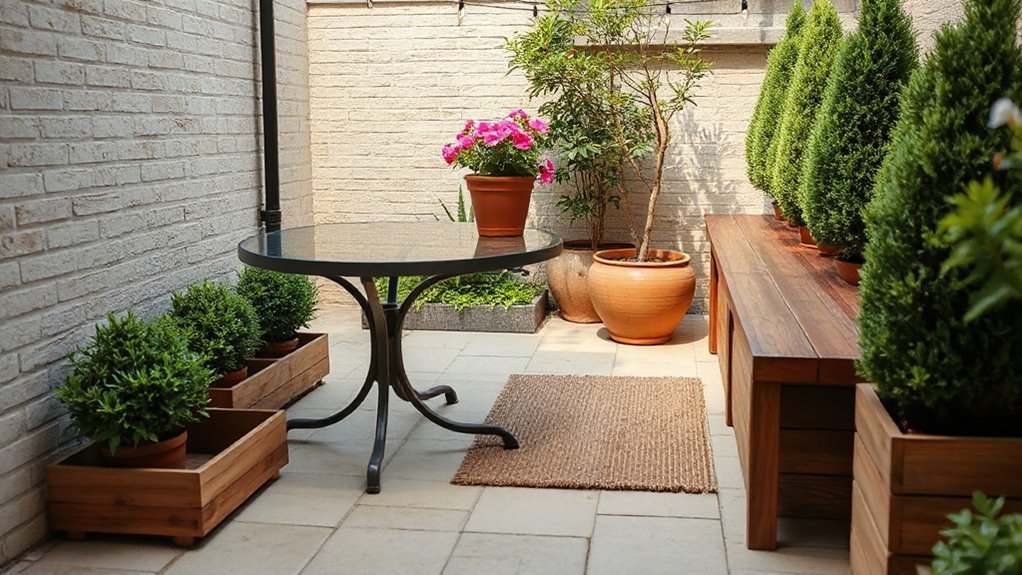
You design a compact patio by defining clear zones for seating, dining, and plant edges, ensuring smooth flow with simple pathways. Choose durable, low‑maintenance materials like concrete pavers or porcelain, and anchor the space with lighting that highlights focal points. Use a cohesive palette with contrasting accents, pick space‑saving furniture, and plan for year‑round utility with smart weatherproofing—all while balancing privacy and openness. A well‑considered layout just might reveal the next practical step.
Define Your Compact Patio Zone
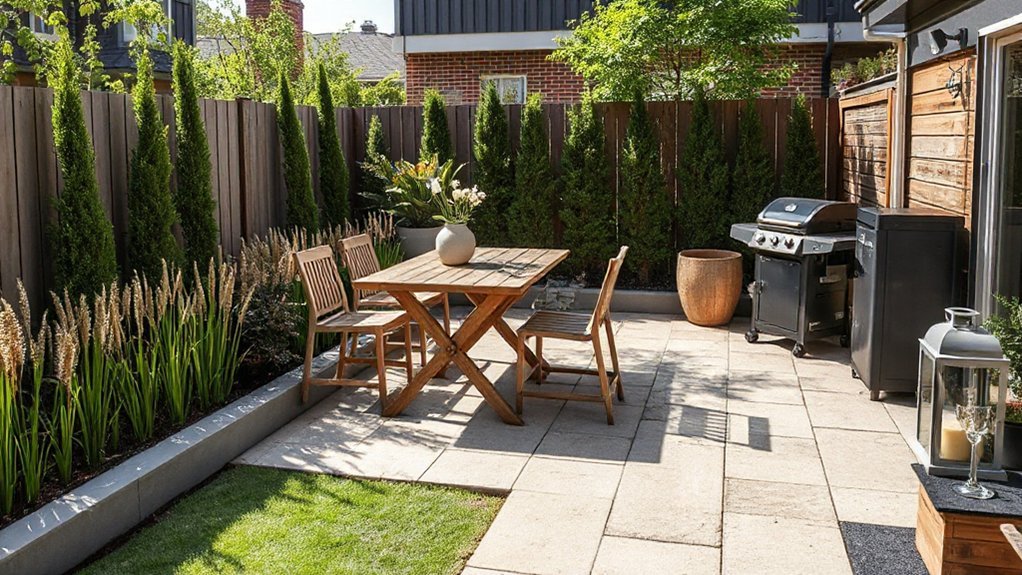
A compact patio begins with a clear zone plan. You map zones by function: circulation, seating, dining, and subtle green edges. Define boundaries with low, visually light edges to preserve openness, avoiding clutter. Prioritize sightlines that extend your yard’s depth, using mulch or gravel to delineate zones without heavy contrast. Consider Garden lighting as a guiding tool; place fixtures to emphasize paths and highlight focal points without glare. For Plant selection, choose compact specimens with refined silhouettes that won’t overwhelm space, opting for vertical cues like slender trees or trellised vines. Keep plant palettes cohesive, repeating a restrained color spectrum and texture. Document measurements, sun exposure, and irrigation needs to guarantee each zone remains usable, low-maintenance, and aesthetically balanced.
Select Durable Materials for Tiny Patios
Choose durable surface options that stand up to foot traffic and weather, like concrete pavers, porcelain tiles, or bluestone. Favor maintenance-friendly finishes that resist staining and ease cleaning, so you spend less time upkeep and more time enjoying the space. Prioritize consistency in texture and slip resistance to balance safety with a cohesive, polished look.
Durable Surface Choices
When choosing durable surfaces for a small patio, weigh longevity, maintenance, and slip resistance to maximize usable space. You want materials that tolerate sun, freeze, and foot traffic without heavy upkeep. Stone pavers offer a natural texture and cool feel underfoot, but spacing and base prep matter to prevent shifting. Concrete overlays provide a smooth, uniform look with tight joints and fast installation, ideal for tight layouts. Consider color, finish, and edge restraint to reduce water penetration and weed growth. Drainage should be integrated into the design, using slightly pitched surfaces and appropriate slopes. Choose materials with proven weather resistance and low absorption to minimize staining. Balance aesthetics with practicality, ensuring alignment with surrounding textures and the overall garden rhythm. stone pavers, concrete overlays.
Maintenance-Friendly Finishes
Small patios benefit from finishes that stay clean and perform under sun and foot traffic. You’ll choose maintenance-friendly options that resist staining, fading, and spatter, without frequent resealing. Opt for low maintenance materials that tolerate weather shifts and daily use, so upkeep stays quick and predictable. Favor sealed textures or non-slip surfaces that are easy to clean with a quick sweep and light wash, preventing buildup in tight joints. Prioritize durability over novelty; durable materials reduce replacements and save effort over time. Eco friendly finishes matter, but select products with proven longevity and minimal VOCs to protect both space and you. Combine seamless color, subtle texture, and simple joints to minimize dirt traps while preserving a refined, cohesive look.
Pair Colors and Textures for Small Spaces
Pairing colors and textures in a small patio hinges on contrast and cohesion: light walls or furniture bounce sunlight to visually expand the space, while textures add depth without crowding the area. You balance color pairing by choosing a dominant hue and two accents, ensuring tonal harmony and legible progressions. Texture mixing introduces tactile interest without clutter; pair smooth surfaces with restrained roughness—ceramic, wood, textiles—in measured quantities. Keep a consistent material language across elements to avoid disjointed moments. Implement scale-aware contrasts: small patterns read as noise; large, solid planes read as calm anchors. Use reflective surfaces sparingly to amplify light without creating glare. Test palettes at different times of day; observe how natural light shifts perception, then refine.
Choose Space-Saving Furniture
Opt for compact seating that supports easy circulation, prioritizing comfort without crowding the patio. Use stackable or foldable options and consider multiuse pieces to maximize flexibility between lounging, dining, and storage. A cohesive furniture strategy blends form and function, enabling a clean, efficient, and visually balanced outdoor room.
Compact Seating Options
Can you maximize seating without crowding the patio? You’ll choose compact options that blend form and function, prioritizing footprint, comfort, and flow. Opt for slim-frame chairs, built-in benches with storage, and nesting stools that tuck away after use. Select pieces with modular potential so you can reconfigure for gatherings or solo relaxing. Integrate surface-free dining or side tables to keep pathways clear, and consider chairs with fold-flat backs for seasonal removal. For ambiance, coordinate garden lighting and plant selection to anchor seating zones without visual clutter. Prioritize durable materials and low maintenance finishes to maintain a pristine look. Your goal is a cohesive, breathable seating plan that feels spacious despite limited area.
- Slim, modular seating components that fold or nest
- Built-in benches with storage and seating height harmony
- Compact, multi-use tables paired with adjustable lighting
Stackable Furniture Strategy
A stackable furniture strategy keeps the patio open without sacrificing seating variety. You select modular pieces that nest, stack, or fold, maximizing floor space while preserving visual calm. Choose low-profile profiles and neutral finishes to maintain cohesion with greenery and paving. Prioritize pieces with built‑in rotation or flip mechanisms to reconfigure seating fast for guests or dining. Materials should resist weather and fade, with quick‑dry cushions stored when not in use. Integrate vertical gardening nearby to draw the eye upward without crowding the deck, using slim planters that rest on shelves or walls. Pair with discrete lighting solutions—LED strips, step lights, and pocket sconces—to define zones without clutter. Keep pathways clear, balancing function with a refined, understated aesthetic.
Multiuse Patio Pieces
Flexible, space-saving patio pieces redefine how you use small outdoor areas. Choose furniture that serves dual roles, maximizing function without clutter. Multiuse pieces keep sightlines clean while delivering comfort, durability, and style. Opt for folding or nesting designs, built-in storage, and modular configurations that rearrange for entertaining, dining, or lounging. Integrate garden lighting and subtle outdoor decor to extend usability after dark and elevate ambiance. Prioritize weather resistance and easy maintenance to sustain longevity in tight spaces.
- Nesting tables and benches that double as storage
- Modular seating with detachable cushions and concealed rails
- Folding dining sets linked to compact storage
These choices streamline layout, emphasize material harmony, and enhance nighttime appeal with discreet garden lighting and cohesive outdoor decor.
Plan Circulation, Zoning, and Visual Expansion
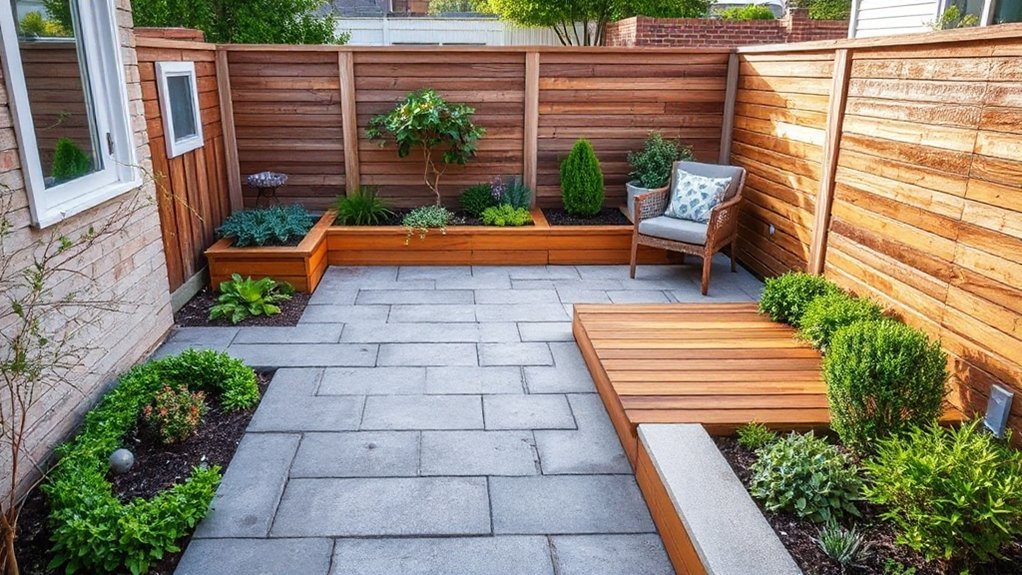
Plan circulation, zoning, and visual expansion by outlining clear pathways, defining functional zones, and guiding the eye with intentional sightlines. You map how people move, keeping traffic flow smooth and unobtrusive. Route connections to seating, dining, and access points without clutter, using narrow, permeable borders to soften progressions. Zone allocation should reflect use: a compact dining area near the house, a contemplative corner, and a play or planting strip as needed. Visual expansion comes from aligned edges, repeated materials, and vantage points that reveal beyond the patio. Integrate landscape lighting to extend usability after dark and subtly highlight focal trees or sculpture. Use privacy screens where needed to create intimate rooms without closing views, preserving openness elsewhere.
Make It Year-Round: Weatherproofing and Maintenance
To keep your patio usable year-round, prioritize weatherproofing and low-maintenance upkeep that protect structure and finishes while preserving its aesthetic.
- Inspect and seal joints, then apply UV-stable finishes to resist sun, rain, and temperature swings.
- Choose durable, low-maintenance materials, integrate hidden drainage, and plan for seasonal plantings to soften edges without increasing upkeep.
- Install efficient outdoor heating options and smart controls, paired with weatherproof cushions and removable covers for rapid seasonal shift.
Seasonal plantings frame the space without heavy maintenance, while outdoor heating extends usable windows. Guarantee gutters, drains, and fascia are clear, and use breathable fabrics and rust-resistant hardware. A tight fabric of protection and simple routines keeps the patio stylish and functional, with minimal disruption to daily use.
Upgrade on a Budget for a Chic Patio
Spruce up a chic patio without breaking the bank by prioritizing smart, high-impact updates over expensive renovations. You’ll improve perceived value with targeted choices that balance form and function. Start with durable, lightweight furniture that folds or stacks for flexibility, then apply a cohesive color palette to unify small spaces. Upgrade surfaces using affordable composite tiles or treated pavers to create clean, low-maintenance zones. Enhance ambiance with Vintage lighting placed at focal points to draw the eye without overpowering the area. Add decorative planters in varied heights for vertical interest and to frame seating. Opt for modular storage to reduce clutter and keep tools accessible. Finish with weatherproof textiles and a simple irrigation plan to sustain the aesthetic with minimal upkeep.
Frequently Asked Questions
How to Maximize Seating Without Crowding a Small Patio?
Maximize seating by clever Furniture arrangement and compact, modular pieces that tuck along edges. Use corner benches, stackable chairs, and a slim dining set. Choose cohesive Color schemes to visually unify gaps, preserving flow and avoiding crowding.
What Lighting Works Best for Intimate, Compact Spaces?
You should use string lights and lanterns for intimate, compact spaces. In a case study, you’d outline dimmable LEDs, warm hues, and targeted uplighting to heighten texture. You’ll achieve depth, warmth, and architectural focus with practical layouts.
How Can Vertical Gardening Enhance a Tiny Patio?
Vertical gardening enhances a tiny patio by adding depth without footprint. Use container gardening with vertical planters to maximize greenery, improve microclimates, and simplify maintenance while keeping pathways clear and aesthetics refined.
Which Scent-Friendly Plants Suit Small Outdoor Areas?
A scent is a compass: you’ll thrive with compact, scent-friendly picks. Choose scented herbs like thyme and lavender, and fragrant shrubs such as dwarf lilac. You’ll maximize impact in small spaces without overpowering air quality or maintenance.
How to Create Multi-Season Comfort on a Tiny Patio?
You’ll create multi-season comfort by choosing compact, weatherproof garden furniture and layering with insulated cushions. Use weatherproof materials, install a lightweight pergola for shade, and cue flexible lighting to extend usability from spring through fall.
Conclusion
Design your compact patio with clear zones, durable materials, and cohesive color accents to maximize every square foot. Favor space-saving furniture, tight circulation, and visual expansion through consistent textures and lighting. Weatherproofing and low-maintenance choices keep it practical year-round, while smart planting adds privacy without crowding. Fun fact: small patios can feel 20–30% larger with a single continuous material and strategic light. Keep it simple, balanced, and adaptable for evolving seasons and needs.
About the Author