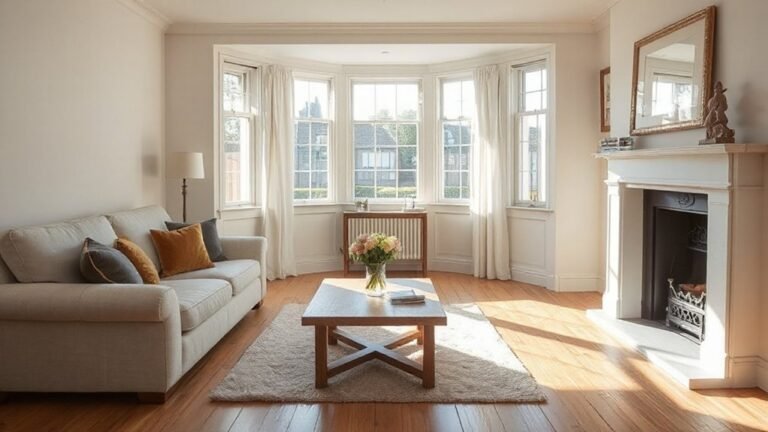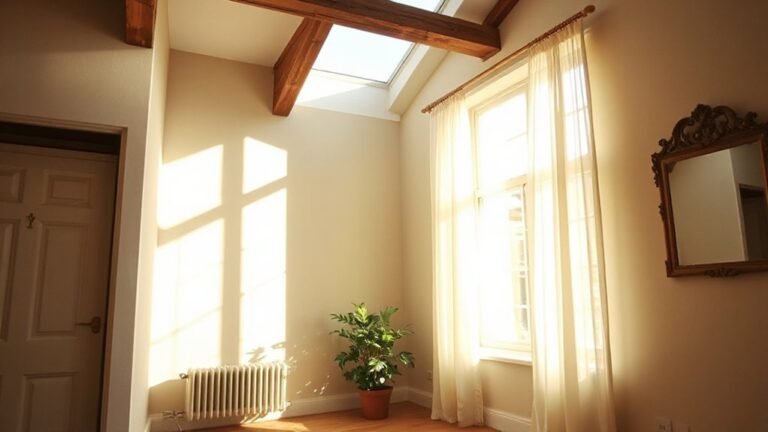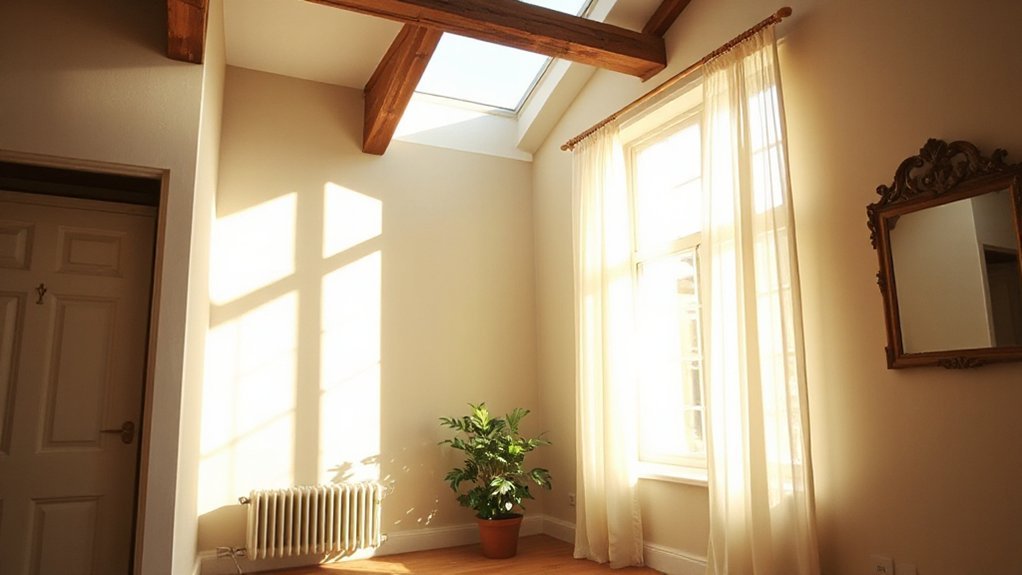
You’ll likely double the daylight in your old UK property—if you navigate the constraints with precision. You map current daylight patterns, assess room use, and identify where reconfigurations or brighter finishes can make the greatest impact, all while respecting heritage constraints. You’ll weigh window and door upgrades against planning, consider reflective surfaces and light-coloured decor, and plan seasonal strategies to sustain brightness without compromising safety or energy goals. The next step invites you to sketch a practical, phased approach.
Assess Your Existing Light and Opportunities
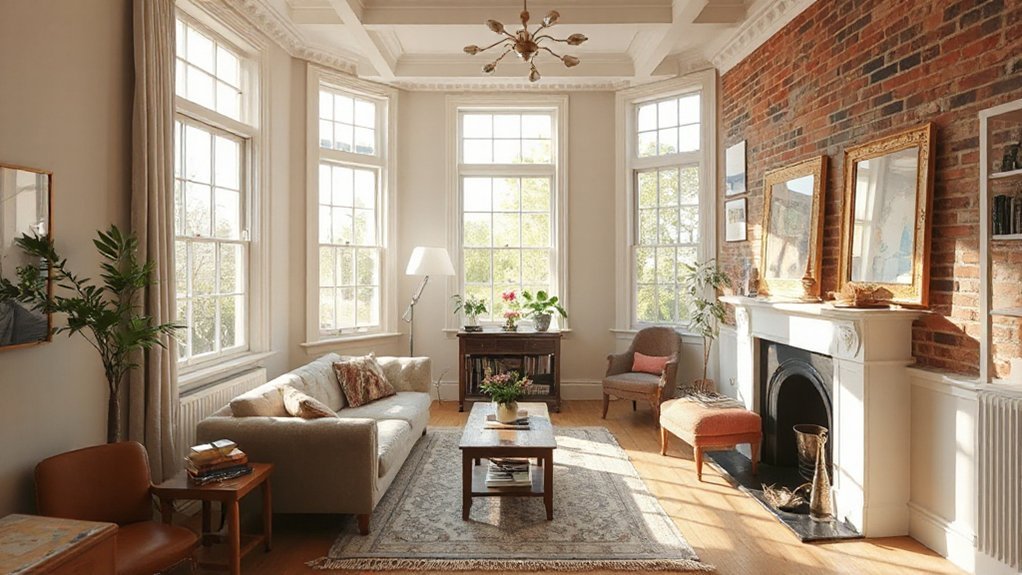
Evaluating your existing light and opportunities begins with mapping current illumination across each room. You’ll catalog brightness levels, glare, and shadow patterns at different times of day, noting how occupants use spaces.
Measure window orientation, surface reflectance, and ceiling height effects to quantify available daylight potential. Identify natural shading influences—overhangs, curtains, and obstructions—that reduce or redirect light.
Consider how daylight sensors could automate adjustments to optimize comfort and energy use without sacrificing visibility. Document wall colors and material finishes since luminance changes alter perceived brightness.
Create a simple grid that links window size to usable illumination, factoring task needs and occupant activity. This baseline guides targeted improvements, ensuring subsequent changes align with real daylight behavior rather than assumptions.
Reconfigure Spaces for More Daylight
Reconfiguring spaces for more daylight starts with purposeful layout changes that reduce obstructions and maximize light paths. You should map existing sightlines, noting fixed features that interrupt daylight reach. Then reallocate high-use zones to align with north-south light flow.
Prioritize open-plan passages or targeted alcoves that permit cross-illumination without introducing glare. Use partial-height partitions or movable screens to maintain views while keeping lines of brightness intact. Curtain placement becomes a tool to modulate daylight intensity seasonally, avoiding heavy fabrics that soften or trap light.
Consider corridor and stair configurations to minimize shadowing on primary living areas. Skylight installation, when feasible, adds torso-level light corridors and reduces reliance on artificial lighting.
Guarantee structural compatibility and moisture management before any alteration, documenting observed constraints.
Upgrade Windows and Doors in Period Homes
Upgrading windows and doors in period homes requires a careful balance between preserving historic character and improving performance. You assess frame materials, sash design, and glazing options to minimize visual impact while maximizing daylight and thermal efficiency.
Prioritise historically informed specifications: slim profiles, authentic corner joints, and appropriate lintels to maintain proportion and rhythm on the façade. You evaluate glazing performance with double or triple glazing, low-emissivity coatings, and argon fills, preserving light transmittance without compromising energy targets.
Installations should respect historic preservation guidelines, avoiding over-dimensioning or obtrusive hardware. Consider daylight quality, glare control, and weather sealing to reduce drafts.
The result emphasises aesthetic enhancement through careful detailing, achieving brighter interiors while safeguarding architectural integrity and long-term sustainability.
Reflective Finishes to Brighten Rooms
Reflective wall finishes, mirror placement strategies, and glossy floor surfaces can collectively amplify daylight by bouncing light deeper into rooms. However, each option requires careful consideration of room size, reflexivity, and glare.
You’ll want to map sightlines and assess material brightness, color temperature, and maintenance needs to guarantee the reflections enhance, not overpower, the existing light.
This discussion frames how to balance aesthetics with performance to optimize natural illumination in older UK properties.
Reflective Wall Finishes
Glossy, light-colored wall finishes can considerably boost ambient brightness in older UK properties by maximizing daylight diffusion and reducing perceived shadows. You’ll evaluate interior wall treatments that reflect and scatter light without requiring major structural changes.
Satin or semi-gloss paints, high-reflectance plasters, and specialized wallpapers can create uniform luminance, improving perceived room size. Consider pigment and sheen to avoid glare while preserving color accuracy.
In practice, you combine material selection with surface texture control: smoother finishes yield more predictable diffusion; microtextured options can mitigate hotspots. Where exterior reflectors influence interior illumination, confirm external glazing and shading don’t negate interior brightness gains.
Document measurable gains via luminance tests to verify consistency across wall surfaces, and align finishes with existing architectural detailing for cohesive, daylight-positive interiors.
Mirror Placement Strategies
Mirror placement can amplify the benefits of reflective finishes by redistributing available daylight deeper into a room. In practice, you should position mirrors to create layered reflections that extend sightlines and minimize shadowed zones without causing glare.
Place mirrors opposite key light sources to maximize light reflection, but avoid direct exposure to strong afternoon sun which can cause hotspots. Consider wall-mounted, freestanding, or cabinet-integrated options to tailor spread patterns to room geometry.
Align edges with architectural features to maintain visual coherence and reduce perceived clutter. For narrow or deep rooms, use a series of smaller mirrors rather than a single large panel to create a stair-stepped diffusion effect.
Regularly reevaluate angles after furniture changes, ensuring reflections preserve brightness without compromising function.
Glossy Floor Surfaces
Glossy floor surfaces use their high-sheen finish to bounce daylight across a room, effectively extending the perceived depth of space in older UK properties. You assess how reflective finishes modify light paths: smoother, uniform surfaces minimize scattering, increasing directional daylight penetration from windows and skylights.
Consider material compatibility with existing substrates, as the calibration of gloss levels affects glare, color fidelity, and perceived warmth. High-gloss coatings can reveal subfloor irregularities, so surface preparation and curing conditions matter for durable brightness.
In practical terms, opt for mid-to-high gloss levels where traffic and wear are manageable, and use UV-stable sealants to preserve reflectivity. Regular maintenance, including non-abrasive cleaning, sustains the impact of glossy floors on overall luminance.
Reflective finishes enhance daylight distribution without structural changes.
Fabrics, Colors, and Decor That Multiply Light
Strategically choosing fabrics, colors, and decor can particularly amplify available daylight by enhancing reflectivity and perceived brightness. You assess surface finishes, selecting textile textures that scatter light rather than absorb it, such as matte weaves and lightly brushed fibers.
Pair these with restrained color palettes that lean toward cool whites, pale grays, and soft pastels to preserve luminance without washing out architectural details. Avoid high-gloss materials on walls and upholstery, which can create harsh hotspots.
Use mid-tone neutrals to anchor rooms while allowing daylight to circulate; incorporate reflective accents—glass, mirrors, and metallics—sparingly to prevent glare. Consider scale and contrast: large, light-dominated panels outperform small, dark patches.
In particular, fabrics and color strategies should maximize diffusion, depth, and continuity of daylight throughout the space. Textile textures, color palettes.
Ventilation, Safety, and Planning Permissions
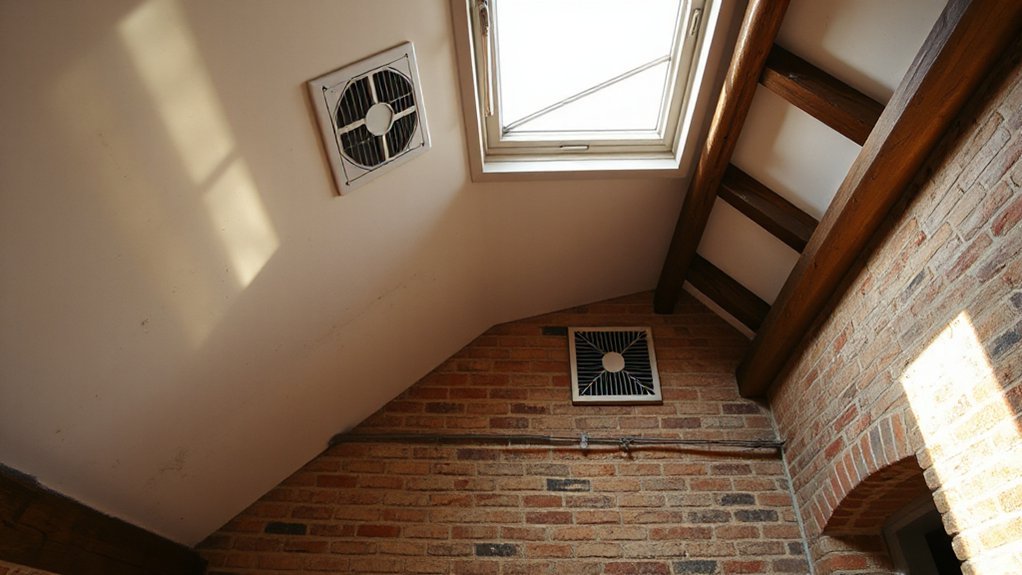
You’ll assess ventilation options and upgrades to guarantee air quality while preserving natural light in older UK homes.
Consider safety implications for window adjustments and new openings, including egress, glazing, and thermal performance, to prevent risks and comply with best practices.
For planning permissions, outline when changes require consent, and identify the relevant authorities and evidence you’ll need to document for approvals.
Ventilation Considerations Upgrades
Ventilation upgrades in older UK properties must balance performance, safety, and planning constraints; you’ll need a clear plan that addresses current fabric conditions, occupant needs, and regulatory requirements.
You assess existing ventilation paths, airtightness, and moisture risk, then quantify air-change targets compatible with daylight-driven spaces. Choose low-resistance strategies to minimize heat loss while meeting IAQ standards, prioritizing controllable exhausts in damp zones and continuous supply where needed.
Consider passively venting options alongside selective mechanical systems, sized to building fabric and occupancy patterns. Integrate indoor plants to help humidity moderation but avoid hygroscopic species in damp areas.
When feasible, deploy ceiling fans to improve air distribution without compromising insulation. Document compliance steps, maintenance regimes, and potential retrofit sequencing within planning constraints.
Safety Aspects For Windows
In older UK properties, windows are a focal point for both daylighting and safety considerations, especially when upgrades touch ventilation paths, potential openings, and planning permissions. You assess how changes affect air exchange without compromising security or egress.
Prioritise window security by selecting robust locking mechanisms, tamper-resistant hardware, and reliable hinges that maintain structural integrity under load or impact.
When evaluating emergency escape, verify that any alteration preserves or improves clear, unobstructed exit routes with compliant sill heights and opening angles.
Consider compliant glazing options and frame materials that resist forced entry while supporting ventilation requirements.
Document risk assessments for occupancies, ensuring that venting provisions don’t create inadvertent access points.
Balance daylight gains with controlled access, maintaining functional safety without unnecessary obstruction.
Planning Permissions Guidance
Planning permissions for ventilation and safety changes in older UK properties require a precise, evidence-based approach that aligns design intent with statutory requirements. You’ll navigate Historic preservation considerations alongside Building regulations, ensuring alterations don’t compromise character or fabric.
Start by identifying applicable planning and, where relevant, listed-status constraints. Then assess how proposed ventilation upgrades intersect with habitable space quality and fire safety.
Building regulations govern structural integrity, moisture control, and energy performance, so you’ll document measurements, performance criteria, and mitigation strategies.
When windows, skylights, or means of ventilation change, you’ll prepare detailed drawings, testing data, and risk assessments to demonstrate compliance and minimize impact on historic assets.
Engage early with planning authorities and conservation officers to streamline approvals and uphold both safety and heritage objectives.
Seasonal Light Strategies for Year‑Round Brightness
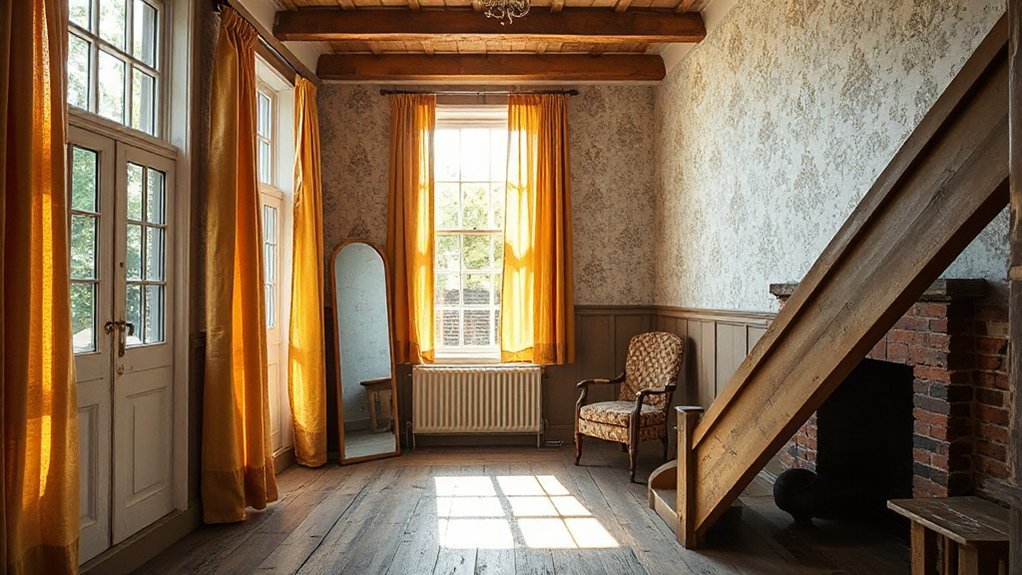
Seasonal light strategies optimize brightness by aligning window use and interior layout with the sun’s annual path. You adjust aperture and shading to track seasonal sun angles, maximizing daylight in winter while preventing overheating in summer.
In practice, you map room functions to cardinal exposure, prioritizing south-facing panes for consistent illumination during low-angled sun periods. Use vertical and horizontal integrations, such as light shelves and reflective surfaces, to extend daylight deeper into interiors without increasing glare.
Evaluate glazing performance across seasons and calibrate blinds or louvers to modulate irradiance while preserving visual comfort. This approach balances lighting aesthetics with energy efficiency, and it guarantees historical preservation requirements by avoiding invasive alterations and maintaining authentic fenestration where feasible.
Continuous monitoring ensures year-round brightness without compromising architectural integrity.
Plan and Implement a Balanced Daylight and Lighting Scheme
A balanced daylight and lighting scheme begins with a precise assessment of room functions, window orientations, and fabric reflections. Then it translates those factors into targeted layout and fixture decisions.
You map daylight potential across the day, aligning glazing with task zones and circulation routes to minimize glare and heat gain. Then you specify window treatments to modulate solar ingress, daylight angles, and privacy, maintaining a constant perceptual brightness.
For artificial lighting, you choose a layered approach: ambient, task, and accent layers, integrating dimmable LED fixtures and color temperatures suited to activities and times of day. Document control strategies, including sensors and programmable scenes, to preserve natural light while ensuring consistent performance.
Finally, review materials, finishes, and contrasts to sustain reflectance and reduce energy demand.
Frequently Asked Questions
How Can Daylight Affect Property Value in Older UK Homes?
Daylight improves property value; you’ll notice higher interior brightness and stronger market appeal as you upgrade. Interior brightness increases perceived space, while window enhancements can yield better energy efficiency and daylight metrics, supporting appraisal and buyer enthusiasm.
What Rental or Lease Constraints Impact Daylight Renovations?
One statistic shows 31% of tenants notice daylight quality affecting satisfaction within 6 months. You must check rental or lease constraints before renovations; window placement and interior reflectors are critical, ensuring compliance, permits, and landlord consent to avoid penalties.
Do Listed Status or Conservation Areas Restrict Light Improvement Work?
Yes, listed status or conservation areas may restrict light-improvement work. You’ll need Planning permissions and consider historical restrictions, as approvals hinge on preserving character; assess impact on façades, skylights, and reflectors before submitting detailed specifications for assessment.
Are There Acoustic Trade-Offs When Increasing Natural Light?
Yes, there can be acoustic trade-offs when increasing natural light. You’ll boost sound insulation and acoustic performance with proper glazing and framing, but large areas may introduce flutter echoes; balanced design preserves daylight while maintaining room acoustics efficacy.
How to Budget for Long-Term Daylight Maintenance in Period Properties?
Daylight budgeting works by forecasting lighting efficiency needs and annual maintenance costs, accounting for seasonal variations. You’ll monitor glazing durability, solar gain, and fixture efficiency, then set reserves for replacements, sealants, and potential efficiency upgrades over time.
Conclusion
You’ve mapped the shadows and traced the sun’s path across your walls. Like a lighthouse keeper, you’ve tuned openings, colors, and fabrics to guide brightness through narrow corridors of history. The plan stands as a compass, not a cage—symbolic daylight steering your rooms toward clarity, while heritage remains the steady hull. With every glazing choice and reflective finish, you light the past’s corridors anew, balancing risk, beauty, and comfort into a single, living beacon.
About the Author