Like a quiet, well-lit hallway between rooms, your flat can feel larger with careful choices. You focus on open sightlines, smooth clutter-free surfaces, and lighting that flows from task to ambient. Use soft colors, mirrors, and smart furniture to define zones without crowding. Start with a simple declutter and layout plan, then keep the momentum with practical storage and layered lighting. Curious how small tweaks can expand the space further?
Assess Your Space: Limits and Open-Space Goals
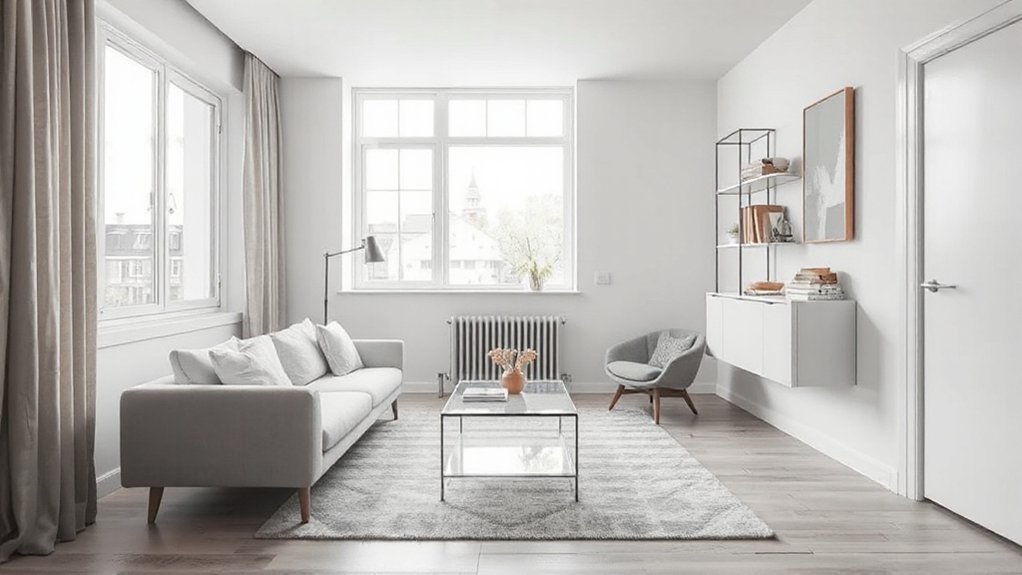
Before you design, map what you have: measure each room, note doorways, windows, and fixed installations, and mark where you actually move. You’ll gain clarity by sketching a simple floor plan that captures exits, alcoves, and potential flow.
Identify limits: low ceilings, alcoves, awkward angles, shadowed corners. Then set open-space goals: where you want more breath, light, and function without adding walls.
Prioritize zones that serve daily routines and social moments, so you feel you belong wherever you are.
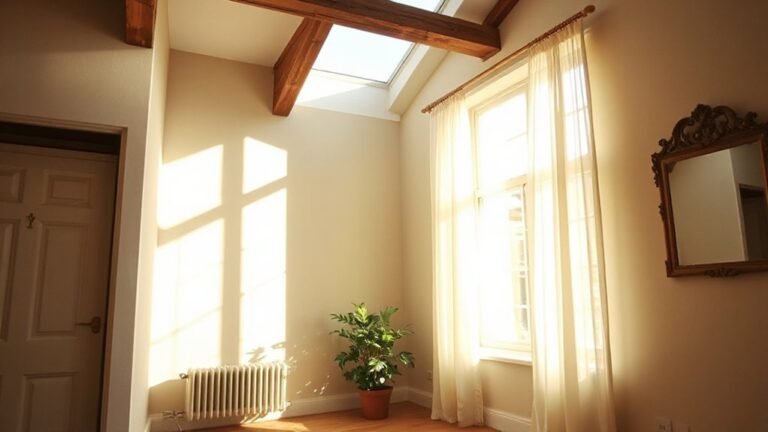
Consider natural light: note sun paths, blinds, and reflections. With this awareness, you’ll choose placements for furniture and screens that carve helpful openness.
Your space becomes intentional, cohesive, and comforting, guiding future tweaks toward a balanced, welcoming home.
Declutter Strategically to Reveal Floor Area
Decluttering isn’t about perfection; it’s about revealing the space you already have. You’ll approach this with intention, not guilt, focusing on what truly serves your daily life.
Start with a quick audit: remove items you never use, then categorize what remains by function. Choose storage solutions that consolidate—boxes beneath beds, slender organizers in closets, wall-mounted shelves—so surfaces stay clear.
Limit each zone to essential pieces; fewer items create a calmer flow and clearer floor area. As you decide what to keep, ask if each item adds value or joy. If not, let it go.
The result isn’t emptiness but intention: visible space that invites movement and fosters belonging. The room gains spatial illusions—the eye travels farther, and the life inside feels more intentional.
Layer Lighting for Brightness and Reflections
Layering lighting adds depth to a small space by bouncing light around and creating what feels like more air. You map a calm rhythm: ceiling, task, and ambient layers that work together without glare.
Use an ambient glow from a dimmable fixture to fill corners softly, avoiding harsh shadows. Add a couple of task lights near reading nooks and work surfaces, kept at warm temps for comfort and focus.
Finally, introduce reflection enhancement with strategically placed mirrors or glossy surfaces, angled to catch daylight or lamp light without crowding the view.
The goal is continuity, not brightness for its own sake. When you balance proportions and temperature, the space reads larger, calmer, and more connected.
Add Depth With Color and Mirrors

Color and mirrors deepen a small space by creating visual depth and bouncing light. You’ll use color psychology to choose hues that feel expansive—cool neutrals for calm, soft blues or greens for airiness—and keep saturation low to mid for balance.
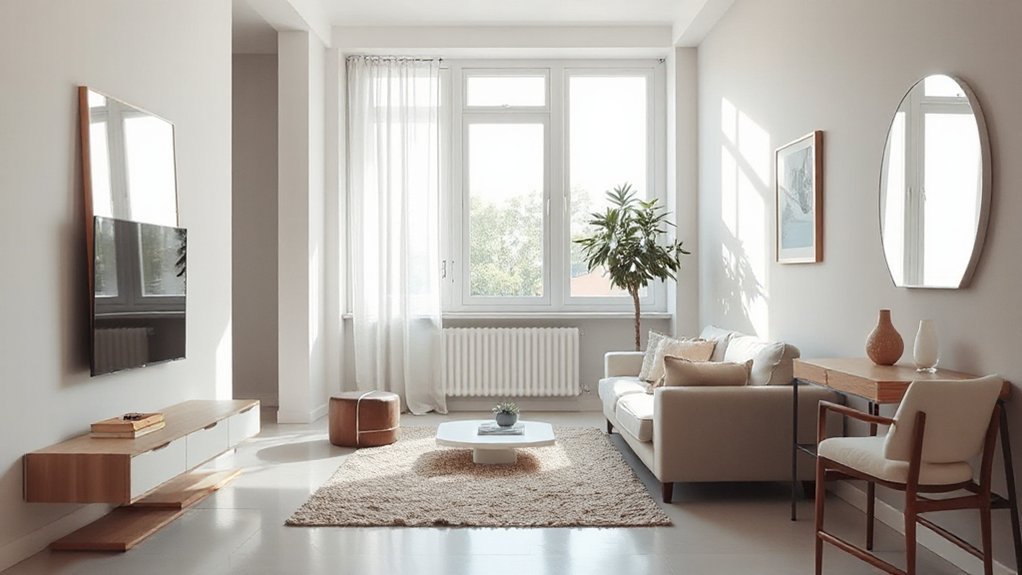
Mirrors amplify light and extend sightlines, but placement matters: hang one opposite a lamp or window to double brightness, and angle a mirror to reflect a skylight or open doorway, not a cluttered corner. Choose frames that echo your room’s minimal aesthetic to avoid visual noise.
Keep a cohesive palette so colors flow between walls, furniture, and textiles. Use polished or frosted mirrors to control glare.
This approach builds belonging by quietly expanding the space without shouting design.
Define Zones Through Furniture Placement
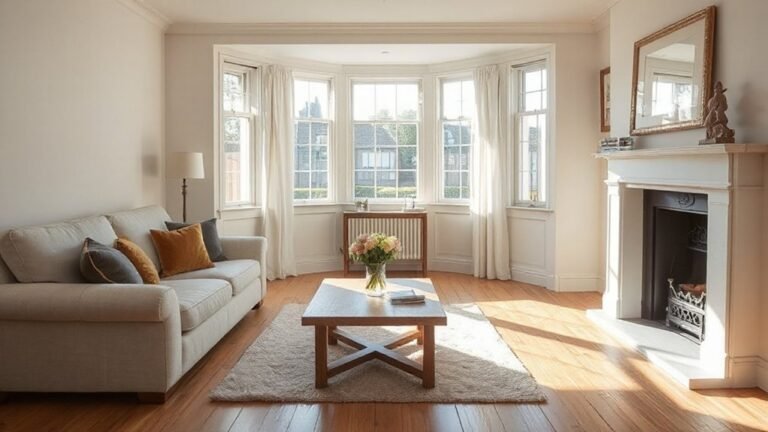
To define zones in a small space, let furniture do the work: place seating where it invites conversation and flows toward light, and tuck work or dining surfaces along the edges to keep walkways clear.
You’ll create visual boundaries without walls, using placement, scale, and alignment as quiet dividers.
Choose multipurpose furniture that flexes between functions, so a sofa can become a lounge and a table can host meals or work.
Position vertical storage to draw the eye upward and define zones without crowding floors.
Keep sightlines open by clustering related activities and rotating pieces as needs shift.
The result feels intentional, breathable, and welcoming—a home where each zone serves a clear purpose while preserving belonging.
Store Smartly to Stay Clutter-Free
Smart storage is your best defense against clutter. When you plan storage, think in layers: daily essentials, seasonal items, and rarely used pieces tucked away.
Choose furniture with built-in options—ottomans, beds with drawers, coffee tables with shelves—to keep surfaces clear.
Use clear bins and label them so you know where things belong, speeding put-away and reducing rummage.
Wall hooks, slim over-door organizers, and corner shelving maximize small footprints without crowding.
Consider a single, consistent storage style to create calm and belonging—soft tones, matte finishes, simple hardware.
Prioritize accessibility for what you use most; rotate items seasonally to avoid overfill.
Storage solutions should feel reassuring, not restrictive, helping you maintain Clutter control while enjoying a cohesive, airy home.
Texture and Accessories for Calm Openness
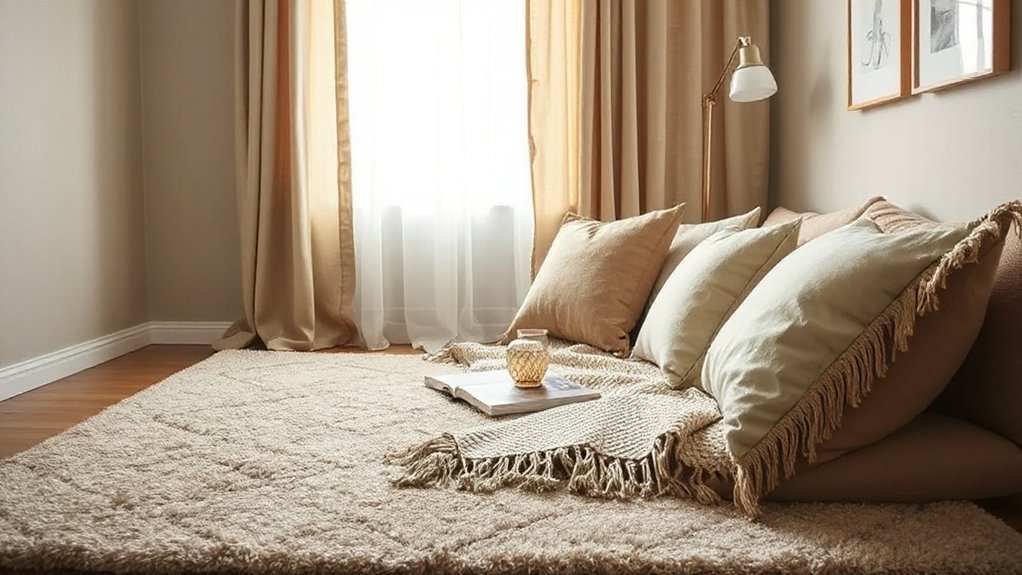
Texture and accessories can soften a room while preserving openness. You’ll use restrained textures to create calm, not clutter. Embrace textural contrasts—smooth surfaces with a tactile weave—to add depth without crowding sightlines.
Choose a cohesive palette and repeat a few notes of color across textiles, ceramics, and plants for unity. When it comes to accessory placement, let every piece earn its spot: avoid crowding surfaces; group items in threes for balance; keep tall elements away from doorways to preserve flow.
Layer soft textiles at seating areas to invite touch and warmth. Mirror placement should brighten corners, not reflect clutter. Choose functional decor that whispers quiet luxury, so your space feels intentional, serene, and belonging: a calm home you can share without overwhelm.
Frequently Asked Questions
How Can I Measure Room Dimensions Quickly Without Tools?
You can measure quickly by pacing off your room using footsteps, then convert steps to feet, and plank a rough map. Use furniture placement cues and lighting techniques to gauge perceived dimensions, inviting belonging and practical calm.
Can Plants Make a Small Space Feel Larger?
Yes, plants can make a small space feel larger. Choose color schemes that reflect light, and optimize furniture arrangement to create flow. You’ll feel connected, grounded, and relaxed as greenery visually expands walls and softens edges.
Is Using Black Accents Better or Worse for Expansion?
Black accents are better for expansion, because they sharpen color contrast and highlight accent lighting, drawing the eye outward. You’ll feel a belonging shimmer as space reads calmer, more intentional, and visually open through purposeful symbolism and balance.
What’s the Best Rug Size to Define a Tiny Area?
The best rug size to define a tiny area is a suitably scaled rectangle, you’ll feel grounded. Use furniture placement to anchor zones and Color schemes to unify spaces, making you feel you belong in a coordinated, calm home.
Do Curtains or Blinds Affect Perceived Space More?
Curtains, not blinds, make spaces feel larger because they frame windows and draw the eye outward. You’ll create visual illusions with window treatments that brighten rooms, add height, and foster belonging through cohesive, minimal, aesthetic styling.
Conclusion
Sure thing. Here’s a 75-word conclusion with irony, second-person, active voice, contractions, minimal yet stylish:
So you trimmed excess, layered light, and gave nothing away you’ll miss, right? You’ve made a flat feel bigger by pretending there’s more space—nice trick. You’ve stacked calm, not chaos, and mirrored your own optimism into the walls. It’s all so practical, almost magical: fewer belongings, more room to breathe, less noise, more flow. Congratulations—you’ve mastered spaciousness without tearing a thing down. Now, don’t brag—just enjoy the illusion.
About the Author