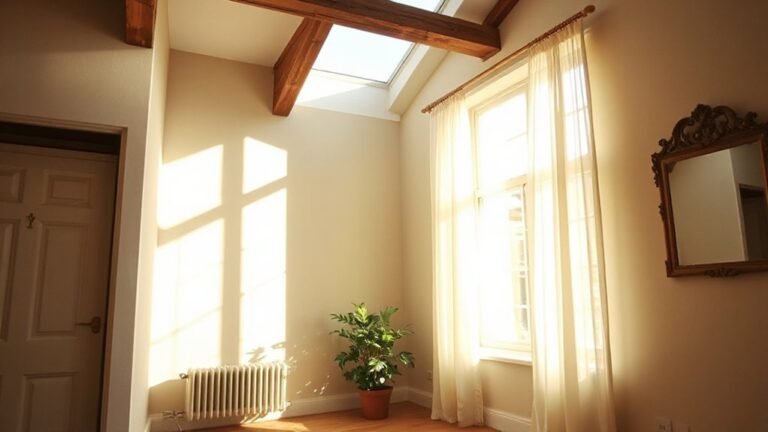
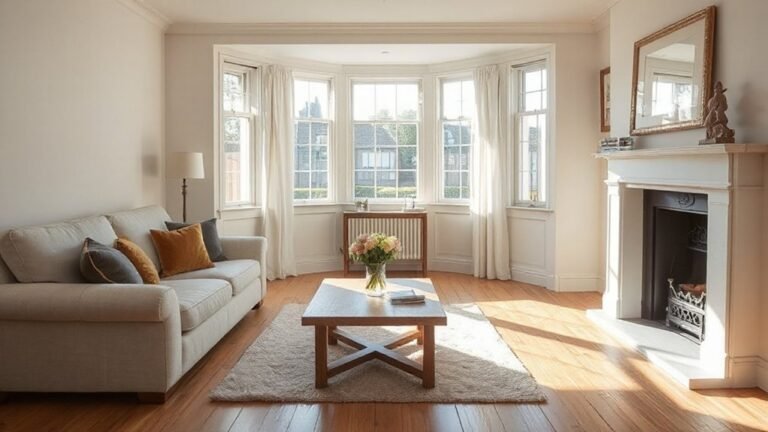
Turning a conservatory into a year‑round living space starts with a precise assessment of cold spots, drafts, and heat loss, then moves to high‑performance glazing and insulation that minimize escape. You’ll balance comfort with cost by planning heat paths, zoning, and ventilation, while layering shading and daylighting to control glare. The goal is a practical, energy‑efficient microclimate that remains comfortable in every season—and the details you choose now will determine how smoothly the next steps unfold.
Baseline Conservatory Assessment: Find Your Cold Spots, Drafts, and Heat Loss

A baseline conservatory assessment identifies where heat escapes and drafts enter the space, setting the foundation for effective improvements. You’ll map thermal leakage using infrared, blower-door tests, and daylight observations, documenting hotspots, perimeter gaps, and glazing weaknesses.
Focus on practical measurements: door thresholds, frame joints, roof vents, and skylight seals, noting how each area contributes to comfort loss. Record how Conservatory aesthetics influence perceived temperature and daylight quality, guiding targeted upgrades without overdesigning.
Assess landscaping integration as it relates to shading, windBreaks, and moisture control surrounding the structure, identifying opportunities to harmonize exterior features with interior comfort.
Compile a concise action list with priority timing and cost ranges, ensuring you can track progress and verify improvements through repeat measurements.
Year‑Round Glazing and Insulation: Compare Options That Stop Heat Escape
You’ll compare glazing choices by examining U-values and their impact on heat loss, so you choose parts with proven thermal performance.
We’ll also review insulation strategies that improve heat retention without sacrificing daylight or comfort.
This discussion sets the groundwork for selecting system options that balance energy efficiency, cost, and year-round livability.
Glazing Thermals And U-Values
Glazing thermals and U-values determine how quickly heat escapes a conservatory, so selecting the right glazing and frame materials is essential for year-round comfort. You’ll quantify thermal performance using U-values, typically measured in W/m²K, and assess how frames contribute to overall losses.
Lower U-values indicate better insulation, but you must balance daylight, glare, and solar gain with comfort needs. Consider double- or triple-glazing, low-emissivity coatings, and thermal breaks to reduce thermal bridging at frame junctions.
Evaluate glazing performance across the intended climate, paying attention to seasonal heat loss and summer overheating potential. Material choices influence long-term durability, maintenance, and cost.
Prioritize systems designed to minimize heat flux while maintaining structural integrity and aesthetic harmony with your home.
Insulation Strategies For Heat Retention
To keep a conservatory comfortable year-round, focus on insulation strategies that minimize heat loss while accommodating daylight and solar gain. You’ll prioritize continuous edge insulation and roof-to-wall detailing to reduce cold bridges.
Then select glazing with appropriate solar gain control and high U-values where needed. Combine multi-layer or insulated glazing for reduced heat flux, and install a controlled shading system to balance sun during peak hours.
Partitioned ceiling insulation improves overall performance without compromising openness. For interior strategies, use thermal curtains to bolster air tightness during colder periods and seal gaps around doors and vents.
Portable heaters provide zone warmth where necessary, but place them with safety clearances and smart controls. Regular audits verify performance and guide incremental upgrades.
Practical Heat Retention: Tricks That Deliver Real Temperature Gains
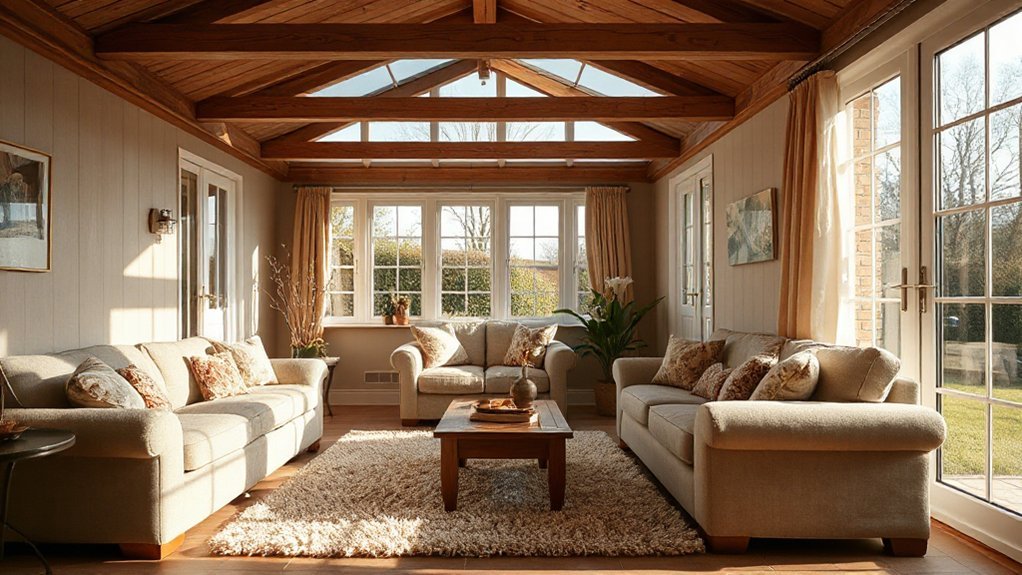
Effective heat retention in a conservatory hinges on targeted, know-how-driven tweaks that minimize heat loss while maximizing comfort. You’ll optimize glazing choices, seal gaps, and employ thermal breaks to reduce edge losses and drafts.
Start with insulated blinds or fabric shades that cut solar gain in peak sun and retain warmth at night, then pair with low-emissivity coatings to reflect infrared without compromising light.
Use a continuous floor slab or underfloor heating to eliminate thermal bridges and stabilize temperatures across zones.
Plant integration serves as a natural microclimate moderator, while furniture placement creates thermal buffers and reduces convective currents.
Prioritize compact seating that’s easy to rearrange, and align major seating with heat sources for even distribution.
Monitor performance and adjust configurations for steady comfort.
All‑Season Layout: Zone Planning, Traffic Flow, and Heat Paths
Even with robust insulation, you’ll maximize comfort by designing distinct zones that align with heat pathways and traffic patterns. For the All‑Season Layout, you map heat generation and transfer points to establish three priority zones: warm hub, transitional lounge, and cool retreat.
Define circulation routes that minimize backtracking; keep primary paths clear of seating and storage to reduce heat loss from movement. Furniture arrangement should support direct lines to radiant sources while preserving flexible use of space; place seating to buffer drafts and align with heat paths without obstructing vents or radiators.
Choose a color palette that reinforces zoning—warmer hues near heat sources, cooler tones along outer walls. Guarantee transitions between zones are seamless with subtle thresholds and consistent lighting to sustain perceived comfort.
Shading, Venting, and Daylighting: Control Light and Air for Comfort
To optimize comfort, you’ll evaluate Light Control Techniques, selecting shading and glazing options that reduce glare while preserving view and daylight.
You’ll pair Ventilation Strategies with operable vents and cross-vent design to maintain air quality and minimize heat buildup.
Finally, Daylighting Optimization guides you to balance natural light with energy use, using placement, reflectors, and controls to front-load passive cooling and consistent illumination.
Light Control Techniques
Light control is essential for year-round comfort in a conservatory, and it hinges on three interrelated strategies: shading, venting, and daylighting.
You’ll optimize comfort by selecting shading solutions that balance glare reduction with daylight provision, tailoring thickness, opacity, and installation height to your siting.
For venting, deploy operable panes or louvers that activate with indoor setpoints, ensuring cross‑flow without compromising safety or aesthetics.
Daylighting should be precise: orient and size glazing to maximize natural light while minimizing heat gain, complemented by light diffusers to create even illumination.
Implement window films to modulate infrared transmission where needed, preserving views.
Use automated controls and manual overrides to maintain consistent interior temperatures and visual comfort throughout seasons.
This approach delivers predictable, energy‑efficient performance.
Ventilation Strategies
Ventilation strategies in a conservatory hinge on coordinating shading, airflow, and daylighting to maintain comfort year-round. You balance passive and active systems to minimize temperature swings while preserving views and daylight.
Start with targeted shading to reduce heat gain during peak sun, then deploy operable vents and ridge or fan-assisted exhaust to establish cross-ventilation without drafts.
Integrate humidity control with dampness-avoidance measures, ensuring relative humidity stays within comfortable ranges for occupants and materials.
Prioritize air quality by preventing pollutant buildup through continuous low-level airflow and, where appropriate, mechanical ventilation with heat recovery.
Use zoning controls to tailor ventilation to occupancy, solar load, and weather.
Document operation procedures for routine checks, filter cleanliness, and seasonal rebalancing to sustain performance.
Daylighting Optimization
Shading, venting, and daylighting work together to maximize comfort and efficiency in a conservatory, controlling glare, heat gain, and illumination quality without compromising views. You balance shading devices with ventilation timing to maintain steady temperatures while preserving natural light.
Use operable skylights and high-performance glazing to modulate daylight intensity, reducing glare and hot spots; pair with exterior screens or louvers that respond to sun position. Optimize daylighting distribution to avoid color distortion and ensure even illumination for tasks and mood.
Consider Sunlight reflection patterns to minimize hotspots on seating and work surfaces. Incorporate color therapy considerations by selecting light-adaptive materials that maintain true color rendering.
Document control sequences for occupants, then test to confirm comfort, energy savings, and visual clarity across seasons.
Cozy Yet Bright Decorating Moves: Finishing Touches That Boost Warmth and Ambience
To create a cozy yet bright atmosphere in a conservatory, focus on precise finishing touches that enhance warmth without sacrificing light. You’ll implement controlled contrasts, selecting textures and tones that read as warm under daylight while remaining luminous at dusk.
Prioritize Plant placement to create natural zoning, ensuring vertical height and foliage don’t obstruct sightlines or solar gains.
Use furniture materials that combine thermal efficiency with tactile comfort; opt for wood or rattan supports and light upholstery in breathable fabrics to maintain airflow.
Integrate soft, layered lighting—dimmable LEDs and warm bulbs—to reinforce warmth without glare.
Choose window treatments that filter glare yet preserve view, and add subtle metallic accents for cohesion.
Finally, curate a minimal accessory set to avoid visual clutter while reinforcing design intent.
Frequently Asked Questions
What Is the Typical Payback Period for Year-Round Conservatory Upgrades?
The typical payback period varies, but you’ll likely break even within 5 to 12 years. You’ll maximize energy efficiency with proper insulation solutions, efficient glazing, and airtight seals, reducing cooling and heating costs over time.
How Do I Choose Flooring That Stays Warm and Durable?
You should choose flooring with high thermal mass and stability; 75% of heat loss occurs through floors, so prioritize floor insulation and radiant heating compatibility. You’ll reduce cold spots, improve comfort, and maintain efficiency with proper installation.
Can Underfloor Heating Be Installed in Existing Conservatories?
Yes, you can install underfloor heating in existing conservatories. Guarantee proper Conservatory ventilation and insulation enhancements, including thermal breaks and radiant barriers, plus a compliant, energy-efficient manifold. Coordinate with a qualified electrician and insulation specialist for best results.
What Are the Best Low-Maintenance Soft Furnishing Options?
You’ll choose curtain fabrics with UV resistance and easy-care finishes, and upholstery choices in performance fabrics. You’ll prioritize wipeable, fade-resistant options, and opt for neutral tones to minimize maintenance while maximizing durability and client comfort.
How Do I Handle Condensation Without Compromising Light?
Condensation can vanish with proper ventilation solutions and careful glazing choices; you’ll slash moisture while preserving light. You’ll deploy continuous vents, dehumidifiers, and opacified skylights for condensation prevention, keeping clarity, comfort, and energy efficiency intact.
Conclusion
In the end, your conservatory becomes a well-tuned engine for comfort. Each layer—glazing, insulation, shading, and layout—acts like valves and pistons, controlling heat and airflow with precision. You’re the designer of a living century, where warmth travels along defined paths, vents sigh softly, and daylight pours through without glare. With thoughtful finishing touches, you’ve welded function and coziness together, turning a glass space into a reliable, year‑round sanctuary you can actually live in.
About the Author