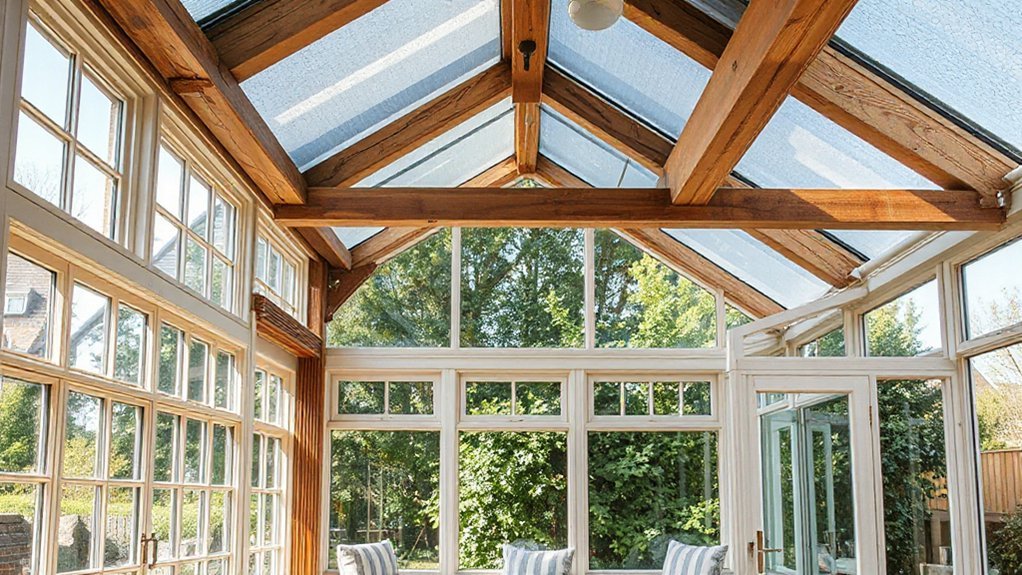
Like a quiet heirloom waiting for care, your old conservatory holds stories in its frame. You’ll start by spotting urgent weaknesses, then map upgrades by impact, cost, and disruption. Focus on weatherproofing, authentic-looking glazing, and reversible cosmetic tweaks that respect character. The path you choose should balance preservation with comfort, so you know what steps you can take first—and why they matter to long-term value. If you’re curious about the exact order, you’re in the right place.
Identify Urgent Weaknesses and Your Upgrade Goals
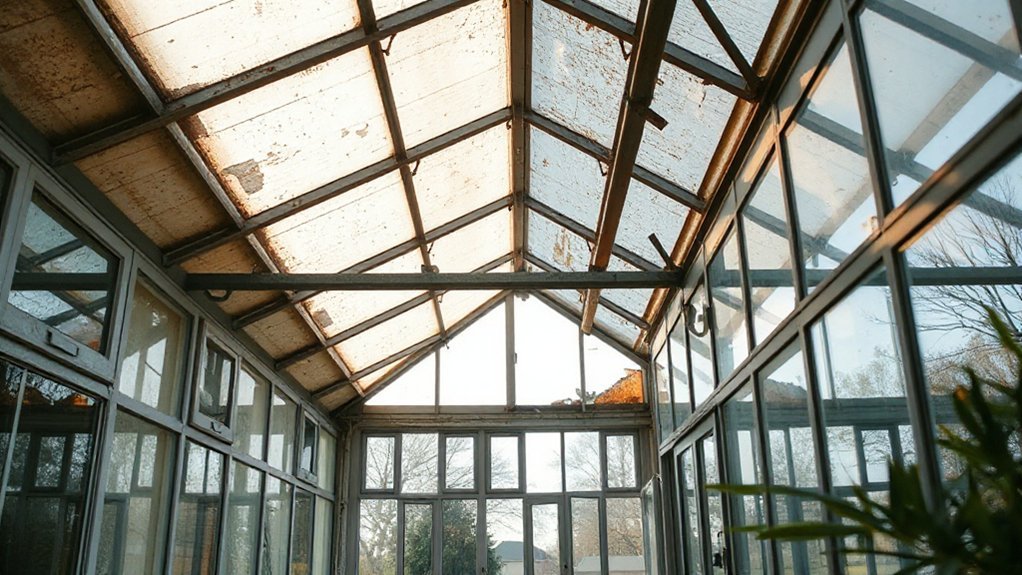
Identify urgent weaknesses and set clear upgrade goals by inspecting both structure and function. You’ll map how the conservatory performs today, noting drafts, leaks, glazing inefficiencies, and timber decay.
Assess structural integrity, joint looseness, and roof sag, then weigh weather sealing, insulation, and ventilation against measured comfort needs.
Prioritize issues that threaten safety or historic value, so you preserve essential character while improving reliability.
Define upgrade goals that honor Historical preservation and aesthetic harmony, ensuring replacements or repairs respect proportion, materials, and detailing.
Establish a clear hierarchy: address water intrusion first, then energy performance, then access or usability.
Document constraints and permissions, linking fixes to long-term stewardship.
Align actions with preservation standards while delivering practical, visible benefits for occupants.
How to Rank Upgrades by Impact, Cost, and Disruption
You’ll start by ranking upgrades by impact to your conservatory’s function and aesthetics.
Then compare costs and disruption to determine which changes earn the most value with the least interruption.
Aim for quick wins that preserve structure and context while guiding the longer-term plan.
Rank Upgrades By Impact
When ranking upgrades by impact, start by separating improvements that save the most energy and maintenance time from those that boost usability or aesthetics but cost more.
You’ll want to quantify impact: energy savings, reduced upkeep, and longevity. Prioritize retrofits with clear, lasting benefits, like insulation upgrades or glazing improvements, followed by features that enhance comfort and function.
Consider how each option affects historical preservation, ensuring materials and methods align with the structure’s character. Favor eco-friendly materials and low-maintenance elements that resist weathering without compromising appearance.
Assess disruption: choose upgrades that fit within seasonal windows and require minimal exterior alterations. Document expected performance, then compare against a conservative budget to avoid overcommitting.
Your aim is a conservatory that remains authentic, efficient, and timeless.
Compare Costs And Disruption
To compare costs and disruption, start by mapping each upgrade’s price and timeline against its expected impact on energy use, maintenance, and daily living. You’ll weigh upfront capital, ongoing upkeep, and any fits-and-finish needs against how your conservatory serves you season to season.
Consider historical preservation constraints, whether fixtures, glazing, or framing must meet heritage guidelines, and how long each change will take, from design to installation.
Assess disruption: dust, access, and any temporary closure of doors or views. Track maintenance implications, such as weatherproofing and cleaning demands.
Weigh aesthetic enhancements against practical gains, ensuring the look remains sympathetic to the existing structure.
Clearly document costs, timelines, and projected energy savings to guide informed, sensitive upgrades.
Prioritize Quick Wins
Identify quick wins by ranking upgrades based on the trio of impact, cost, and disruption. You’ll want actions that noticeably improve function without erasing character or triggering major repairs.
Start with high-impact, low-disruption changes—improve weather tightness with draft-proof seals, or replace single-pane glazing with energy-efficient units that preserve original frames.
Budget-friendly tweaks live here too: upgrading curtains or blinds, optimizing lighting, and selecting understated hardware that respects the conservatory’s style.
Consider garden aesthetics and outdoor landscaping as a frame, ensuring any alteration blends with existing lines and sightlines.
Prioritize improvements that require minimal downtime and reversible tweaks, so you can reassess later if needed.
Document decisions for future maintenance, maintaining both utility and provenance.
Weatherproofing and Insulation for Year‑Round Comfort
Weatherproofing and insulation are essential for turning a dated conservatory into a comfortable, year‑round space. You’ll prioritize tight joints, draft-free thresholds, and a continuous thermal envelope that respects the building’s character.
Begin with discreet door seals, ceiling eaves, and floor perimeters that minimize heat loss without disruptive alterations to historic fabric. Use breathable, lime-based or low‑VOC materials for mortar and plaster where appropriate, preserving appearance while improving performance.
Insulation should be implemented in a way that minimizes thermal bridges, particularly around transoms and sash members, to maintain historical preservation values.
Consider underfloor heating zones only where the structure supports it, and install mechanical ventilation with heat recovery to balance humidity.
Structural reinforcement may be needed where comfort upgrades reveal weaknesses.
Refresh Glazing and Roofing Without a Full Rebuild
You can refresh glazing options to improve light and heat retention without a full rebuild, selecting panes that balance clarity with energy performance.
Consider roof insulation upgrades and lightweight material choices that preserve the conservatory’s bulk and character while reducing strain on existing framing.
We’ll compare practical options for glazing, insulation, and materials to help you plan a careful, preservation-minded refresh.
Refresh Glazing Options
What glazing options best preserve your conservatory’s character while improving energy and comfort? You should evaluate historically appropriate glazing styles, prioritizing thin profiles and authentic muntins where needed, while upgrading performance.
Start with glazing units that match original pane sizes and colors, then consider non-intrusive solar control methods. Glass tinting and solar control films can reduce glare and heat gain without altering the exterior silhouette, yet choose products compatible with curb appeal and transparency.
If your frames are sound, retrofit low-emissivity (Low-E) or double-glazed units into existing sashes to boost insulation with minimal disruption. Avoid full replacement unless timber decay or sills prove unsafe.
Coordinate with a preservation-minded pro to ensure weatherseals, shading, and vents preserve historic character while delivering year-round comfort.
Roof Insulation Upgrades
Consider practical, non-invasive options to improve thermal performance without a full rebuild. Roof insulation upgrades focus on reducing heat loss while preserving character.
Start with the roof plane: inspect existing glazing bars and tiles for gaps, then seal with breathable tapes and compatible sealants to minimize drafts without altering appearance.
Use thin, high-performance insulation boards beneath existing roofing where space allows, ensuring any addition remains visually discreet and reversible.
In heritage contexts, avoid structural changes that undermine the roof’s silhouette.
Add controlled ventilation to prevent condensation, balancing airflow with preservation needs.
Where rafters are exposed, consider modest insulation between members and underlay membranes that meet local conservation guidelines.
Document changes for future caretakers, emphasizing historical preservation and structural reinforcement as guiding principles.
Lightweight Material Choices
Lightweight materials can refresh glazing and roofing without the disruption of a full rebuild. You’ll improve performance while preserving Character and charm, using thin-profile frames and panels that shed weight without sacrificing strength.
Choose glazing with low U-values and high solar control to minimize heat gain, while maintaining clear sightlines.
For roofing, consider structural panels or resin-coated composites that resist weather yet install quickly, reducing load on the existing frame.
Match profiles to original geometry to honor the conservatory’s character, supporting Historical preservation goals.
Select materials with verified durability and easy maintenance to extend life.
Prioritize material sustainability; favor recycled or responsibly sourced options and modular components that can be replaced individually.
Document choices and rationale to reinforce conservation-minded, context-aware decisions.
Warmer, More Comfortable Flooring Options
If you’re upgrading an old conservatory, start with flooring that feels warmer underfoot and supports steady footing in varied temperatures. Choose materials that minimize thermal bridges and resist moisture intrusion, preserving the structure’s integrity.
Consider engineered wood, cork, or vinyl planks with insulating underlayment for consistent comfort without sacrificing durability. Prioritize flooring durability by selecting products tested for high humidity and temperature swings, guaranteeing long-term performance in a sunlit environment.
Material sustainability matters too: opt for responsibly sourced wood, recycled-content composites, or cork harvested from managed forests. Avoid permeable surface choices that trap condensation.
Install with a breathable, moisture-controlled subfloor system to prevent warping. Finally, confirm edge detailing and transitions honor original assembly, keeping floor lines clean and legible for future preservation efforts.
Efficient Climate Control: Heating, Cooling, and Sealing
Efficient climate control begins with a tight envelope and targeted, low-impact systems that keep a conservatory comfortable year-round. You’ll seal gaps, joints, and edge connections to prevent heat loss in winter and air leakage in summer.
Prioritize energy efficient glazing to minimize solar gain while preserving light and views. Use insulation-tier upgrades in existing walls and roof where feasible, selecting sustainable materials that resist moisture and decay.
Choose compact, intelligent heating and cooling that respond to occupancy and sun exposure, rather than oversized, wasteful units. Incorporate passive cooling strategies—ventilation, shading, and thermal mass—where practical.
Regular maintenance of seals, sensors, and damp-proofing sustains performance, reduces utility use, and protects historic fabric. Aim for a balanced, durable system that respects the structure’s integrity.
Budget Lighting and Shading to Transform the Space
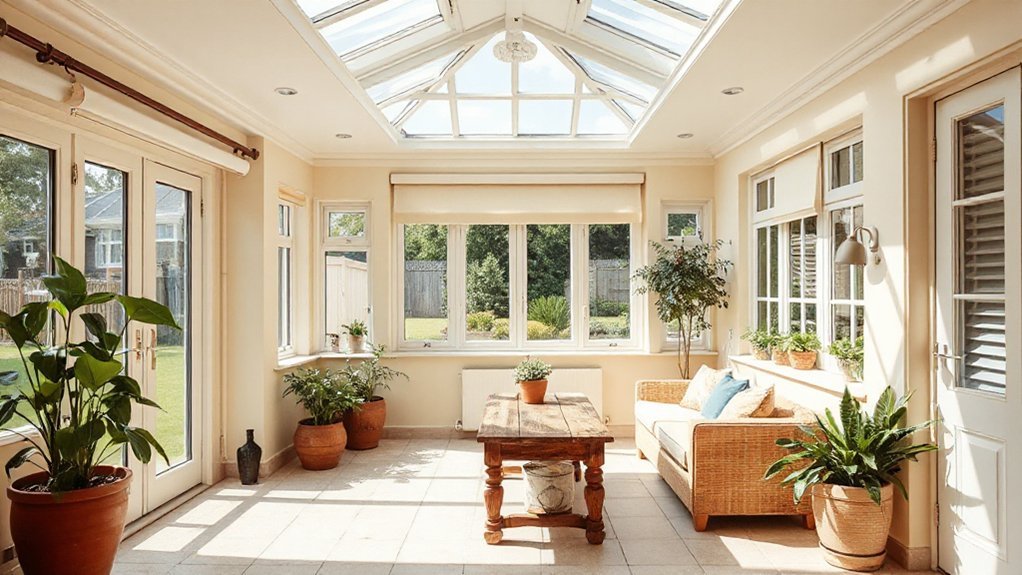
Budget lighting and shading offer an affordable, high-impact way to transform a conservatory while preserving its character. You’ll prioritize natural lighting, choosing window treatments that modulate glare without dimming the space excessively. Consider solar shades or light-filtering blinds to balance views with comfort, and pair them with energy-efficient LEDs that render colors accurately.
Avoid heavy fixtures that overwhelm original detailing; instead, install slim-profile pendants or recessed options that respect glazing patterns. Shading strategies should be reversible and non-invasive, such as external screens or interior roller shades that don’t damage timber frames.
Plan ventilation improvements alongside lighting: operable vents and louvers enhance air movement when shading is in place, reducing heat build-up. Document changes for future preservation, ensuring materials and finishes align with the conservatory’s heritage.
Cosmetic Tweaks That Respect Character and Boost Value
Small cosmetic updates can elevate a conservatory without compromising its character; choose tweaks that read as intentional and reversible. You’ll focus on finishes, not transformations, preserving original detailing while modernizing touchpoints.
Begin with subtle interior decor updates that respect light and proportion—soft, neutral textiles, coordinated blinds, and discreet hardware that echoes historic detailing. Keep furniture scaled to the chamber and avoid ostentation that overrides silhouette.
Landscaping enhancements should frame the structure without crowding it, using native plantings and unobtrusive paths to extend views.
Repair any glazing flaws carefully to maintain glazing pattern and muntins. Use low-VOC paints and sealants to protect value over time.
Document changes for future stewardship, ensuring each tweak enhances character and preserves the conservatory’s legacy.
Plan, Source, and Hire Pros for a Cost‑Efficient Upgrade
To plan a cost-efficient upgrade, begin by defining clear priorities that align with the conservatory’s character and structural realities. Then map out a realistic budget and timeline.
You’ll identify essential updates, minimum disruptors, and non-negotiable protections for existing fabrics and glazing. Source reputable, locally based trades with verifiable portfolios, and request detailed bids that specify materials, lead times, and warranty terms.
Vet pros for licensing, insurance, and past preservation work to ensure compatibility with historic standards. Plan furniture arrangement to maximize light, circulation, and focal views without compromising structure or ventilation.
Establish color schemes that respect period details while allowing for durable finishes. Hire a project manager or capstone coordinator to coordinate trades, monitor progress, and ensure timely, budget-conscious decisions.
Frequently Asked Questions
Can I Upgrade a Conservatory Without Planning Permission?
Yes, you can upgrade without planning permission in many cases, but check local rules. Improve Conservatory insulation and consider window replacement to boost efficiency while preserving appearance and heritage, ensuring structures stay within permitted development guidelines.
Which Materials Offer the Best Long-Term Value?
Like a well-tuned instrument, you should choose durable, low-maintenance materials. For conservatory maintenance and energy efficiency, opt aluminum or uPVC with thermal breaks, and consider treated timber where appropriate. They offer long-term value and easier upkeep.
How Long Will Upgrades Realistically Take?
Upgrading your conservatory realistically takes weeks to a few months, depending on scope. You’ll finalize decisions on conservatory insulation and glazing options, coordinate permits, and complete installations methodically, preserving structure while minimizing disruption throughout the timeline.
Will Upgrades Affect Property Insurance Premiums?
Insurance costs may modestly dip or rise; premium impact depends on upgrades. You’ll demonstrate safety, compliance, and robust materials, so insurers see less risk. You preserve value while protecting future finances with prudent, professional, plausible improvements.
Can I Mix DIY With Professional Work Safely?
Yes, you can mix DIY with professional work, but prioritize safety and precision. Plan DIY tasks around your licensed pro’s schedule, guarantee proper integration, and maintain documentation for DIY safety and professional integration throughout the project.
Conclusion
As you move from assessment to action, the gains won’t shout—they’ll whisper, then settle in. Each careful fix, every sustainable upgrade, tugs softly at the old conservatory’s seams, tightening durability without erasing history. You’ll seal, insulate, and refresh with restraint, watching comfort and efficiency rise while character endures. The next step isn’t obvious until you measure the quiet improvements—then you’ll see the truth: the space you protect is the space you love, renewed, yet faithful. The reveal awaits your next precise move.
About the Author