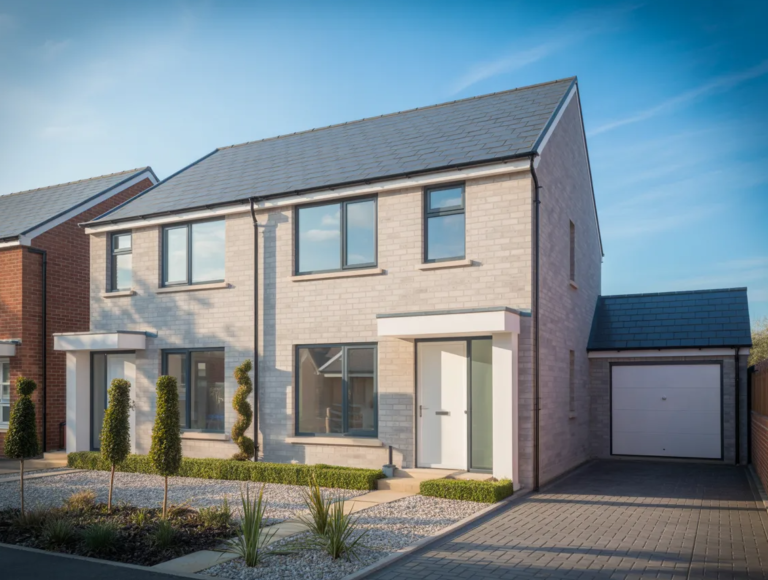
You might be surprised to learn that Liverpool’s prices are rising in a tight market with only modest annual gains of 2–3%. You’ll see demand cluster around transit-accessible pockets like the Docks, Baltic Triangle, and Maghull, while rents align with sale prices, signaling stability. The question is how long affordability holds, and what shifts in mortgage terms or policy could steer the next phase of growth. Let’s explore the drivers and potential routes ahead.
What’s Driving Liverpool’s Housing Market Today

Liverpool’s housing market is being shaped by tight supply, resilient demand, and shifting buyer preferences that together push prices and rents higher. You see rental yields stabilizing as occupancy remains high and new builds lag behind demand, with planning delays weighing on supply-response times.
Demand is concentrated in city-fringe neighborhoods offering transport access, green spaces, and affordable options relative to central cores. You’ll notice affordable entry points moving up the ladder as lenders tighten criteria and deposit requirements, affecting first-time buyers.
Market sustainability hinges on continued inventory growth, targeted affordable product, and calibrated mortgage underwriting. For affordability, density-led development and mixed-use schemes matter, while data-driven monitoring of vacancy, turnover, and utilization will guide prudent pricing and risk management going forward.
Liverpool Price Trends at a Glance
You’ll see the latest price movements mapped to weekly and monthly shifts, with precise figures on gains and dips across key neighborhoods.
The demand pulse snapshot highlights where buyers are flocking and how quickly listings convert, giving you a granular view of buyer intentions.
Looking ahead, we’ll connect these signals to forecasted momentum, pricing tiers, and potential traction over the next quarter.
Latest Price Movements
Prices in Liverpool have shifted modestly over the latest quarter, with asking rents up 2–3% and typical sale prices showing a similar incremental rise, signaling a steady but selective recovery. You’ll see price fluctuations across neighborhoods, yet overall momentum points to renewed market stability as supply tightens and demand remains measured.
- Price signals: rents and sale prices move in tandem, narrowing dispersion between segments.
- Regional spread: central pockets outperform outer boroughs, yet gains stay within a predictable band.
- Forward trajectory: modest, data-driven increases imply cautious optimism for next quarter.
If you’re evaluating exposure, monitor mortgage rates, inventory turnover, and time-on-market trends to gauge evolving stability and potential upside.
Demand Pulse Snapshot
Recent momentum shows demand cooling slightly in some inner districts while remaining firmer on established commuter belts, underscoring a split between high-competition hotspots and steadier outer pockets. You’ll see a clear pulse in listings and sale timelines, as market fluctuations outline two speed zones.
Demand patterns indicate cooler bids in central zones, with price discovery narrowing and longer marketing times, while fringe areas retain robust bids and quicker turnovers. Forward-looking signals suggest continued pressure on stock in top-tier wards, yet resilience in peripheral pockets driven by rental demand and relocation flows.
We project gradual rebalancing over the next quarter, driven by income growth and financing costs stabilizing. Targeted benchmarking will sharpen pricing, enabling you to differentiate entry points, concessions, and timing across Liverpool’s micro-markets.
Where Demand Is Hottest in Liverpool
You’ll see demand concentrating first in the city’s core neighborhoods and rising pockets where amenities, transport links, and recent price momentum create a tipping point.
Our data highlights the Hot Neighborhoods Spotlight and the Demand Drivers Revealed behind this pattern, showing where buyers and renters are flocking first.
Look ahead to how these signals inform timing, investments, and strategy for you as we map where demand is hottest next.
Hot Neighborhoods Spotlight
If you’re wondering where demand is burning the hottest in Liverpool, it’s the eastward rush toward the Docks and Baltic Triangle, plus steady interest in Anfield and Maghull at the fringe.
You’ll see a tight pattern: higher transaction rates, faster price growth, and thicker supply-to-demand in targeted pockets.
1) Docks and Baltic Triangle: core for redevelopment funding, rising rents, and visible neighborhood revitalization signals.
2) Anfield fringe: improving community amenities, new eateries, and walkability boosts demand concentration without pricing shock.
3) Maghull at the edge: steady growth driven by transit access, affordable entry points, and granular micro-market data.
Forward look: expect continued density gains where placemaking and amenities align with commuter gains and investment.
Demand Drivers Unveiled
Demand in Liverpool hinges on three core catalysts: access to transit, placemaking, and price discipline. You’ll see demand coalesce where rapid connectivity meets daily life quality, with transit hubs shaping trip frequencies and resale velocity.
In the hottest micro-markets, housing affordability remains the hinge point, as buyers weigh monthly payments against income trajectories and debt ceilings. Data shows corridors around core stations outperform broader boroughs, driven by multi-modal access and predictable commute times.
Placemaking—gelled by mixed-use density, safe streets, and amenity diversity—adds stickiness, lifting occupancy durations and rent resilience.
Market sustainability hinges on calibrated pricing, lease maturity, and energy-efficient stock, reducing churn and cybersecurity of cash flows.
Expect continued concentration near transit upgrades, with affordability policies nudging steady, incremental demand growth.
Liverpool Rental Yields and Buy-to-Let Potential
Even now, Liverpool’s rental landscape shows clear pockets of buy-to-let potential driven by steady demand from students, professionals, and redeveloped urban centers, with yields varying considerably by neighborhood and property type.
You’ll see rental yields and buy to let metrics trending upward where regeneration, transport links, and amenities cluster, while blocks farther from core hubs lag. This footprint is data-driven: occupancy remains high, rents track local benchmarks, and cap rates compress where demand is most resilient.
What follows is a forward-looking, granular snapshot you can use to gauge opportunity.
- Investment hotspots with sustained occupancy and above-average rent growth
- Property types delivering best cap-rate consistency across cycles
- Risk factors like zoning shifts, student intake, and lender appetite
Rental yields clarify where to focus, Buy to let viability sharpens your plan.
Affordability for First-Time Buyers in Liverpool
You’ll see how First-Time Buyer Costs are evolving in Liverpool, with down payments, stamp duty benchmarks, and monthly outlays mapped against median incomes.
Mortgage Availability Factors show tighter or looser lending cycles, rate trajectories, and qualification thresholds that directly shape affordability timelines.
Local Support Programs layer on grants, shared equity, and regional schemes, creating tangible short-term relief and clearer long-term paths for new buyers.
First-Time Buyer Costs
What does it take to get onto the Liverpool property ladder today, given rising prices and tighter lending? You’ll face a concrete set of upfront costs and ongoing pressures that shape affordability. Data indicates first-time buyer costs are rising faster than wages in many areas, yet pockets of cost relief exist with starter homes and shared equity schemes.
Expect deposits around 5–15% of purchase price, plus stamp duty considerations and legal fees. Overall affordability challenges hinge on monthly payments relative to income, not just sticker prices.
- Upfront deposits and closing costs
- Stamp duty implications and conveyancing fees
- Ongoing mortgage payments versus income growth
Keep tracking local price trajectories, lender criteria, and government initiatives to gauge whether the market remains navigable within your budget.
Mortgage Availability Factors
Mortgage access in Liverpool hinges on how lenders weigh deposit size, income, and credit history against local price trends. Tighter lending criteria and rising rates have narrowed the window for first-time buyers, even as government schemes and high-LTV products temporarily ease entry.
You’ll see a granular impact: average deposit challenges, debt-to-income thresholds, and affordability gaps by ward.
Mortgage regulations are tightening underwriting, with more emphasis on disposable income, self-employment income stability, and stress tests above current pay.
Lending criteria vary by lender, yet trendlines show smaller loan-to-value options are less accessible for new entrants, heightening competition for fixed-rate deals.
Forecasts indicate gradual normalization, contingent on rate stabilization and clearer policy signals.
Monitor lender appetite shifts and macro price momentum to time applications.
Local Support Programs
Liverpool’s local support landscape for first-time buyers centers on targeted grants, shared equity pilots, and council-backed purchase schemes that complement tightening national lending criteria.
You’ll see clear, data-driven impact from community programs and local initiatives designed to reduce upfront costs and bridge income gaps. Projected take-up hinges on employer partnerships, eligibility thresholds, and regional housing supply.
- Targeted grants and down-payment assistance
- Shared equity pilots tied to property type and location
- Council-backed purchase schemes with fixed-price caps and resale conditions
These mechanisms are increasingly granular, with quarterly dashboards tracking take-up by ward, applicant demographics, and affordability-to-income ratios.
How Wages and Jobs Are Shaping Prices

Wages and job trends are directly shaping prices in Liverpool’s housing market: higher pay and tighter labor markets push up construction costs, land pricing, and mortgage rates, while rising employment supports stronger demand for homes.
You’ll see wage trends influence builder bids, spec activity, and project timelines, creating a tighter supply response in mid-market homes.
Job growth baselines—manufacturing, logistics, and health sectors—translate into steadier buyer confidence and larger deposit power, lifting appraisals and pricing power for existing stock.
Data signals point to a cumulative 2–3% annual price lift driven by income momentum and employment resilience over the next four quarters.
Regional variance persists: outer wards show slower uplift, while core corridors trend toward higher price dispersion and faster turnover.
The Role of Interest Rates in Liverpool’s Activity
Interest-rate dynamics are the lever shaping Liverpool’s housing activity next. You’ll see bank policy tweaks translate into faster or slower demand, with buyers responding to monthly payment realities and lender criteria.
In Liverpool, rate cycles directly affect affordability, and that shapes transaction velocity, held inventory, and price momentum.
1) Interest rate fluctuations drive mortgage affordability shifts, altering how many households qualify and how much they can borrow for a given monthly budget.
2) Short-horizon rate moves tend to compress or extend listing timelines, influencing buyer competition and price negotiation dynamics.
3) Long-run expectations about inflation and policy path anchor borrowing costs, informing prudent investment and development pacing.
Expect a sharper sensitivity to global rates, while local demand remains resilient on income growth and supply responsiveness.
Regeneration and Infrastructure Boosting Value in Liverpool
Regeneration momentum is lifting local prices as new projects come online and neighborhoods reconfigure around improved amenities.
Infrastructure investments, from transport upgrades to green space, are delivering measurable value uplifts and clearer investment signals.
You’ll see the impact in tighter yields, faster sales, and more granular data on price per square foot by ward in the near term.
Regeneration Momentum Boosts Prices
Regeneration momentum is lifting property values across Liverpool as new infrastructure projects and urban renewal accelerate demand in targeted neighborhoods. Buyers and renters are pricing in faster turnover, tighter yields, and clearer development timelines.
You’ll see price growth concentrate where green spaces and community engagement are strongest, with data showing double-digit rises in pre-renovation suburbs and steadier gains in core hubs.
In the coming year, regeneration will continue to concentrate on walkability, transit access, and mixed-use fronts that blend homes with services.
- Neighborhoods with active community engagement see quicker sales cycles and higher rent stability.
- Projects near new green spaces report premium pricing versus comparable areas.
- Developers align timelines to transparent milestones, reducing hold periods and increasing confidence.
Infrastructure Projects Driving Value
Infrastructure investments are quietly reshaping Liverpool’s value trajectory, as new projects tighten supply constraints and shorten investment horizons. You’ll see urban renewal activate distinct pockets of demand, with regeneration corridors translating into higher footfall and resilient rental yields.
Transportation upgrades, from quick transit corridors to freight-friendly links, compress commute times and broaden catchment areas for buyers and renters alike. In data terms, project pipelines lift near-term capex absorption and shorten lead times for development approvals, supporting quicker value realization.
You monitor granular indicators—announced spend by corridor, per-square-foot price lifts near stations, and occupancy upticks around mixed-use nodes. The forward impulse is clear: targeted infrastructure accelerates redevelopment velocity, diversifies demand, and strengthens Liverpool’s competitive position against comparable regional markets.
Liverpool’s New Builds and Urban Living Options
Liverpool’s new-build market is accelerating, with recent developments focused on compact, transit-oriented blocks that blur the line between living and working. You’ll see data-driven layouts prioritizing efficiency, mixed-use podiums, and adaptable floor plates to support remote work and micro-entrepreneurship.
Urban development signals indicate rising density alongside green spaces, with walkability scores increasing as new routes connect key services.
Housing diversity expands beyond single-family permutations to modular flats, co-living, and live-work hybrids, catering to varied income bands and lifecycle stages.
Expect tighter controls on car access, prioritizing cycling infrastructure and bus corridors.
1) Compact blocks with mixed-use amenities
2) Flexible unit configurations for evolving needs
3) Transit-first planning driving price stability and demand growth
Liverpool Neighborhood Hotspots to Watch

If you’re mapping growth, you’ll want to track the East Bank and Baltic Triangle clusters where new mid-rise blocks, coworking spaces, and improved cycle routes are converging with existing cultural anchors.
In these hotspots, data show rising transaction velocity and tighter supply, with price growth outpacing regional averages over the past 12 months. The East Bank’s mixed-use envelopes attract young professionals, while the Baltic Triangle benefits from creative economy spillovers and enhanced transit links, supporting higher daytime footfall.
Expect ongoing density gains, more parklets, and targeted refurbishments that sustain neighborhood charm and a palpable community vibe. For investors and residents, these clusters offer measurable liquidity, walkable access, and forecasted rent normalization as demand remains structurally robust.
Investor Strategies in a Changing Liverpool Market
As growth pours into the East Bank and Baltic Triangle, investors should prioritize data-driven entry points that align with rising transaction velocity and tightening supply. You’ll optimize returns by segmenting portfolios across asset types and submarkets, calibrating exposure to local nuances and demographic shifts. Ground decisions in transparent metrics: rents per square foot, cap rate compression, and occupancy trends, then stress-test scenarios under different interest-rate paths.
Investor diversification and Market timing emerge as core disciplines to weather cycles and capture opportunistic windows.
- Build a layered exposure plan across residential, student, and small-commercial assets.
- Core-plus acquisitions paired with tactical exits when rent growth decelerates.
- Use short-, medium-, and long-hold horizons to align with liquidity and credit conditions.
Risks and Headwinds for Liverpool Property
Tighter financing conditions and rising borrowing costs are tightening liquidity for Liverpool property, even as demand remains resilient in pockets like the East Bank and Baltic Triangle.
You’ll see higher debt service ratios constrain larger deals, nudging cap rates upward and compressing risk-adjusted returns.
Market volatility remains a barometer for buyer confidence, with transactions clustering around modest price steps rather than dramatic moves.
Policy uncertainties—ranging from planning reforms to fiscal adjustments—could delay developments and alter yield profiles in mixed-use schemes.
On the supply side, approvals timelines and infrastructure bets influence project viability, particularly for mid-scale conversions.
You should monitor lender appetite, regulatory signals, and macro shocks, because the combination of tighter credit, shifting policy, and global risk sentiment will shape pricing scars and demand elasticity through the next cycle.
Short-Term Catalysts to Watch in Liverpool

Liverpool’s near-term catalysts hinge on liquidity inflection points, policy clarity, and project momentum across East Bank and the Baltic Triangle. You’ll see how liquidity shifts shape transactional velocity, while policy signals reduce uncertainty for buyers and developers.
Market fluctuations will test pricing ceilings, but data-driven signals guide risk-adjusted timing. Buyer psychology rallies when project milestones hit, and transparent timelines reduce hesitation during short windows of opportunity.
- Monitor financing terms and credit availability for faster closings.
- Track project milestones, permitting, and completion schedules in East Bank and Baltic Triangle.
- Assess price momentum and sentiment surveys to gauge timing sensitivity.
Expect granular indicators—weekly price moves, demand-supply gaps, and absorption rates—to inform prudent, near-term decisions.
Long-Term Outlook for Buyers, Renters and Sellers in Liverpool
Long-term buyers, renters, and sellers in Liverpool should expect a data-driven trajectory shaped by supply discipline, wage growth, and evolving policy support, with explicit milestones guiding risk-adjusted decisions.
Over the next 5–7 years, long term trends point to steadier home-price appreciation aligned with local productivity gains, while rental inflation remains tempered by increased new supply.
Demographic shifts, including aging cohorts and urban in-migration, will influence demand pockets across wards, with prime accessibility areas outperforming peripheral ones.
Buyers should weigh mortgage affordability against glidepath risk, and renters can anticipate longer leases as stability improves.
Sellers benefit from gradual price resilience, particularly where amenities and transport upgrades converge with targeted development, creating transparent, repeatable decision criteria for market timing.
Frequently Asked Questions
How Quickly Are Prices Likely to Rise in Liverpool Next Year?
Prices are forecast to rise modestly next year, about 3–5%, as market stabilization and buyer incentives support activity. You’ll see granular data trends, with inventory shifts and price-per-square-foot signals guiding you toward smarter, forward-looking decisions.
Which Liverpool Areas Offer the Best Value for Buyers?
You’ll find affordable neighborhoods with solid value, especially near transit nodes, and you’ll spot investment hotspots where rental yields outpace averages; data shows steady appreciation potential, forward-looking rents, and granular churn indicators guiding your next purchase decision.
Will Wage Growth Keep up With House Price Gains?
Wage growth may trail house-price gains soon, you’ll face affordability challenges, and wage stagnation could intensify. Looking ahead, you’ll need granular data, trend forecasts, and local pockets where income gains align with price trajectories to stay informed.
What Are Future Plans Affecting Liverpool’s Housing Supply?
You’ll see 12,000 new homes planned over five years, driving supply. Urban regeneration and targeted housing policies will shape this trajectory, prioritizing brownfield sites, affordable units, and mixed-use blocks to balance demand with sustainable growth.
When Will Rent Growth Outpace Purchase Price Growth in Liverpool?
Rent growth will outpace purchase price growth in Liverpool when rental affordability improves and yields rise, likely mid-decade; you should monitor occupancy, cap rates, and new supply as Investment opportunities expand and demand strengthens.
Conclusion
You’ve seen liquidity steadying as prices drift 2–3% annually, with demand concentrated in transit-friendly pockets like the Docks and Baltic Triangle. An intriguing stat: rental yields hover around mid-to-high single digits, underscoring buy-to-let viability even as prices push gradually higher. Looking ahead, affordability tightens but long-term gains track regional productivity over 5–7 years, supported by green space, placemaking, and ongoing infrastructure upgrades. If you plan now, you’ll ride stability into meaningful, sustained appreciation.
About the Author