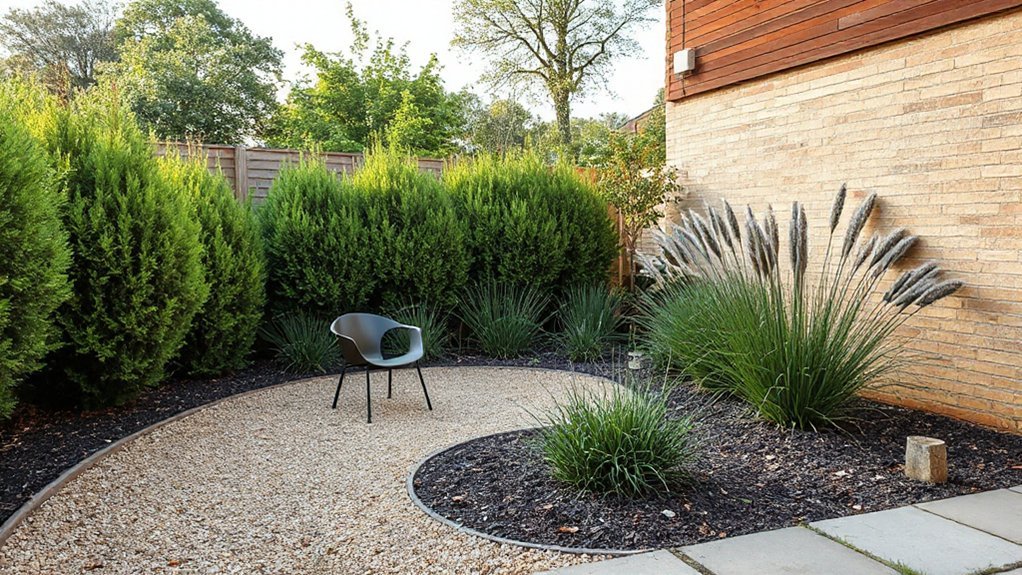
If you’re juggling family life and a garden, a low-maintenance makeover can fit your schedule. Think native, drought-tolerant plants, smart hardscapes, and zones for play, edible snips, and chill-out spaces. Use permeable paths, mulch, and a simple irrigation plan to cut upkeep. Keep textures and colors calm, and let durable materials carry the routine. You’ll soon have a tidy, inviting outdoor space that works with your week, not against it. Curious how to begin?
Define Your Low-Maintenance Garden for Busy UK Families
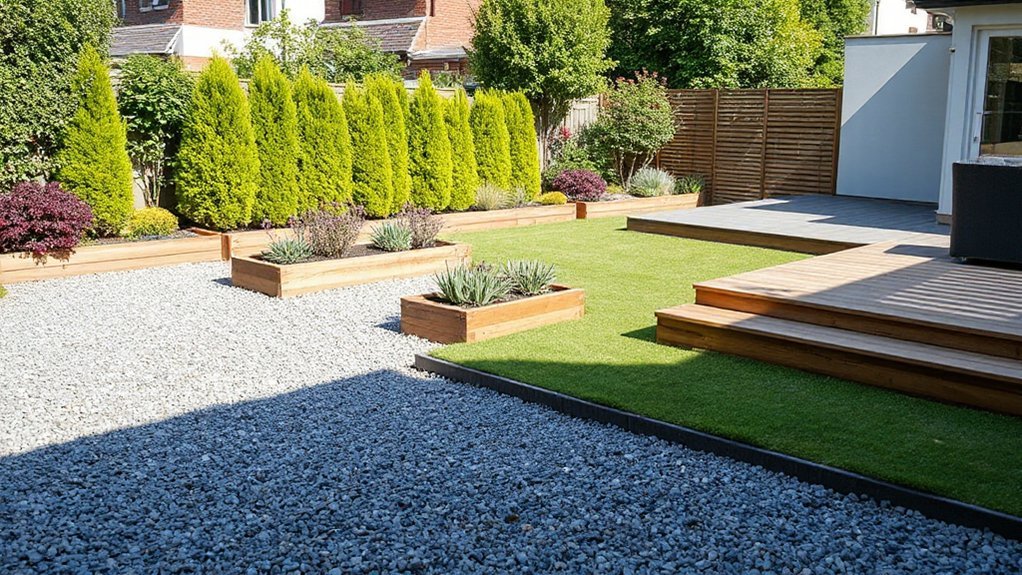
A low-maintenance garden for busy UK families means you can enjoy outdoors without a lot of upkeep. You define it by purpose and practicality, not size or trends. Begin with a clear set of priorities: what you want to see, how often you’ll work, and which tasks you’ll automate or simplify. Choose hardwearing materials, drought-tolerant plants, and mulched beds to reduce weeding. Plan zones for relaxation, play, and edible crops, then map paths that minimize stepping on soft soil. Consider Garden aesthetics that blend with your home while staying low maintenance, using consistent palettes and textured foliage. Prioritize Wildlife habitats with native plants, nesting spots, and water-friendly features. Reassess seasonally, trimming only what’s necessary to maintain structure.
Quick-Start Layouts for Instant Curb Appeal
To add instant curb appeal without slowing you down, start with quick, practical layouts that fit a busy family routine. In a small entry, place a compact seating area using garden furniture to invite guests and create an instant focal point. Align paths with clear sightlines, guiding visitors from gate to door without detours. Zone the front yard into three simple zones: seating, greenery, and a low-maintenance border that stays neat with minimal effort. Use modular, movable pieces for flexible spacing as seasons change. Add outdoor lighting to extend curb appeal after dark and highlight key features. Choose weather-resistant finishes and a neutral palette to reduce upkeep. Keep maintenance logs and rotate accent plants seasonally for a fresh look with minimal work.
Plants That Thrive With Minimal Care in the UK
If you’re short on time but want a lush UK garden, choose plants that shrug off neglect and thrive in variable weather. In practical terms, start with native wildflowers to support local pollinators and reduce feeding needs. They establish quickly and handle cool springs and wet summers without fuss. Pair these with drought tolerant succulents for sun-soaked spots; they store moisture and resist heat waves, ideal for patios or borders. Pick hardy perennials that require minimal pruning, like geraniums, hellebores, and sedums, rotating seasonal accents as interests shift. Mulch protects roots and slows evaporation, while a small, well-placed container lineup keeps maintenance low. Water deeply but infrequently, and let natural rainfall do most of the work. Your garden stays colorful with minimal effort.
Low-Maintenance Edging and Groundcover for Fuss-Free Paths
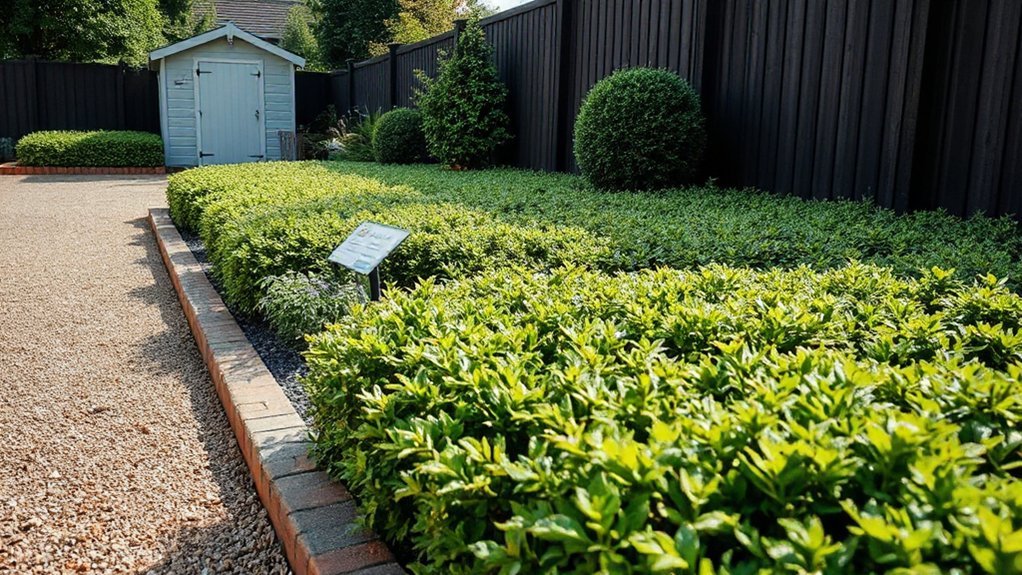
Edging and groundcover that stay tidy with minimal effort make for fuss-free paths you’ll actually use. You’ll choose low-maintenance options that endure UK seasons, stay neat, and reduce edging chores.
1) Opt for clump-forming perennials or compact groundcovers that spread evenly, keeping paths clean without constant trimming.
2) Use resin or steel edgings with a soft top to deter grass encroachment while staying mowing-friendly.
3) Add decorative lighting along borders to extend usability after dark and discourage trips.
4) Integrate garden ornaments sparingly as focal points that require little upkeep yet boost charm.
Seasonally, weed-suppressing mulch beneath the groundcover helps; avoid heavy watering—this minimizes fuss while keeping paths inviting.
Water-Smart Techniques to Save Time and Water
Water-smart techniques save time and water by prioritizing efficiency and simple routines. You’ll cut waste with a smart drip system and a timed sprinkler, set to dawn or dusk to minimize evaporation. Collect rainwater in a barrel, then reuse it for borders and containers, reducing mains water use. Mulch generously to steady soil moisture and suppress weeds, which means less watering and less maintenance. Choose drought resistant plants suited to UK seasons, lowering watering needs while keeping colour and structure. Group plants with similar water needs to avoid overwatering some, underwatering others. Integrate rain gardens in low-lying beds to capture and infiltrate runoff. Regularly check hoses and emitters for leaks, and tweak schedules as weather shifts. Rainwater harvesting supports sustainable care.
Durable, Set-Forget Hardscapes for Busy Schedules
Durable, set-forget hardscapes start where your water-smart efforts left off: with low-maintenance backbone that keeps a busy UK garden looking tidy all year. You’ll install resilient surfaces that resist weeds, reduce runoff, and stay tidy between seasons. Think practical materials, seasonal color accents, and simple maintenance rhythm. Garden art adds personality without fuss, while integrated wildlife habitats keep nature close without extra chores.
- Choose permeable pavers or compacted gravel for easy cleaning and drainage.
- Add a durable edging system to keep borders neat with minimal effort.
- Place evergreen screening for year-round structure and privacy.
- Include low-water, seasonal lighting to extend usability and safety.
This approach blends function, style, and wildlife-friendly zones, supporting busy schedules throughout the year.
Weekly 30-Minute Maintenance Routines for Weeknights
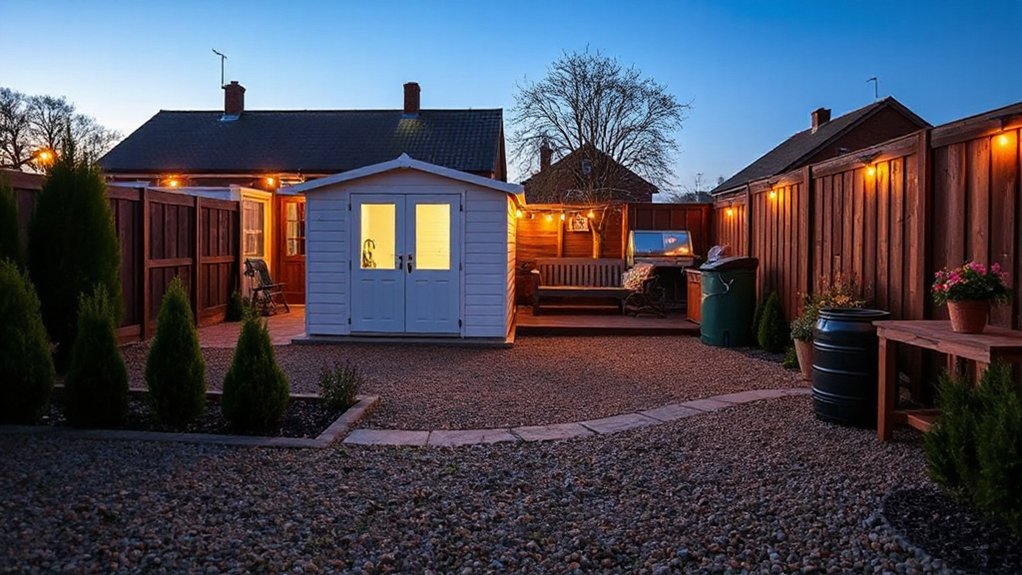
Weeknights don’t have to derail your garden goals: with a compact 30-minute routine, you keep your space tidy and inviting even during busy weeks. You’ll focus on quick, effective tasks that fit a UK autumn-to-spring cadence. Start with a 5-minute sweep of fallen leaves and debris, then prune spent stems to encourage tidy growth. Check irrigation lines and water if needed, but don’t overdo it—seasonal planting shifts require balance. In the garden beds, replace mulch where thinning shows, protecting soil and roots during cold snaps. Inspect for garden pests and address any hotspots with a quick spray or soap wash, keeping chemicals minimal. Finish by sampling light, leaning toward late-season additions that extend interest without overhauling existing scenes.
Budget-Smart Makeovers That Last in UK Gardens
Budget-smart makeovers that last in UK gardens keep costs down without sacrificing impact. You’ll stretch every pound by planning seasonal tweaks, choosing durable basics, and reusing elements you already have. Focus on perennial structure first, then swap accents as trends shift.
- Prioritize low-cost, high-impact garden furniture that doubles as seating and storage to reduce clutter and expense.
- Use outdoor lighting strategically—solar options for borders and steps cut wiring costs while extending usable hours.
- Refresh with paint, mulch, and hardy perennials; these slow-bias upgrades stay vibrant through changing seasons.
- Invest in smart containers and modular pieces you can rearrange for parties or quiet evenings.
You’ll enjoy a tailored, budget-friendly outdoor space that remains practical year-round.
Frequently Asked Questions
How Soon Can I See a Noticeable Garden Transformation?
You’ll notice a difference in 2–4 weeks with quick wins like fresh mulch and new plantings; garden lighting and water features enhance weekends. In a month, expect cohesive ambience, plus seasonal color and low-maintenance enjoyment.
What Homeowner DIY Skills Are Essential for Maintenance?
You’ll need basic DIY skills: pruning, weeding, lifting, and safe power-tool use. For maintenance, learn seasonal checks, sealing timber, and cleaning water features. Keep garden furniture dry and water features winter-ready to save effort year-round.
Can I Convert an Existing Garden Gradually?
Yes, you can convert gradually. Start small with seasonal steps, like installing a water feature later and adding garden art as you go. You’ll keep maintenance light and enjoyable, updating gradually into a cohesive, low-effort landscape.
Which Pests Are Common in Low-Maintenance Layouts?
Common pests in low-maintenance layouts include aphids, slugs, snails, and scale; you’ll notice them seasonally. Practice Pest prevention with barriers and early monitoring, and Pest control promptly to protect your plants and enjoy healthier, easier gardening year-round.
How Do I Budget for Seasonal Plant Replacements?
To budget seasonal plant replacements, track expected costs, set aside a monthly fund, and curb impulse buys. Use cost effective planting strategies and seasonal gardening tips, prioritizing sturdy, low-maintenance varieties that perform well in UK weather and budgets.
Conclusion
You’ve got a plan that fits real life: hardy plants, smart layouts, and set-it-and-forget-it hardscapes. With monthly checks kept brief, you’ll enjoy a vibrant, drought-smart garden all year round. Use permeable paths, mulch, and auto-watering to cut chores, not chaos. Seasonal tweaks keep colour and function high, from spring blooms to autumn edibles. And yes, even a touch of a 19th-century steam locomotive charm in your tool shed will feel utterly timeless in your busy UK garden.
About the Author