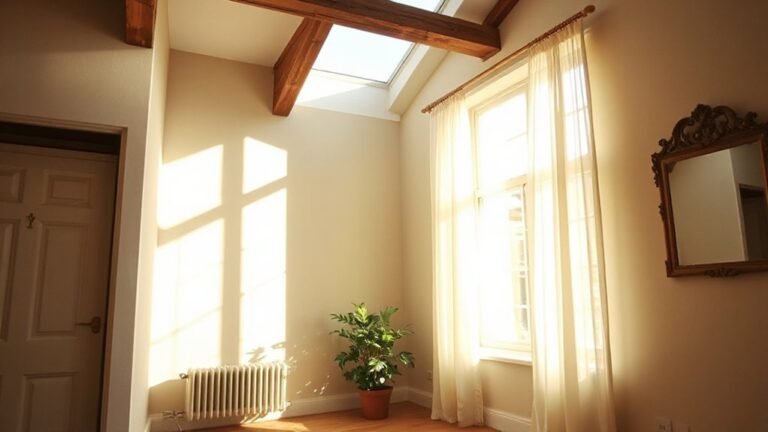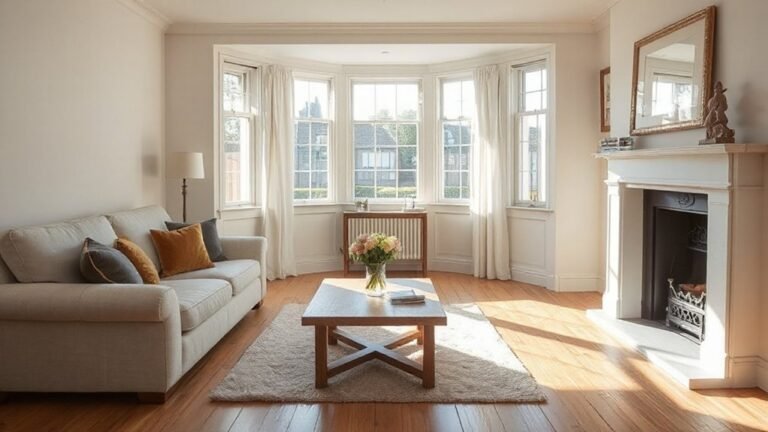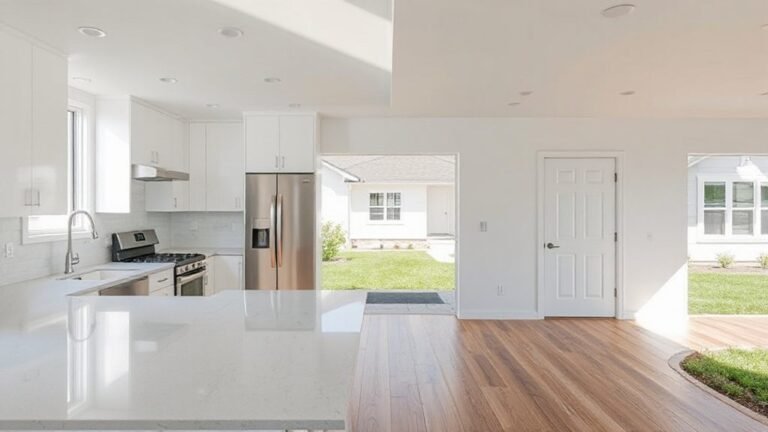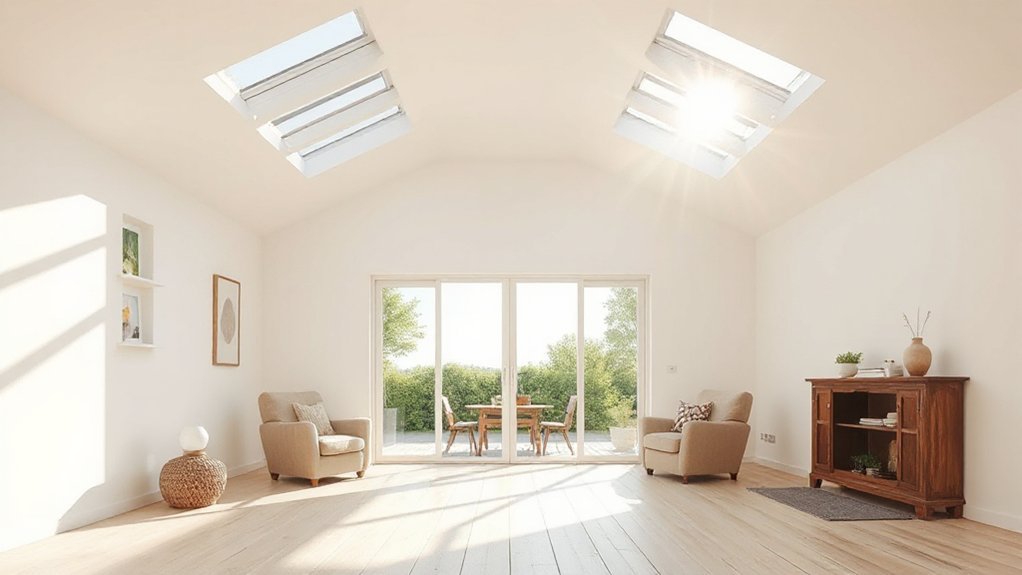
In a sunlit living room, a rooflight over the seating zone and glass sliders at the terrace edge can double perceived space. You’ll want precise placement aligned with paths and use, balancing daylight goals with glare and heat control. This approach hinges on glazing, shading, and diffusion—crafted to heighten interior clarity while preserving energy performance. Stay with me to uncover how to coordinate sizing, layout, and timing for optimum impact.
Budget, Sizing, and Installation: Your Practical Framework
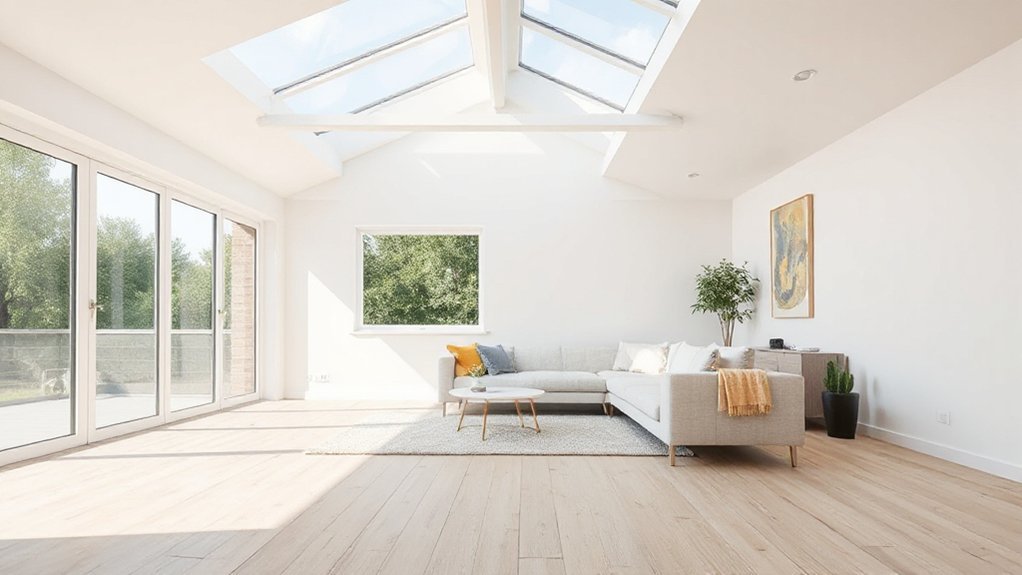
When planning budget, sizing, and installation, start with your goals for light, ventilation, and access, then translate them into measurable specs for rooflights and sliding doors. You’ll map performance targets to unit costs, assemble a cost analysis framework, and establish a prioritized feature set. Define required U-values, glare control, and operability to drive material selection decisions and allowable budget ranges. Size sequences should align with room geometry, occupant load, and peak solar gain. Document installation constraints, flashing compatibility, and roof structure impact to refine sequencing and labor estimates. Track contingency for fasteners, sealants, and weatherproofing. Compare suppliers on warranties, delivery timelines, and service levels. Choose materials that balance thermal performance, durability, and cost, ensuring long-term value and maintenance practicality.
Rooflights by Room Type: Which Models Fit Where
Rooflights suit different rooms by their functional needs and occupancy profiles, so match models to use-case rather than size alone. In living spaces, opt for wide-throw openings or tilt-and-turn variants to balance daylight with heat control and privacy. Kitchens benefit from units with robust ventilation integrations and easy-clean surfaces, while bathrooms require moisture-resistant frames and anti-fog glazing. For home offices, prioritize glare reduction and adjustable capping to minimize eye strain without sacrificing natural light. Bedrooms benefit from secure locking and Concealed Overhangs to reduce street noise while maintaining warmth. Rooflight maintenance should be planned: clean seals, check drainage, and test mechanisms regularly. Sliding door security remains essential where doors align with roof apertures. Choose models offering reliable hinges, multipoint locks, and compatible frames for added protection.
Maximize Daylight With Strategic Rooflight Placement
Strategic rooflight placement directly influences daylight reach and temporal consistency across spaces. You should consider sizing and layout to maximize illumination while minimizing glare and heat gain. Align placement with room use and sun path to optimize daylight distribution and efficiency.
Strategic Rooflight Placement
How can you maximize daylight by placing rooflights strategically? Place rooflights where they align with primary work zones and living areas, prioritizing horizontal daylight distribution over vertical shafts. Use performance data to locate high-transmittance angles that minimize shading from adjacent structures and landscaping. Orient glazing to capture winter sun while reducing summer glare, integrating solar shading where needed to control luminance without sacrificing depth. Consider rooflight size and spacing to create even illumination across ceilings, avoiding hotspots and shadows on tasks. Incorporate intelligent controls—daylight sensors—to modulate glazing and artificial lighting, maintaining consistent light levels. Pair rooflights with shading strategies that preserve glare-free views and reduce cooling loads while preserving visual comfort. Guarantee installation accommodates future maintenance access and weatherproofing.
Maximising Daylight Reach
To maximise daylight reach, align rooflight placement with primary work zones and living areas while prioritising horizontal distribution over vertical shafts. You optimise coverage by mapping occupant pathways and ceiling height patterns, then position openings to illuminate through natural travel routes. Use max daylight transfer with low-angle setbacks and narrow glazing to reduce glare while keeping consistent light diffusion across spaces. Account for solar shading to manage seasonal intensity without sacrificing reach, ensuring shading devices support even distribution. Consider glazing transom heights to sustain light depths from multiple angles. Maintain clear sightlines to prevent dark corners and leverage reflective surfaces for uniform brightness. Solar shading, light diffusion.
- Align with zones and pathways
- Prioritise horizontal spread
- Balance shading with diffusion
- Avoid glare at junctions
Optimal Rooflight Sizing
Ideal rooflight sizing hinges on balancing daylight gain with glare control and energy performance. You determine size by room function, ceiling height, and anticipated solar angles, then translate that into surface area targets and placement rules. Use a rational method: simulate daylight with the window-to-wall ratio, account for seasonal variation, and constrain glare via shading or baffle design. A smaller, strategically placed rooflight can outperform a larger, poorly oriented one, so prioritize axial location, typical row spacing, and uniform distribution for deep daylight penetration. Consider skylight materials and glazing choices that minimize heat gain while preserving color fidelity. Plan for rooflight maintenance to sustain performance, accessibility, and reliable operation over time.
Sliding Doors for Indoor-Outdoor Living: Key Considerations

Sliding doors for indoor–outdoor living hinge on seamless operation, weather performance, and durable hardware; selecting the right system requires evaluating stackability, sash weight, and threshold design to guarantee tight seals, smooth operation, and accessible shifts. You should assess weatherstripping quality, frame materials, and security features to minimise air leakage while preserving aesthetics. Consider track alignment, drainage, and maintenance access for long-term performance. Prioritise ease of operation across temperature ranges and frequent use. Plan for privacy solutions and window maintenance alongside functionality to sustain comfort and value.
- Stackability options and alignment
- Sash weight and balance mechanisms
- Threshold design, drainage, and accessibility
- Maintenance access, weather seals, and security features
Glazing That Reduces Glare and Controls Heat
Glazing that reduces glare and controls heat relies on coatings and tints chosen to balance visible light, solar heat gain, and indoor comfort. You select glazing with solar control properties aligned to site conditions, orientation, and occupancy patterns, then verify performance with tested metrics. Smart glass options enable dynamic adjustment for varying daylight, while fixed-tint solutions offer predictable, cost-effective control. Glare reduction targets visibility comfort without sacrificing view or daylight distribution, using spectral filtering and anti-reflective media to minimize hotspots. For sliding doors and rooflights, assure uniform performance across spandrels and seams to avoid differential shading. Consider low-emissivity coatings to reduce heat transfer during peak sun and prevent interior fading. Documentation should demonstrate compliance with relevant standards and system compatibility for long-term reliability.
Ventilation and Energy Efficiency With Light-Focused Design
By aligning natural light with controlled ventilation, you maximize air exchange without compromising daylight quality. Consider how airflow interacts with insulation to sustain daylight-driven energy savings and maintain thermal comfort. This discussion centers on the synergy between daylighting efficiency, airflow patterns, and the resulting impacts on overall energy performance.
Natural Light and Ventilation Synergy
Natural light and ventilation should be treated as a coordinated system, not as separate design goals. You balance window openings, rooflights, and thermal breaks to optimize both daylight and airflow without compromising insulation or solar gains. Use controlled apertures to modulate cross-ventilation and purge heat, while preserving glare control and privacy. Precise sizing guarantees reliable night-time cooling and daytime light delivery. Align shading strategies with vent operation to prevent overheat during peak sun.
- solar shading integrated with operable vents for dynamic comfort
- light diffusion techniques to reduce hotspots and improve uniformity
- cross-ventilation paths matched to room usage and occupancy
- performance metrics that couple daylight autonomy with air exchange rates
Airflow, Insulation, and Daylighting Efficiency
Airflow, insulation,, and daylighting must be optimized together to deliver consistent comfort and energy performance. You balance operable rooflights and sliding doors to control cross-ventilation without compromising thermal envelopes. Use continuous insulation and air barriers to minimize heat loss while preserving adaptive airflow paths. Implement solar shading strategies to reduce heat gain during peak sun while preserving daylight quality; automated shading aligns with occupancy and weather data to avoid overheating. Insulation must compensate for ventilation swings, maintaining indoor moisture control without creating condensation risk on sensitive surfaces. Fan-assisted ventilation can enhance air quality when natural flow is limited, but ensure controls prevent drafts near glazing. Monitor daylighting levels to optimize solar gains, preventing glare and overcooling, and verify overall energy performance with a commissioning plan.
Daylight-Driven Style: Curb Appeal and Interior Mood
Daylight drives both curb appeal and interior mood by shaping exterior perception and interior ambiance with natural illumination. You leverage daylight to highlight architectural lines while controlling glare and color fidelity, aligning exterior finishes with interior palettes. The result is a cohesive aesthetic that feels intentional and calm rather than incidental.
- Color schemes harmonize outside and inside, ensuring consistent temperature perception and material resonance
- Furniture placement optimizes sightlines, maximizing daylight distribution without compromising function
- Material brightness and contrast are calibrated to reduce shadow harshness and enhance texture
- Window and door reflections are considered in design choices to preserve legibility of art and decor
This approach keeps lighting behavior predictable, enabling you to craft a durable, welcoming atmosphere that ages gracefully.
Quick-Start Guide: Budgeting, Sizing, and Timeline

To get your project started on solid footing, map out a realistic budget, exact sizing, and a practical timeline before any procurement or site work begins. You’ll first establish a baseline cost for rooflights and sliding doors, including delivery, installation, and any scaffolding or access enhancements. Then determine sizing by referencing room dimensions, daylight targets, and solar shading considerations to avoid over- or under-illumination. Align your timeline with Building regulations milestones, planning approvals, and supplier lead times to prevent delays. Factor in potential weather gaps and permit processing windows, setting clear milestones for design sign-off, fabrication, and site readiness. Monitor budget variances through the process, and verify that solar shading solutions integrate with ventilation and thermal controls within code requirements. Maintain documentation for future inspections.
Frequently Asked Questions
How Do Rooflights Affect Attic Insulation and Dew Point Risk?
Rooflights slightly raise heat transfer and may alter insulation impact; guarantee high-performance glazing and continuous attic insulation to minimize dew point risk. Use vapour barriers, proper ventilation, and edge detailing to control condensation and maintain thermal efficiency.
Can Sliding Doors Improve Cross-Ventilation Year-Round?
Sliding doors can improve cross-ventilation year-round. About 40% more natural airflow is achievable when operated for cross-vent scenarios; this enhances ventilation efficiency and comfort, especially in temperate climates. You’ll feel consistent cooling and improved indoor air quality.
Which Materials Balance Light Transmission and Privacy Best?
You should choose materials offering glass clarity with moderate light transmission and added privacy filters, such as frosted or lightly tinted finishes, to balance visibility and privacy while maintaining accurate color and glare control.
Are There Building Code Limits on Rooflight Numbers?
Yes, building code regulations set limits on rooflight quantity. You’ll need to verify local bylaws; rooflight quantity limits vary by region and roof area. Make certain calculations, setbacks, and fire/safety provisions are satisfied before installation.
What Maintenance Regimes Maximize Long-Term Daylight Performance?
You maximize daylight longevity by implementing regular cleaning and seal inspections, gasket replacements, and glazing performance testing, ensuring energy efficiency remains high; monitor insulation, frame integrity, and condensation, preserving natural light while minimizing heat loss and degradation.
Conclusion
To maximize daylight, align rooflights and sliding doors with movement patterns, selecting sizes that balance glare control and solar gain. Use glazing and diffusion to maintain comfort, while shading adapts to sun angles. Integrate ventilation and thermal breaks to avoid hotspots and reduce energy use. This approach delivers an immersive, daylight-rich interior with dramatic openness—an almost jaw-dropping proof to light engineering. Start with a precise plan, then iterate for ideal performance and curb appeal.
About the Author