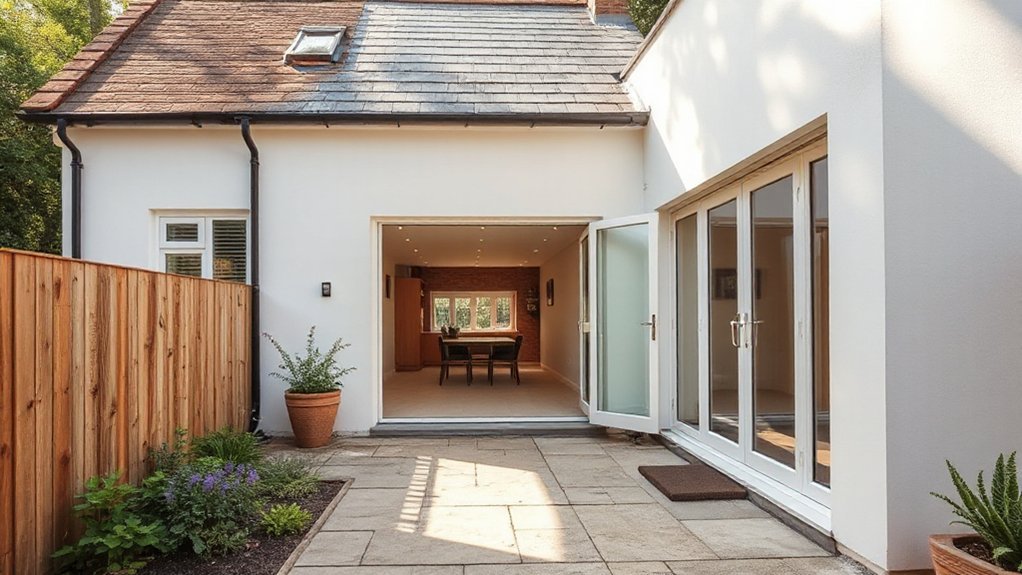
If you’re considering a single storey extension, we’re some thoughts for you to ponder. A coincidence often shapes how you approach space: a modest rear extension can transform your daily flow just as you discover a new way to frame views from the kitchen. You’ll plan footprint, light, and access with precision, balancing function and form. As you weigh materials, glazing, and structure, consider how the design will age with your home. The next steps reveal why the simplest extension decisions can redefine comfort, value, and planning outcomes—and what to pin down first.
Assess Site and Brief for a UK Single-Storey Extension
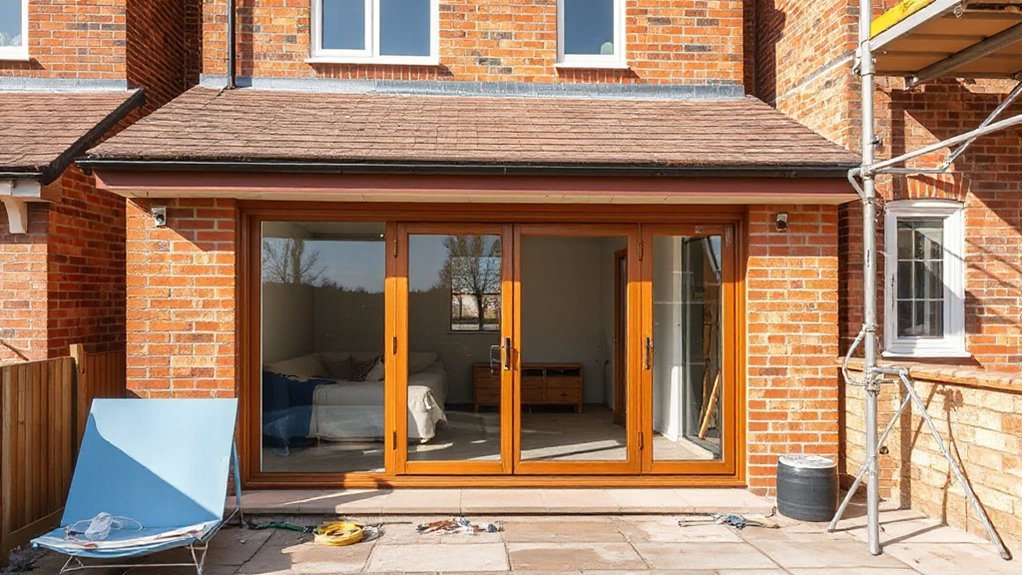
Evaluating the site and briefing for a UK single storey extension requires a concise synthesis of constraints, opportunities, and client aspirations. You assess boundary conditions, ground conditions, drainage, and access to utilities, prioritising reliability and constructability.
Consider site orientation, prevailing sun paths, and wind exposure to inform envelope decisions and glazing strategy. Define spatial needs with measurable targets: functions, dimensions, and service zones, aligning with budget and programmatic milestones.
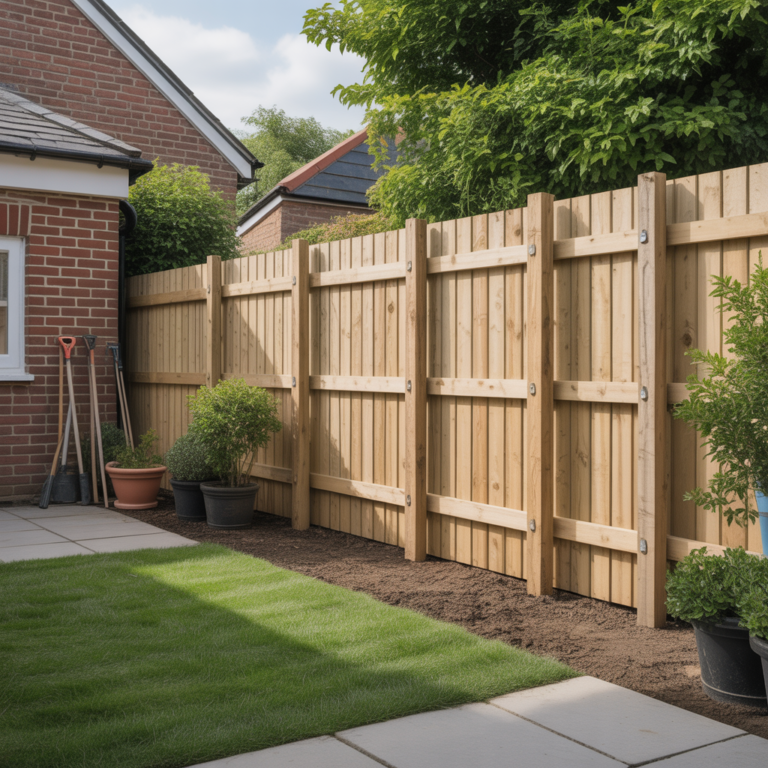
Landscape integration guides boundary treatment, planting, and outdoor pedagogy, ensuring seamless legibility between new and existing spaces. Plan for interior customization by specifying adaptable zones, material palettes, and acoustic requirements that support future changes in use.
Document approvals, constraints, and milestones clearly, establishing a disciplined brief that reduces risk and enhances design integrity throughout procurement.
Plan Footprint: Light, Flow, and Access in 7 Steps
You design the footprint to maximize Light-Filled Flow, ensuring every zone links without barriers. Consider each step as a sequence that preserves daylight, sightlines, and user circulation while prioritizing an Accessible Floorplan.
In this 7-step approach, you balance enclosure and openness, integrating flow, access, and practical service routes for a cohesive plan.
Light-Filled Flow
Align rooms so doors become moments of mediation rather than barriers, fostering seamless transitions. Use full-height glazing where possible to blur boundaries between inside and outside, while maintaining thermal performance and glare control.
Limit subdivisions that disrupt daylight propagation; opt for open, adaptable configurations with soft partitions or integrated storage. Position service cores to minimize travel distances, and ensure logical circulation that supports both daily routines and entertaining layouts.
Prioritize daylight autonomy, acoustic comfort, and precise detailing in joints, reveals, and finishes.
Accessible Floorplan Steps
Begin by establishing a circulation spine that connects primary living zones with focused access to utilities and service cores, ensuring width, turning radii, and door clearances meet universal design standards.
In accessible floorplan steps, you methodically allocate spaces to optimize light, flow, and access.
Position entry points to minimize thresholds and align corridors with predominant movement paths, supporting straight-line travel and clear sightlines.
Create zoned areas with defined thresholds and consistent turning radii, enabling smooth progression between rooms.
Integrate built-in storage and service cores within reach ranges, reducing asymmetrical obstruction.
Prioritize corridor width and door clearances to accommodate mobility considerations, including wheelchair and walker use.
Specify non-slip finishes and tactile cues at key junctions.
Document compliance with accessible design criteria, testing for intuitive wayfinding and resilient, low-maintenance materials.
Budget-First Build: UK Cost Ranges and Tradeoffs
Under a budget-first approach, UK cost ranges hinge on site conditions, spec depth, and delivery schedule, with tradeoffs that balance upfront allocation against long-term performance. You’ll see budgets reflect structural choices, foundation scope, and insulation strategies, where iterative value engineering governs tradeoffs between material costs and energy efficiency.
Budget considerations center on achievable envelope performance, buildability, and risk exposure during delivery windows. You’ll likely trade higher upfront spend for reduced lifecycle costs through better thermal breakeven, or accept modest boosts to maintenance if opting for simpler detailing.
Materials, subcontractor access, and sequencing shape variability, so document assumptions early. Clear cost bands help manage expectations, while contingency buffers address unknowns. Prioritize measurable outcomes, align with fabric-first principles, and track evolving unit rates to sustain design-led precision.
Construction tradeoffs drive feasibility without compromising functionality.
Design Styles That Integrate With Your Home
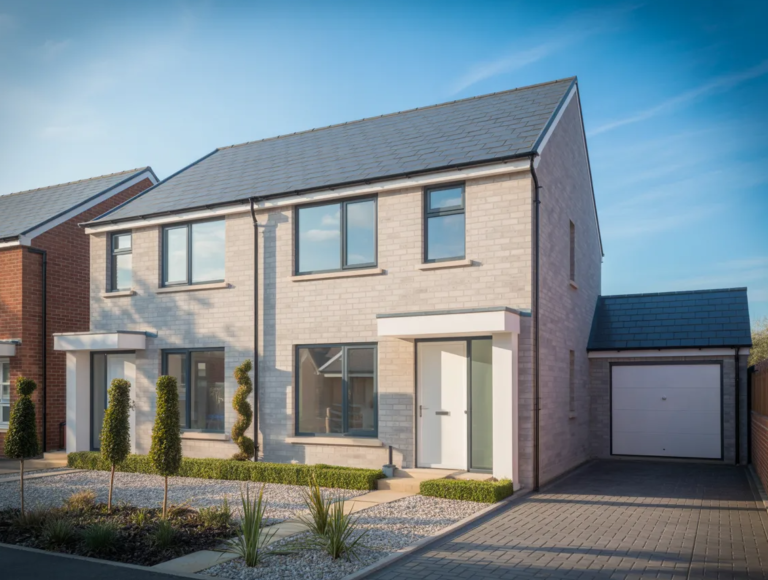
You’ll align your extension with the existing structure by honoring harmonious volume proportions, ensuring the new space reads as a natural continuation.
Match your material palette across textures, tones, and detailing to create a cohesive, legible join.
Use a roofline echo to subtly reflect the original silhouette, reinforcing integration without competing with the main house.
Harmonious Volume Proportions
Achieving harmonious volume proportions begins with a deliberate calibration of room scale, ceiling height, and furniture footprint so spaces read as cohesive units rather than isolated rooms. You target proportional harmony by aligning bay widths with door and window proportions, ensuring sightlines stay uninterrupted, and by modulating ceiling planes to maintain consistent vertical rhythm.
Visual balance emerges when massing reads as a single volumetric gesture, with furniture and built-in runs scaled to the primary axis. Avoid abrupt depth changes; prefer gentle setback recesses to preserve legibility.
Use modular furniture grids to reinforce proportionate relationships between zones, ensuring each area contributes to a unified whole. This approach supports seamless progression between extension and existing home, achieving a refined, technically coherent extension language.
Material Palette Alignment
Begin with one core material, then layer secondary textures that echo the primary, avoiding competing patterns. Precision matters: specify grain direction, sheen levels, and porosity to control light reflection and perceived depth.
Consider climate and maintenance when choosing render, brick, timber, or metal finishes, ensuring durability aligns with your UK context. Establish a restrained palette—three to four tones maximum—to maintain aesthetic consistency.
Document tolerances for joints and reveals to preserve rhythm through corners. The result is a cohesive, legible extension that quietly supports the existing architectural language.
Roofline Echo Integration
Consider continual soffit detailing and a shared material pallet to reinforce coherence, rather than introducing contrasting accents. The aim is architectural harmony achieved through disciplined geometry, consistent pitch, and synchronized ridge heights across the envelope.
Employ passive control of shadows by aligning overhangs with existing eaves, so the massing reads as one form. Favor restrained ornament and precise junctions at corners, preserving clean sightlines.
Roofline integration prioritizes predictability of silhouette, legibility of form, and unified perception of the home.
Materials, Sustainability, and Build Quality
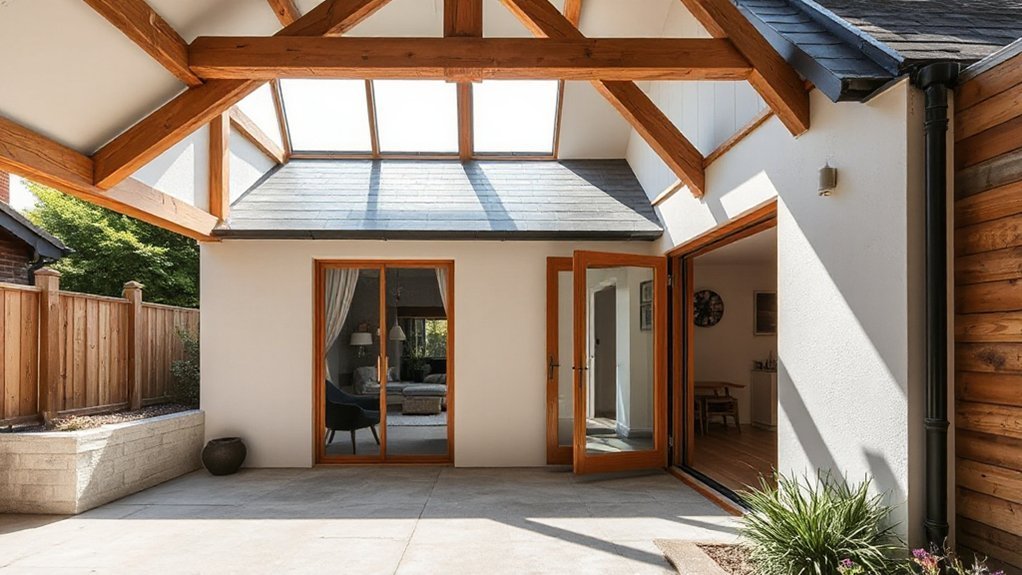
Choose sustainable materials where possible, prioritising low embodied energy, recycled content, and off‑site fabrication to reduce waste.
Verify thermal bridging, airtightness, and moisture control at every junction, since envelope integrity dictates energy use and indoor comfort.
In construction detailing, specify robust fixings, corrosion‑resistant metals, and durable finishes that withstand local climate without frequent maintenance.
Build quality depends on precise fabrication, accurate on‑site assembly, and rigorous quality checks; document tolerances, surface finishes, and joinery tolerances to minimise performance gaps.
Align materials strategy with long‑term adaptability, ensuring that extension remains functional, stylish, and resilient.
Permissions in Practice: UK Timelines and Pitfalls
Managing permissions in practice requires a clear, design-led timeline that aligns with project goals and local regulations. You start by mapping mandatory stages: feasibility checks, pre-application discussion, and submission windows, then align them with your build sequence.
Planning permissions determine the base timetable, so identify potential constraints early, such as conservation areas, setbacks, and local policy deviations. Anticipate permitting hurdles by preparing robust drawings, rationales, and any necessary heritage or ecology inputs.
Your team should run parallel processes where possible—survey briefs, structural calculations, and party-wall considerations—to prevent delays at decision points. Maintain clear records of approvals, conditions, and deadlines, updating stakeholders in real time.
In practice, tight governance reduces rework and keeps the extension on track.
Create Seamless Inside–Outside Living: Garden-to-Home Connections
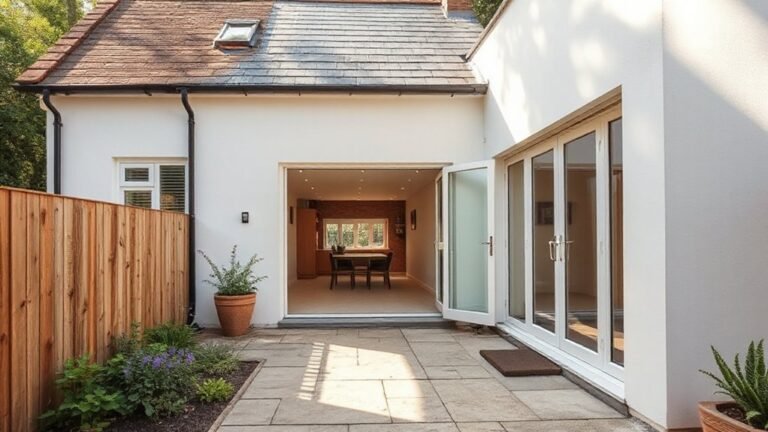
Bringing the garden into the home begins with precise planning of how doors, thresholds, and openings will read as one continuous space. You should align glazing, flooring transitions, and wall finishes to minimize visual breaks, creating a single, fluid threshold.
Focus on sightlines that extend from interior seating to exterior zones, ensuring furniture and planting don’t encroach on circulation. Use a performance-led approach: doors that pocket or swing with controlled air seals, thresholds that sit flush, and damp-proof detailing that prevents cold bridging.
Consider garden privacy when selecting glazing tint and positioning. Specify outdoor furniture with durable, low-maintenance materials and a restrained color palette to maintain cohesion. Integrate shading and service zones to support seamless use across both domains.
Frequently Asked Questions
How Can I Maximise Daylight Without Compromising Privacy?
To maximise daylight without sacrificing privacy, position glazing on the boundary with high-performance, low-porosity frames, employ skylights for top-lighting, and use translucent screens or frosted glazing for Privacy protection while preserving natural light distribution.
What Are Common Hidden Costs in Planning a Single-Storey Extension?
Budget-conscious builders beware: hidden costs often creep in from Building Regulations and Planning Permissions, plus surveying, site prep, and utilities. You’ll tighten timing, track changes, and guarantee accurate specifications, budgeting contingencies for permits, inspections, and potential amendment fees.
Which Foundations Suit Uneven UK Garden Soil Types?
Foundation types for uneven UK garden soil vary; choose deep footings or piling, supported by soil stabilization where needed. You assess bearing capacity, drainage, and frost risk, implementing continuous reinforced concrete slabs or pad foundations with flexible connections.
How Do I Future-Proof for Potential Mobility Needs?
“Plan ahead, they say.” You future-proof for mobility by designing accessible routes, smart wiring, and flexible layouts, optimizing energy efficiency. You’ll specify low-threshold doors, universal controls, and scalable technology, ensuring durable accessibility while maintaining precise, design-led performance.
What Insurance Cover Is Essential During and After Construction?
Essential cover includes extensive insurance during construction, plus post-construction coverage for latent defects and third-party risks; ensure contract works, public liability, and structural warranty are in place, addressing Insurance requirements and Post construction coverage for lasting protection.
Conclusion
So, as you wrap your single storey extension plan, you’ll recognise how the project’s success hinges on precise site assessment, disciplined budgeting, and a design-led approach that respects the home’s original language. An interesting statistic: in the UK, extensions account for about 15–20% of a typical home’s value increase when well-executed. Aim for seamless indoor–outdoor flow, robust structural detailing, and compliant materials to maximise light, access, and long‑term energy efficiency.
About the Author