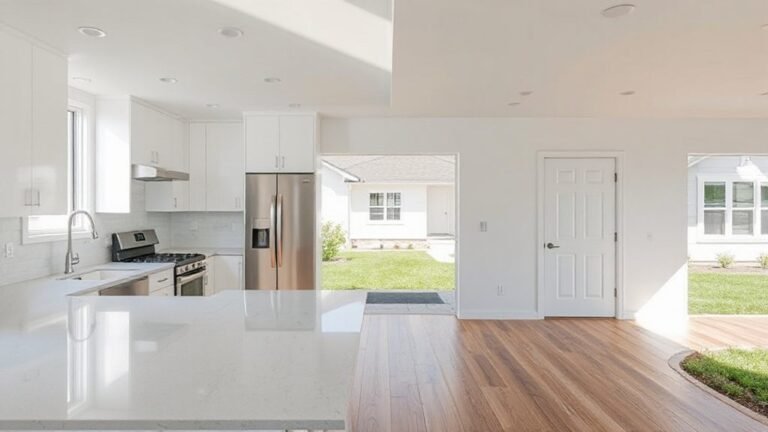
You’ll test the idea that open shelves naturally stay tidy if you group by function and leave space to breathe. When you balance height, texture, and color, clutter hides in plain sight and daily-use items stay within easy reach. The trick isn’t just decoration; it’s discipline—minimal accents, seasonal refreshes, and a clear system for rehoming what you rarely touch. Curious how small adjustments can transform your whole kitchen without adding bulk? Let’s start.
Why Open Shelving Stays Neat When Styled Well
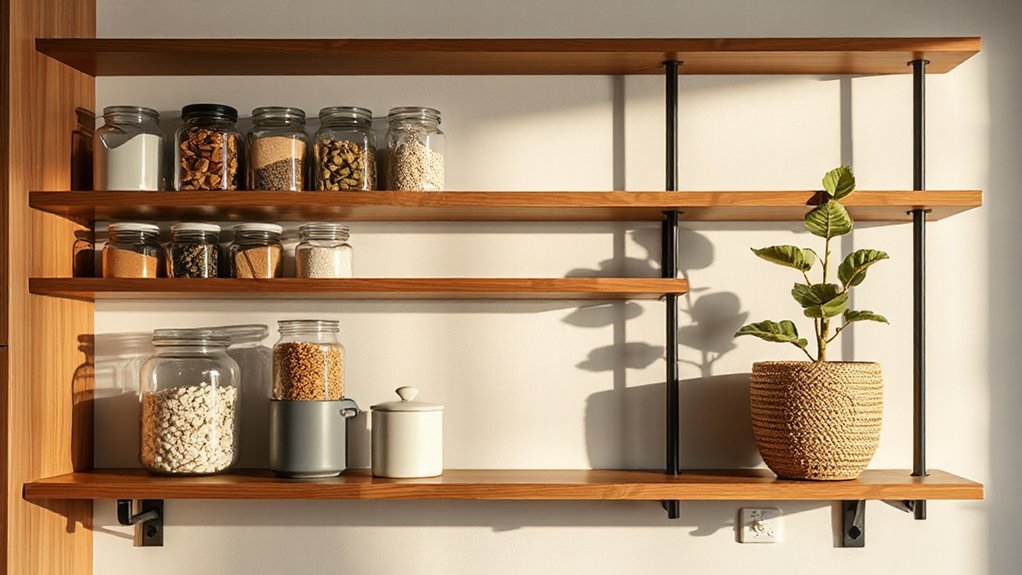
Open shelving stays neat when you style it with intention. When you prep a shelf, group items by function and height, then stack essentials together in small, repeatable patterns. Use decorative accents sparingly to add personality without creating chaos; a few ceramic pieces or a single vase can anchor a zone without crowding it. Keep color consistent to read as a cohesive system, not a jumble of odds and ends. Position shelf lighting to highlight key zones: lamps, LED strips, or puck lights should illuminate recipes, glasses, and frequently used dishes. Rotate pieces seasonally, swapping in new decorative accents every few months to refresh the look without bulk. Establish rules: edit monthly, maintain clear sightlines, and honor the purpose of each shelf.
Core Principles: Balance, Repetition, and Negative Space in Kitchens
Balance, repetition, and negative space aren’t abstract ideals—they’re practical tools you can apply tonight. In the kitchen, you’ll balance items by size, shape, and finish, so shelves feel cohesive, not chaotic. Repetition builds rhythm; mirror a couple of motifs across different shelves to unify the display. Negative space is your quiet between objects, letting each piece breathe and the overall look stay calm. Use decorative accents sparingly to punctuate shelves without shouting. Shelf customization lets you tailor spacing and heights to your everyday needs, reinforcing balance and rhythm while preventing clutter. Keep a tight core of essentials, then layer in character with intentional accents rather than excess.
- Create a simple repeating motif across shelves
- Vary height and depth to cultivate rhythm
- Reserve space for strategic decorative accents
Practical Groupings for Texture, Color, and Daily-Use Items
Texture, color, and daily-use items should be grouped for quick access and cohesive look. You’ll want a clear logic: rotate pieces by function, not just by hue. Start with everyday staples—plates, mugs, and glasses—stacked by height and use, then place frequently used tools within reach. Introduce texture with mix-and-match materials (ceramic, matte stone, glass) in a controlled rhythm, avoiding chaotic variety. Color should repeat in small, intentional bursts: a familiar accent mug here, a coordinating vase there. Keep decorative accents minimal and purposeful, so a single bowl or jar reads as a deliberate touch rather than clutter. Seasonal displays can nod to the calendar through a curated trio of objects, ensuring the shelf stays fresh without overwhelming.
A 6-Step Workflow to Style Clean Kitchen Shelves
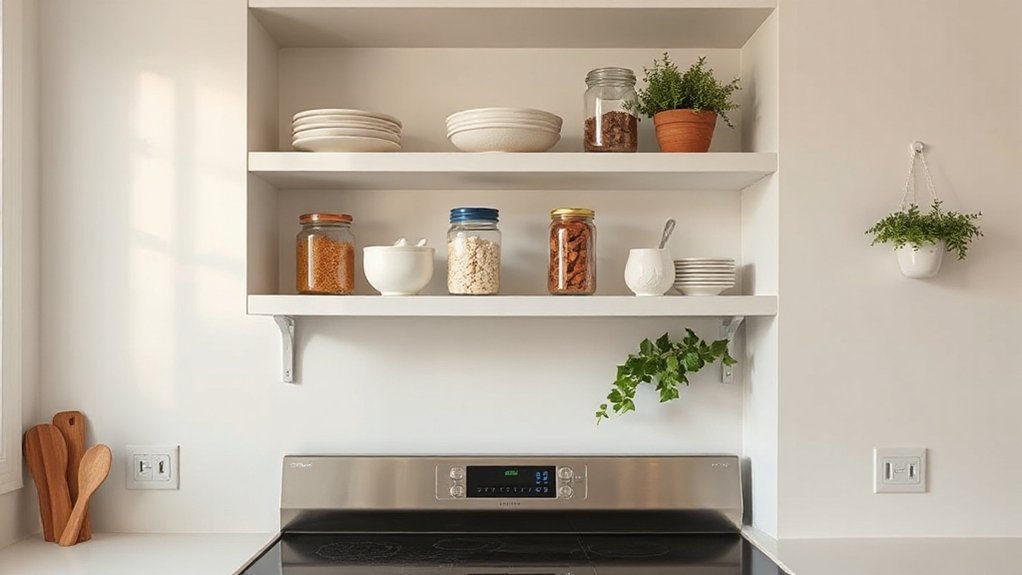
Now you’re ready to put that grouped approach into action with a clear, repeatable workflow. Follow this 6-step routine to keep clean shelves visually calm and functional. Step 1: assess what you truly use, then remove excess. Step 2: build a core trio per shelf—function, form, and texture. Step 3: place everyday items lower and visible, rare pieces higher. Step 4: mix decorative accents sparingly to avoid clutter. Step 5: rotate seasonal swaps to keep interest without overcrowding. Step 6: step back, adjust symmetry, and maintain breathing room.
- Keep a running baseline of items you actually reach for daily
- Swap in decorative accessories and small art to refresh without bulk
- Schedule quarterly audits to refresh color, texture, and balance
Quick Maintenance Tips to Keep Shelves Fresh
To keep shelves looking fresh, do quick, regular checks: wipe surfaces, swap out dusty items, and rehome anything you don’t use weekly. Start with a simple sweep: remove items you barely touch, dust the surfaces, and wipe with a damp cloth. Rotate canisters and jars so labels face out, keeping the most-used items front and center. Dedicate a minute to hide clutter behind shelf accessories that support storage optimization, like labeled bins or shallow baskets. Replace damaged reverent pieces and purge duplicates to preserve balance. Schedule a 5-minute monthly refresh to align with seasonal changes and recipe rhythms. Maintain a consistent, curated look by grouping similar objects and keeping a slim inventory. This disciplined approach preserves visual calm and functional efficiency.
Frequently Asked Questions
How Do I Avoid Dust Buildup on Open Shelves Over Time?
Dust prevention comes from regular cleaning, airtight storage, and minimal knickknacks. Keep shelves dust-free with weekly wipe-downs, then rotate items for shelf organization. Use closed containers, moisture control, and labeled zones to reduce buildup over time.
Which Heights Are Ideal for Practical Kitchen Shelf Access?
You’ll want adjustable heights, then set each shelf where you reach naturally as you cook. Decor placement matters, so keep essentials at eye level for speed, and tall items higher for occasional reach—practical, coincidence guiding your flow.
Can You Mix Vintage and Modern Items Without Clutter?
Yes, you can mix vintage charm with modern contrast without clutter. Curate sparingly, group by color or theme, keep lines clean, display essentials, and blend textures. You’ll achieve a balanced, purposeful shelf that feels cohesive and intentional.
What Are Budget-Friendly Ways to Refresh Shelf Styling?
You can refresh shelf styling on a budget by swapping in decorative accents and aligning color coordination. Curate a few cohesive pieces, mix textures, recycle containers, and rotate pieces seasonally for a practical, concise refresh you’ll actually maintain.
How Often Should I Rotate Items to Maintain Balance?
Rotating every 4–6 weeks keeps balance clear and fresh. You’ll maintain rhythm with seasonal rearrangements, swapping in decorative accents as seasons shift. You stay practical: refresh, don’t overthink, and keep a cohesive, uncluttered display.
Conclusion
You can keep open shelves calm and practical by sticking to deliberate groupings, ample negative space, and a touch of texture. By styling for function—everyday items at reach and decorative pieces sparingly—your shelves feel curated, not crowded. For example, a sunny case study: a baker keeps jars, a tray, and a single vase on one shelf, while the rest stays clear. The result is a kitchen that looks organized, feels inviting, and remains easy to maintain day-to-day.
About the Author