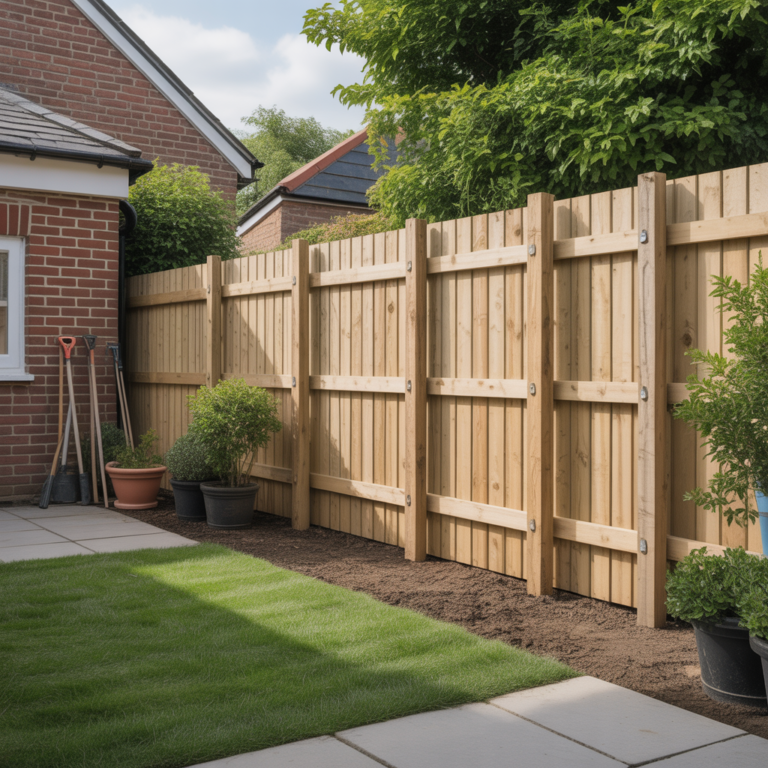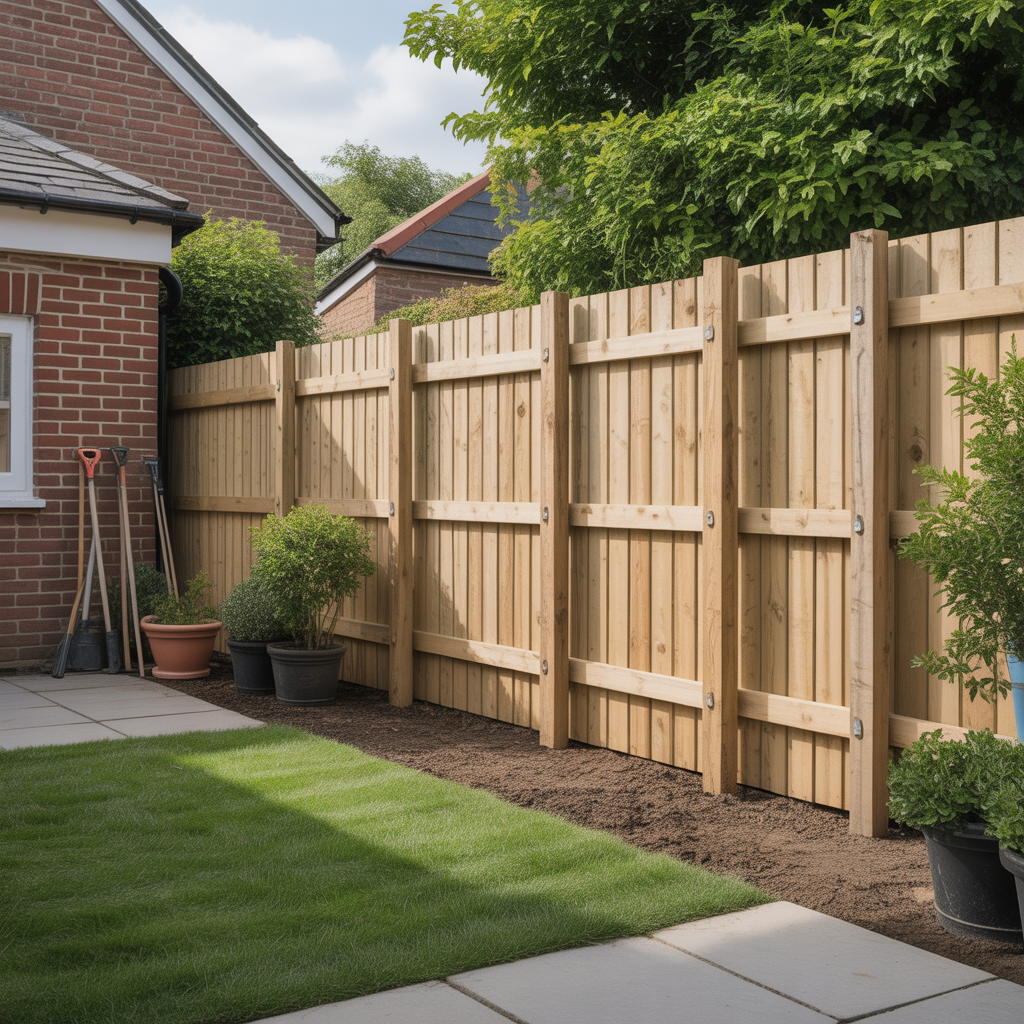
2026 UK Garden Boundary Fence Rules Explained
Putting up a fence might seem like the simplest of home improvement projects — a few posts, some panels, a weekend’s work to make your back garden more private. In practice, boundary fencing is one of the most reliably contentious areas of UK property law, generating disputes between neighbours, enforcement actions from councils, and legal arguments about who owns what and who can do what with it. Getting the basics right before any work starts is considerably easier than sorting out the consequences after the fact.
This guide covers what UK fence rules currently require in 2026: the permitted development height limits, when planning permission is needed, how to work out who owns a fence, and what to do when things go wrong with a neighbour.
Note: This guide covers the general position in England. Rules in Wales, Scotland, and Northern Ireland differ in some respects. Planning rules can also vary depending on local conditions — if in doubt, contact your local planning authority before starting work.
The Core Height Rules
The fundamental fence rules in England are governed by permitted development rights under the Town and Country Planning (General Permitted Development) Order 2015 (as amended). The headline rules are straightforward:
Rear and side garden fences: You can erect, maintain, or improve a fence, wall, or gate up to 2 metres in height without planning permission. This is measured from natural ground level on the higher side of any slope.
Front garden and highway boundaries: If your fence, wall, or gate is adjacent to a highway used by vehicles — which includes roads, but also shared private roads and driveways in some interpretations, and even footpaths adjacent to highways — the maximum height without planning permission is 1 metre.
These two numbers — 2 metres at the back, 1 metre at the front — are the foundation of the whole system, and getting them wrong is the most common planning mistake homeowners make with fencing.
The Trellis Problem
Trellis added on top of a fence counts towards the total height. A 1.8-metre fence panel with a 30cm trellis topper is a 2.1-metre fence, which exceeds the permitted development limit and technically requires planning permission. This catches a surprising number of homeowners off guard.
The Sloping Ground Problem
Height is measured from the natural ground level on the higher side of any slope. If the ground on your side is 30cm higher than your neighbour’s side and you build a 2-metre fence measured from your ground level, the fence will stand 2.3 metres above your neighbour’s ground level and will exceed the permitted development limit as measured from their side.
Lowering flower beds or raised planters does not circumvent the rules — the measurement is taken from natural ground level, not from the surface of whatever you have installed.
When Do You Need Planning Permission?
Beyond the height limits, planning permission is required in a number of specific situations:
Exceeding the height limits. If you want a fence taller than 2 metres at the rear or 1 metre adjacent to a highway, you need to apply to your local planning authority. The council will consider road safety (for highway-adjacent requests), privacy, visual impact, and local planning policies.
Listed buildings and their curtilage. If your property is a listed building, or if your fence forms part of the curtilage (the land immediately surrounding) of a listed building, planning permission is required for any new fence or wall regardless of height. The same applies if your fence forms a boundary with a neighbouring listed building or its curtilage.
Conservation areas, AONBs, and National Parks. Stricter rules apply in conservation areas, Areas of Outstanding Natural Beauty, National Parks, and World Heritage Sites. Height restrictions may be lower, and the material and design of a fence may need to be in keeping with the character of the area. Always check with your local planning authority before starting work in any designated area.
Article 4 Directions. Local authorities can issue Article 4 Directions that remove permitted development rights in specific areas. If your property is in an area subject to an Article 4 Direction, you may need planning permission for work that would otherwise be permitted development. Check your council’s interactive planning map before assuming PD rights apply.
Like-for-like replacement — the trap. Replacing a fence like-for-like (same height, same position) does not normally require planning permission. However, if the original fence was already unlawful — built above permitted development limits without permission — replicating it does not make it lawful. The planning status of the original is what matters, not the age of the replacement.
Who Owns the Fence? The Boundary Question
The question of who owns a fence is one of the most common and most poorly understood aspects of UK boundary law. There is no universal rule — the idea that “you own the fence on the left” or “you own the fence on the right” is a myth that has no basis in law.
Check the Title Deeds and T-Marks
Fence ownership is determined by the title deeds of the properties concerned, not by any general convention. On the Land Registry plans that come with your title deeds, look for a T-mark — a short line with a crossbar. The T-mark points inward toward the property responsible for maintaining that boundary. If the T-mark is on your side of the fence line, you are responsible for the fence.
Some title deeds contain explicit clauses about boundary maintenance — who is responsible for which boundary, what materials can be used, and what the permitted height is. These provisions override general planning rules, so a fence that is otherwise permitted development may be restricted by a covenant in the deeds.
If your deeds show no T-marks and contain no explicit boundary provisions, the ownership of the fence is genuinely uncertain and may need to be resolved by examining neighbouring properties’ deeds, looking at Land Registry records, or — in disputed cases — taking legal advice.
No T-Mark Doesn’t Mean Shared
The absence of a T-mark does not automatically mean the fence is a party fence shared between both properties. It means ownership is unspecified. Both neighbours may need to refer to their title deeds, previous correspondence, or the Land Registry to establish the position.
The Right-Hand Fence Myth
There is no legal presumption that a homeowner owns or must maintain the right-hand fence when facing their property from the front. This is a widespread misconception. The only reliable source of truth is the title deeds.
What You Can and Cannot Do With Your Neighbour’s Fence
If a fence belongs to your neighbour, your rights over it are limited in specific ways:
You cannot paint or treat the side facing your garden without permission. The fence belongs to your neighbour. Painting, staining, attaching anything to, or otherwise altering the side visible from your garden without their consent is technically an interference with their property. In practice, very minor acts are unlikely to cause disputes, but any substantive alteration without agreement can create a legal problem.
You can attach things to your own side of your own fence without restriction. If you own the fence, you have full rights over both sides.
A collapsing fence in your garden. If a neighbour’s fence falls or leans into your garden, the law permits you to place the damaged pieces back onto their land, but you must not cause additional damage in the process. If the fence is actively causing a safety hazard, speak to the neighbour first. If they refuse to act, specialist property dispute solicitors can advise on your options.
Neighbour’s fence on your land. If a neighbour has erected a fence that encroaches on your land — even by a small amount — you can require it to be moved. This is a trespass issue. Document the position carefully, attempt to resolve it through discussion, and if the neighbour refuses, legal advice will be needed.
The Party Wall Act and Fencing
The Party Wall Act 1996 is widely associated with building work on shared walls, but its application to garden fencing is more limited than many homeowners assume.
For standard timber, metal, or panel fencing, the Party Wall Act does not usually apply. However, if you are intending to excavate postholes within 3 metres of your neighbour’s building and to a depth lower than the base of their foundations, you must serve a Notice of Adjacent Excavation. For shared party walls — such as a decorative brick boundary wall that sits astride the boundary — the full Party Wall Act provisions apply, including the right for each neighbour to appoint a surveyor.
For most garden fence projects, the Party Wall Act is not directly relevant, but any significant excavation near a neighbouring structure requires a careful check.
The Highway Boundary Rule in Detail
The 1-metre highway rule applies more broadly than many homeowners expect. It is not limited to fences fronting a main road — it applies to any boundary adjacent to a highway used by vehicles, which includes:
- Roads of any classification
- Shared private driveways and access ways in some circumstances
- Side gardens abutting a footpath adjacent to a vehicular road — the 1-metre rule applies even if the fence is not directly facing the road
The reason for this rule is road safety: tall fences and walls near junctions, driveways, and pedestrian access points obstruct the sight lines of drivers and pedestrians. Councils take enforcement of this rule relatively seriously, particularly where the boundary creates an observable highway safety issue.
Lawful Development Certificates
If you are unsure whether your proposed fence falls within permitted development rights — or if you want written confirmation that it does before proceeding — you can apply for a Lawful Development Certificate (LDC) from your local planning authority. An LDC is not a planning permission; it is a formal confirmation that the proposed work is lawful as permitted development.
An LDC provides peace of mind about boundary fence rules, a formal written record, and protection if a neighbour later challenges the fence. For anything other than entirely straightforward installations well within the height limits, an LDC is worth considering — particularly if you intend to sell the property in future, when solicitors or mortgage lenders may ask questions about any structures near the boundary.
Enforcement: What Happens If You Get It Wrong?
Building a fence above permitted development limits without planning permission does not automatically result in an immediate fine. Local planning authorities deal with non-compliant fences through enforcement procedures:
- The council may issue an enforcement notice requiring changes — typically reducing the fence to the permitted height.
- In some cases, a retrospective planning application may resolve the issue if the council considers the fence acceptable.
- If a boundary fence rules enforcement notice is ignored, the council can take further action and recover costs.
Enforcement is usually triggered by a complaint — typically from a neighbour. A fence that has been in place for four or more years without enforcement action being taken may benefit from the four-year rule (time limit for enforcement action on operations), but this is not a straightforward protection and should not be relied upon without legal advice.
Practical Steps Before You Start
A few steps before the first fence post goes in will prevent the majority of fence-related disputes:
Check your title deeds. Establish which boundaries are your responsibility and whether any covenants restrict what you can do.
Measure carefully. Confirm exactly where the boundary sits. Use a laser level from natural ground level, and remember that trellis counts towards total height.
Check for planning constraints. Search your address on your council’s interactive planning map for Article 4 Directions, conservation area status, or listed building proximity.
Talk to your neighbour first. Even when you have a clear right to erect or replace a fence, a brief conversation before work begins prevents the majority of disputes. If possible, put any agreement in writing — an email exchange is sufficient.
Keep records. Photograph the existing situation before work begins, and document the new fence’s position and height when it is complete.
Consider a Lawful Development Certificate for anything that involves judgment calls about height, location, or special planning designations.
Getting boundary fencing right is more about process than technical difficulty. The rules are not complicated once you know them — the problems arise almost exclusively from starting work without checking what applies to the specific situation.
About the Author