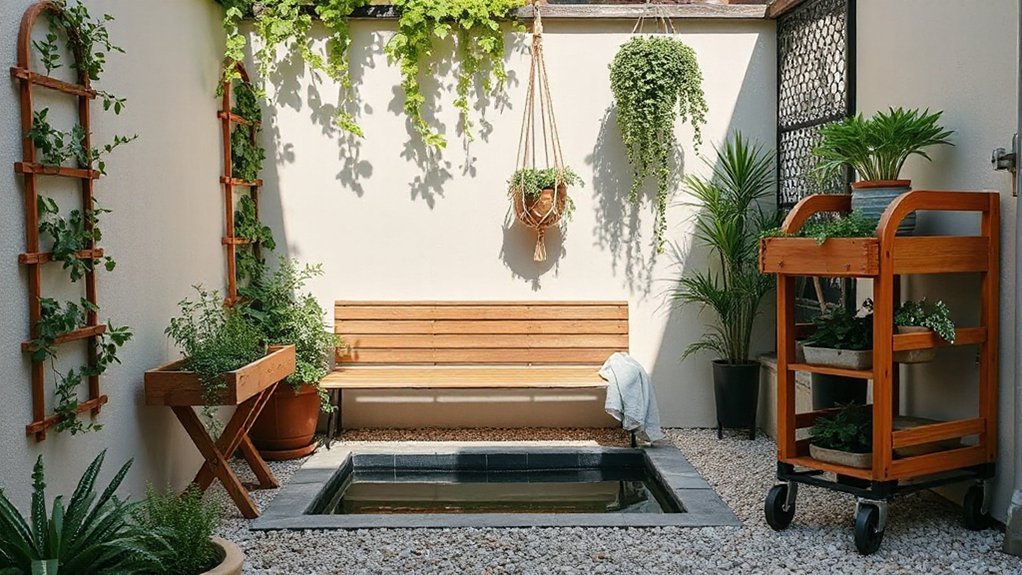
If you’re working with limited outdoor space, you can still create a functional, inviting escape by stacking functions—vertical gardens, compact multi-use furniture, and modular planters that maximize every inch. Consider shade-tolerant, layered plantings and soft ambient lighting to extend usability into the evening, plus smart irrigation to cut maintenance. A few smart zoning moves and privacy screens can make a tiny yard feel larger and more personal, but you’ll want to keep exploring practical layouts and ideas before you commit.
How to Make Small Outdoor Spaces Functional in 5 Steps
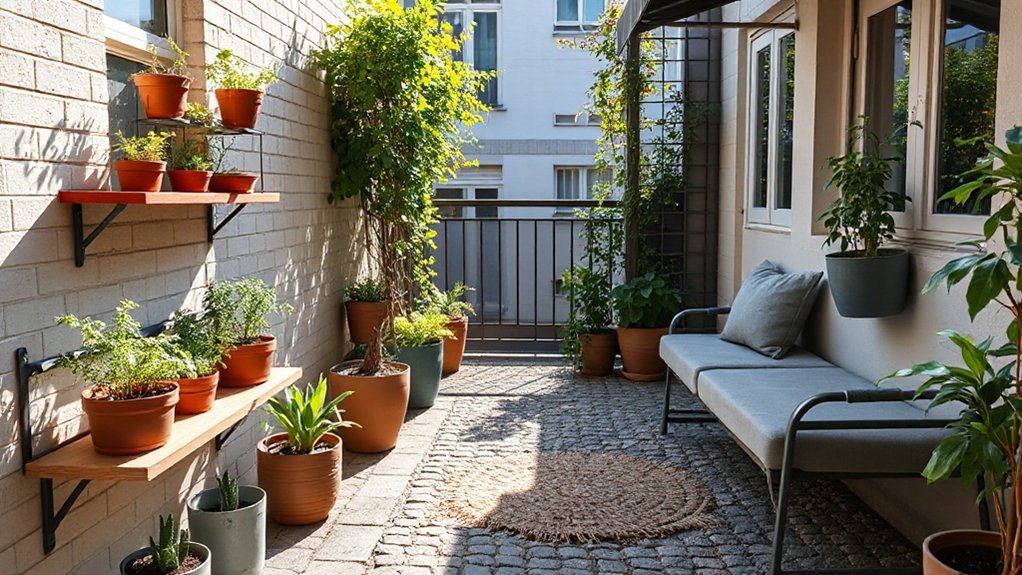
Maximizing function in small outdoor spaces starts with a clear plan. You’ll map zones for seating, growing, and play, then test sightlines in daylight.
Begin with soil preparation: loosened, well-draining beds support healthy roots and reduce maintenance. Add a thin layer of compost to improve nutrients without crowding roots.
Choose compact, multi-purpose furniture and keep traffic paths clear to avoid bottlenecks.
Prioritize vertical integration—trellises, wall planters, and railings—to free floor space while maintaining garden aesthetics.
Select a cohesive color palette and durable materials to minimize upkeep.
Install smart storage to hide tools and potting supplies, keeping surfaces uncluttered.
Use lighting and weather-resistant textiles to extend usability at dusk.
Finally, create a simple maintenance routine so the space stays functional without becoming a chore.
Vertical Garden Ideas That Save Floor Space
Vertical space is your best ally, so you’ll prioritize vertical space utilization to free floor area.
Wall-mounted growing systems keep productivity up while staying tidy, and durable vertical planters resist weather and daily use.
Start with a simple, modular setup and expand as your needs grow.
Vertical Space Utilization
Shelving, wall trellises, and hanging planters let you pack greenery into narrow walls without sacrificing floor space. You’ll organize vertical growth by prioritizing sun exposure and accessibility, placing mature specimens lower for easy care and lighter greens higher for visual impact.
Use modular panels and freestanding grids to adjust heights as plant needs change, keeping irrigation simple with drip lines or capillary mats. To maximize urban aesthetics, vary textures—finesse ferns beside glossy herbs and compact perennials—to create depth without crowding.
Think plant diversity for resilience: mix edible greens with pollinator-friendly blossoms and compact herbs to support a thriving micro-ecosystem. Regularly evaluate airflow and light shifts; prune to prevent crowding and guarantee even light distribution across all tiers.
Wall-Mounted Growing Systems
Wall-mounted growing systems transform narrow walls into productive greenery without touching the floor. They optimize vertical space, letting you place herbs, greens, and compact veggies where floor gardens won’t fit. You’ll likely encounter modular panels, pockets, and hanging pots that are easier to install than full shelving, with adjustable spacing to accommodate plant needs.
Practical setup emphasizes drainage, irrigation, and sun exposure; choose a system that suits your light conditions and climate. In indoor gardening, you should monitor airflow and avoid overwatering by using lightweight, breathable media in each module.
For container planting practicality, select appropriately sized holders and guarantee easy access for pruning and harvesting. Regularly rotate crops to maximize yield, and document growth to refine future wall layouts.
Durable Vertical Planters
Durable vertical planters maximize space with sturdy frames and weatherproof materials, making them a reliable backbone for any compact garden. You’ll benefit from elevated soil volume without sacrificing floor area, allowing multiple herb and leafy beds in a single footprint.
Choose units with drainage and built-in reservoirs to reduce watering frequency and waste. Opt for weather resistant gardening features like corrosion-resistant metals or UV-stable plastics to withstand sun and rain.
Consider modular designs that adapt to balconies, entryways, or narrow walls, so you can reconfigure as plant needs shift. Guarantee the structure supports weight with even distribution to prevent tipping.
Regularly inspect seams and fasteners, keep roots aerated, and group water-loving plants together away from drought-tolerant varieties. Durable vertical planters simplify maintenance and maximize yield.
Compact Furniture Sets for Comfort and Flow
Think about space-smart seating arrangements that fit your garden’s scale without crowding pathways. Multi-function patio pieces help you switch from lounging to dining without adding clutter, keeping traffic flowing smoothly.
Align your furniture to support flow, using compact sets that meet comfort needs while maximizing visible area.
Space-Smart Seating Arrangements
When space is tight, selecting compact furniture sets that maximize seating without crowding the room makes a big difference. You’ll prioritize modular pieces that adapt to different layouts, so seating depth and legroom stay comfortable without overwhelming the patio.
Choose slender-profile chairs or benches with built-in storage to reclaim floor space after gatherings. Opt for multi-seat benches instead of separate chairs to maintain flow and sightlines.
Consider uplifted or floating seating to create the impression of more area. Plan around plant arrangement to keep greenery accessible and unobtrusive, not competing with seating.
Check seating comfort with cushions and fabric that resist weathering yet feel inviting. Favor simple, durable designs that you can rearrange quickly for sun, shade, or dining moments.
Multi-Function Patio Pieces
Compact, multi-function patio pieces boost both comfort and flow by combining seating, storage, and surface space in single, space-efficient units. You gain instant versatility: benches with hidden bins, coffee tables that lift to add dining space, and poufs that store cushions.
Choose modular sets you can reconfigure for gatherings, then tuck essentials inside for tidy, uncluttered decks. Prioritize durable materials and weather-sealed hardware to reduce upkeep while maximizing lifespan.
In tight layouts, opt for pieces with slim profiles to preserve walking routes and sightlines. For outdoor entertaining, pair compact tables with stackable chairs that can be stowed when not in use, preserving floor area.
Add decorative accents—cushions, lanterns, and a focal planter—to personalize the look without overcrowding the space.
Flow-Enhancing Layouts
Flow comes from smart placement and paired pieces that guide movement without feeling cramped. In compact spaces, choose furniture sets that fit a clear rhythm: one focal point, a path, and a resting zone.
Limit the number of separate seating groups to avoid fragmentation; instead, use a single, versatile arrangement that can flex with activities. Prioritize low profiles and modular pieces that can be reoriented as angles change with foot traffic.
Leave sightlines open to wall edges and verticals, so garden art and plant containers don’t compete for attention. Use cushions and fabrics in cohesive tones to unify the space.
Finally, position planters to create a soft corridor and balance, not barriers, enhancing flow while preserving accessibility. Gardens remain welcoming and functional.
Smart Planter Systems for Easy, Low-Maintenance Care
Smart planter systems simplify gardening by automating watering, lighting, and nutrient delivery, so you can grow herbs, vegetables, or flowers with minimal effort. You’ll benefit from consistent moisture without overwatering, and scalable sizing fits tight spaces.
Look for a unit with automated watering, so schedules align with plant needs rather than guesswork. Soil sensors provide real-time feedback on moisture, temperature, and nutrient levels, helping you adjust inputs precisely.
Monitoring apps offer remote control and alerts, reducing daily chores. Choose systems with modular planters and built-in LED lighting that supplements daylight, extending growing windows.
Prioritize water efficiency, leak prevention, and easy cleaning. While pricier upfront, long-term labor savings, healthier crops, and compact setup justify the investment for busy owners.
Water-Wise Solutions for Tiny Patios and Balconies
Maximizing efficiency on tiny patios and balconies means prioritizing water-smart approaches that fit small outdoor spaces. You optimize with a compact layout, choosing vertical planters and modular containers that reduce runoff while keeping essential moisture in reach.
Implement rainwater harvesting with a slim, wall-mounted barrel or hidden tank to capture roof runoff for use during dry spells, minimizing mains water use.
Select drought tolerant plants that thrive in containers, such as compact herbs or succulents, to reduce irrigation frequency.
Mulch generously and group plants with similar water needs to simplify scheduling.
Install drip irrigation or soaker hoses with a timer to deliver targeted moisture, preventing waste.
Maintain soil quality with slow-release fertilizer and monitor for overwatering signs to sustain long-term health.
Shade-Tolerant Plants That Thrive in Small Spaces
Shade-tolerant plants are your best friends in compact spaces because they thrive where sun is scarce and still deliver color and texture. In a small garden, you should prioritize species that endure low light and dry spells, then evaluate how they pair with containers and weekly care.
Favor shade plants with compact growth, slow spread, and clear foliage—ferns, hostas, astilbes, and heucheras fit well. Group plants by light tolerance and water needs to minimize maintenance and avoid conflicts.
Use multi-height layering: groundcovers, mid-height, and a few vertical accents to maximize depth without crowding. Choose light-reflective foliage to brighten dim corners and guarantee consistent moisture without overwatering.
This approach delivers visual impact while preserving space efficiency.
Create Micro-Outdoor Rooms: Zone It Smartly
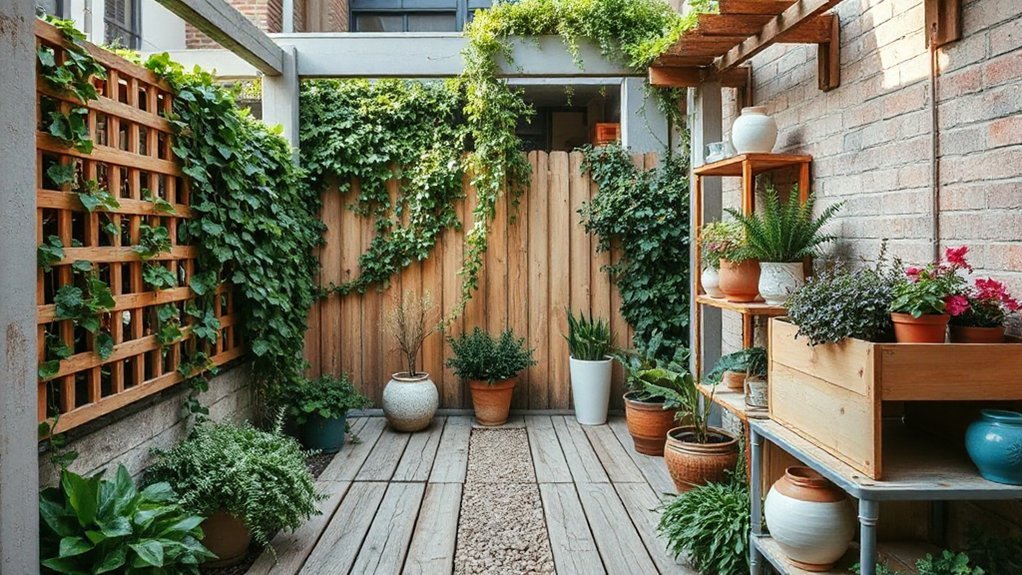
Creating micro-outdoor rooms means carving distinct zones within a small footprint to boost usability without crowding the space. You’ll define purpose areas—a compact dining nook, a sunlit seating corner, and a narrow planters pathway—to maximize function without material excess.
Use clear sightlines and logical flow: place entry points near paths, not behind furniture clusters. Implement micro climate zones by grouping sun-loving plants where it’s warmest and shade-tolerant varieties where it’s cooler, boosting comfort with minimal effort.
Privacy screens, such as lattice panels, trellises, or tall grasses, create visual separation without enclosing you. Opt modular furniture, foldable or stackable pieces, to reconfigure layouts on demand.
Keep textures cohesive, air movement steady, and storage accessible, so each zone remains practical, tidy, and inviting.
Lighting Techniques for Ambience Without Clutter
Lighting can tie your micro outdoor rooms together without adding clutter. You’ll choose ambient lighting that offers soft, even coverage, avoiding harsh spots. Position low-profile fixtures along paths, walls, and plant edges to create depth without crowding the space.
Use decorative illumination that doubles as art—think solar lanterns, string lights, or discrete uplights hidden in shrubs. Keep cords minimal with battery-powered options or integrated wiring tucked behind trim.
Prioritize color temperature around 2700–3000K for warm, inviting atmospheres that don’t shout. Dimmer controls let you shift intensity as the evening evolves, preserving openness.
Avoid clutter by sticking to a cohesive fixture family and limiting the number of light sources. Regularly test lighting quality, ensuring safe footpaths and balanced highlights.
Multi-Use Elements: Storage, Seating, and Greenery
You’ll maximize space by choosing compact storage that doubles as seating and by planning dual-purpose zones for work, meals, or relaxation.
Pair vertical greenery with slim, under-sill shelves to keep clutter low while boosting atmosphere.
Explore ideas for vertical garden racks, hidden storage ottomans, and fold-away benches to unify storage, seating, and greenery efficiently.
Compact Storage Solutions
Compact storage solutions for small gardens hinge on multi-use elements that simultaneously store, seat, and host greenery. You’ll maximize square footage by choosing furniture that folds, stacks, or doubles as planters.
Prioritize built-in storage benches with hinged lids or under-seat drawers to conceal tools, soil, and liners. Use planting containers that stack vertically or nest within one another to reduce footprint while adding greenery.
Opt for modular units you can reconfigure as needs change, keeping pathways clear and sightlines unobstructed. Materials should resist weathering and be easy to clean; choose neutrals to maintain a cohesive look.
Consider hidden compartments for irrigation supplies and a compact potting area. Garden decor should remain understated, while functionality drives every element.
Dual-Purpose Seating Areas
Dual-purpose seating combines comfort with practicality, letting you dine, lounge, or pot plants without wasting square footage. In small spaces, choose outdoor seating that doubles as storage or a mini-green wall.
Opt for benches with hinged lids or hidden trunks to stash cushions, hoses, or tools, keeping surfaces tidy. A compact, modular table can serve as a dining surface and work area for potting; when not needed, it folds away, freeing floor space.
Select dual purpose furniture with robust materials and weather resistance to reduce maintenance. Integrate greenery through built-in planters or lattice-backed benches to create a visual boundary without crowding the area.
Prioritize clean lines, stable supports, and easy access to stored items for daily usability. Outdoor seating that doubles as storage enhances functionality while maximizing limited outdoor space.
Vertical Greenery Ideas
Vertical greenery isn’t just about looks; it can trim clutter, add seating, and store essentials all at once. You’ll leverage vertical frames, wall-mounted planters, and modular shelves to combine greenery with usable space.
Prioritize multi-use elements: benches with built-in planters, trellises that hold pots, and pockets that store tools or seed packets.
For indoor herbs, place lighted, accessible modules at counter height to reduce reach-time and encourage daily care. Choose compact varieties and rotate crops to maximize yield in small footprints.
On rooftops, install lightweight, wind-resistant systems that double as shade or seating zones, creating pleasant microclimates.
Planters should drain well and be easy to clean. Consider rooftop gardens with drip irrigation to minimize water waste.
Maintenance Habits for a Tiny Garden That Grows
A tiny garden rewards steady maintenance: you’ll keep plants healthy and space usable by setting a simple routine and sticking to it. To begin, sketch a weekly task list that fits your schedule, not your ambitions.
Prioritize Plant care by inspecting each plant for signs of stress, pests, or watering gaps, and act promptly. Water only when the top inch of soil is dry, conserving moisture for when it’s truly needed. Schedule light trimming to prevent overcrowding and improve air circulation.
Track Soil health through a quick monthly check: observe texture, moisture retention, and nutrient color in leaves. Mulch to reduce weed competition and conserve moisture. Use markers to monitor changes and adjust your routine seasonally for steady, low-effort growth.
Frequently Asked Questions
How Can I Maximize Privacy in a Tiny Outdoor Space?
You can maximize privacy by layering strategies: install Privacy screens along sightlines, hang outdoor curtains for flexible enclosure, and use tall planters or trellises to block gaps; combine vertical greenery with strategic lighting for a subtle, secure feel.
What Are the Best Air-Cleaning Plants for Small Balconies?
Indoor air purifying plants top the list for small balconies; choose low maintenance greenery like pothos, snake plants, and ZZ plants. You’ll improve air quality efficiently, while keeping care simple and space uncluttered.
Can I Grow Vegetables With Vertical Gardening Techniques?
Yes, you can grow vegetables with vertical techniques. Use companion planting to pair crops for pest control, and guarantee soil enrichment with compost and organic amendments to sustain yields and structure as you scale upward.
How Often Should I Water Containers in Hot Climates?
Water daily in hot climates, but adapt to the plant’s needs. A consistent watering schedule beats sporadic bursts. Check container drainage first; guarantee holes aren’t blocked and soil dries slightly between waterings for healthy roots.
Which Low-Cost Materials Look Stylish in Compact Yards?
You should favor sustainable materials and modern designs, as these look stylish yet remain affordable in compact yards. You’ll prioritize durability, low maintenance, and efficiency, choosing modular planters, recycled metal accents, and composite wood for a streamlined, practical setup.
Conclusion
In a tiny garden, chance often mirrors intention. You’ll notice how a vertical trellis aligns with a sunset shade, how a compact chair fits beside a slim planter you almost forgot you owned. When the smart irrigation hums softly, your drifts of drought-tolerant greens feel suddenly inevitable. The path you cut echoes the steps you take—calm, efficient, uncluttered. Coincidence becomes clarity: space, purpose, and greenery finally meet, turning small into intentionally lived.
About the Author