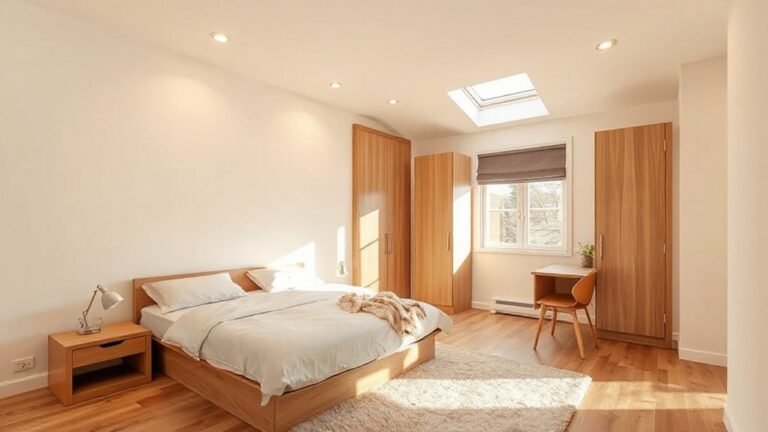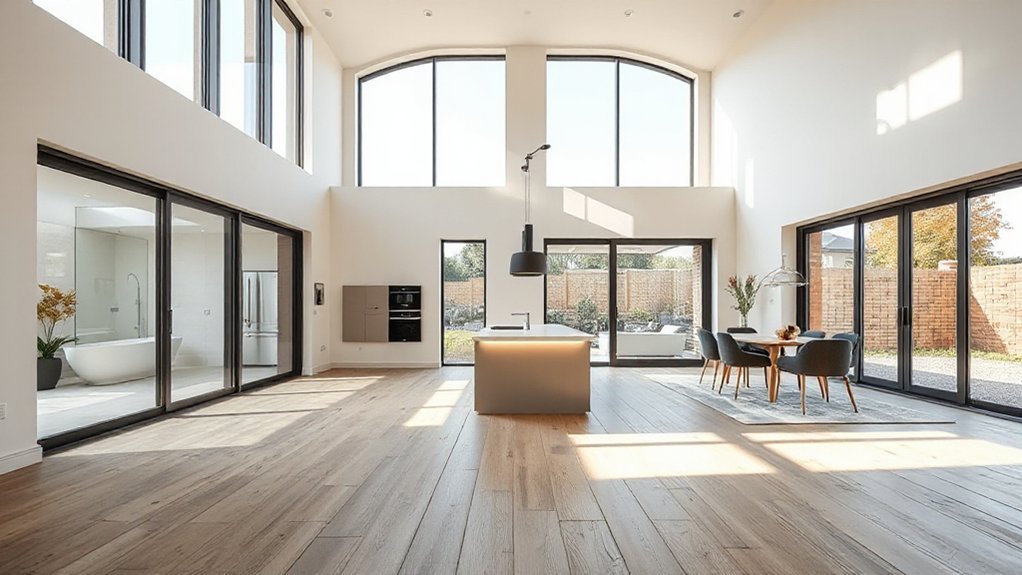
As a UK buyer, you’re prioritising smart-ready infrastructure, energy efficiency, and flexible layouts that grow with your family, driven by clear demand for durable finishes and reliable connectivity. New builds must blend open-plan living with practical storage, adaptable spaces, and low-maintenance design, powered by smart automation and affordable running costs. With these trends shaping value and resale potential, you’ll want concrete examples and benchmarks that show where to invest next—and whether current options actually deliver.
Why New-Builds Matter for Long-Term UK Living
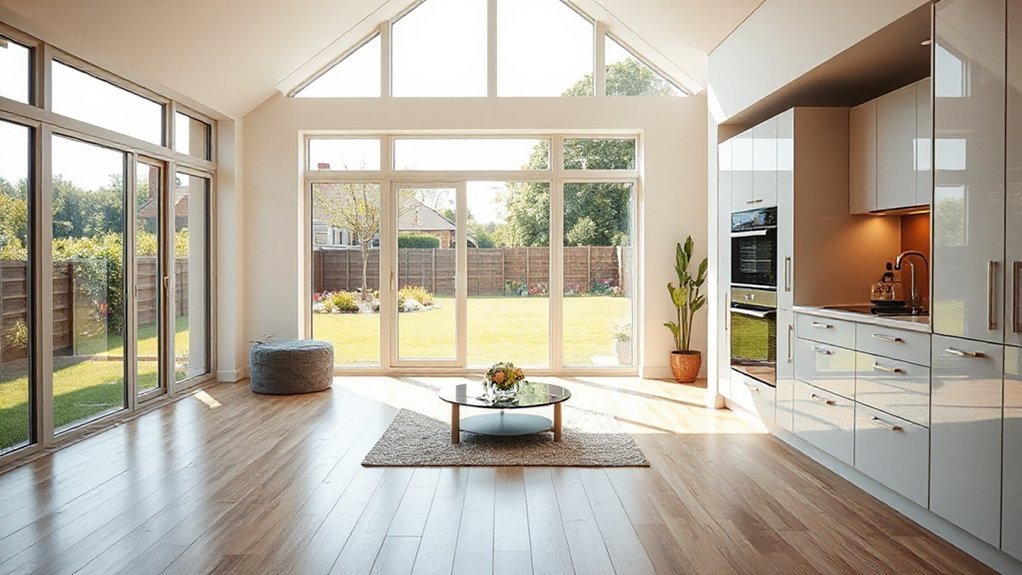
New-build homes aren’t just trendy novelties; they’re foundational to long-term UK living because they come with modern layouts, durable specifications, and up-to-date wiring and insulation that lower running costs and maintenance over time. You’ll notice how efficient design supports predictable budgets, with improved energy performance driving lower utility bills and fewer retrofit surprises. Market data shows steady demand for homes offering flexible spaces that adapt as families grow, boosting resale resilience. From a policy and developer perspective, these properties foster affordable affordability through standardized build quality and longer lifespans, reducing total cost of ownership. You benefit from stronger community cohesion as nearby amenities and shared spaces encourage neighbour interaction, safety, and social networks—factors that underpin stable, sustainable long-term living.
What Makes a New-Build Future-Proof
You’ll want to look for smart-ready infrastructure and flexible space planning as the core pillars of future-proofing. Data shows demand for homes that can adapt to tech upgrades and changing family needs, without costly refits. Prioritizing these features now positions you for resilience, efficiency, and stronger resale in a shifting market.
Smart-Ready Infrastructure
Smart-ready infrastructure is the backbone of future-proof homes, ensuring seamless connectivity, energy efficiency, and adaptable spaces as technology evolves. You’ll see measurable demand for scalable networks, modular wiring, and energy-smart components that reduce overhead while supporting upgrades. Data from UK buyers shows a preference for homes that lower running costs and maximize uptime, with predictable maintenance needs. Integrating robust home security and climate control systems early lowers retrofit risk and supports compliant safety standards. Expect builders to target standardized interfaces, remote diagnostics, and interoperability across brands to boost resale value.
- Scalable networks and modular cabling
- Energy management with smart meters and sensors
- Integrated home security systems
- Centralized climate control and automation
Flexible Space Planning
As buyers increasingly demand adaptable layouts, developers should prioritize configurable rooms, operable partitions, and footprint flexibility that support evolving life stages and work patterns. Flexible space planning translates to convertible spaces that morph with needs, reducing future renovation costs and time-to-market risk. In a data-driven market, households prize multi purpose rooms that serve as home offices, study niches, or guest zones without sacrificing everyday livability. Metrics show higher resale value for homes with switch-ready floorplans and modular furniture zones, especially in urban and commuter belts. Proactive builders should standardize built‑in dividers, scalable services, and footprint options that accommodate growing families, aging relatives, and hybrid work. This approach aligns with demand signals, planning certainty, and forward‑looking capital returns.
Energy Efficiency That Trims Bills and Boosts Comfort
Energy efficiency isn’t just a selling point; it’s a core driver of value for new-build buyers. You’ll see tighter operating costs and steadier comfort as standard, supported by market data pointing to faster resale, lower service charges, and stronger EPC ratings. The trend leans toward integrated systems that balance upfront cost with long-term savings, and buyers reward homes that benchmark high on performance. Expect emphasis on airtight envelopes, efficient heat pumps, and smart controls, all designed to scale with evolving needs. Renewable energy and modern insulation materials increasingly underpin design choices, delivering durable resilience and lower carbon footprints.
- Benchmark with real-world energy data to quantify savings
- Prioritize airtight construction and high-R insulation materials
- Integrate renewable energy sources for on-site generation
- Use smart controls to optimize heating, cooling, and occupancy
Flexible Layouts for Growing Families and Changing Needs
Flexible layouts that adapt as families grow and life evolves are increasingly central to the appeal of new-build homes. You’ll see demand shifting toward flexible spaces that support evolving routines without costly redesigns. Open plan living continues to dominate, enabling natural daylight, social connection, and easy supervision of youngsters or home work zones. Multi use rooms gain traction as households combine study nooks, guest suites, or teenager retreats, maximizing resale value and utilization. Developers are responding with tiered configuration options, mezzanines, and demountable partitions to preserve light and privacy. Market data indicates higher asking prices for homes offering adaptable layouts, with faster sales velocity in regions prioritizing family-friendly infrastructure. Looking ahead, builders should prioritize modular design, smart zoning, and scalable infrastructure to capture growing family demand.
Low-Maintenance, Durable Finishes You Can Trust
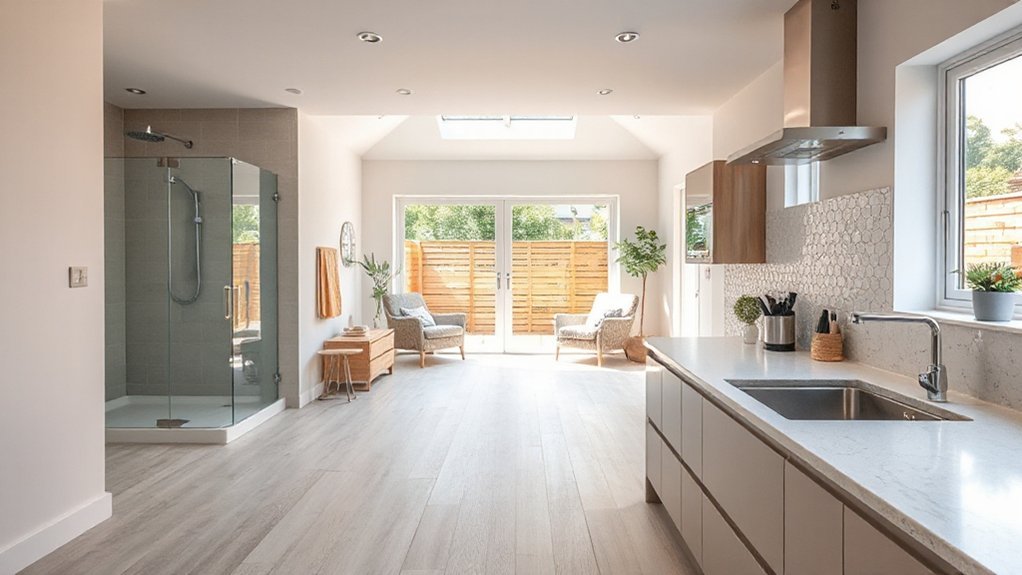
Low-maintenance, durable finishes are a top priority for buyers and builders alike, driven by the need to cut lifecycle costs and reduce upkeep. You’ll see demand for coatings and materials that resist weathering, staining, and impact, preserving value over time. Market data highlights a shift toward predictable maintenance cycles and longer product lifespans, with installers favoring standardized, proven options. Custom finishes offer differentiation without sacrificing durability, while exterior durability remains a key risk reducer for deposits and resale. Expect suppliers to consolidate, driving bulk pricing and consistent performance across climates.
- High-durability exterior cladding with proven weather resistance
- Low-maintenance, stain-resistant finishes on cabinetry and surfaces
- Custom finishes that align with architectural intent without added upkeep
- Warranty-backed materials optimized for UK conditions
Smart, Easy-To-Use Connectivity for Daily Life
Smart home hubs are becoming a UK buyer baseline, driving bold choices around control and privacy while enabling seamless daily automation. With reliable Wi‑Fi at the core, buyers expect simple, intuitive routines that cut effort and support remote monitoring. The market trend favors platforms that deliver interoperable devices and predictable performance, shaping smarter, more connected homes.
Smart Home Hubs Connect
Smart home hubs are the central nervous system of modern UK homes, simplifying daily routines by connecting devices, apps, and sensors into one intuitive platform. You’ll gain a streamlined interface, faster setup, and scalable connectivity solutions that future-proof your build. Market data shows rising adoption among new-build buyers, with higher satisfaction where hubs integrate voice, automation, and energy monitoring.
- Unified control across categories (lighting, climate, security) for seamless daily use
- Interoperability and open standards to maximize long-term value
- Robust security features, including regular updates and privacy controls
- Predictive energy insights that help cut bills and inform upgrades
Simple Daily Automation
Even as homes become more connected, daily automation should feel effortless—an always-on assistant that anticipates your routines rather than dictating them. In UK new builds, buyers increasingly prize simple, reliable automation that enhances daily life without complexity. Data shows households gravitate toward systems that deliver measurable convenience: personalized routines that streamline morning wake-ups, commute prep, and evening wind-down. Automated lighting, activated by presence, daylight, or schedule, reduces energy waste while improving comfort and safety. Market trends indicate rapid adoption of intuitive apps and voice controls, with installers prioritizing plug‑and‑play integration across devices. Forward-looking developments emphasize privacy-preserving defaults and scalable ecosystems, so you can add features over time without renegotiating your setup. The result: a smarter home that feels lived-in, not cluttered.
Seamless Wi-Fi Reliability
Seamless Wi‑Fi reliability is the backbone of modern UK new builds, delivering dependable connectivity for daily life without hands-on tuning. You’ll see how wireless connectivity boosts productivity, streaming quality, and smart-home responsiveness, with internet stability underpinning every session and task. Data shows multi-room coverage and load-balanced networks reduce dropouts during peak hours, supporting a homeowners’ growing digital footprint.
- Whole-home mesh systems optimize coverage and minimize dead zones
- Enterprise-grade security defaults paired with simple user controls
- Auto-optimizer firmware that preserves speed and reliability
- ISP-agnostic, future-ready hardware for seamless upgrades
Built-In Storage and Organised Spaces That Work
Built-in storage isn’t a nice-to-have—it’s a decisive driver of home functionality and buyer confidence. The market data show buyers prize clever layouts and scalable solutions that reduce clutter, boosting perceived value by up to 12% in latest UK spec homes. In practice, you’ll want built-ins that maximize every square meter, from alcove shelving to integrated benches, with durable finishes and easy-to-clean surfaces. Focus on Hidden compartments and multi-purpose furniture that hides away seasonal items while preserving open, flexible living zones. Closet organization should be engineered into primary wardrobes and entryways, enabling rapid daily routines and longer-term habit formation. For developers, predict demand by offering modular storage modules and finish options aligned with family sizes, hobby spaces, and home-office needs.
Frequently Asked Questions
How Long Do New-Build Warranties Actually Last, and What Do They Cover?
Warranty duration varies by policy, typically 10 years for structural cover; coverage details include major structural defects, sometimes appliances and fixtures. You’ll want to compare schemes, track claim windows, and assess transferability for resale value and market insight.
Can You Customize Fixtures After Moving in Without Major Costs?
You can customize fixtures after moving in, often at modest costs, especially if you prioritize swaps during the initial setup. Data shows higher resale potential with fresh home decor and interior design tweaks driven by market trends.
Do New Homes Include Charging Points for Electric Vehicles by Default?
Yes, many new homes now include EV charging points by default, and this trend grows with smarter design. You’ll notice a focus on smart home integration and energy efficiency, shaping futures-ready layouts and marketable, convenient everyday living.
How Effective Are Soundproofing Measures in Modern UK Builds?
Soundproofing is highly effective in modern UK builds, with advancing soundproofing technology and enhanced acoustic insulation delivering measurable noise reductions. You’ll see steadier sound control, better privacy, and price-return benefits as developers invest more in these upgrades.
Are There Hidden Costs for Maintenance on Brand-New Properties?
Hidden fees can appear, but your risk is low with builder warranties; you’ll still face maintenance surprises if you ignore snagging reports. You should monitor contracts, plan budgets, and track trends to minimize long-term costs and optimize value.
Conclusion
In short, the future-proof home isn’t a luxury—it’s a data-backed necessity. You’ll want smart-ready infrastructure, energy-efficient systems, flexible layouts, durable finishes, built-in storage, and seamless connectivity that scales with family needs. Market trends show buyers prize homes that adapt year after year, cutting bills while boosting comfort. Think of your house as a well-titted toolbox—every feature, from insulation to automation, fits perfectly now and evolves with you tomorrow. Your next move? Plan for growth.
About the Author