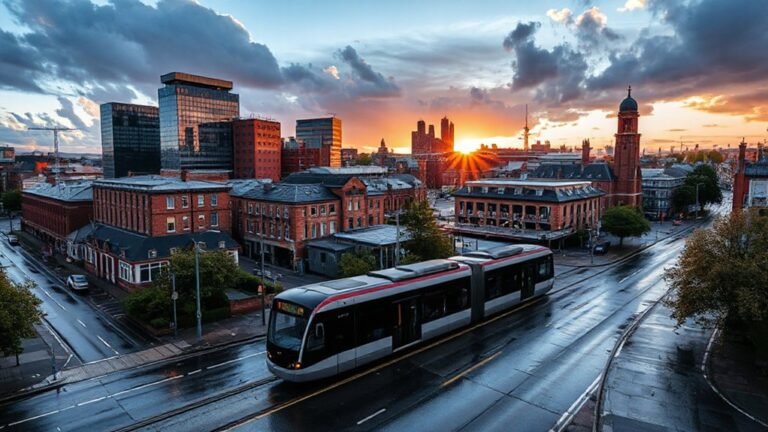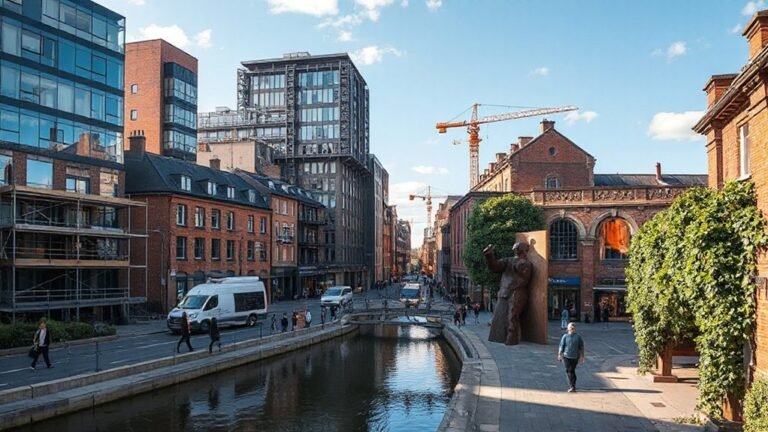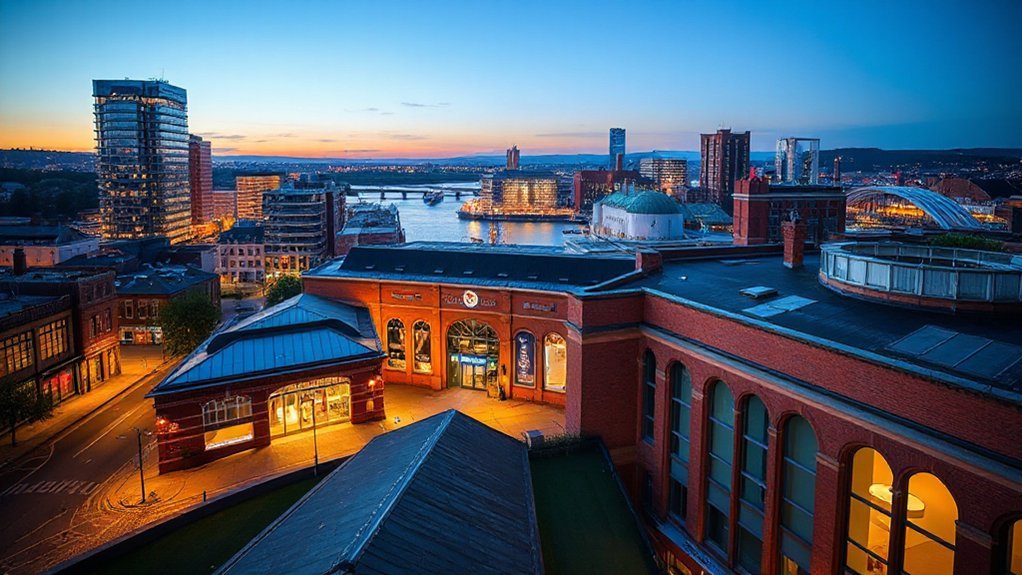
The Titanic Quarter is already seeing sustained momentum as regeneration and connectivity lift property values. You’ll push deeper into Belfast’s long-term play by weighing how Riverfront upgrades, tech and financial clustering, and university-linked talent shape risk-adjusted returns. With suburban clusters and stable policies tempering volatility, the question becomes which districts best balance cost, access, and innovation—and why now is the moment to map your exposure. The next move hinges on your risk tolerance and financing options.
Belfast Long-Term Investment Canvas: Why It Matters
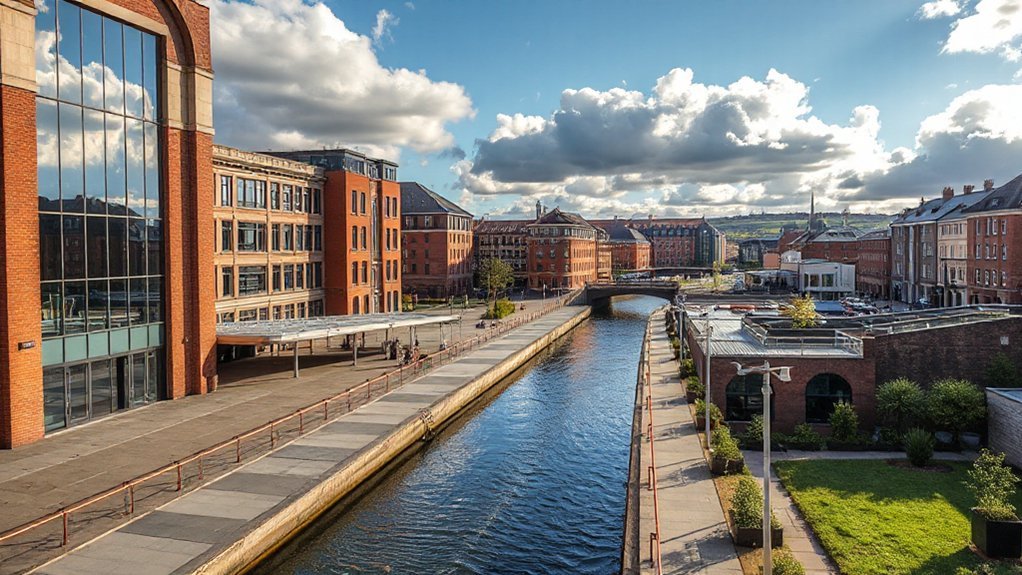
A Belfast long-term investment canvas matters because it translates a complex mix of signals—economic growth, demographic trends, and policy momentum—into a clear view of where durable value will accumulate.
You assess multi-year indicators, linking GDP resilience, employment quality, and capital formation to potential exits and compounding returns.
The canvas emphasizes converging drivers: skills pipelines, innovation capacity, and infrastructure quality, all aligned with targeted sector strengths.
You weigh risk-adjusted paths, scenario ranges, and timing horizons to gauge when capital commits and exits mature.
Cultural heritage informs place-making, tourism resilience, and brand equity, while Environmental sustainability drives efficiency, compliance, and long-run cost of capital.
Belfast Riverfront Regeneration and Value Creation
You’ll see how riverfront infrastructure upgrades reveal tangible value as throughput, access, and resilience improve.
Waterfront land value tends to track these changes, signaling stronger rent growth and asset upside over the next cycle.
This is a data-driven signal for investors to tilt toward regeneration-led opportunities along Belfast’s docklands.
Riverfront Infrastructure Upgrades
Combined drainage and flood management improvements reduce risk for key districts, protecting investments and boosting confidence for long-horizon projects. Modernized piers, smarter quay spacing, and resilient foundations support heavier use and faster turnarounds, while adaptable public domains encourage year-round activity.
Data indicates reduced congestion on access routes and higher throughput at gateways, translating to faster project delivery and stronger off-site spillovers. Market awareness suggests steady premium capture through mixed-use stacks, anchored by transport links, energy efficiency, and governance that prioritizes transparency and performance metrics.
Waterfront Land Value Growth
You’ll see waterfront development releasing higher land valuations as rail, bus, and pedestrian corridors knit together under dense, mixed-use blocks. Data indicate accelerated price per hectare when development timelines align with zoning certainty, climate-ready infrastructure, and continuous public domain improvements.
Market expectations point to sustained capital inflows as anchor tenants and residential demand converge near stations and piers. Yet, land speculation remains a risk, requiring disciplined due diligence, transparent entitlement pipelines, and performance-based milestones.
If delivery pins tighten, unit economics improve, and risk is managed, Belfast’s riverfront could maintain premium value trajectories into the medium term.
How Transport Upgrades Drive Belfast Demand
Transport upgrades are a catalyst for growth, as better transit and faster connections lift property demand and reduce travel times. You’ll see connectivity release demand across neighborhoods, with data pointing to higher valuations and rent potential near improved corridors.
Looking ahead, the market responds to these capabilities with sharper liquidity and broader investor interest.
Transport-Driven Growth
Transportation upgrades are already reshaping Belfast’s demand landscape: enhanced rail links, improved road and bus corridors, and smarter freight networks are compressing travel times and increasing reliability, which in turn elevates property values and boosts commercial activity.
You’ll see higher investor appetite as commute buffers shrink and certainty rises, particularly near new interchanges and station hubs, where density and demand profiling shift in favor of mixed-use projects.
Data-driven forecasts point to sustained rent growth, higher cap rates for transit-adjacent assets, and longer dwell times in retail nodes with accessible logistics.
Cultural heritage and Environmental sustainability emerge as value multipliers, aligning urban renewal with social resonance and lower carbon intensity, reinforcing Belfast’s long-term, market-smart growth trajectory.
Connectivity Unlocks Demand
Connectivity releases demand by turning upgraded transport links into tangible investment catalysts. You’ll notice how new rail and bus corridors shorten commutes, boost reliability, and expand catchment areas for local businesses.
Data shows footfall rises near station hubs, with ancillary spending lifting cultural districts and hospitality clusters. As routes improve, investors price in faster two-way flows of talent and visitors, enhancing property yield and redevelopment momentum.
This isn’t abstract: it translates into measurable demand for office, retail, and mixed-use spaces around transit nodes. Expect growth in Cultural festivals access and the Culinary scene as night-and-day access expands evening trade.
In a Belfast snapshot, improved mobility sharpens market timing, aligns with planning envelopes, and accelerates long-term, supply-constrained value creation.
Belfast Tech Clusters and Financial Services Magnetism
Belfast’s tech clusters and financial services magnetism are converging into a high-growth engine, underpinned by a skilled workforce, targeted public support, and a robust digital infrastructure. You’ll see this mix translate into rising investment, with fintech and cybersecurity gaining traction alongside advanced analytics and cloud services.
Data signals point to dense fintech hubs, collaborative ecosystems, and favorable tax-incentive environments that attract seed rounds and scale-ups alike. Sector convergence is accelerating talent mobility, supported by targeted STEM training and vocational pathways.
Cultural heritage and a growing culinary scene contribute to quality-of-life metrics that attract senior engineers and executives. Forecasts show sustained demand for data centers, AI-enabled solutions, and customer-centric platforms, reinforcing Belfast’s role as a resilient, future-facing financial-tech node.
The Belfast University Ecosystem as a Talent Engine
The Belfast university ecosystem functions as a precise talent engine, aligning research strengths with industry needs to shorten pathways from lab to market. You’ll see University collaboration fueling applied projects, spinning out prototypes faster and aligning grant cycles with real-world demand.
Data shows rising postgraduate throughput, with cross-disciplinary programs boosting startup readiness and collaborative publications translating into early-stage ventures. You benefit from stronger talent development pipelines, where internships, industry PhDs, and rapid prototyping labs compress development timelines.
Market-aware programs shift curricula toward market signals, ensuring skills match employer demand now and into the next decade. This ecosystem sharpens Belfast’s competitive edge, attracting investment by delivering skilled teams, validated tech, and measurable, repeatable progress across sectors.
Key Growth Districts in Belfast: Titanic Quarter to York Street

From the strengths of Belfast’s university ecosystem, you can see a clear path from research to scalable districts, with Titanic Quarter and York Street emerging as the propulsion corridor. You’ll notice rapid job growth, dense mixed-use development, and measurable ROI signals driving investor confidence.
The districts leverage cultural heritage and evolving local cuisine to attract talent, tourists, and enterprise, aligning supply chains with demand. Data indicates ongoing leasing demand, strong cap rates, and targeted public-private partnerships that accelerate redevelopment milestones.
Expect a measured shift toward higher-value tenants, tech-enabled services, and cultural tourism synergies that strengthen resilience.
- Titanic Quarter’s mixed-use renewal drives office-to-residential demand and anchor institutions.
- York Street enhances connectivity, logistics, and micro-hub diversification.
- Cultural heritage activation complements hospitality and retail upside.
- Local cuisine experiences amplify neighborhood branding and visitor spend.
Suburban Growth Corridors and Upside in Belfast
You’ll see that Belfast’s suburban growth corridors are signaling durable upside as population and cross-border connectivity rise.
Market data points to steady rent and value growth, supported by new housing supply, transport upgrades, and amenity investments along key corridors.
Looking ahead, you should expect better risk-adjusted returns as these areas mature into high-demand, low-variance markets.
Suburban Growth Corridors
- Transport integration reinforces value convergence across clusters.
- Demand dispersion lowers concentration risk.
- Mixed-use schemes elevate daily convenience.
- Cultural and rural assets support sustainable pricing trajectories.
Upside in Belfast
Data indicates vacancy rates tighten first along core corridors, then widen outward as absorption expands, signaling scalable long-term cycles.
Development pipelines favor mixed-use schemes that preserve density without sacrificing livability, aligning with projected population growth and employment hubs in technology and services.
Historic architecture adds character premium, while planned cultural festivals elevate night-and-weekend activity, boosting ancillary spend and asset resilience.
If you target neighborhoods adjacent to transit upgrades and culturally anchored districts, your upside compounds through stronger liquidity and diversified exit options.
Belfast’s Cost of Doing Business: Competitive Operating Costs
Belfast offers competitive operating costs that support durable profitability, with attractively priced commercial rents, energy bills, and labor costs relative to peer markets. You’ll notice a favorable cost structure that preserves margins while enabling strategic hiring and ongoing investment.
The city’s Cultural Heritage informs cautious, value-driven development, and Community Engagement shapes resilient supply chains and local partnerships.
Looking forward, cost stability and efficiency upgrades are expected to keep Belfast competitive as markets tighten.
- Lower occupancy costs compared with peers
- Predictable energy pricing and upgrades
- Efficient labor markets with skilled Talent pools
- Strong vendor ecosystems and local supplier incentives
Belfast Demographics That Support Longevity
You’ll see Belfast’s age structure shifting toward a balanced mix that supports sustainable growth, with a growing young workforce reinforcing demand and innovation.
As you track the data, expect a demographics profile that blends expanding youth cohorts with an aging population that remains economically active longer.
This trajectory informs resilient housing, healthcare, and services markets, positioning Belfast for steady long-term investment.
Age Structure Trends
What do Belfast’s age structure trends imply for long-term resilience and investment potential? You’ll see evolving age demographics shaping demand, housing, and services, with steady population shifts toward a balanced mix of generations. This pattern supports stable consumer bases, greater intergenerational spending, and targeted infrastructure planning that reduces risk for investors.
- Age cohorts expand cautiously, guiding retirement-friendly amenities and healthcare investments.
- Population shifts favor mixed-use developments that accommodate work, leisure, and care needs.
- Planning signals lower dependency pressure on public finances, boosting credit and project feasibility.
- Markets benefit from segments with durable demand in housing, transport, and digital services.
Growing Young Workforce
Although the city’s aging trends headline long-term resilience, Belfast’s expanding young workforce signals a complementary strength for longevity-focused markets, driving durable demand for housing, transport, and digital services as new entrants shape the economy. You’ll see labor inflows boosting productivity and entrepreneurship, supporting diversified sectors from tech to creative industries.
Data indicate rising youth participation in higher education and apprenticeships, aligning with long-run growth in skilled roles.
Cultural diversity enhances problem-solving, expanding market reach and resilience to shocks.
Housing affordability becomes a key gating factor; policymakers and developers must align supply with demand to sustain mobility and retention.
In this context, a vibrant, youthful base underpins stable consumer markets, favorable employment dynamics, and resilient, data-driven investment opportunities across Belfast’s urban footprint.
Aging Population Dynamics
- Retirement communities expanding in urban corridors to optimize access to work, recreation, and services
- Healthcare facilities upgrading capacity and specializations to reduce wait times and improve outcomes
- In-home support and remote monitoring technologies enabling independent living
- Transit and pedestrian infrastructure prioritized to boost mobility and reduce isolation
You’ll see data-driven forecasts show rising expenditures in elder care, signaling resilient demand for targeted real estate, hospital capacity, and integrated care networks as Belfast ages gracefully.
Public-Private Investment Backdrop in Belfast

Public-private investment in Belfast has gathered momentum as a catalyst for sustained growth, with recent deals signaling a clear shift toward infrastructure, housing, and regional competitiveness. You’ll see collaboration across municipal bodies, local developers, and international funds accessing capital efficiently.
The investment landscape is marked by targeted incentives, streamlined procurement, and risk-sharing models that align public needs with private returns. Data show rising project pipelines in transport corridors, digital infrastructure, and mixed-use developments, underpinned by stable policy signals and long-term funding commitments.
You’ll benefit from transparent governance, performance metrics, and quarterly disclosures that track impact, affordability, and job creation. Forecasts point to elevated private equity interest as Belfast enhances resilience and productivity through well-structured partnerships.
Belfast Real Estate Signals: Office, Industrial, and Mixed-Use Trends
Belfast’s real estate signals point to a disciplined shift toward modern office, resilient light industrial, and vibrant mixed-use schemes, driven by population growth, talent flows, and transit connectivity. You’ll see demand skew toward adaptable spaces, with short, flexible leases and higher efficiency standards.
Data shows steady occupancy gains in core markets, while investment yields compress modestly as confidence strengthens. Cultural heritage and Tourism hubs anchor neighborhood appeal, supporting premium pricing for well-located assets.
You should expect increasingly integrated retail and leisure layers that enhance daytime foot traffic and evening activity.
- Office demand concentrates around transit-accessible districts
- Industrial leasing grows in logistics-friendly belts with skilled labor
- Mixed-use developments add residential with amenity-rich workflows
- Market signals favor resilient assets aligned with cultural heritage branding
Regeneration Case Studies in Belfast: Projects Shaping Returns
Regeneration Case Studies in Belfast reveal how strategic, privately funded developments are driving tangible returns through enhanced connectivity, amenities, and placemaking.
You’ll see microdistricts delivering higher footfall, quicker project ROI, and diversified tenant mix that supports resilience. Data show improved transit links, smart street layouts, and mixed-use hubs boosting occupancy premiums and rent stability.
Case studies highlight public‑private collaboration accelerating land value uplifts while maintaining risk controls and transparent governance. Cultural Heritage is leveraged as a differentiator, fostering authentic experiences that attract visitors and residents alike.
Local Cuisine clusters anchor nighttime economies, extend dwell times, and underpin sustainable growth. You gain a forward‑looking view of regeneration as a market signal: projects scale, returns compound, and Belfast strengthens its investment thesis.
Belfast’s Policy Environment That Encourages Commitment
Policy clarity and consistency underpin confident investment in Belfast, because a stable policy toolkit reduces risk and accelerates value realization. You’ll see that policy stability supports predictable planning, permitting you to lock in long-horizon returns while reallocating capital efficiently.
Forward-looking incentives shape timing and scale, aligning with market realities and project pipelined opportunities. Data show persistent support for key sectors, with streamlined approvals and measurable milestones that keep projects on track.
- Policy stability signals reliable regulatory cadence and predictable timelines.
- Incentive programs quantify ROI, improving hurdle rates and financing terms.
- Transparent criteria foster faster due diligence and stakeholder alignment.
- Outcome-linked supports encourage incremental commitments as markets mature.
Risks to Monitor for Durable Value in Belfast
Even as Belfast’s fundamentals strengthen, you should watch for several durable value risks that could temper returns over time. You’ll want to monitor macro shocks, housing supply constraints, and zoning shifts that can tilt development timelines and project costs.
Demand softness in commercial segments could pressure rents in office and retail, while public infrastructure delays may elevate capex bets and prolong capitalization cycles.
Regulatory changes, labor market tightness, and construction cost volatility also pose upside-downside risks to project timelines and yields.
Cultural festivals and local cuisine growth enhance appeal but can intensify seasonal demand swings, complicating occupancy stability and revenue forecasting.
Proactive risk pricing, scenario planning, and diversified tenant mixes help preserve durable value amid evolving market rhythms.
Continuous data support keeps you alert and adaptable.
Financing Pathways for Belfast Projects
Access to capital will shape Belfast project timelines as much as planning and demand. You’ll see financing pathways evolve through data-driven models, diversified capital stacks, and returnable milestones that align with market momentum. Creative financing and community engagement will be central to de-risking projects and facilitating mixed-use development across districts.
- You’ll leverage blended funding sources, combining public grants with private equity to reduce upfront risk.
- You’ll use outcome-based contracts and tax-increment tools to align incentives with delivery timelines.
- You’ll prioritize community engagement to improve approvals, attract local partnerships, and validate demand signals.
- You’ll monitor macro trends, ensuring finance remains flexible enough to adapt to policy shifts and market cycles.
How to Evaluate Belfast Districts for Long-Term Investment
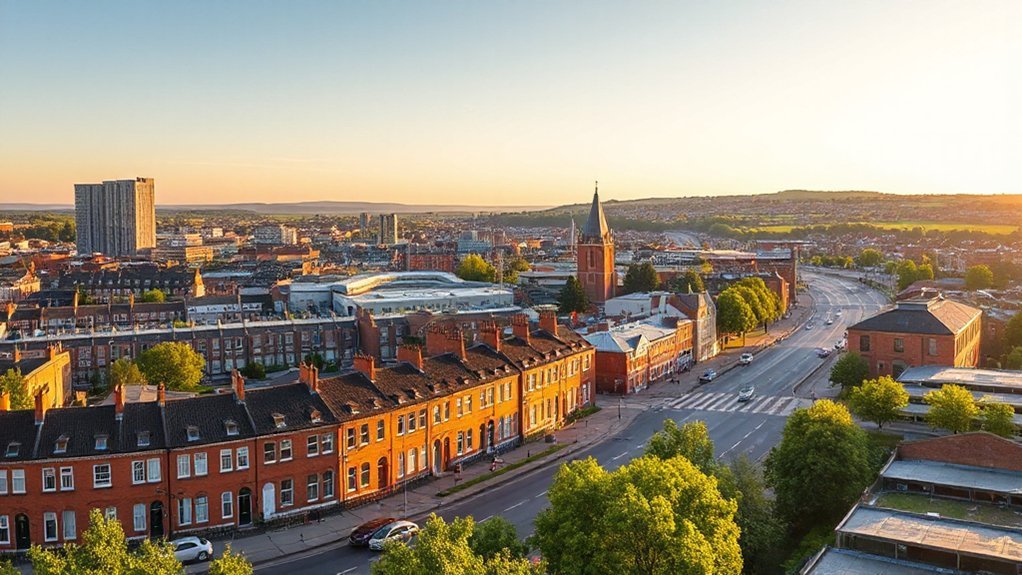
To evaluate Belfast districts for long-term investment, you’ll start with a clear, data-driven framework that links demographics, demand signals, and project viability to roughly five to ten year horizons. You’ll quantify population trends, age structure, and income growth to gauge resilience and future purchasing power.
Next, assess demand signals such as occupancy rates, rental yields, and new-build pipelines, aligning them with planning approvals and infrastructure plans.
Evaluate project viability through capex intensity, regulatory timelines, and partner credibility, mapping sensitivity to interest-rate scenarios.
Consider cultural heritage and local cuisine as value levers that attract sustained visitor and resident interest, shaping demand sustainability.
Finally, compare districts on a transparent dashboard, prioritizing those with balanced upside, minimal exposure to shocks, and clear exit paths.
Next Steps: Building a Belfast Investment Playbook
To turn the Belfast district insights into actionable strategy, start building an Investment Playbook that ties data-driven signals to executable steps. You’ll align market trends, risk metrics, and local signals with clear actions, ensuring scalability and repeatability.
The playbook should capture Cultural Heritage and Local Cuisine as growth anchors, mapping them to target assets, partnerships, and promotion channels. Use scenario planning to stress-test returns under varying demand cycles, and embed KPIs that trigger reallocation when thresholds are crossed.
Maintain a forward-looking lens, leveraging real-time data feeds and validator checks to keep decisions disciplined and timely.
- Define data sources, KPIs, and decision thresholds that trigger portfolio adjustments.
- Map Cultural Heritage and Local Cuisine to investment theses, partnerships, and branding.
- Establish governance, review cadence, and risk-mitigating exit criteria.
- Create a templated rollout plan with phased milestones and resource needs.
Frequently Asked Questions
What Undiscovered Sectors Could Drive Belfast’s Future Value?
Emerging tech and Cultural districts could drive Belfast’s future value, you’ll see. You leverage data-driven insights, monitor market signals, and invest strategically, highlighting growing sectors and cross-sector synergies that boost innovation, tourism, and local employment momentum.
Which Neighborhoods Offer the Best Long-Term Rent Resilience?
You’ll see rental stability in neighborhoods with diversification, as diversified areas reduce risk and stabilize demand. You’ll also benefit from Neighborhood diversification, which cushions shocks and sustains rent growth through varied tenant bases and evolving employment hubs.
How Will Climate Risk Affect Belfast Investment Returns?
Like a compass in a storm, you’ll see climate risk shaping returns. You’ll need climate adaptation and risk mitigation; data shows resilience varies. You’ll adjust strategies, hedge exposures, and capitalize on markets prioritizing adaptive infrastructure and green incentives.
What Are Hidden Regulatory Hurdles for Cross-Sector Projects?
You’ll face zoning complexities and licensing challenges that slow cross-sector projects, so you should model regulatory timelines, map stakeholder approvals, and forecast cost impacts; data-driven projections show these hurdles erode early-stage returns but create disciplined, market-aware prioritization.
Which Exit Strategies Yield the Strongest Long-Hold Returns?
You chart a steady course through market volatility, choosing exit strategies that maximize liquidity and tax efficiency while you preserve upside; diversify properties, and anticipate cycles, because diversification protects you when markets swing, guiding long-hold returns.
Conclusion
You’ve seen Belfast as a living spine of potential, where riverfronts pulse with regeneration and districts hatch long-term value. With transport arteries expanding, tech and finance clusters maturing, and universities converting talent into capital, the city stocks up as a resilient, data-backed bet. Monitor policy stability and financing options like a weather eye for shifts. Build your playbook now, align districts to demand, and let informed bets turn blueprints into enduring, profitable horizons.
About the Author