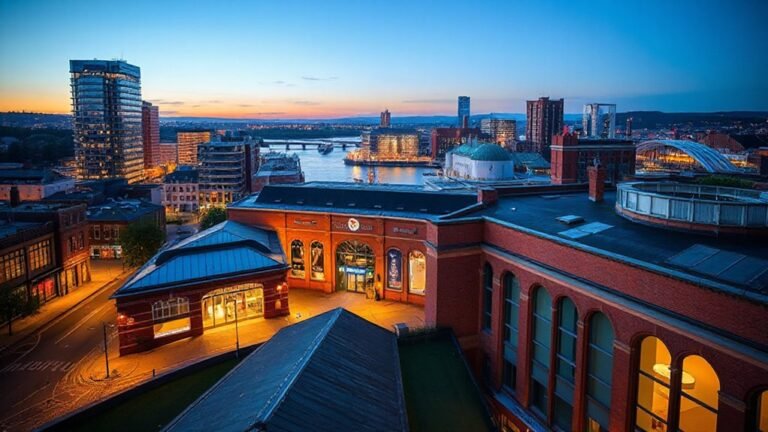
You may not realize that Manchester’s core transport arteries are already shaping value, with regeneration zones around rail hubs driving higher demand before many new developments fully land. You’ll want a disciplined, data-driven approach as markets shift—understanding where transit, amenities, and green space converge. There’s more behind the surface than price trends alone, and the next moves hinge on infrastructure and policy timelines. If you’re serious about long-term growth, you’ll want to look closer.
Why Manchester Offers Long-Term Growth Potential

Manchester’s long-term growth potential rests on a trio of fundamentals: demographic momentum, sustained urban investment, and a diversified local economy. You’ll see that market stability emerges from steady employment, visible infrastructure upgrades, and governance that aligns planning with housing supply.
Population growth sustains demand across mid-market and premium segments, while urban renewal cycles reveal underutilized sites, boosting density and productivity. You benefit from a resilient rental market where yields remain competitive due to immigrant and student influx, plus commuter access to regional employment hubs.
Data indicate multi-year appreciation trends, supported by favorable financing conditions and a clear pipeline of developments. When you evaluate opportunities, prioritize assets with diversified tenant bases, transparent cash flows, and predictable occupancy—elements that reinforce market stability and boost rental yields over the long horizon.
Core Corridors Driving Demand in Manchester
Transit connectivity is up front as a growth lever, with real-time data showing stronger demand along key corridors.
Rail corridor expansion and investment are translating into shorter commutes and higher occupancy, signaling reinforced value for buyers.
Urban regeneration momentum across these routes suggests sustainable price appreciation and smarter diversification of property bets.
Transit Connectivity Boost
Transit connectivity is a primary driver of demand along Manchester’s core corridors, where recent data show faster commutes and increased accessibility attracting buyers and investors. You’ll notice multi-modal hubs compress travel times, boosting appeal for both residents and businesses.
In practical terms, property values correlate with transit frequency, reliability, and station placemaking, creating measurable uplift along key routes. Look for ongoing upgrades, like signal optimization and pedestrian-grade crossings, which reduce wait times and enhance safety.
Local cultural hotspots and green space development act as compounding magnets, converting transit access into livability premiums and stronger rental yields. Going forward, density alongside improved walkability will sharpen demand signals near stations, guiding prudent acquisition in areas poised for sustained appreciation.
This trajectory supports disciplined, data-informed portfolio growth.
Rail Corridor Growth
Rail corridors are the fastest-growing arteries of Manchester’s property market, with core routes showing sharper price appreciation and higher rental demand than fringe areas. You’ll see demand concentration around stations that connect business clusters, universities, and cultural hubs, creating resilient yield profiles.
Data indicates that properties within a 15-minute walk of major corridors outperform comparable non‑corridor units on both capital growth and occupancy. When planning, prioritize areas adjacent to efficient interchanges, where upgrades shorten commutes and elevate appeal.
Historical architecture along these routes adds character value, while ongoing upgrades preserve functional appeal. Cultural hotspots near rail nodes drive footfall, supporting short- and long-term rent stability.
Look for developments leveraging transit-oriented design, with mixed-use amenities that sustain demand through economic cycles.
Urban Regeneration Momentum
Urban regeneration along Manchester’s core corridors is accelerating demand, as public investment, private development, and community upgrades converge to reshape value today and in the near term. You’ll see sustained capital flows targeting transport connections, mixed-use hubs, and skills infrastructure that attract tenants and buyers with long horizons.
Data indicate higher leasing activity and price stabilization within Opportunity Corridors, offset by incremental development lead times. You should expect improved public domain, safer streets, and easier commutes to catalyze adjacent residential demand.
Remaining pockets of urban decay are narrowing as retrofit rates rise and brownfield sites convert to productive uses. Balancing growth with historical preservation will help sustain cultural appeal, while policy alignment clarifies zoning, incentives, and timelines.
This momentum supports disciplined, forward-looking investment across Manchester’s core corridors.
Emerging Areas to Watch for Long-Term Value
You’ll see up-and-coming neighborhoods gaining traction as new infrastructure and amenities come online, signaling measurable long-term value.
Data points—price trends, rental yield, and projected development plans—point to steady appreciation over the next decade.
Stay disciplined: assess each area’s growth drivers, not just current momentum, to identify true long-term value.
Up-and-Coming Neighborhoods
What makes Manchester’s emerging neighborhoods worth watching is the clear trajectory of value, driven by targeted regeneration, improving transport links, and growing demand from local renters and young buyers.
You’ll see rapid absorption of new stock in up-and-coming precincts, with price growth outperforming city averages over the past 12–24 months.
Supply includes luxury apartments that appeal to professionals seeking central access without sacrificing amenities, while mixed-use developments boost daytime footfall and evening demand.
Investment narrative is supported by measurable progress in connectivity, cycle routes, and phased district plans.
Green spaces remain a critical differentiator, attracting families and retirees toward balanced living.
As markets shift, these areas offer disciplined upside tied to infrastructure and demographic trends rather than speculative hype.
Long-Term Value Drivers
Long-term value in Manchester’s emerging areas hinges on durable, data-backed drivers that extend beyond short-term hype. You should monitor population growth, employment hubs, and transport connectivity, then translate those trends into property resilience.
Price per square foot alone won’t reveal staying power; look for sustained rent growth, occupancy rates, and developer discipline. Favor areas with diversified demand—from tech to healthcare—and practical upgrades like energy efficiency.
Luxury apartments can signal premium demand, but liquidity matters too: consider resale velocity and mortgage availability. Green spaces matter for livability, effect on health outcomes, and higher absorption during downturns.
Track school catchments, crime statistics, and council investment plans to anticipate value inflection points. Informed decisions emerge when data guides intuition, not the other way around.
How Transport and Infrastructure Fuel Growth
Transport and infrastructure are the primary engines of Manchester’s growth, shaping where buyers see value and how quickly property can appreciate. You’ll notice that access to reliable public transport and timely infrastructure projects directly correlates with rental yields and capital appreciation.
Data shows that areas with new transit lines or upgraded stations attract higher demand from commuters, students, and young professionals, compressing vacancy risk.
Momentum is evident in projected timelines for Metrolink extensions and highway upgrades, which tend to lift nearby property valuations before completion.
You should map proximity to stations, bus routes, and future project corridors to forecast growth trajectories.
Prioritize neighborhoods with confirmed public transport improvements and robust infrastructure pipelines to position your portfolio ahead of market shifts.
Housing Types and Price Trajectories by Area

Housing types and price trajectories vary by area, shaped by local demand, amenities, and built-form patterns exposed in the latest market data. You’ll see higher concentrations of luxury apartments in city-center corridors where rental yields and capital gains align with urbanization trends.
By contrast, countryside estates and village-scale housing tend to offer slower price growth but stronger long-term stability, appealing to buyers seeking space and lifestyle differentiation.
Price trajectories reflect transport access, school catchments, and planning constraints, with edges showing resilience when new facilities open value.
In established districts, premium pricing persists for period features and architectural pedigree.
Regeneration, Amenities, and Future Developments
regeneration projects across Manchester are reshaping demand patterns as new facilities open and community spaces expand, boosting area desirability and investment upside. You’ll see measurable gains in footfall, occupancy, and rental yields as Cultural landmarks and new Retail districts anchor vibrant precincts.
Future developments emphasize mixed-use hubs, better transport links, and sustainable design, supporting long-term value without overexposure to cycles. You can expect clearer planning signals, public-private partnerships, and targeted infrastructure that de-risks property exposure.
Data indicates faster price appreciation in areas with amenity density and diversified uses.
- Transit-enabled growth corridors
- Cultural landmark clusters
- Mixed-use redevelopment zones
- Retail district revitalizations
A Practical Framework to Evaluate a Manchester Investment
A practical framework for evaluating a Manchester investment starts by anchoring decisions in measurable demand drivers, risk-adjusted returns, and clear exit scenarios. You assess market signals, including occupancy trends, rental growth, and price momentum, to quantify future cash flows.
From there, you stress-test scenarios for varying interest rates, supply pipelines, and policy shifts, ensuring resilience.
Prioritize assets with durable demand: Luxury apartments benefit from urban compression and tenancy stability, while Commercial investments gain from diversified tenant bases and long lease durations.
Document a transparent hurdle rate, cap-rate expectations, and debt capacity, then map exit options across market cycles.
Maintain discipline by updating inputs quarterly, tracking deviations, and refining sensitivity analyses.
This framework supports objective, data-driven decisions focused on sustainable long-term growth.
Frequently Asked Questions
How Does Rental Yield Compare Across Manchester Neighborhoods Long-Term?
Because rental yields vary by area, you’ll see steady long-term differences as market trends evolve; expect higher yields where demand remains strongest, supported by disciplined property management and data-driven planning to ride rising rents and occupancy rates.
What Are Tax Implications for Buy-To-Let in Manchester?
You’ll face tax implications for buy-to-let in Manchester, including Stamp Duty, income tax, and relief limits. Tax incentives exist for certain investments; you should align with investment strategies that optimize deductions, depreciation, and future capital gains in a data-driven way.
Which Areas Have the Strongest Capital Growth History?
“History repeats itself,” you learn, as you analyze data: you’ll see the strongest capital growth in areas with robust property management and resilience to market volatility. You’ll plan strategically, monitor metrics, and adapt to evolving market conditions.
How Does Student Demand Impact Rental Cycles Citywide?
Student demand accelerates rental cycles citywide, driving higher peaks during term starts and easing in holidays. You’ll see systematic shifts: student accommodation expands near campuses, while overall rental market fluctuations tighten when academic calendars align with intake periods.
What Funding Options Exist for Property Upgrades or Renovations?
Property financing options include equity loans, private lenders, and government-backed schemes; renovation grants exist for energy efficiency upgrades. Like a seed funded by rain, you’ll grow value over time, data-driven decisions guiding your renovations and risk-managed priorities.
Conclusion
Manchester’s long‑term growth hinges on smart, data‑driven bets in the right corridors and emerging pockets. You should map transit access, regeneration timelines, and amenity density, then compare price trajectories and rental yields across areas. Think of it like charting a coastline: steady waves of investment push demand inland toward transit hubs and mixed‑use cores. If you anchor decisions to measurable signals and disciplined risk checks, your portfolio rides the upcoming urban tide rather than fighting it.
About the Author