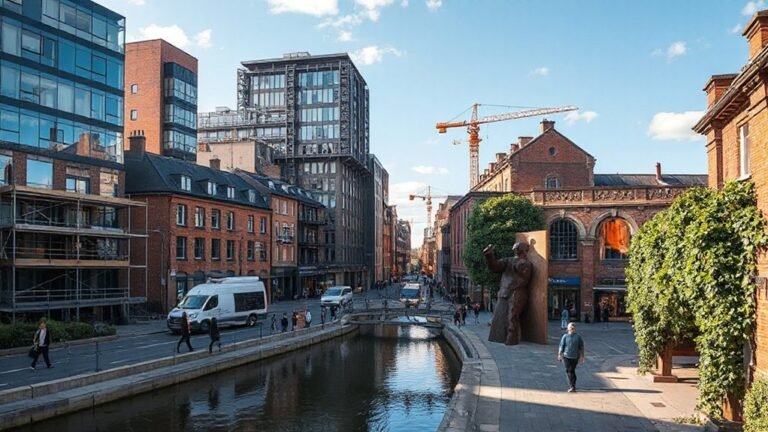
Slough’s property market isn’t booming overnight; it’s quietly becoming a dependable commuter hub. You’ll see rail links to London, Heathrow, and the Thames Valley lift demand for energy-efficient, well-located homes with flexible layouts. With Crossrail enhancements on the horizon and steady rent growth underpinning prices, there’s a clear path for scaled investment. If you’re weighing how to position capital, the next steps—and the risks—are worth your attention as momentum builds.
How Slough Became a Commuter Hub: Drivers, Timelines, and Scale

Slough evolved into a commuter hub primarily due to its transport spine and strategic location between London and the Thames Valley. You track the pattern: rail investments, road capacity, and cross-town bus integration, all accelerating cross-urban flows.
Timelines show rapid growth after the late 1990s, with phased station upgrades and line electrification, lifting service frequency and reliability.
Scale emerges as peak-hour ridership surges, supported by park-and-ride facilities and adjacent business parks that concentrate employment access.
Urban regeneration initiatives push revitalized corridors, aligning housing supply with demand and reducing travel times.
You quantify outcomes: shorter journeys, higher occupancy rates, and enhanced land value along transit nodes.
Cultural diversity complements this trajectory, expanding workforce skills, retail demand, and civic engagement, reinforcing Slough’s role as a strategic commuter ecosystem.
What Buyers Are Seeking in Slough Today
You’re prioritizing property features that match current market demand in Slough, from commute-friendly locations to modern interiors.
The data shows buyers seek efficiency, value growth potential, and flexible living spaces that support hybrid work.
We’ll outline the top priorities and market signals shaping what buyers are pursuing right now.
Buyer Priorities Today
What’re buyers prioritizing in Slough today? You focus on value-driven features that sustain resale and rental appeal. Core priorities cluster around transport efficiency, rental yield, and livability.
Proximity to M4 and Crossrail access matter most for commuting benchmarks and buyer confidence; you quantify this with travel-time reductions and connectivity scores.
Property condition, energy efficiency, and council services rank high, influencing ongoing costs and habitability.
Layouts favor open-plan spaces, flexible rooms, and storage to suit hybrid work.
You weigh priced-in amenities like local cuisine and community events, noting their impact on daily life and social capital.
Market signals show stable demand for well-maintained homes with modern systems, plus proactive vendor disclosures, ensuring fewer post-purchase frictions and faster closings.
Slough Market Demands
In Slough today, buyers are prioritizing value-driven features that sustain resale and rental appeal, with a sharp focus on transport efficiency, yield, and livability. You assess units for robust transport links, reliability, and nearby amenities that boost rentability, while still delivering long-term value.
Demand signals show emphasis on scalable layouts, energy efficiency, and low maintenance costs, with strong appetite for properties near rail, buses, and major arterials. Local cuisine and historical landmarks matter for livability narratives, shaping neighborhood desirability and branding.
You track yields by asset class, balancing initial price against ongoing costs and potential tax incentives. Market signals favor adaptable spaces, secure parking, and pedestrian-friendly streetscapes that attract tenants and buyers alike.
- Transport access and connectivity
- Energy efficiency and maintenance costs
- Proximity to local cuisine hubs and landmarks
- Scalable, adaptable layouts and parking
Cross-Border Investment Into Slough: UK vs. European Capital
Cross-border investment in Slough is tightening as UK and European capital compete for scale, speed, and certainty in a market shaped by logistics links, business-friendly policies, and ongoing EMEA demand.
You’ll see capital deployment diverge by horizon: UK buyers favor quicker exits, while European funds prioritize longer-term cash flow and resilience.
Data indicates steadier inflows from UK pension funds, contrasted with European sovereigns pursuing sizable, dual-use assets near rail and motor networks.
Seasonal trends modulate bid-ask dynamics, yet overall activity remains robust against macro uncertainty.
Market saturation appears concentrated in gateway corridors, leaving selective, underwritten opportunities with higher hurdle rates.
You should target assets with flexible occupancy, predictable revenue, and evident light-touch regulatory access to maximize risk-adjusted returns in this cross-border landscape.
The Top Transport Links Shaping Slough’s Value
You’ll see how Rail Connectivity Strength drives commute times and accessibility, shaping demand and premium pricing across Slough.
Road Linkage Influence shows how arterial routes affect local business activity, service levels, and catchment expansion.
Together, these metrics anchor value forecasts and guide asset positioning for investors and developers.
Rail Connectivity Strength
Rail connectivity is a core value driver for Slough, delivering fast links to London, Heathrow, and the wider Southeast that attract tenants, investors, and commuters alike. You’ll see that rail infrastructure underpins demand, with frequent services, reliable timings, and cross-connecting routes boosting occupancy and saleability.
Data indicate strong peak-hour cadence and growing off-peak usage, supporting diverse tenancy profiles and investment timelines. Connectivity upgrades, including project completions and planned enhancements, correlate with rent parity gains and cap rate stability.
You benefit from shorter travel times, predictable commutes, and enhanced accessibility for tenants seeking scalable space near transport hubs. The market rewards proactive operators who align development with upgrade schedules and service reliability.
- High-frequency services concentrate demand around key stations
- Peak-to-off-peak performance narrows vacancy risk
- Timetable reliability supports pricing power
- Transit-oriented growth links rail to value uplift
Road Linkage Influence
Road accessibility acts as a multiplier for Slough’s property value, shaping demand, pricing, and occupancy by linking business parks, logistics nodes, and commuter corridors. You read how road linkage funnels traffic patterns into arterial routes, influencing turnover in office walksheds and warehouse footprints.
Data shows faster, more reliable links reduce vacancy risk and expand catchment for tenants seeking just-in-time deliveries. You’ll notice peak loads align with major industrial clusters, boosting rent-per-square-foot metrics and lowering capitalization rates where reliability improves.
Local cuisine and community events become ancillary value signals, signaling a connected, livable environment that supports daytime footfall and evening amenities. You’re observing a strategic mobility backbone: imminent road upgrades, congestion management, and interchanges that compound Slough’s appeal to employers, residents, and suppliers alike.
Which Neighborhoods Rent First in Slough
In Slough, certain neighborhoods consistently rent first due to a combination of access, affordability, and amenities. You’ll see prioritization where transit nodes meet cost efficiency, and where local services reinforce daily routines. This pattern aligns with neighborhood demographics and rental price comparison data, guiding decisions for commuters and investors alike.
- Proximity to rail links and bus corridors
- Lower median rents within accessible clusters
- Diverse housing options supporting varied household sizes
- Amenities density driving quick tenancy turnover
Strategically, you should map entry points by door-to-desk time, then cross-check with rental price comparison and demographic profiles.
This helps forecast demand spikes and capex pacing. In practice, target areas with robust transit access, balanced rents, and service mix that reduces vacancy risk while maintaining return on investment.
Slough Price Trends: Past, Present, and What’s Next
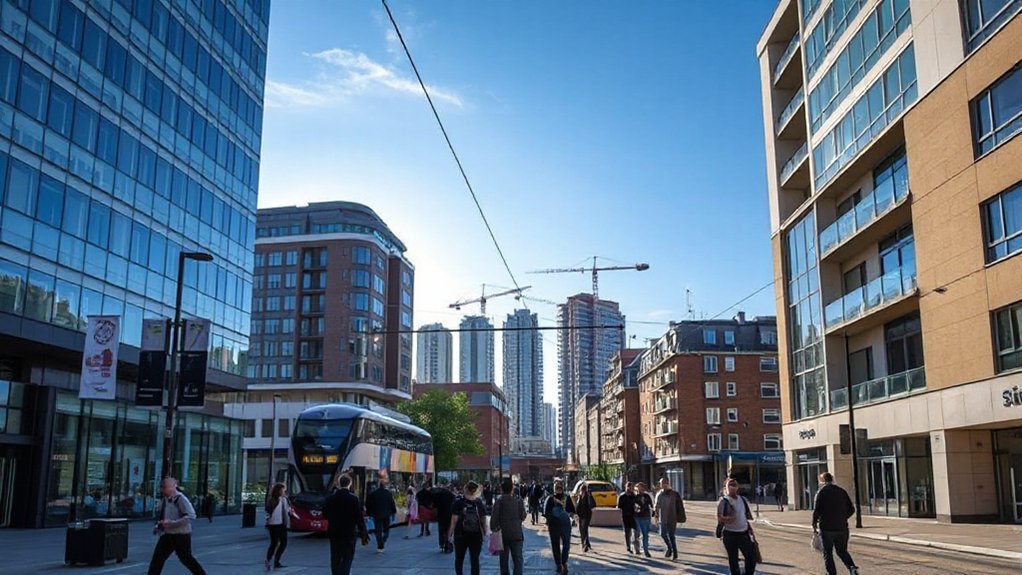
You’ll see how past price trajectories set the baseline for today’s values and the signals they send about momentum ahead.
The data points to a measured but steady trend, with cycles tied to broader economic factors and local demand.
Based on this, the future market outlook suggests a cautious, performance-driven path with opportunities tied to price normalization and sustained activity.
Past Price Trajectories
What do the numbers say about Slough’s price trajectory over the past decade? You’ll see steady gains punctuated by periods of acceleration, with top-tier demand concentrated near transport links and growth sectors.
Historical trends reveal price resilience during varied economic cycles, while demographic shifts feed persistent buyer interest in commuter corridors. You’ll notice capex-driven price bumps around major projects and infrastructure upgrades, followed by normalization as supply catches up.
Overall, the trajectory favors gradual appreciation rather than dramatic swings, signaling a stable, investable market.
- Historical trends show recurring cycles of mild corrections followed by renewed activity
- Demographic shifts concentrate demand among young professionals and families seeking affordability and commute access
- Price momentum aligns with infrastructure milestones and employer clustering
- Supply-demand balance moderates pace, reinforcing selective, location-driven gains
Future Market Outlook
Despite steady demand and ongoing infrastructure investments, Slough’s price trajectory is likely to blend gradual appreciation with selective pockets of acceleration, driven by transport links, employer clusters, and ongoing regeneration.
You’ll see moderate year-over-year gains tempered by micro markets near rail hubs and business parks, with capex spurring apartment density and new homes.
Our data point to sustained activity in mid-market segments, while prime segments may outperform during strong export cycles and cross-rail completions.
Price momentum should remain resilient, aided by population growth, income stability, and targeted regeneration schemes.
Local cuisine and cultural festivals amplify livability, supporting discretionary demand in fringe zones.
Rent Levels and Investor Yield in Slough

Rent levels in Slough remain robust, supported by a steady inflow of tenants and a tight rental market. You’ll see yields remain attractive despite modest capex, with steady rent growth outpacing inflation in gateways. Price-to-rent ratios stay balanced, supporting investor confidence while risk controls tighten.
- Rental yields by asset class and submarket
- Impact of property taxes on net returns
- How rental regulations shape lease terms and vacancies
- Occupancy risk vs. renewal probability in commuter corridors
Data indicates occupancy stays high, with renewals stabilizing cash flow streams. You should monitor regulatory shifts and tax policy, as these factors compress or expand NOI. Strategic ordering of assets by proximity to transit hubs improves resilience.
New Housing Schemes and Their Impact on Supply
You’ll see the new homes pipeline shaping supply alongside rising demand signals. Data indicate a link between completed projects and available stock, with timing affecting price pressures and affordability.
This sets the stage to assess how upcoming schemes may recalibrate Slough’s housing balance and investment dynamics.
New Homes Pipeline
- Delivery phasing and milestones
- Affordable housing quotas
- Infrastructure alignments
- Livability enhancements
Supply Demands Impact
New housing schemes are reshaping Slough’s supply dynamics, with demand outpacing approvals in several neighborhoods and development timelines tightening overall. You’ll see approvals lagging behind buyer appetite, creating a pinch on delivery timelines and price pressure across commuter corridors.
Data shows a rising share of projects entering phased releases, which constrains immediate stock while long-term stocks improve; this shifts market risk toward existing housing and rental markets.
Rural development initiatives surface in peripheral parcels, yet scale remains modest relative to need, suggesting local governance must align zoning, infrastructure, and financing to liberate transmission of schemes.
Strategic emphasis lands on faster approvals, transparent pipelines, and targeted incentives to sustain supply. Coordination between councils and developers will determine affordability trajectories and neighborhood resilience.
Pricing by Slough Postcode: Where to Buy for Value
Prices and demand vary by Slough postcode, so identify value by mapping average prices, growth rates, and rental yields across zones rather than chasing headline figures. You’ll compare cost per square foot, time on market, and yield dispersion to spot superior pockets, not only high prices.
Align decisions with Property taxation considerations and Local zoning implications to understand long-term value and development risk. Prioritize areas with steady rent growth and favorable planning outlooks, then test affordability against commute time and lifestyle factors.
Use a data-driven filter to rank postcodes by risk-adjusted return, not glamour.
- Price dispersion by postcode and its impact on value
- Growth trajectory vs. current rental yields
- Zoning rules and taxation effects on cash flow
- Exit strategies and future demand drivers
5-Year Affordability Scenarios for Slough Commuters
You’ll see tight credit constraints and rising deposit requirements shaping monthly outlays, with mortgage rates expected to settle but principal interest still consuming a meaningful share of income.
In 12 months, affordability hinges on wage growth versus rent escalations, while 5-year projections stress the impact of stress tests and loan-to-value limits.
Urban agriculture, increasingly embedded in fringe residential pockets, offers swappable cost offsets by reducing food expenses and transport reliance, subtly easing total costs.
Historic landmarks anchor local growth, but their preservation may constrain new-build sites, affecting supply and price trajectories for commuters seeking stability and predictable monthly commitments.
Amenities and Lifestyle Factors Buyers Want in Slough
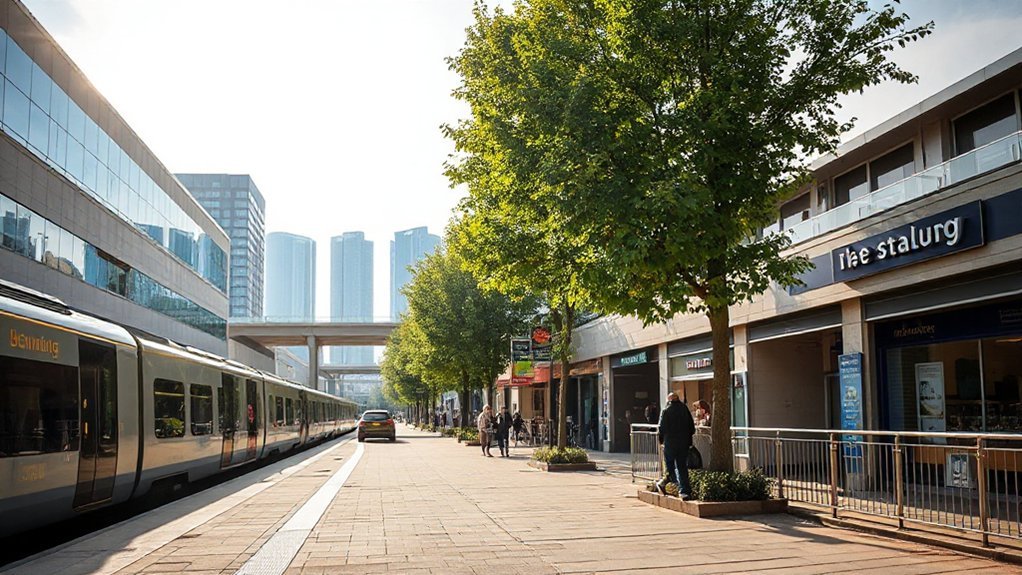
Slough buyers tend to prioritize amenities that cut friction and boost daily convenience, with a clear tilt toward transit access, green space, and everyday services. You’re seeking practical lifestyle signals that translate to reliable returns, not frills.
Data shows demand clusters around walkable corridors, quick rail links, and diverse service mixes. Gourmet dining and fitness centers act as anchors, signaling quality and ongoing use.
Proximity to parks and schools reinforces long-term appeal, while predictable daily routines reduce turnover risk. You’ll value neighborhoods with mixed-use density that supports morning commutes and weekend socializing, complemented by robust public transit options and safe, active streets.
- Gourmet dining proximity
- Fitness centers access
- Green space quantity and safety
- Everyday services density
Cross-Border Opportunities: How Money Flows Affect Pricing
Cross-border money flows reshape Slough’s pricing by shifting demand curves through currency movements, investment cycles, and cross-border capital access. You’ll see price signals tighten when sterling strengthens, as overseas buyers pause, and loosen when it softens, inviting a broader pool.
Border dynamics drive timing: capital flight risk, regulatory shifts, and rate differentials alter buyer eligibility and mortgage conditions. Currency impacts filter into capex pacing, influencing development timelines and discount rates used by valuers.
You’ll observe higher transnational bids for commuter-friendly assets near rail links during liquidity cycles, then retrenchment as yields compress or funding narrows. Data points show correlated price upticks with surges in foreign demand and cross-border refinancing activity.
In strategy, monitor FX volatility, capital controls, and cross-border investor sentiment to anticipate pricing momentum and adjust targeting.
Market Risks Every Commuter Investor Should Assess
Market risks for the commuter investor emerge directly from how Slough’s market dynamics respond to funding cycles and policy shifts. You should quantify timing risk, interest-rate sensitivity, and capital availability to anticipate price volatility and rental gaps.
Monitor Property tax trends and how they alter carrying costs, cash flow, and yield margins. Zoning regulations influence allowable density and permitted uses, shaping future rent potential and resale value.
Data-driven scenarios help you avoid overpaying during stimulus peaks and underperforming in tightening cycles. Track local infrastructure plans, transit service changes, and grant programs that can shift demand.
Prioritize risk buffers, exit strategies, and conservative rent projections to preserve margin.
- Funding and rate sensitivity
- Tax and regulatory impact
- Zoning and density changes
- Exit and buffer planning
Renovation Options and Product Types That Deliver Returns in Slough
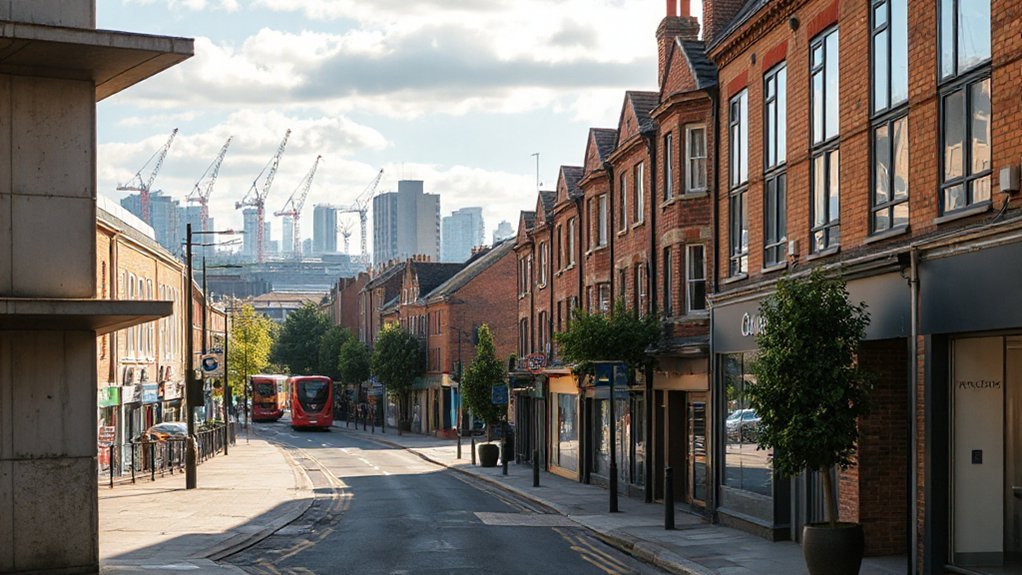
To maximize returns in Slough, focus on renovation strategies and product types that align with demand signals, capex limits, and leasing cycles. You should prioritize scalable upgrades that boost yield without overcapitalizing, targeting units with high occupancy risk or turnover potential.
Consider modular, reversible renovations that support multiple tenants and long-term leases, enabling quicker rent resets and reduced vacancy impact. Renovation ideas include enhanced common areas, flexible layouts, energy efficiency, and smart-property tech that lowers operating costs and appeals to upscale commuters.
Emphasize product diversification by blending compact studios, one-bedroom flats, and work-home live‑work spaces to stabilize income streams. Tie decisions to data on rental velocity, seasonality, and maintenance cycles to optimize ROI and minimize downtime.
Case Studies: Standout Successes in Slough’s Markets
Case studies reveal standout successes across Slough’s markets by pairing targeted renovations with tenant mix strategies that reduced vacancy and boosted rent collections. You’ll see how operators used data to select improvements that matched demand, then optimized occupancy with complementary tenants.
Historical architecture outcomes demonstrate lasting value when upgrades honor era details while upgrading systems. Local festivals provide peak demand windows, guiding leasing and pricing during event periods.
By measuring turnover, rent collection rates, and vacancy days, these cases prove strategic execution beats generic upgrades.
- Targeted renovation timing aligned with festival calendars boosts occupancy
- Tenant mix optimization reduces dead space and accelerates cash flow
- Data-driven pricing reflects footfall and seasonal demand
- Historical architecture preserved while modern systems improve reliability
Crafting a Commuter Purchase Plan for Slough
Slough’s commuter dynamics shape investment decisions, so you’ll want a plan anchored in real data and tight timelines. You’ll assess transit nodes, morning peak flows, and rental turnover to forecast demand windows and price pressure.
Map target neighborhoods by proximity to stations, bus corridors, and future Crossrail-led connectivity, then layer school catchments and workplace clusters to optimize exit timing.
Set quarterly milestones: price growth, vacancy trends, and rent-to-price ratios, with guardrails for macro swings.
Build a purchase calendar that prioritizes high-liquidity assets, minimal days on market, and reliable yield, not speculative hype.
Include local cuisine and cultural festivals in neighborhood scouting to gauge lasting appeal.
Align financing, due diligence, and contingency budgets to maintain momentum through seasonal shifts and market pauses.
Frequently Asked Questions
How Stable Are Slough’s Long-Term Rental Yields?
Your rental yields are moderately stable, though Market fluctuation and Rental demand vary seasonally; long-term returns hinge on local economy and supply. You should monitor vacancies, renewal rates, and market signals to gauge continued stability and risk.
Which Schools Most Drive Neighborhood Desirability?
Schools with top rankings and strong community amenities drive desirability most. You’ll notice, data shows prized neighborhoods cluster around high-ranking schools, while well-supported amenities reinforce value. You gain clarity on where rankings and amenities converge for best outcomes.
How Are Council Tax Changes Affecting Costs?
Council tax changes will raise your costs modestly this year, with higher bands absorbing more. You’ll see tax implications reflected in your bill, guiding your budget adjustments to preserve cash flow and maintain essential services.
What Credit Checks Do Lenders Require for Commuters?
“Trust, but verify,” you ask: lenders require your credit history to assess risk; they’ll verify income and debts, too. You’ll learn your loan eligibility based on credit history, income, employment, and overall debt posture.
Which Local Services Influence Purchase Timelines?
Local transport and neighborhood amenities shape your purchase timeline; delays often hinge on council approvals, school openings, and utility connection schedules. You should track transit upgrades, amenity rollouts, and timing of contractor works to align with your move.
Conclusion
Slough isn’t just a commuter hub—it’s a velocity accelerator for property markets. Demand surges, rents rise, and infrastructure upgrades turbocharge value every quarter. You’ll ride a data-driven wave: proximity to rail, Crossrail benefits, and resilient price growth compound into faster, steadier returns. Invest with precision, diversify wisely, and time your buys with regeneration milestones. In Slough, the convergence of transit and opportunity isn’t hypothetical—it’s a strategic blueprint delivering scalable, repeatable wealth.
About the Author