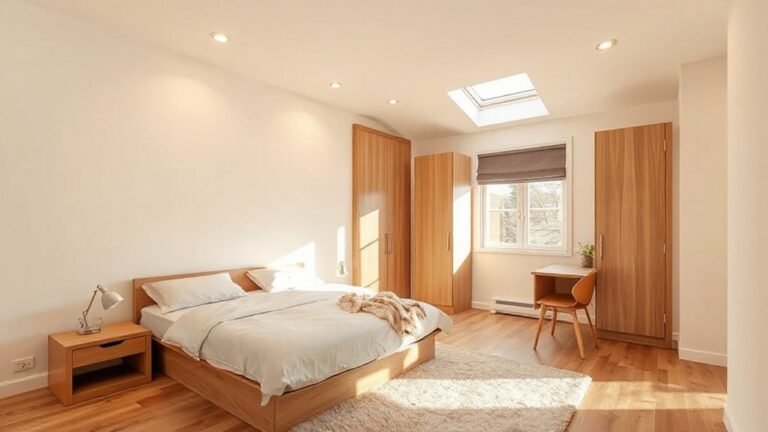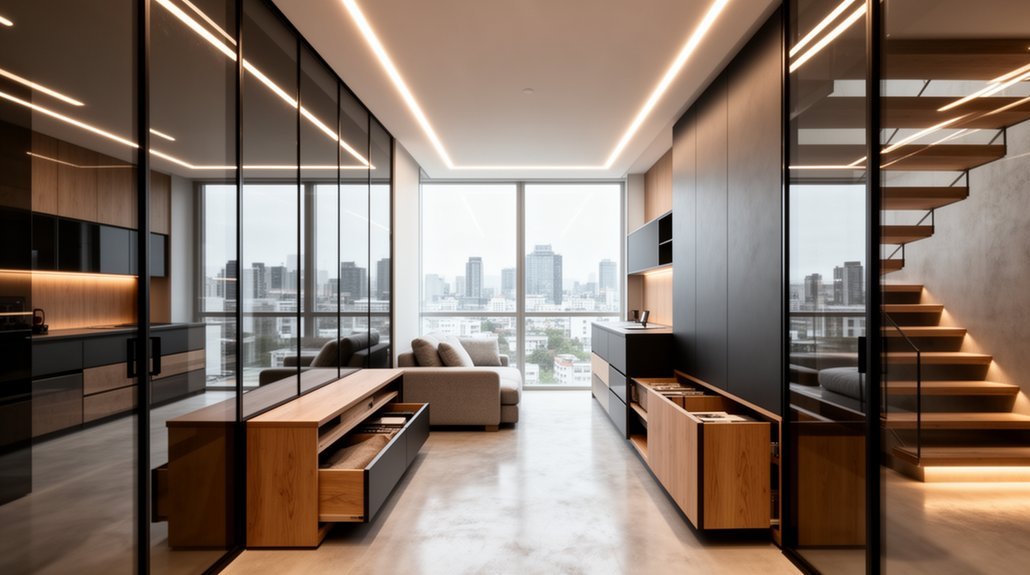
Ultra-modern ideas for compact city flats focus on smart layouts and multi-functional furniture that free you from clutter. Prioritize zones for living, dining, and sleeping to optimize flow, using convertible pieces like sofa beds and wall desks to reclaim floor space. Embrace vertical storage with tall shelves and under-bed drawers, and choose restrained palettes with texture variation to feel spacious. Use light, reflective surfaces and subtle finishes to amplify quiet luxury. If you keep going, you’ll discover even smarter, space-saving tactics.
Layouts That Maximize Space: Practical Configurations for Tiny City Flats
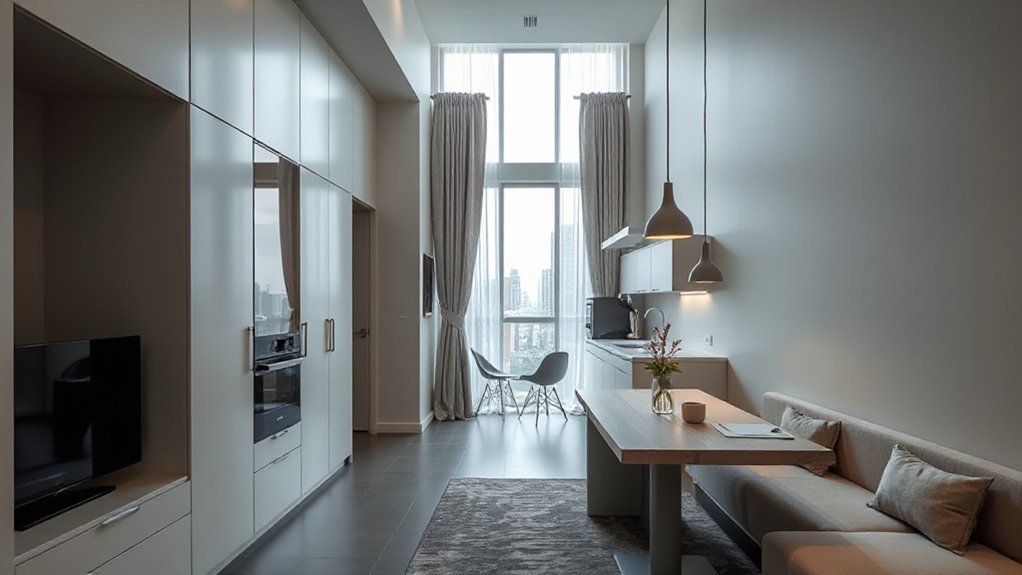
Maximizing space in tiny city flats starts with smart zoning: designate distinct zones for living, dining, and sleeping to avoid clutter and create a sense of order. You’ll optimize flow by aligning furniture with natural sightlines and traffic patterns, keeping walkways clear.
Use compact, purpose-built configurations: a sofa bed for flexible lounging, a lift-top coffee table for storage, and a wall-mounted media unit to reclaim floor space.
Storage solutions should be tucked into multipurpose components, like benches with lids or drawers under beds, so every inch serves a function without visual noise.
Embrace vertical design: tall bookcases, wall shelves, and peg rails draw the eye upward, increasing perceived room height.
When arranging, test sightlines, avoid overmatching, and prioritize accessible storage that supports daily routines.
Choose and Use: Multi‑Functional Furniture That Frees Up Space
Multi-functional furniture is your best ally when you’re optimizing small city flats. You choose pieces that do double duty, so each square foot earns its keep. Prioritize convertibles—sofas that convert to beds or wall desks that fold into cabinetry—so you reclaim floor space without sacrificing function.
Look for hidden storage integrated into seating, beds, and ottomans; it hides everyday clutter and keeps surfaces clear. Measure clearances before buying to guarantee doors and lids won’t collide with walls or other furniture.
Opt modular systems you can reconfigure as needs change, rather than fixed, bulky setups. Label compartments or use shallow organizers to keep essentials easy to locate.
Convertible beds and hidden storage are practical anchors for a tidy, flexible layout.
Light, Color, and Materials That Create Quiet Luxury in Small Rooms
Soft light, restrained color, and tactile materials establish quiet luxury in small rooms by shaping atmosphere rather than crowding space.
You prioritize ambient lighting that blends sources—wall washers, dimmable LEDs, and warm desk lamps—to soften edges and add depth without glare.
Choose a restrained palette; pastel palettes work best when layered with natural textures like linen, felt, and stone.
Use fewer shades, but vary texture and finish to create richness.
Materials should feel premium yet practical: matte ceramics, brushed metals, and soft, low-sheen wood.
Keep surfaces uncluttered to reflect light and enhance perception of space.
Minimize high-contrast accents; let tonal harmony guide focal points, such as a sculptural chair or a subtle architectural detail.
This approach yields calm sophistication that reads as quiet luxury.
Budget‑Friendly Styling Tricks That Transform Compact Homes
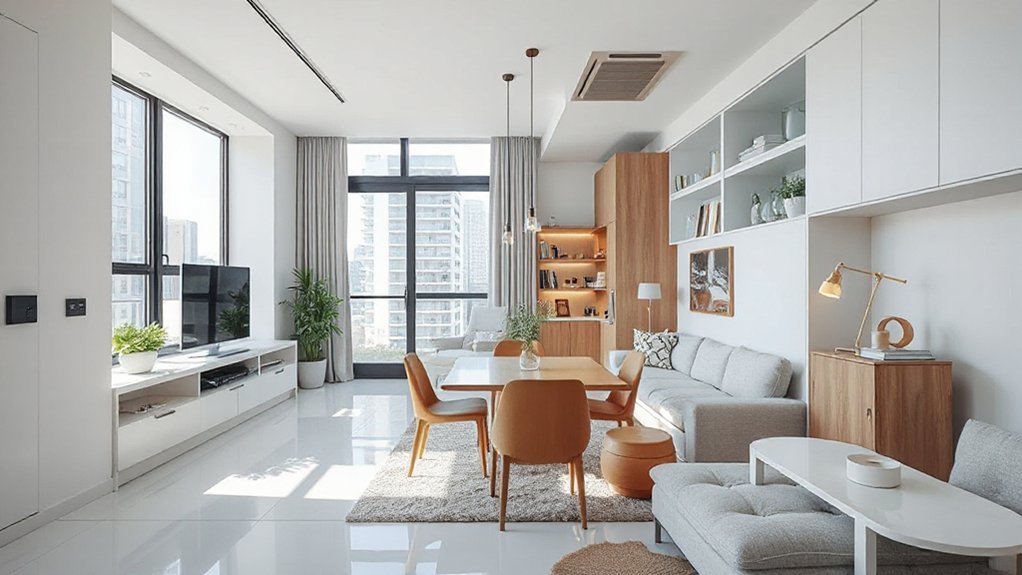
Budget-friendly styling tricks can make a compact home feel bigger and more versatile without breaking the bank. You’ll maximize space with deliberate scale: choose furniture that fits your floor plan, then pair it with low-profile pieces to reduce visual clutter.
Use multifunctional elements—an ottoman with hidden storage, a wall-mounted desk, or a bed with drawers—to reclaim square footage without sacrificing function.
Emphasize light and reflection: glossy surfaces, light colors, and well-placed mirrors create depth. Prioritize cohesion through a restrained palette and consistent metal or wood accents.
Artwork placement matters: group pieces in a cohesive arrangement at eye level to widen walls, not clutter them. Decor accents should punctuate, not overwhelm—select a few high-impact pieces.
Keep textures varied, but avoid over-accessorizing.
Core Framework for Small-Space Design: Criteria, Workflow, and Quick Wins
So how do you build a reliable framework for designing small spaces? You start with clear criteria: function, adaptability, and scale to your layout. Define zones that maximize flow, light, and accessibility, using zoning techniques to separate living, work, and rest without walls.
Map a straightforward workflow: assess site constraints, draft a minimalist program, prototype layouts, then test for daily ergonomics. Prioritize flexibility: modular furniture, foldaway surfaces, and concealed storage.
Implement smart storage first—overhead niches, under‑bed drawers, and pullout pantry—so every cubic inch serves a purpose. Establish quick wins: optimize verticals, align electricals with furniture, and streamline finishes to reduce visual clutter.
End with a review loop for continual refinement as needs shift.
Frequently Asked Questions
How to Maximize Storage Without Sacrificing Floor Space?
Maximize storage by using multi functional furniture and vertical storage solutions. You’ll keep floor space open while every inch serves a purpose; choose bed frames with drawers, wall-mounted shelves, and fold-away desks to stay organized and efficient.
Can Soundproofing Improve Comfort in Tiny Flats?
Can soundproofing improve comfort in tiny flats? Yes, with soundproof materials you’ll notice clearer walls and less disturbance, boosting sleep and focus. You’ll achieve noise reduction through dense panels, acoustic ceilings, and door seals for calmer, more productive living.
What Are Scalable Tech Integrations for Compact Homes?
Yes, you can scale tech in compact homes by integrating smart lighting and climate control that adapt to occupancy. You’ll save energy, automate scenes, and maintain comfort with centralized hubs, remote access, and modular, space-efficient components.
How to Mix High-End and Budget Materials Effectively?
Furniture costs explode? Not anymore. You mix luxury finishes with budget friendly accents, creating high-end vibes without the guilt. You pair contrasting textures, balance scale, and seal edges for durable, practical, premium-looking results you’ll love daily.
Which Zoning Tricks Create Distinct Rooms in Studios?
You can create distinct studio zones with open plan layouts and smart zoning partitions. Use partial walls, bookcases, or screens to allow flow while defining living, dining, and sleeping areas—maximizing light and preserving the open feel.
Conclusion
You’ve got the blueprint to make compact city flats feel expansive. Choose layouts that preserve flow, and pick multi-functional furniture that disappears when not in use. Use light, quiet-luxury materials to calm spaces, then layer budget-friendly styling to elevate detail without clutter. Stay disciplined with a core framework: define criteria, follow a workflow, and chase quick wins. Ready to transform tiny rooms into breathable, high-performance environments? Isn’t smart, purposeful design the ultimate luxury in small spaces?
About the Author