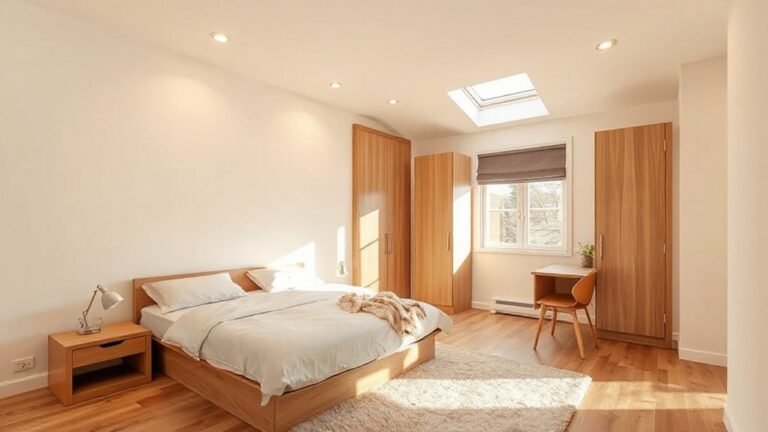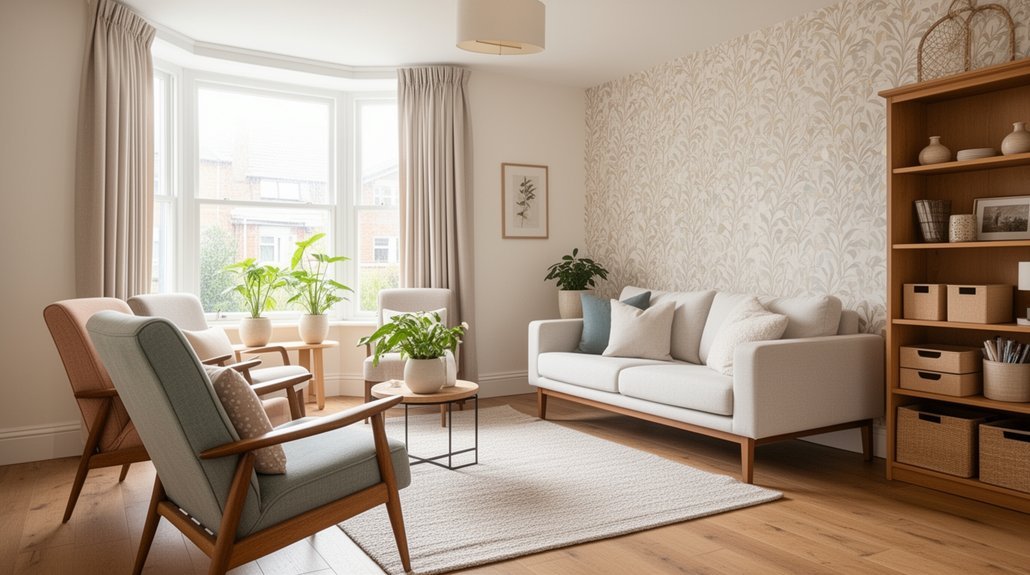
Looking to refresh your UK living room on a budget? Start with clear goals and a realistic budget, then assess your space for layout priorities and traffic flow. Tackle quick wins like a paint refresh, textured textiles, and thoughtful lighting—layer ambient, task, and accent light. Source smartly with thrift finds and multifunctional furniture, and refresh seasonally to stay current. Prioritize durability for UK climates, and plan storage to cut clutter. If you keep going, you’ll uncover more practical tips.
Define Your UK Living Room Makeover Goals
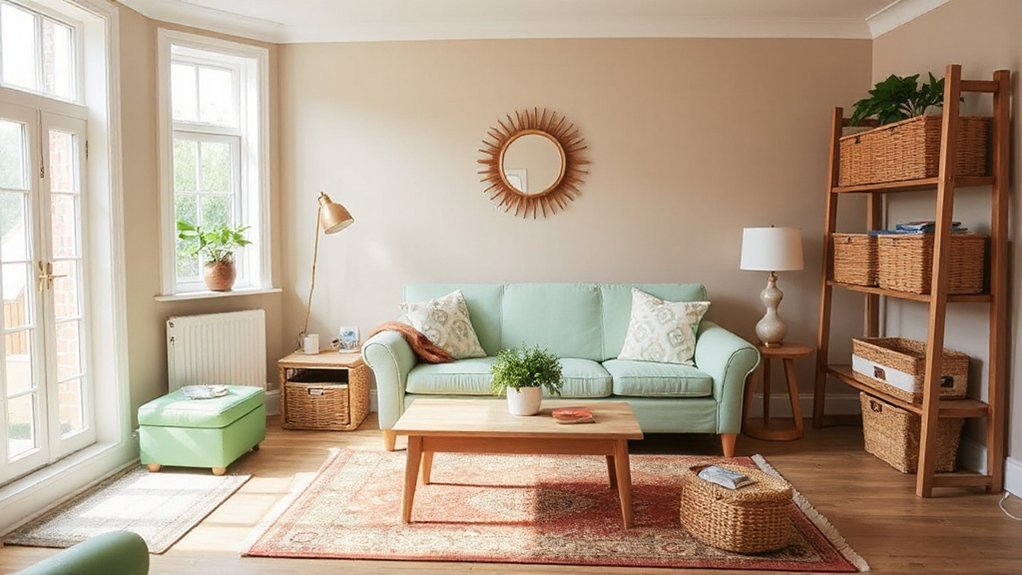
To define your UK living room makeover goals, start by identifying what you want to achieve in mood, function, and budget. You’ll translate these aims into concrete outcomes: a cohesive living room decor that reflects your style, a practical furniture arrangement that maximises space, and a budget plan you can stick to.
Consider mood elements like lighting warmth, colour palette, and texture. Function focuses on traffic flow, seating comfort, and media placement for everyday use.
Define success metrics, such as a calmer atmosphere, easier cleaning, or more usable lounge areas. Document your top three priorities and any must-have features.
Keep notes concise, prioritise clarity, and revisit goals after initial choices. This clarity guides decisions without overreaching.
Set a Realistic Budget for a UK Living Room
With your goals in mind, set a budget that keeps you in control while you achieve a cohesive look and functional layout. Begin by listing must-haves versus nice-to-haves, then assign realistic prices for each item and service.
Allocate a separate contingency—15% is a practical cushion for unforeseen costs. Prioritize durable basics first: sofa, coffee table, lighting, and storage, selecting neutrals for longevity and swapping with affordable accents later.
Plan for Vintage accents to add character without overspending, and reserve funds for a couple of statement pieces rather than chasing every trend. Use sales, secondhand finds, and DIY updates to stretch the budget further.
Track every receipt and adjust as needed, ensuring spending aligns with your target timeframe and overall plan. Artistic murals can be explored as a future, low-cost enhancement.
Assess Your Space: Layout Priorities for Small UK Rooms
Maximize every inch by mapping your room’s true footprint and prioritizing essential functions. In small UK rooms, identify the core activities you need: relaxation, conversation, and occasional work.
Place the primary seating to face a focal point, like a compact TV or natural light, and avoid blocking pathways. Use a simple furniture arrangement that preserves clear circulation and creates distinct zones without crowding.
Measure door swings, window alcoves, and radiator space to prevent clashes. Choose scalable pieces—compact sofas, nested tables, and a slim console—to maintain flexibility.
Colour coordination matters: keep a light, cohesive palette to expand perceived space, then introduce contrast accents through textiles and art.
Prioritise multi‑use items and avoid oversized clutter that can shrink functionality and flow.
Quick Wins: Paint and Texture Refresh on a Budget
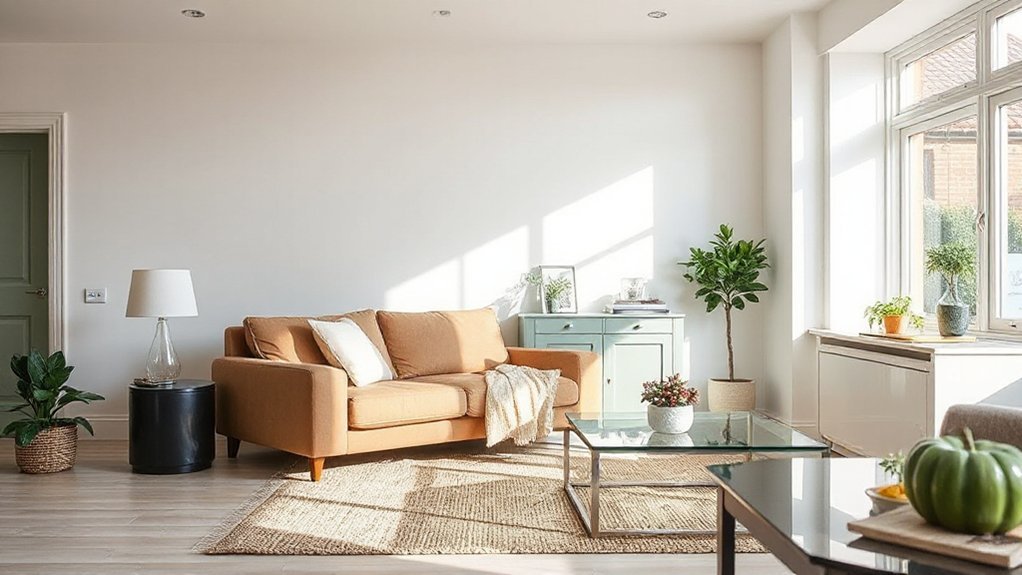
A quick refresh can dramatically reshape a small UK living room without breaking the bank. You’ll gain impact with paint and texture that’s simple and affordable.
Start with neutral walls to enlarge the space, then add depth via an accent wall or bold trim. Use matte finishes to hide imperfections and avoid glare.
Introduce texture through woven rugs, soft throws, and sculptural cushions. Replace or refresh cushions rather than whole sets to control costs, and consider budget furniture pieces that complement your palette.
For artwork, swap in DIY art—handmade prints or a gallery wall with mixed frames—to add personality without a premium price.
Subtle sheen, accurate colour sampling, and smart layering finish the transformation economically and effectively.
Budget-Friendly Sourcing: Thrift Stores for UK Homes
Thrift stores can be a goldmine for affordable, stylish UK living rooms. You’ll uncover durable pieces, characterful textures, and color boosts without breaking the bank. Embrace thrift shopping to mix vintage finds with modern basics, creating a curated, cohesive look.
Inspect wood surfaces, joints, and upholstery for durability, and don’t fear a little restoration to maximize value. Prioritize versatile shapes and timeless patterns that pair with your existing scheme.
Since selection varies, visit regularly and track trends online to time purchases. Keep a budget, negotiate calmly, and transport safely to avoid damage.
With patience, you’ll build a layered, personalized space that feels expensive but remains budget-smart.
- Practical inspection cues for furniture
- How to blend vintage finds with contemporary pieces
- Quick protection and cleaning tips
Upcycling for Small Rooms: Fit-Savvy Transformations
Upcycling in small rooms doesn’t have to feel cramped—you’ll use every inch with smart, space-saving tricks. Think compact-centric makeovers that maximize storage and light, so the room stays functional and stylish.
Let’s explore upcycled space tricks that open up versatility without clutter.
Upcycled Space Tricks
Can tiny rooms feel cramped? You’ll reclaim floor area with deliberate upcycled space tricks. Use vertical solutions, fold-away pieces, and modular units to free breathing room while keeping function sharp. Think double-duty furniture, wall niches, and magnetic strips for small items. Prioritize creative storage that’s accessible yet unobtrusive, so clutter never dominates your sightline. Each choice should support flow, not interrupt it.
- Convert an ottoman into a hidden storage bench with a lift-top for blankets and remotes.
- Install wall-mounted shelves that extend upward, leaving floor space clear.
- Choose nesting tables and stackable chairs you can tuck away when not in use.
These moves keep debt-free, upcycled space at the core of your makeover, delivering practical, space-efficient living.
Compact-Centric Makeovers
If you’ve seen the gains from clever storage and vertical thinking, you’ll appreciate how small-room upcycles tighten every inch. Compact-Centric Makeovers focus on fit over flair, using every surface wisely.
Choose sustainable materials that resist wear and stay clean with minimal fuss, like lightweight engineered woods, low-VOC paints, and breathable fabrics. Prioritize modular furniture you can reconfigure in minutes, and opt for wall-mounted storage to free floor space.
Color schemes should read large: use light neutrals with deliberate pops for contrast, avoiding heavy drapes that crowd windows. Embrace cultural influences to guide accents—artisan hooks, woven textures, or kiln-fired ceramics—without clutter.
Finally, plan dual-purpose pieces: a bench that hides storage, a coffee table with built-in charging, and shelves that scale with your needs.
Affordable UK Flooring Alternatives That Look Luxe
Are there affordable flooring options in the UK that still look luxurious? Yes. You can achieve high-end appeal without breaking the bank by choosing materials that mimic traditional finishes or pair sleek textures with thoughtful details.
Consider durable options that wear well and resist stains, then opt for colors and patterns that convey sophistication. Look for sustainable flooring and proof of eco-friendly materials to align with greener living while keeping costs sensible.
Install with careful underlay and precise joins to boost perceived quality. Prioritize timeless looks over trendy patterns to extend longevity. Choose finishes that reflect light to enlarge spaces.
- Engineered hardwood with a real-wood veneer
- Luxury vinyl tiles that imitate stone or timber
- Cork or bamboo with high-density wear layers
Lighting on a Budget: Layered Light Without Overspending
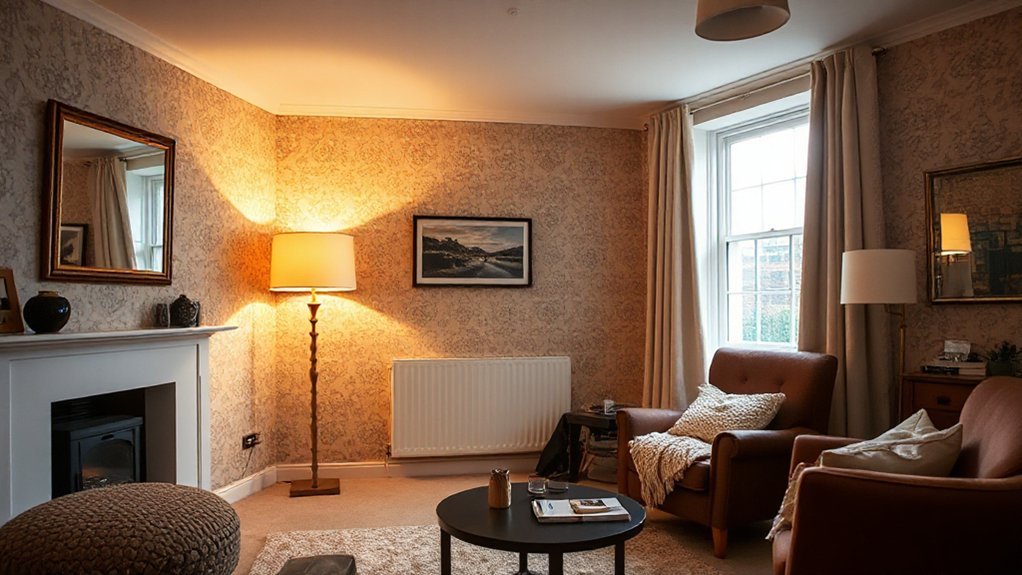
Layered lighting is practical and affordable when you mix three core layers: ambient, task, and accent.
Start with a central ceiling light for general glow, add a couple of task lamps where you read or work, and finish with small accents to sculpt texture and depth.
You’ll get a flexible, budget-friendly scheme that feels curated, not cluttered.
Layered Lighting Basics
Good lighting isn’t expensive: you can achieve layered lighting on a budget by combining ambient, task, and accent layers with simple, affordable choices. Layered lighting basics help you shape ambient atmosphere while ensuring practical task illumination for reading or hobbies.
You’ll regulate mood and function by mixing general brightness with focused light, then punctuate spaces with subtle accents. Choose affordable fixtures that blend with your room’s style, and prioritize bulbs with adjustable warmth.
Position lights to avoid glare and shadows, keeping traffic paths clear. With thoughtful layering, you gain depth, flexibility, and energy efficiency.
- Use a ceiling light for ambient brightness and add a floor or table lamp for task illumination
- Choose dimmable options to adapt mood and function
- Add a small accent light to highlight art or textures
Budget-Friendly Light Tricks
Budget-friendly lighting isn’t about cutting corners—it’s about smart choices that stretch your wallet. You’ll create layered light without overspending by pairing a few versatile fixtures with smart placement.
Start with a central ceiling light for general brightness, then add task and ambient options. A dimmable lamp near seating lets you adjust mood without wasting energy.
Choose LED bulbs with a warm color temperature for a natural glow and consistent energy efficiency. Use under-cabinet or shelf lighting to highlight focal areas without overdoing it.
Consider wall sconces to broaden the room’s feel without extra wiring. Prioritize lighting design that supports function—reading zones, screens, and accents—while keeping wattage low.
Small upgrades, big impact on energy efficiency and atmosphere.
Colour Schemes for UK Homes: Bricks, Neutrals, and Accents
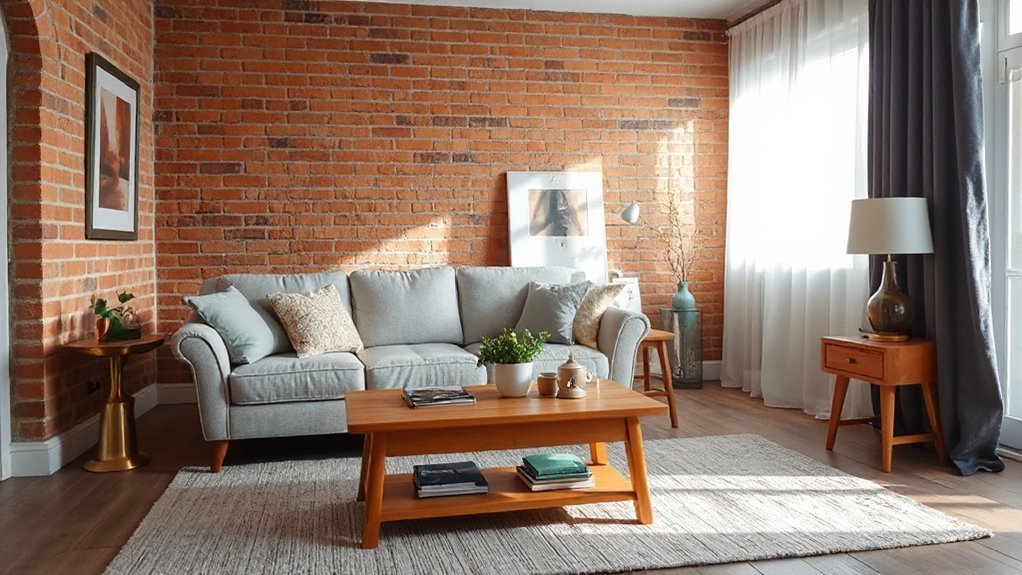
When choosing colour schemes for UK homes, start with bricks as a grounding element—its warm, earthy tones set the overall mood. You’ll balance neutrals with strategic accents to keep spaces calm yet characterful.
Consider color psychology: use soft, airy neutrals to enlarge rooms, and introduce depth with deeper accents in furniture or textiles.
Choose paint finishes that suit wear and light—matte for walls to soften glare, satin or eggshell for trim to ease cleaning. Test palettes in both daylight and lamp light before committing.
- Bricks as a warm base with cool neutrals for contrast
- Subtle accent tones guided by mood and function
- Durable paint finishes aligned with room use
Texture Pairings for Cozy British Ambience
Texture is the quickest way to make a British living room feel warm and lived-in after you’ve laid down the bricks’ earthy base and layered neutrals. You’ll pair rougher surfaces with smoother ones to create textural contrast that reads cozy rather than clinical.
Start with a rugged wall finish or exposed timber, then introduce a polished surface such as glass or ceramic for balance. Avoid monochrome monotony by mixing warm wood, ceramic, and metal accents that reflect light without shouting.
Think tactile layering: a stone or brick feature, a soft wool throw, and a woven rug; each element invites touch and adds depth. Keep scale in mind—larger textures anchor the room, smaller textures provide nuanced warmth without clutter.
Soft Furnishings on a Budget: Curtains, Rugs, Cushions
Curtains, rugs, and cushions are high-impact, low-cost ways to refresh a UK living room without breaking the bank. You set the tone with curtain patterns that suit your space, then layer textiles for depth. Cushion layering adds color and texture without a full redesign, letting you swap hues seasonally.
Choose mid-weight fabrics for drapery to balance light control and airflow, and pair with durable, easy-clean rugs. Keep a cohesive palette across fabrics to avoid clashing prints. Optimize impact by pairing bold cushions with solid curtains and a neutral rug.
Practical purchases beat impulse buys, so test scales in-store and online before committing. Small changes, big lift.
- Curtain patterns that mirror your wall color or artwork
- Layered cushion textures for depth
- Coordinated rug and upholstery color family
Create Your Own Statement Pieces: DIY Projects
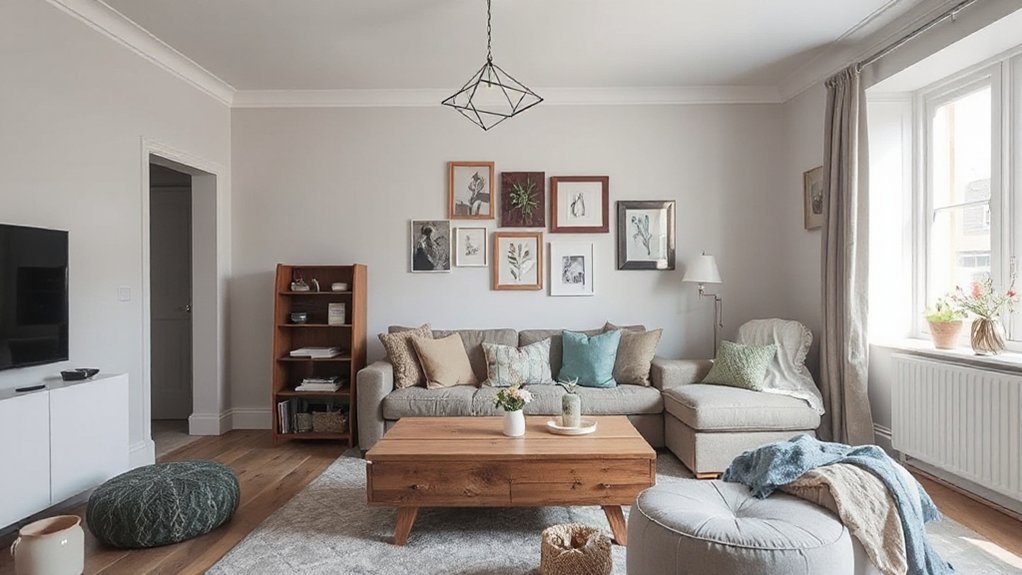
If you’re after a bold, personalized look, DIY statement pieces let you infuse your living room with character without a full renovation. Start small with upcycled furniture: sand, paint in a bold hue, and seal for durability. Use eco friendly materials like reclaimed timber or low-VOC paints to keep the project sustainable.
Create a focal point with a handmade coffee table or a bespoke headboard repurposed as a wall feature. Integrate vintage decor elements to add depth and history without costly investments.
Labeled shelves, geometric shelves, or a custom lampshade crafted from found fabrics can finish the look. Plan, measure, and test layouts before committing; small, well-executed pieces outperform hurried purchases.
Stay pragmatic, precise, and mindful of scale to maintain balance.
Wall Decor That Adds Character Without Cost
You can add character to your walls without spending a fortune by layering simple, high-impact strategies. Start with wall art that speaks to you, swapping frames, sizes, and orientations to create visual rhythm. Mix inexpensive prints with one bold statement piece to anchor the room.
Use texture—tapestries, fabric panels, or woven mats—to add depth without crowding the budget. Leaning shelves with curated objects can introduce personality without nails. Reframe old pieces in fresh mats or mounts to give them new life.
Focus on cohesion: pick a unifying color, material, or theme that ties the room together.
- Curate wall art with varied scales and frames
- Create a focal statement piece to anchor the space
- Use fabric textures and lean-mounted elements to fill gaps
Smart Substitutions: Hardware, Fixtures, and Accessories
Ready to upgrade on a budget, you’ll see how small hardware swaps save you money without sacrificing style. Think like-for-like replacements that boost function, with fixtures that stretch your budget and stay, well, practical.
Accessories can punch up rooms with impact, so start with thoughtful choices that balance cost and wow.
Hardware Swaps That Save
Upgrading hardware can deliver big results without a full renovation. You’ll tighten the room’s look and improve usability with simple swaps that don’t drain your budget. Focus on high-impact, cost effective fixtures that complement existing décor, not overpower it. Choose finishes and styles that match your current hardware to maximize cohesion and perceived value.
You’ll save time and money by selecting universal sizes and DIY-friendly options, then swap only what’s visible for instant upgrades. It’s about smart choices, not complete overhauls, so you keep disruption to a minimum while boosting perceived quality.
- Match finishes across knobs, pulls, and switch plates for a unified look
- Opt for durable, easy-care materials in high-use areas
- Prioritize functional upgrades that enhance grip and accessibility
Fixtures On a Budget
Smart substitutions can transform a room without a full reno. When you’re choosing fixtures on a budget, focus on core pieces that set tone: door handles, taps, lighting pendants, and shelf brackets.
Look for vintage charm in plated brass or aged bronze for a warm, collectible feel, but balance with clean lines to keep things fresh. If you crave modern minimalism, select matte black or brushed nickel finishes and streamline shapes.
Replace dated drawer pulls with cohesive sets to unify cabinetry, and swap a dated ceiling fixture for a single, well‑chosen pendant to anchor the space.
Prioritise ease of installation, durability, and motion‑sensor or dimmable options where possible to maximise utility without inflating costs.
Accessories With Impact
Accessories can transform a room fast, especially when you choose smart substitutions for hardware, fixtures, and small accents. You’ll notice big gains by swapping cabinet pulls, door handles, and light fittings for finishes that echo vintage accents.
Introduce statement artwork in a balanced display; one bold piece can anchor a neutral palette without clutter. Opt for hardware in brass or aged copper to add warmth, then pair with soft-textured textiles and cohesive framing.
Use lighting as an accent—dimmed wall sconces create depth and draw attention to focal points. Keep scale mindful so the space remains practical and uncluttered, not busy.
- Vintage accents via hardware and fixtures
- Statement artwork as a room anchor
- Cohesive finishes and balanced display
Storage Makeovers for Small UK Rooms
Maximizing storage in small UK rooms comes down to smart layout, multifunctional pieces, and consistent organization. You’ll map zones that keep everyday items out of sight yet easy to reach, using wall-mounted shelves and slim cabinets to avoid footprint creep.
Choose beds, sofas, and ottomans with hidden storage, plus nesting options that expand when guests arrive. Vertical space becomes a friend: tall units, hooks, and peg rails multiply storage without crowding floors.
Embrace multifunctional furniture, like coffee tables with drawers or lift-top tops for concealed shelves. Tidy visual cues help—bin liners and labeled baskets reduce clutter.
Add character with vintage textiles as throws or cushions, and dial in DIY lighting to highlight storage nooks while keeping rooms feeling open.
Seasonal Refresh: Keeping Your Look Fresh Year-Round
Seasonal refreshes keep your living room feeling current without a full overhaul. You can adapt the space by swapping small elements, using color psychology to match mood with function, and keeping core pieces unchanged for cost efficiency.
Plan simple swaps that align with the season, like textiles, art, and accent accents, so the room remains cohesive yet refreshed. Focus on seasonal decor that adds texture and depth without clutter, and use lighting to shift the atmosphere as moods change.
Keep a small, rotating kit of accessories to refresh quarterly, and measure impact by comfort and usefulness, not trendiness. This keeps your look fresh year‑round, practical, and affordable.
- Rotate textiles and lamps for subtle shifts
- Use color psychology to cue mood and energy
- Curate a minimal seasonal display to avoid clutter
Weather-Resistance and Durability for UK Climates
In UK homes, you’ll want weather-resistant materials that stand up to rain, humidity, and temperature swings.
Choose surfaces and finishes built for durability, with proven UK climate performance and easy maintenance.
I’ll guide you through selecting options that stay looking good and perform reliably year after year.
Weather-Resistant Materials
Weather resistance is essential for UK living rooms, where damp, humidity, and rapid weather changes can test materials. You’ll choose weather resistant materials that cope with moisture, temperature swings, and wear. Prioritize fabrics and finishes labeled for UK climate durability, with built‑in stain resistance and antimicrobial properties where relevant.
Look for low‑maintenance options that clean easily and resist cracking or fading over time. Install trims and seals that prevent drafts and moisture intrusion, and ensure proper ventilation to reduce condensation risk. Opt for finishes rated for UV exposure and cleaning with gentle solutions.
Balance cost with longevity, and plan replacements before they show wear.
- Weather resistant materials for upholstery and surfaces
- Durable finishes and moisture‑resistant textiles
- Selections that minimize maintenance while enduring UK climates
UK Climate Durability
You’ll want outdoor furniture that resists fading and rust, plus cushions with quick-drain cores and UV protection.
Choose paints and sealants that survive moisture swings without peeling.
For interiors, pick flooring and wall finishes that tolerate condensation and temperature changes, with airtight seals around doors and windows.
Invest in smart thermostats to optimize heating and reduce stress on materials during cold snaps.
Pair these with breathable textiles for comfort without compromising longevity.
Regular inspections, prompt repairs, and simple, durable designs keep spaces resilient year-round.
Real-Life UK Makeovers: Case Studies and Takeaways
Real-Life UK Makeovers reveal what works in practice: how designers balance style with budget, timing, and lived-in needs. You’ll see patterns emerge: repurposing furniture, prioritising lighting, and choosing durable fabrics that age well.
Case studies show quick wins—paint, hardware swaps, and layered textiles—that transform rooms without blowing budgets. You’ll notice the tension between Vintage charm and Modern minimalism, and how teams fuse these vibes with practical, UK-friendly considerations like moisture resistance and tenancy-friendly updates.
Takeaways emphasize planning, measuring spaces accurately, and investing in versatile basics you can rehome or reupholster. By observing real results, you gain a playbook for achievable, long-lasting makeovers that stay stylish without overspending.
- Quick wins: paint, hardware, lighting
- Balancing charm with minimalism
- Practical budgeting and timing strategies
Troubleshooting Budget Makeovers: Common Snags and Fixes
Budget makeovers almost always run smoother in theory than in practice. When you hit snags, you stay practical: diagnose first, fix second. Expect uneven paint edges, mismatched cabinet pulls, or shortfalls in fabric yards.
If you run short on Eco friendly materials, adjust by swapping similar textures or colours rather than redoing entire pieces. For wiring or lighting hiccups, plan safe, compliant tweaks and use cord covers to hide messes.
If you misjudge space, re-measure and pivot your layout rather than buying more. Smart technology can simplify fixes, like motion-activated lamps or smart plugs to test power without rewiring.
Keep a small kit: sandpaper, touch-up paint, pliers, and adhesive. Document changes to avoid repeating mistakes.
Frequently Asked Questions
How Can I Measure Success for a Budget Makeover?
You measure success by clear milestones: finish on time, stay under budget, and see daily improvements in comfort and function. Track DIY tips progress, compare pre- and post-plan metrics, and review budget planning against actuals monthly.
What Is the Cheapest Way to Refresh Walls?
Wall decals offer a budget-friendly refresh; you won’t break the bank, and it hides flaws gracefully. DIY painting adds polish when you want color. You’ll save, look sharper, and feel confident as you transform walls.
Can Small Changes Impact Perceived Room Size?
Yes, small changes can dramatically affect perceived size. Use color theory—light, cool hues to expand space—and smart furniture arrangement to maximize flow, create open sightlines, and avoid clutter for a room that feels larger and calmer.
Which Fabric Choices Maximize Durability on a Budget?
Durable fabrics for budget use are tightly woven blends like microfiber or faux leather; they resist wear, clean up easily, and hide stains. Prioritize upholstery maintenance, avoid loose weaves. Quick tip: treat spills to prevent fabric staining.
How Long Should a Quick Makeover Realistically Last?
Quick makeovers realistically last 1–3 months if you’re practical: secure timeless color schemes, keep furniture arrangement uncluttered, and refresh accents seasonally; durable fabrics help, but you’ll win by consistent upkeep and smart, low-cost tweaks.
Conclusion
You’ve got the tools to transform your space without breaking the bank. Start with clear goals, a realistic budget, and a smart layout. Tackle quick wins like paint and textures first, then layer in thrifted finds for character. Keep a seasonal refresh plan and choose durable finishes suited to UK weather. If a snag pops up, reassess priorities and improvise—the simple truth is a little intent goes a long way, and perseverance pays off. You’ll nail it, no doubt.
About the Author