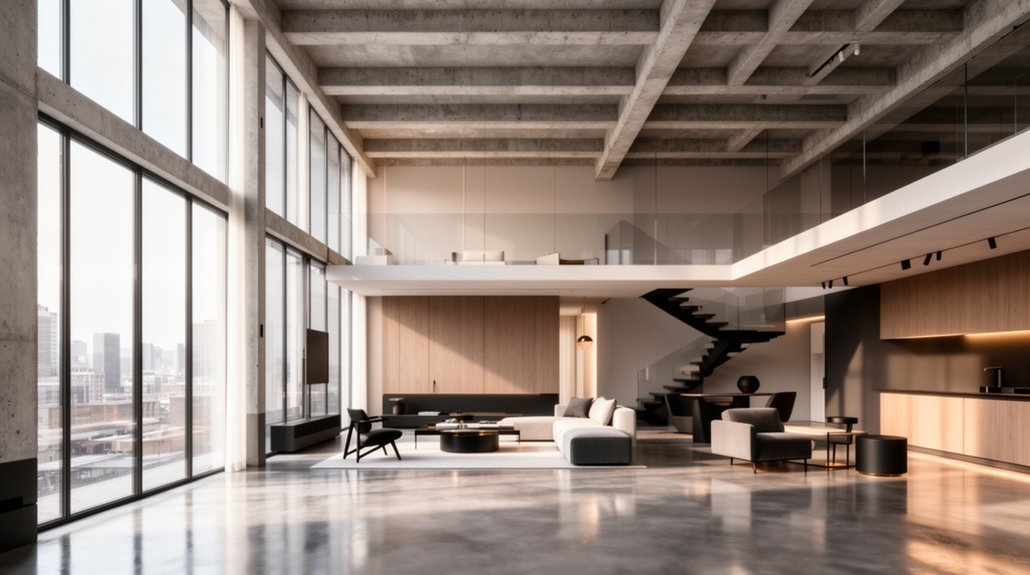
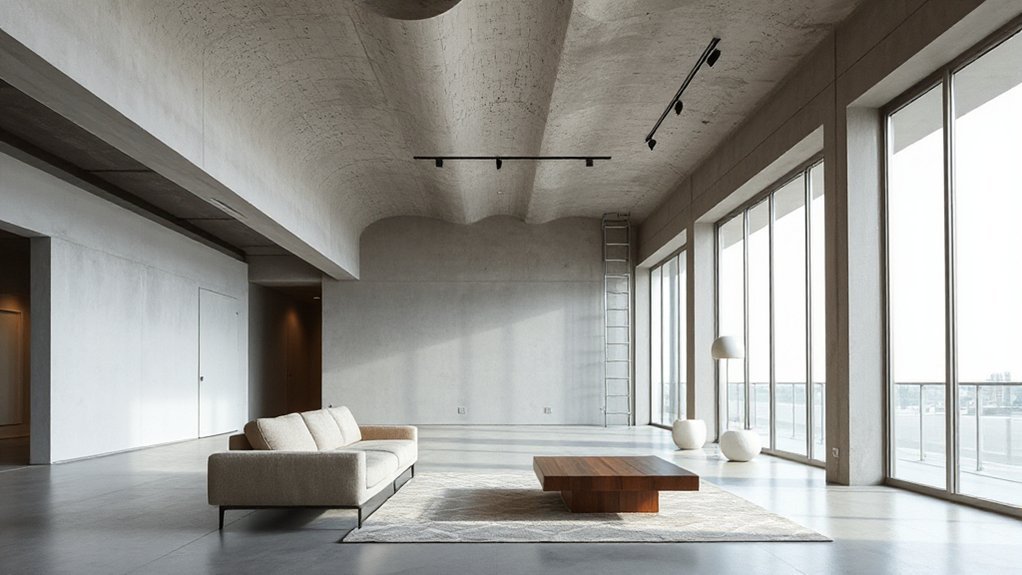
Ultra-modern loft concepts blend industrial honesty with airy, open layouts and smart zoning. You’ll see a core palette of concrete, metal, and warm wood, balanced by soft textiles and vintage accents. Think soaring ceilings, vertical sightlines, and open-plan living that defines zones with furniture, lighting, and materials rather than walls. Durable, low-maintenance finishes, tactile textures, and indoor-outdoor continuity create cohesive spaces. If you keep exploring, you’ll uncover practical steps to apply these ideas successfully.
What Defines an Ultra-Modern Loft?
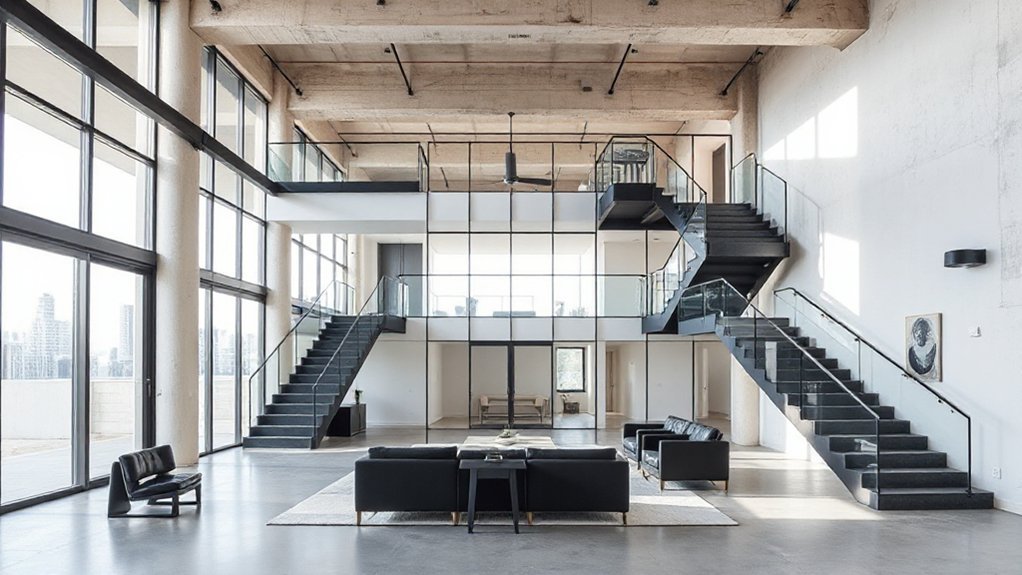
An ultra-modern loft combines minimalism with clean lines, open spaces, and a focus on function. You define it by restraint: uncluttered surfaces, hidden storage, and purposeful geometry that guides movement.
You seek natural light, high ceilings, and a neutral palette that amplifies space while letting deliberate accents stand out. From there, you integrate technology seamlessly, prioritizing control systems that simplify daily life without visual noise.
You balance form and practicality, ensuring every element earns its place. Vintage charm and eclectic decor appear as deliberate counterpoints, not distractions, pairing nostalgic details with contemporary architecture.
This synthesis creates a cohesive identity grounded in clarity, durability, and adaptability. The result is a living environment that remains efficient, calm, and distinctly refined.
Core Material Palettes: Concrete, Metal, and Warm Wood
Concrete, metal, and warm wood form the core palettes for modern loft interiors, each bringing distinct mood and performance to the space. You combine these materials to balance durability, texture, and warmth, avoiding sterile sameness.
Concrete provides structural honesty and a cool baseline, while metal infuses industrial edge and precision. Warm wood adds tactility and human scale, softening edges without sacrificing modern rigor.
Vintage charm emerges when you expose or reproduce patinas, creating contrast against sleek surfaces.
Natural light plays a central role: it accentuates material grain, heats timber naturally, and deepens shadows for depth.
Use the palette strategically: concrete for structure, metal for accents, wood for focal surfaces.
Maintain restraint, ensuring finishes and contrasts stay deliberate, cohesive, and purpose-driven.
Creating Space for Soaring Ceilings: Layout and Scale
To make space feel expansive, position the layout to emphasize vertical rhythm and sightlines that draw the eye upward. You should arrange primary zones along a clear central axis, using tall, unobstructed spaces that let natural light travel skyward.
Prioritize ceiling height dominance by minimizing bulk overhead; couch and seating should sit beneath gracefully scaled ceilings, not crowd them. Use architectural features to cue scale without clutter, such as slender columns, open risers, or a restrained mezzanine where feasible.
Ceiling textures matter for depth—choose smooth planes or subtle paneling to reflect light without breaking unity. Select lighting fixtures that accentuate height: pendant clusters sparingly, wall wash layers, and integrated cove lighting to enhance vertical drama while maintaining clarity and function.
Open-Plan Living: Smart Zoning Without Walls
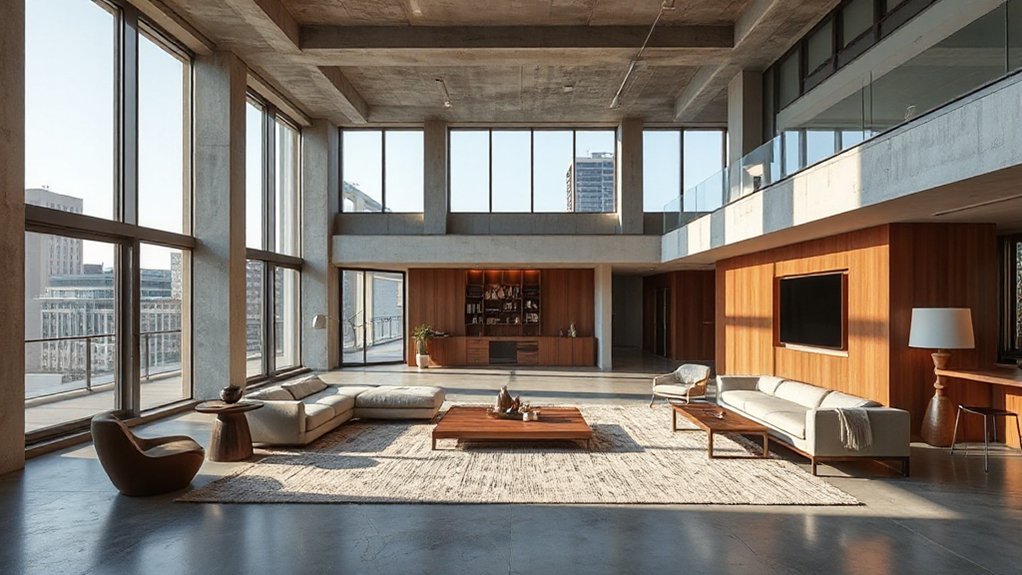
You’ll explore how smart zoning can define living zones without walls, using furniture placement, color, and lighting to guide flow. Focus on Space Flow Principles to guarantee movement feels natural and unobstructed.
We’ll discuss Smart Zoning Techniques that create distinct areas—kitchen, dining, and lounging—while preserving an open, cohesive feel.
Smart Zoning Techniques
Even in open-plan lofts, smart zoning preserves distinct zones without walls, using design and tech to define spaces while maintaining flow. You layer function with form, using furniture placement, lighting, and subtle color shifts to cue boundaries.
Smart dividers–sliding screens, bookcases, or translucent panels–offer flexible separation without breaking openness. Zone cues can be tactile, like rug textures or raised platforms, or optical, via wall washes and controlled luminance.
Tech-enabled spacing adapts to activities: dimmed lighting for dining, task lighting for work, ambient glow for lounging. Storage strategies maintain continuity, preventing clutter that dulls definition.
Incorporate vintage charm through finishes and furnishings, and blend rustic decor with contemporary silhouettes to sustain cohesion. The result is purposeful, navigable space that feels expansive yet deliberately organized.
Space Flow Principles
How can open-plan layouts sustain flow without walls? You craft clear zones through furniture placement, visual cues, and strategic levels, guiding movement without interrupting openness.
Prioritize a continuous sightline from entry to key living areas, then anchor each zone with purpose-built, low-profile dividers or flooring gradients that don’t close space.
Leverage natural lighting to soften boundaries, aligning skylights, clerestory windows, and reflective surfaces to maintain brightness across zones.
Apply acoustic treatment to reduce sound carry between functions, using soft textures, wall panels, and under-rug padding that dampens impact without visual clutter.
Choose cohesive materials and palette to unify areas, while varying scale and furniture to signal distinct functions.
Implement smart storage along edges to preserve flow, accessibility, and a disciplined, breathable loft rhythm.
Industrial Textures Balanced With Soft Textiles
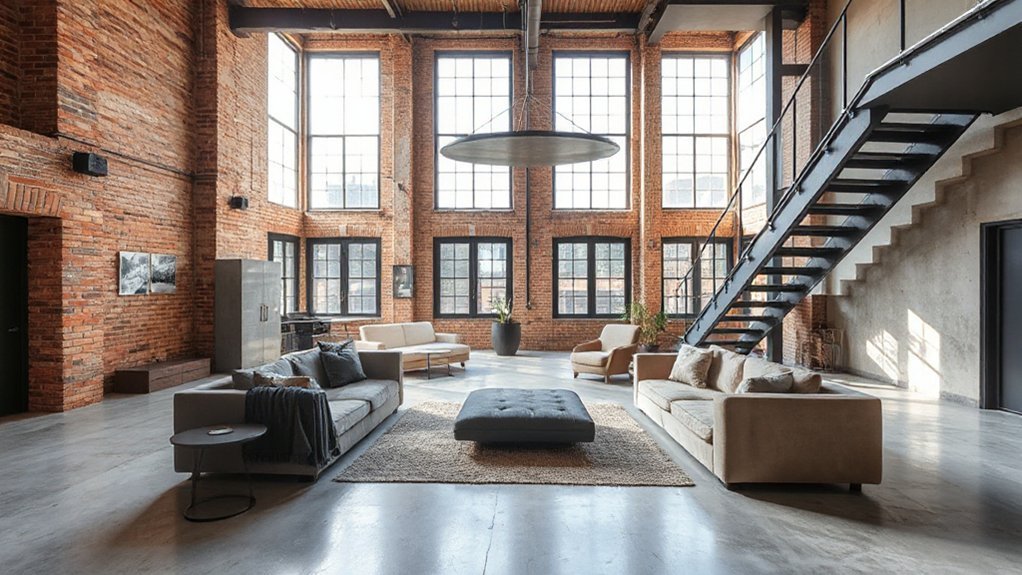
Industrial textures set the stage for loft interiors, but soft textiles keep the space inviting and livable. You blend exposed brick, concrete, and metal with plush fabrics to soften edges and reduce echoes.
Choose tactile weaves—velvet, bouclé, and wool—for upholstery and cushions that cushion traffic while maintaining a rugged vibe. Pair rugged surfaces with textiles in restrained palettes to preserve clarity and sophistication.
Introduce Vintage charm through aged leathers, patinated wood, and antique hardware to create storytelling depth without clutter.
Eclectic accents—ornate mirrors, asymmetric lighting, and layered rugs—add personality while preserving structural honesty.
Prioritize scale and repetition: repeat a few textures across zones, ensuring coherence. This balance yields warmth, practicality, and a refined, contemporary edge.
Color Systems for Refined Urban Interiors
Color systems in refined urban interiors hinge on restraint and cohesion: you combine a controlled palette with strategic contrast to anchor spaces that feel polished yet livable.
In practice, choose a core color and build around it with 2–3 supporting hues, ensuring tonal compatibility and depth. Favor neutral bases—charcoal, warm gray, or bone—then introduce accent tones sparingly to highlight architectural details or materials.
Color harmony emerges when you balance saturation, temperature, and light reflection, so test swatches under natural and artificial light to confirm consistency throughout the day.
Palette contrast should be deliberate: light against dark, matte against glossy, or cool against warm to define zones without shouting.
Maintain cohesion by repeating key hues in textiles, artwork, and hardware for a refined, cohesive urban mood.
Seamless Tech Integration in Loft Living
You’ll explore smart wiring schemes that power everything from lighting to climate control with clean, centralized efficiency.
Hidden display solutions let you access interfaces without cluttering sightlines, preserving the loft’s architecture.
This discussion starts by balancing capability with concealment to guarantee seamless tech integration feels like part of the space, not an add-on.
Smart Wiring Schemes
Use structured cabling, standardized terminations, and future‑proof connectors to simplify upgrades. You’ll pair lighting scenes and climate controls with occupancy sensors, enabling adaptive atmospheres without manual toggles.
Integrate voice and app interfaces, yet maintain a clean aesthetic by concealing panels behind cabinetry or within soffits. When selecting devices, prioritize energy efficiency and cybersecurity, reducing heat, waste, and vulnerabilities.
Vintage charm and rustic accents can coexist with discreet tech by choosing finishes that blend with exposed brick or timber. You deliver a polished, responsive environment that respects craftsmanship and stays quietly intelligent.
Hidden Display Solutions
Hidden displays should disappear into the architecture, delivering meaning without distraction. In loft interiors, you optimize space through concealed panels, hidden storage, and carefully finished seams.
You pair functionality with restraint, selecting concealed displays that remain invisible until needed, then reveal content with a subtle gesture or sensor. Every install prioritizes flush integration, so devices fade into walls, floors, or cabinetry, preserving the clean line of the space.
You map cable routes behind returns and inside plinths, reducing visual clutter while maintaining accessibility. Automation should feel effortless, not intrusive, with tactile or voice prompts guiding users.
This approach sustains calm, maximizes usable space, and keeps focus on form. Hidden storage and concealed displays become deliberate design choices, not afterthoughts.
Lighting as a Design Language in Large Spaces
How can lighting become the guiding language of a large space? In expansive lofts, you set the tone with layered lighting that defines zones without walls. Prioritize a disciplined ceiling design to reflect and distribute light evenly, avoiding harsh glare. Use a mix of ambient, task, and accent layers to sculpt depth, texture, and focus.
Natural lighting should inform your layout: position work areas opposite windows, employ translucent dividers, and exploit daylight shifts to cue evenings. Choose luminaires with a cohesive aesthetic—sleek profiles, adjustable arms, and integrated controls—so fixtures read as a unified system rather than individual elements.
Controls should be intuitive, enabling scene presets for work, social, and relaxation. Balance color temperature to preserve clarity, ensuring every surface reads clean, intentional, and timeless.
Furniture That Belongs in a Modern Loft
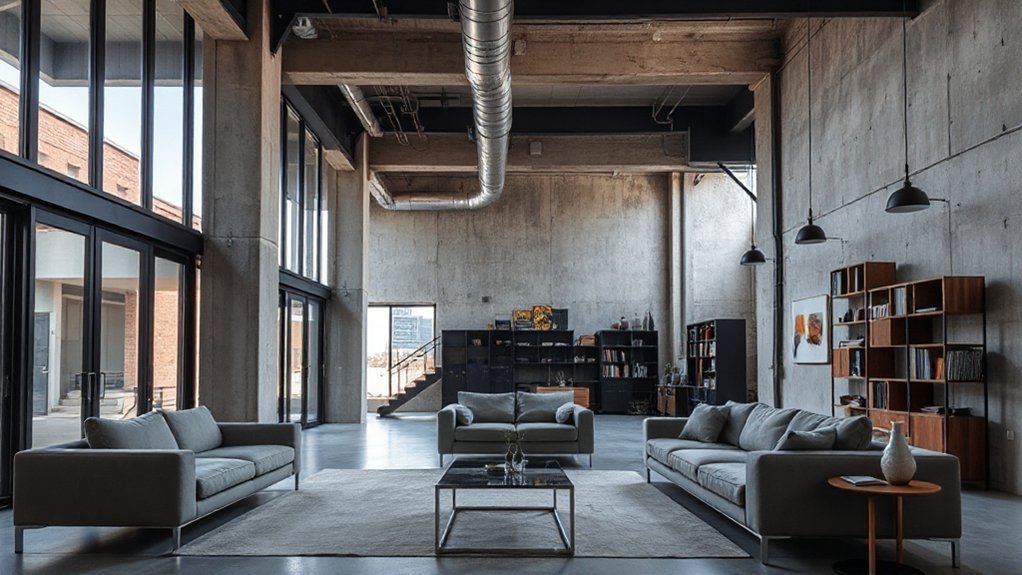
You’ll select minimalist fabrics that emphasize clean lines and neutral tones, keeping the space calm and cohesive.
Combine multimodal storage solutions—hidden compartments, modular shelving, and multifunctional ottomans—to maintain openness without sacrificing practicality.
This approach guides you toward a loft that feels intentional, uncluttered, and ready for flexible living.
Minimalist Fabric Choices
Prioritize textiles with subtle surface interest—woven textures, matte finishes, and tight weaves—so the spaces feel calm and cohesive. Textile textures should contribute depth without visual noise, ensuring furniture remains legible from across the room.
Choose durable, low-maintenance options that withstand daily use without losing character; consider performance fabrics or tightly woven blends for sofas and chairs. Fabric durability matters more than bold prints in minimalist contexts, preserving the clean aesthetic over time.
Finish with crisp silhouettes, avoiding fussy seams or excessive trim to maintain disciplined restraint.
Multimodal Storage Solutions
Multimodal storage is essential in a modern loft, where open sightlines meet practical demands. You’ll balance function with form by selecting pieces that serve multiple roles, keeping spaces uncluttered without sacrificing character.
- Hidden compartments in coffee tables
- Wall-mounted cabinets that double as art
- Benches with built-in cubbies for footwear or books
- Vertical units that merge shelving, hooks, and display surfaces
This approach preserves airy responses to light and scale while delivering flexible storage.
Favor materials that resonate with vintage charm and rustic accents, such as distressed wood or aged metal hardware, to anchor the space.
Prioritize adjustable shelves and modular modules that reconfigure as your needs evolve.
Precision in joinery and finish matters; let every piece earn its keep through clean lines and purposeful detail.
Acoustics and Comfort in Open Loft Rooms
Open loft spaces demand intentional accommodation for sound and comfort, since the open volume amplifies footsteps, voices, and appliances while echo and reverberation can create fatigue. You’re optimizing both privacy and daily livability by shaping acoustics with purpose.
Start with layout-aware zoning that places high-activity areas away from quiet zones, reducing direct sound transfer. Implement surface materials with controlled absorption and diffusion to minimize flutter echoes without sacrificing brightness.
Soundproofing techniques should focus on treating key junctions—ceiling-floor interruptions, door thresholds, and wall seams—to prevent leakage without heavy structural work. Complement systems with targeted acoustic paneling in work areas, lounges, and dining zones to control reverberation times.
Combine these measures with soft furnishings and textiles to enhance comfort while preserving open sightlines and a cohesive aesthetic.
Sculptural Details and Thoughtful Art Curation
You shape a cohesive Sculptural Form Language by selecting pieces that echo the loft’s lines and materials, creating a visual rhythm that guides movement.
Plan an Art Placement Strategy that balances scale, sightlines, and function, so each work enhances the space without overpowering it.
Use Material-Driven Curation to prioritize textures and finishes that age gracefully with the architecture, forging a thoughtful, durable gallery within the living area.
Sculptural Form Language
- Emphasize sculptural furniture that echoes architectural angles, reinforcing rhythm without clutter.
- Use contrasting textures to reveal each curve and edge, enhancing tactile perception.
- Integrate lighting silhouettes that cast deliberate shadows, highlighting form.
- Include vintage charm and artistic murals as counterpoints to industrial cores, enriching narrative depth.
Art Placement Strategy
Art placement should start with a deliberate plan that respects the sculptural details you’ve established while weaving in curated artworks that echo the architecture’s rhythm. You’ll align pieces to emphasize proportion, balance, and negative space, ensuring each work enhances—not competes with—the form language already on view.
Prioritize a concise narrative: choose artworks that articulate the space’s rhythm, color harmony, and material cues without overwhelming focal points. Use varying scales to create a dynamic gallery flow, and stagger installations to mirror architectural lines.
Optimize sightlines from key seating areas, so statements read clearly at typical viewing distances. For lighting, prefer Gallery lighting that renders true color and subtle texture without glare, allowing shadows to sculpt surfaces.
Maintain minimal, purposeful frames, and reassess periodically after changes in decor or lighting.
Material-Driven Curation
- Assess each piece’s tactile presence before placement.
- Pair works by contrast in scale, not theme.
- Integrate vintage charm with modern frames for balance.
- Ground selections with rustic accents to anchor the room.
Use lighting to emphasize texture, avoiding glare that obscures detail. Consider placement as a sculptural decision, not a decoration.
This strict, measured approach produces clarity, authority, and refinement, ensuring the collection reads as a deliberate, curated statement rather than a random assortment.
Indoor/Outdoor Flow: Balconies, Terraces, and Connections
Indoor/outdoor flow is essential in modern lofts, creating seamless passages between living spaces and exterior spaces such as balconies and terraces. You prioritize alignment between interior plans and outdoor access, ensuring doors, thresholds, and sightlines reinforce a fluid rhythm.
Consider operable walls or large pivot doors to blur boundaries without compromising climate control. Balcony and terrace platforms should echo indoor materials—stone, timber, or concrete—that carry through thresholds for visual continuity.
Woven textures, planters, and lighting define zones that extend living areas without clutter. Historical influences inform proportion, railing styles, and heritage details, while cultural inspirations guide color palettes and ornament in restrained doses.
The result is cohesive, adaptable spaces that invite daily outdoor interaction while preserving indoor functionality.
Sustainable, Low-Maintenance Loft Choices
Sustainable, low-maintenance loft design prioritizes durable materials, efficient systems, and timeless aesthetics that endure daily wear. You’ll choose resilient surfaces, low-sheen finishes, and Code-compliant, long-life fixtures to minimize upkeep while maximizing longevity.
Prioritize energy efficiency and indoor air quality with smart controls, LED lighting, and proper ventilation. Vintage charm and rustic accents are integrated with purpose, not for gimmickry, ensuring cohesion across spaces.
- Select recycled or salvaged materials for key surfaces.
- Opt for modular, repairable components to reduce waste.
- Implement high-efficiency HVAC, insulation, and smart thermostats.
- Favor finishes that resist fingerprints, stains, and wear.
Maintainability comes from calm palettes, consistent hardware, and strategic zoning. You’ll enjoy enduring style without constant updates, while elements like vintage charm and rustic accents add character without sacrificing practicality.
Small-Space Loft Hacks for Maximum Impact
Maximize square footage and functionality without expanding the footprint by using smart, space-conscious tactics that build on durable, low-maintenance choices.
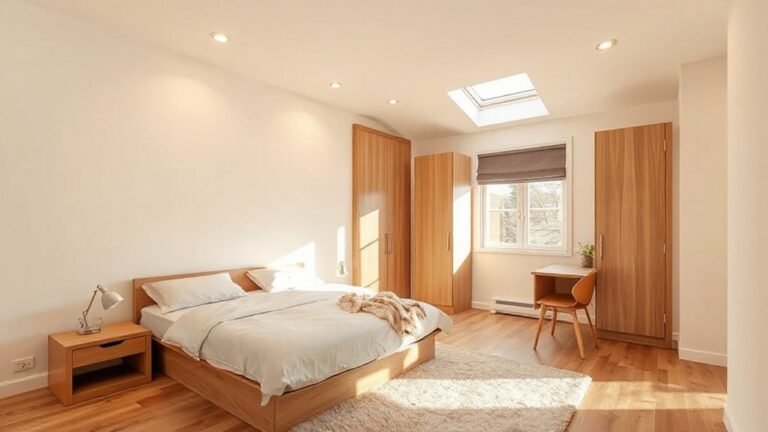
In small lofts, embrace vertical storage, wall-mounted desks, and foldaway furniture to free floor area for movement and decor. Prioritize built-in solutions with clean lines to reduce visual clutter and ease cleaning.
Use multi-purpose surfaces, like a bed with integrated drawers or a dining table that doubles as a work station, to maximize utility. Incorporate vintage charm through carefully chosen accents and lighting, while rustic textures add warmth without bulk.
Choose neutral palettes with punctuations of color to enhance depth and coherence. Guarantee lighting layers—ambient, task, and accent—for perceptual expansion, and keep cables organized behind built-ins to sustain a streamlined, breathable environment.
Case-Study Highlights: Contemporary Loft Makeovers
Contemporary loft makeovers reveal how clean lines, clever zoning, and refined materials transform compact spaces into open, livable residences. You’ll see how measured contrasts—soft textures against industrial surfaces—create character without clutter, while daylight strategies amplify volume.
In these case studies, Vintage charm meets modern practicality, and Eclectic fusion tightens the narrative with surprising harmony.
- Space optimization with modular furniture that echoes the loft’s architecture
- Material coherence uniting warm woods, cool metals, and glass accents
- Zoned openness that preserves flow yet defines function
- Detail-driven textiles and art to deliver personality without overpower
These makeovers prove restraint yields impact. You gain insight into the balance between heritage cues and contemporary form, shaping your own refined loft journey.
From Empty Space to Refined Loft: A Practical Process Roadmap
From the case studies of modern loft makeovers, you’ll apply a clear, practical workflow that turns an empty space into a cohesive, refined loft. Begin with a precise program: define zones, establish structural lines, and confirm load paths.
Map natural light and ventilation to inform window and HVAC choices. Prioritize universal access to key functions while preserving an uncluttered flow.
Develop a restrained palette and scale rules that unify vintage charm with contemporary finishes, then layer texture through materials like exposed brick, timber, and matte metals.
Introduce rustic accents as strategic highlights—handcrafted fixtures, warm woodgrain, and artisanal textiles—to avoid visual overload.
Validate each decision against budget, timeline, and maintenance, iterating only when a feature advances cohesion, function, or resident comfort.
Frequently Asked Questions
How to Balance Heat and Edge in Ultra-Modern Loft Lighting?
Yes—balance heat and edge with smart lighting that cues warm, dimmable LEDs for comfort, while cool, high-contrast accents sharpen edges. You’ll create ambient ambiance, control zones precisely, and maintain a precise, authoritative atmosphere throughout.
What Are Budget-Friendly Loft Upgrades With Lasting Impact?
You can achieve budget-friendly loft upgrades with lasting impact by embracing DIY decor and space maximization. Prioritize multifunctional furniture, smart lighting, and inexpensive wall decluttering. You’ll gain flexible layouts, cleaner visuals, and durable improvements you can proudly own.
Which Textures Best Soften Industrial Spaces Without Losing Sleekness?
Softens textures like velvet and wool while preserving sleek lines; embrace textural contrast to balance metal and concrete. You’ll feel warmth without sacrificing edge. Softening fabrics anchor the space, guiding light and shadows with confident, precise tact. Symbolism.
How to Optimize Natural Light in Tall, Open Spaces?
You optimize natural light by prioritizing window treatments and skylight installation that diffuse glare, guide daylight deeper, and preserve privacy; choose motorized shades, reflective surfaces, and careful placement to balance brightness with energy efficiency and visual clarity.
What Are Low-Maintenance Finishes That Read Premium?
You’ll love low-maintenance finishes that read premium: using sustainable materials and minimalist color palettes. In fact, 60% of homeowners report durability boosts with these choices. You’ll benefit from easy care, timeless appeal, and cost-effective longevity.
Conclusion
You shape a space that breathes: you define the line, you frame the light, you balance grit with grace. You pair raw textures with refined finishes, you embrace height with thoughtful zoning, you blend sustainability with style. You optimize every square inch, you honor craft with serviceable details, you invite texture with warmth, you celebrate restraint with bold statement. You transform empty rooms into expressive lofts, into living works of ultra-modern, timeless, interconnected design.
About the Author