The Best Places to Live in the London Borough of Hounslow As At April 2026
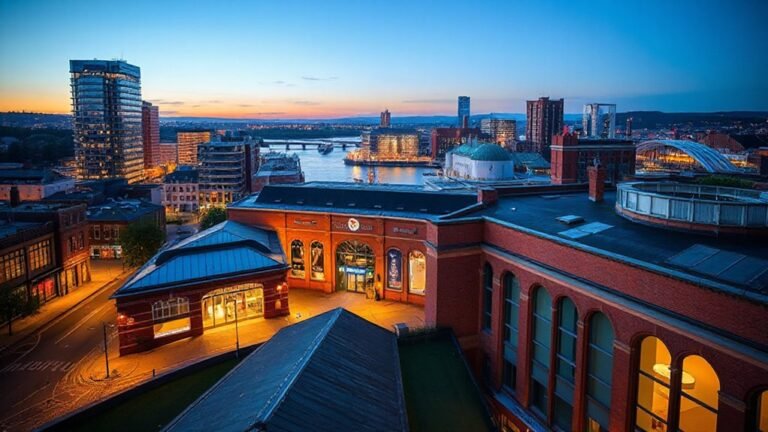
The London Borough of Hounslow occupies a distinctive position in the west London property map — a long, roughly linear borough stretching from the Thames at Chiswick and Brentford in the north-east to Feltham in the south-west, with Heathrow Airport shaping everything from its economy to its daily noise levels at its western edge. It is a borough of very considerable internal variety: Chiswick, at one end, is among the most expensive and sought-after neighbourhoods in west London; Feltham, at the other, is among the most accessible entry points in the capital for first-time buyers. Between them sit Brentford, Isleworth, Osterley, and Hounslow town centre — each with its own character, its own price point, and its own appeal.
The average house price in Hounslow was £528,000 in November 2025 — broadly flat year-on-year, and below the London average of £553,000 for the same period. This makes Hounslow one of the more accessible west London boroughs for buyers who want proximity to central London and genuinely excellent Tube and rail connections without paying the premium of Richmond, Kingston, or inner zones. The borough’s transport infrastructure — eight Tube stations on the District, Piccadilly, and Bakerloo lines, an Overground station, 680 bus stops, and National Rail services from Brentford and Isleworth to London Waterloo — is one of its strongest residential selling points.
Here are six of the best areas to live in the London Borough of Hounslow in 2026.
1. Chiswick
Chiswick is Hounslow’s most celebrated address — an affluent, leafy neighbourhood on the north bank of the Thames that functions as one of west London’s premier residential destinations and that consistently ranks among the most desirable places to live in the capital. The combination of a genuinely exceptional high street (Chiswick High Road, with its concentration of independent shops, restaurants, and cafes at a quality level that rivals neighbouring Kew or Richmond), excellent state and independent schools, District line stations at Turnham Green and Gunnersbury, and the proximity of the Thames path and Chiswick House and Gardens gives the area an amenity package that is hard to fault.
The Character and Price of Chiswick
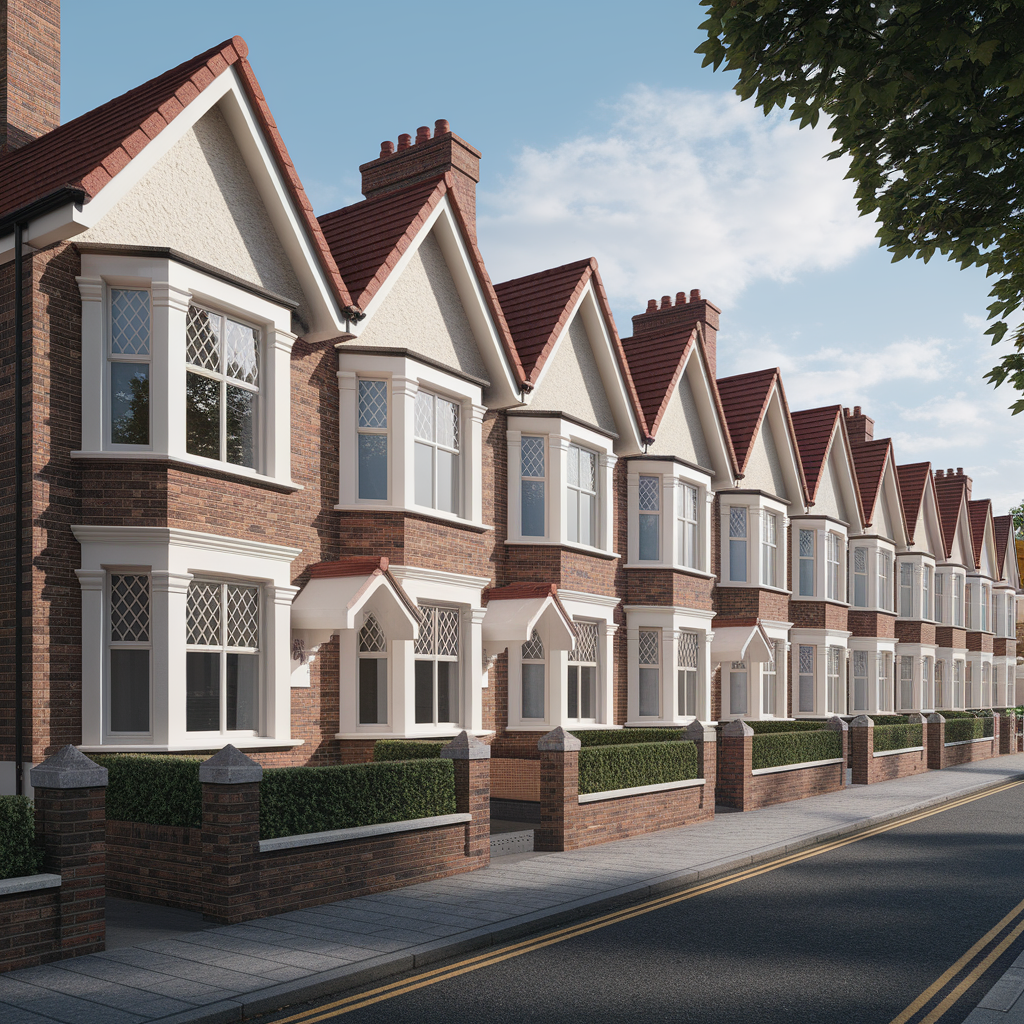
Chiswick is also, unmistakably, expensive. The Victorian and Edwardian terraced and semi-detached houses that characterise the residential streets south of the High Road — particularly the streets around Belmont Road, Glebe Street, and the conservation areas that preserve Chiswick’s period character — typically achieve £900,000–£1.4 million for family-sized properties. The most desirable streets near the river and around the conservation areas command prices that rival neighbouring Richmond and Kew. Flats offer a more accessible entry point — two-bedroom conversions and purpose-built flats in Chiswick can be found from £500,000–£700,000 — though this remains at the top of the Hounslow borough range.
For buyers who can access this market, Chiswick offers something genuinely exceptional: the quality of an established, characterful west London neighbourhood with its own distinct identity, world-class schools and parks, and the kind of community life that the area’s long-established affluent residential population has built and maintained over generations.
2. Brentford
Brentford has been one of London’s more dramatic transformation stories of the past decade — a town that was long associated primarily with traffic congestion on the A4 and the functional rather than the attractive, and that is now establishing itself as a genuinely interesting riverside neighbourhood with a regeneration pipeline that is reshaping its character, its amenities, and its property market.
The Riverside Transformation
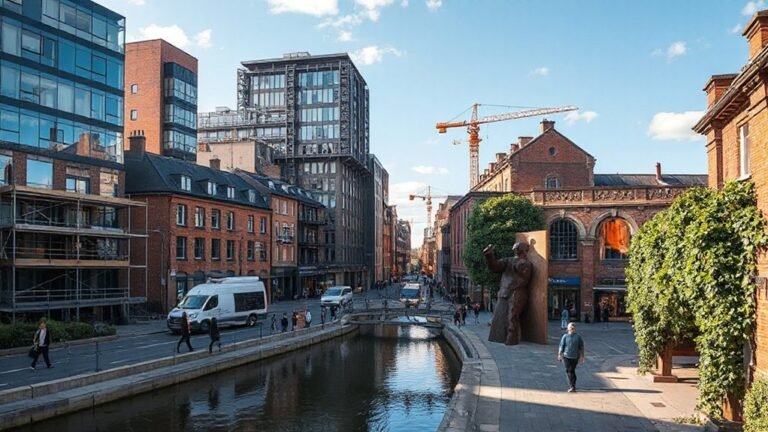
The Brentford waterfront — where the River Brent meets the Thames, at the point where the Grand Union Canal terminates — has been the focus of significant residential development. The Brentford TW8 development and other riverside schemes have brought modern apartment buildings to a location with genuinely exceptional views and water access, and the opening of the Brentford Community Stadium (home to Brentford FC since 2020) has added to the area’s profile and energy.
The Brentford Arts Centre development — 100 homes alongside a new cultural hub — and the Churchill House development (74 homes) represent the borough’s ambition for a town centre that combines residential, cultural, and commercial uses in a way that Brentford has historically lacked. The rail link to London Waterloo provides a fast city commute, and the District line at Gunnersbury connects westward toward Heathrow.
Who Brentford Suits
Brentford’s mix of riverside new-build apartments, Victorian terraced streets, and the energy of a town in active transition suits young professionals and first-time buyers who want west London proximity without the fully-formed premium of Chiswick — which is literally next door. Flat prices in Brentford typically run £350,000–£550,000 for two-bedroom properties; Victorian terraces and semis are available from £550,000–£800,000, substantially below Chiswick equivalents.
3. Isleworth
Isleworth sits between Brentford and Twickenham along the north bank of the Thames, and it offers a residential character that is genuinely appealing without attracting the attention — or the pricing — of its more celebrated neighbours. The area has a range of housing that reflects its layered development history: period houses from the Georgian and Victorian eras sit alongside interwar semis and more recent developments, giving Isleworth a stock that serves a wide range of buyers across different life stages and budgets.
The Appeal of the Thames Corridor
Isleworth’s most significant asset is its Thames-side position. All Saints Church, sitting directly on the bank of the river opposite the Richmond bank, provides one of the most quietly beautiful views in west London — a scene of church, water, and willow that has appeared in the work of Turner and Constable. The Richmond riverbank and the deer park beyond create a backdrop that makes Isleworth’s proximity to the Thames feel genuinely significant rather than merely nominal.
Syon Park — the Duke of Northumberland’s estate — sits immediately adjacent to Isleworth, providing residents with one of London’s most beautiful private grounds visible from the surrounding streets. A new development of 164 social rent homes at Syon Lane has added to the area’s residential offer.
National Rail services from Isleworth to London Waterloo make the commute into the City and West End straightforward. Property prices in Isleworth are generally below Chiswick and Brentford — three-bedroom terraced houses typically achieve £550,000–£750,000, with larger semis and period properties ranging from £700,000 upward. For buyers who want a Thames-corridor address with genuine historical character at a more accessible price than Chiswick or Richmond, Isleworth consistently delivers.
4. Osterley
Osterley is one of Hounslow’s most distinctly suburban areas — quieter, greener, and more spacious than the riverside communities further east, and anchored by one of the borough’s most remarkable assets: Osterley Park, a National Trust property surrounding a magnificent 18th-century mansion designed by Robert Adam, set in 357 acres of parkland, lakes, and woodland. For residents of Osterley, the park is effectively an extension of daily life — a place for morning walks, weekend leisure, and the kind of landscape access that most of London can only achieve by travelling much further out.
A Suburban Character With Excellent Connections
The residential streets of Osterley are predominantly 1930s semis and detached houses — the interwar suburban expansion that followed the Piccadilly line extension and shaped much of west Middlesex. These properties are solidly built, well-proportioned, and typically come with the generous gardens that the 1930s semi’s layout naturally provides. The Piccadilly line at Osterley station connects directly into central London and westward toward Heathrow — making Osterley particularly practical for residents who work at or near the airport, or who require frequent Heathrow access for travel.
Property prices in Osterley sit in the middle of the Hounslow range — three-bedroom semis typically achieve £600,000–£750,000; larger detached properties and the most desirable streets with park-adjacent positions command more. For buyers who want suburban space, green access, and good Piccadilly line connections, Osterley is a consistently reliable and relatively undervalued choice within the borough.
5. Feltham
Feltham is the most affordable area in this guide — and the most honest reflection of the Hounslow borough’s internal market range. Where Chiswick sits at the premium end of the west London market, Feltham provides some of the most accessible property prices in outer west London: a residential area of predominantly post-war housing that serves a diverse population, many of whom are employed in and around Heathrow or in the borough’s commercial and industrial sectors.
Value and Trajectory
Property prices in Feltham have risen by 34.2% over the past decade — among the fastest appreciation rates in the borough — from a lower base that still provides meaningful entry-level access. Two-bedroom flats can be found from approximately £280,000–£370,000; three-bedroom terraced houses typically achieve £400,000–£500,000. For first-time buyers who have found Chiswick, Brentford, or Isleworth beyond their reach but who want to be within the borough, Feltham provides a genuine foothold.
The £210 million High Street Quarter regeneration project is bringing 588 new homes to Feltham town centre alongside improvements to the retail and public realm environment, signalling significant investment in an area that has historically been underserved by the quality of its town centre infrastructure. The regeneration trajectory — reflected in the price appreciation data — suggests that buyers entering Feltham now are doing so ahead of a period of further investment and improvement.
National Rail services from Feltham to London Waterloo make the commute viable, and the area’s position near Heathrow provides a concentration of local employment that underpins consistent rental demand and housing market activity.
6. Hounslow Town Centre
Hounslow town centre is the commercial and administrative hub of the borough — a busy, diverse, high-density urban centre that serves the surrounding residential population with a wide range of retail, food, and service businesses alongside the council offices and civic infrastructure. It is not, in the conventional sense, a neighbourhood in the way that Chiswick or Isleworth is — it is more accurately understood as the practical centre of a borough that spreads its residential population across its constituent towns.
Connectivity Above All
What Hounslow town centre offers residential buyers is, primarily, transport. Three Piccadilly line stations — Hounslow Central, Hounslow East, and Hounslow West — provide direct connections to central London (Piccadilly Circus, Green Park, King’s Cross) and to Heathrow. The A4 and M4 are immediately accessible for drivers. This transport infrastructure makes Hounslow town centre highly practical for commuters who work in central London, and generates consistent rental demand from airport workers, students, and young professionals who need central connections on modest budgets.
Property prices in and immediately around Hounslow town centre are among the borough’s most accessible — two-bedroom flats typically achieve £300,000–£420,000; terraced houses from £450,000–£600,000. The rental market is active and yields are among the stronger in the borough, making it a destination for investors as well as owner-occupiers. For buyers prioritising practical connectivity and rental potential over neighbourhood character, Hounslow town centre delivers. For those for whom lifestyle and environment matter as much as commute, the other areas in this guide offer more.
The Hounslow Market in 2026
Hounslow’s average house price of £528,000 in November 2025 — essentially flat year-on-year in a period when London as a whole fell 1.2% — reflects a borough that is holding its own through the combination of sustained housing demand from its employment base (Heathrow, the commercial corridors, and the public sector), an active regeneration pipeline, and the genuine transport infrastructure that makes every part of the borough connected to the wider city.
The internal range — from Feltham’s entry-level market to Chiswick’s premium positioning — means that Hounslow is genuinely one of London’s most internally diverse boroughs for residential choice. Whatever your budget within the west London property spectrum, the borough has something that deserves consideration.
About the Author