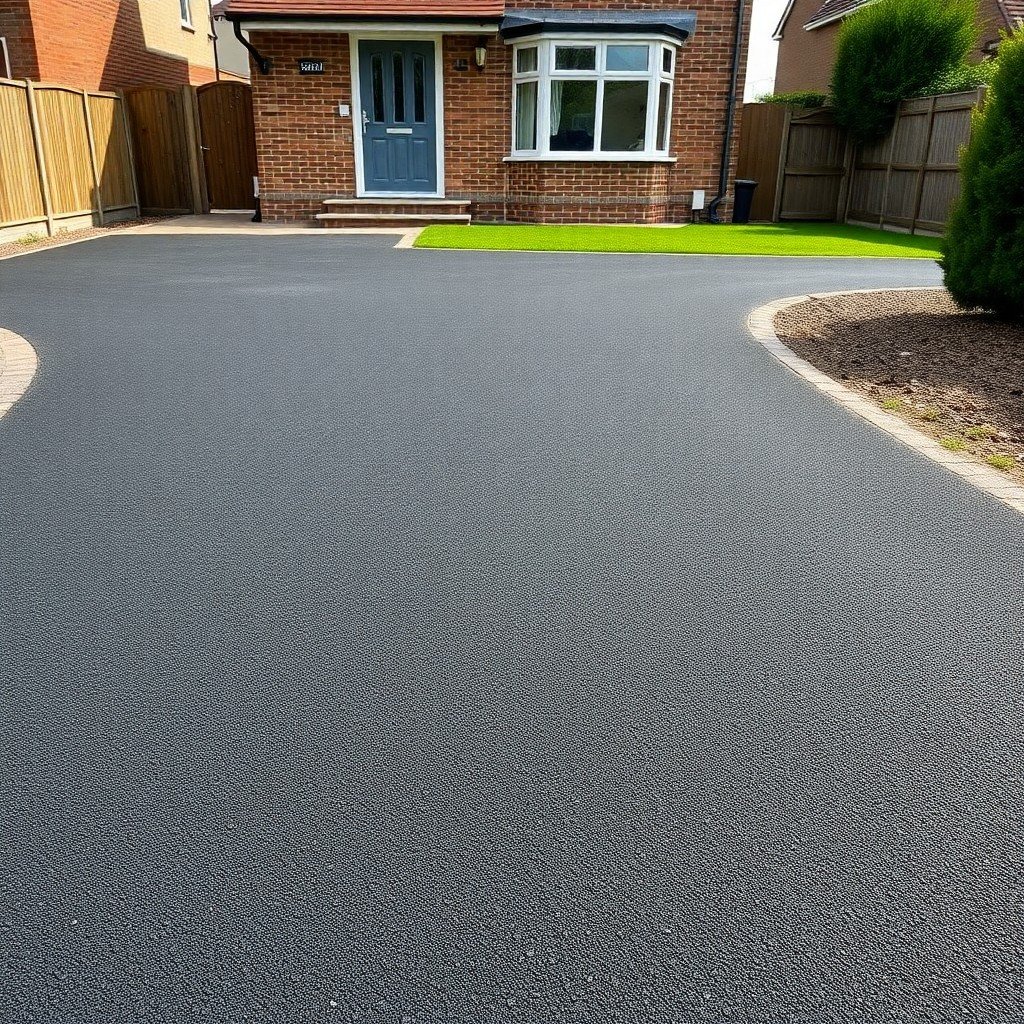
How Long Does Asphalt Take to Dry?
Asphalt does not dry in the conventional sense — it cools. Asphalt (also called tarmac or blacktop) is a mixture of aggregate and bitumen binder that is laid at high temperature (typically 140–165°C) and sets as it cools to ambient temperature. There is no chemical curing reaction; the surface firms up as the bitumen transitions from a workable liquid state to a solid.
This distinction matters because it means drying time is primarily a function of temperature — both the ambient temperature and the heat retained in the asphalt itself.
How Long Before You Can Use It
Foot traffic: 24–48 hours in typical conditions (10–20°C). In cooler weather, the surface firms up faster and may be walkable within 12–18 hours. In hot summer weather (above 25°C), wait the full 48 hours.
Normal vehicles (cars, small vans): 48–72 hours in mild conditions; up to 5–7 days in hot weather.
Heavy vehicles (lorries, skips, large vans): At least 2–4 weeks regardless of weather. Newly laid asphalt remains susceptible to deformation under concentrated heavy loads for several weeks after laying.
Drying Times at a Glance
| Conditions | Foot traffic | Cars / light vehicles | Heavy vehicles |
|---|---|---|---|
| Cold (below 10°C) | 12–24 hours | 48 hours | 4 weeks |
| Mild (10–20°C) | 24–48 hours | 48–72 hours | 4 weeks |
| Hot (above 25°C) | 48 hours | 5–7 days | 6+ weeks |
Why Hot Weather Is the Worst Time
Most people assume newly laid asphalt is at its most vulnerable immediately after laying and becomes safer over the first day or two. In cool weather, this is broadly true. In hot weather, the opposite can apply — a surface that felt firm the morning after laying can soften again in direct afternoon sun, particularly in the first few weeks.
Asphalt has a relatively low softening point. In a UK heatwave, south-facing surfaces in direct sun can reach temperatures that allow the bitumen to deform under point loads. During hot spells in the first summer after laying:
- Parked cars can leave tyre impressions, particularly on the front wheels where the steering is turned
- Motorcycle centre stands and bicycle kickstands can punch into the surface
- Heavy wheelie bins dragged or turned on the surface can score it
These marks are typically permanent once the surface fully hardens. During hot periods, park on the road if possible, or use a board beneath any item that concentrates load on a small area.
The 3–4 Week Vulnerability Window
Even when a new asphalt surface is firm enough for normal use, it remains more susceptible to damage than it will be after full stabilisation. The bitumen continues to harden and its volatile components continue to off-gas for several weeks after laying. During this period:
Avoid:
- Stationary turning of steering wheels (twists and shears the surface rather than simply compressing it)
- Parking consistently in exactly the same spot, which concentrates load in one area
- Sharp point loads — jacks, stands, narrow wheels
Be cautious with:
- Delivery vehicles and vans heavier than a standard car
- Petrol, diesel, and oil spills — petroleum products dissolve bitumen. Clean any spills immediately with an absorbent material (sand or cat litter) and rinse with water.
Sealing: Does It Help, and When?
Asphalt sealant — a coal tar or bitumen-based coating applied to the surface — protects against UV degradation (which causes the characteristic greying and oxidation of aged asphalt), petroleum spills, and frost/freeze-thaw damage. It also refreshes the dark appearance of the surface.
However, sealant should not be applied to new asphalt until the surface has fully off-gassed. Applying sealant too early traps volatiles in the surface and can cause the sealant to fail or remain soft. Most contractors recommend waiting 6–12 months before applying a sealant to new asphalt — not the few weeks that some marketing materials suggest.
After the initial wait, resealing every 3–5 years maintains the surface and significantly extends overall lifespan.

Common Mistakes on New Asphalt
Driving on it too soon in hot weather. The surface may feel firm in the morning but soften significantly by afternoon. If in doubt on a warm day, wait another 24 hours.
Allowing petroleum spills. Even a small fuel spill on new asphalt can soften and penetrate the bitumen binder. Clean immediately.
Sealing too early. Traps volatile compounds and can cause the sealant to fail prematurely. Wait at least 6 months.
Letting heavy vehicles on within the first month. A single pass from a heavily loaded lorry on new asphalt can cause rutting and deformation that requires repair.
The Simple Answer
In typical UK conditions, new asphalt can be walked on after 24–48 hours and driven on by normal cars after 48–72 hours. Avoid heavy vehicles for 4 weeks, avoid the surface during hot spells for the first summer, and do not seal for at least 6 months. Beyond that, leave it alone and let it harden — it gets stronger with time.
About the Author