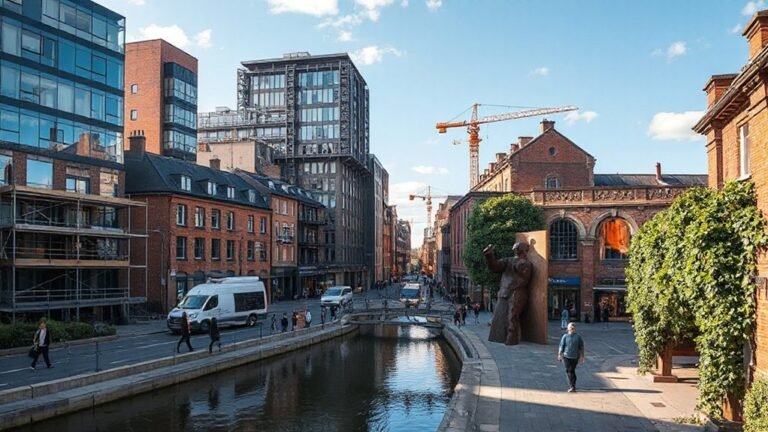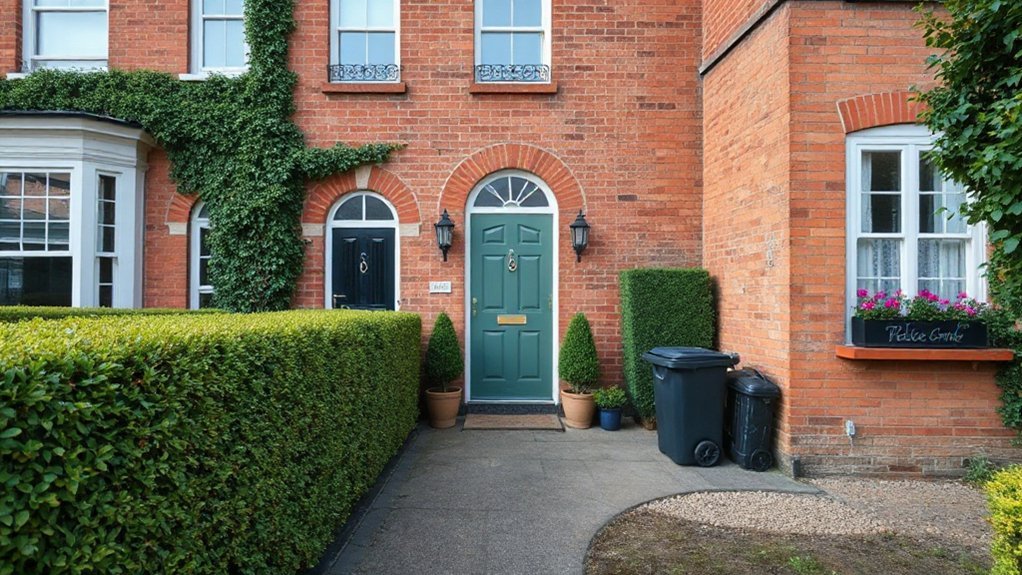
You want kerb appeal that respects your street’s character while inviting new life. Start by spotting your period style, then choose era-appropriate finishes and subtle boundary contrasts that don’t shout. Layer in lighting, fix brickwork, prune borders, and refresh doors with period detail. Small, steady maintenance compounds value and charm, but the path forward isn’t just cosmetic—it’s a conversation with your neighbours and planners, guiding how your streets evolve without losing their soul.
What Kerb Appeal Means on Older UK Streets
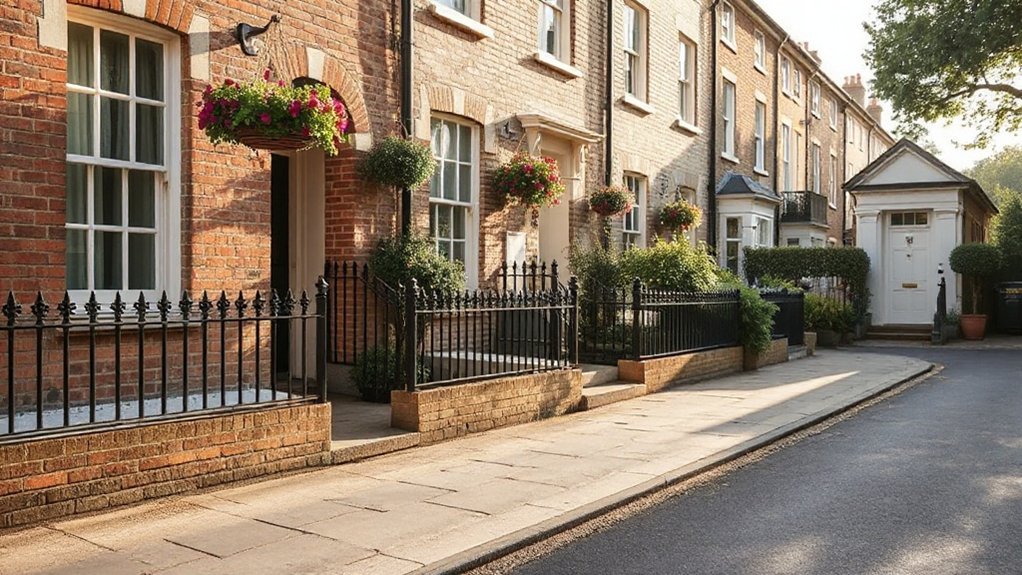
Kerb appeal on older UK streets isn’t just about a pretty façade; it’s about the story each block tells through age, material, and upkeep. You assess public spaces as much as private spaces, noting how street furniture reflections of eras shape daily movement and identity.
Sidewalk aesthetics matter because they guide pedestrians, slow traffic, and invite neighbourly moments at front gates. You measure material choices—cobbled paths, render textures, brick hues—and how maintenance levels preserve character without erasing function.
Community-minded improvement starts with legible, durable design cues: embedded signage, accessible ramps, lighting that reveals texture. When you acknowledge the dialogue between housefronts and the street, you empower residents to sustain harmony.
The goal is cohesive streetscapes that feel both timeless and usable, benefiting everyone who passes by.
Identify Your Period Character and Architectural Style
Identifying your period character and architectural style starts with mapping what your streets were built to express. You chart the fabric of your neighbourhood by noting the dominant motifs, rooflines, cornices, and brickwork that recur across nearby homes. This isn’t guesswork; it’s a technical audit you can share with neighbours and planners.
Look for Victorian aesthetics in ironwork, sash windows, and ornate detailing, then spot Georgian details like proportion, symmetry, and slender pilasters. Create a simple palette of era-signature elements to guide future maintenance, replacements, and planting choices.
Your goal is consistency with intent, not uniform sameness. By clarifying character, you empower collective decisions, preserve identity, and set a clear baseline for authentic kerb appeal that respects history while inviting fresh community use.
Choose Era-Appropriate Paint and Finishes
Choosing era-appropriate paint and finishes follows from mapping your street’s character, but it shifts the focus to how color and surface treatment reinforce that identity. You’ll choose color palettes that echo traditional schemes while respecting modern durability expectations.
Start with subtle base tones that weathering respects, then apply accent hues that highlight architectural details without shouting. Use finishes appropriate to the period—eggshells or matt for walls, semi-gloss for trims—balancing gloss with practicality.
Consider sun exposure, pollution, and moisture when selecting paint durability; you want longevity without frequent repaints. Test sample areas under varying light and seasons, and document results for neighbours’ feedback.
Your goal is a cohesive, legible streetscape that feels intentional, not nostalgic cosplay. When done, curb appeal strengthens community pride and signals respect for the area’s history.
Restore and Protect Brickwork and Masonry
Brickwork and masonry are enduring storytellers for older UK streets, and restoring them thoughtfully preserves that narrative while stopping decay in its tracks. You’ll identify weak mortar, cracked bricks, and rising damp as early warning signals, then plan a targeted approach.
Use lime-based mortars for breathable joints to avoid trapping moisture, and match brick color and texture to maintain historic accuracy. Clean gently—no power washing on fragile surfaces—and remove biological growth with soft brushing and mild cleaners.
Protect profiles, coping stones, and embeddings from water ingress with proper flashing and drainage details. Schedule periodic inspections, re-pointing where needed, and tuckpoint where mortar has failed.
Brick restoration and masonry preservation demand skilled, respectful care to sustain character and value.
Refresh Doors, Windows, and Porches With Period Details
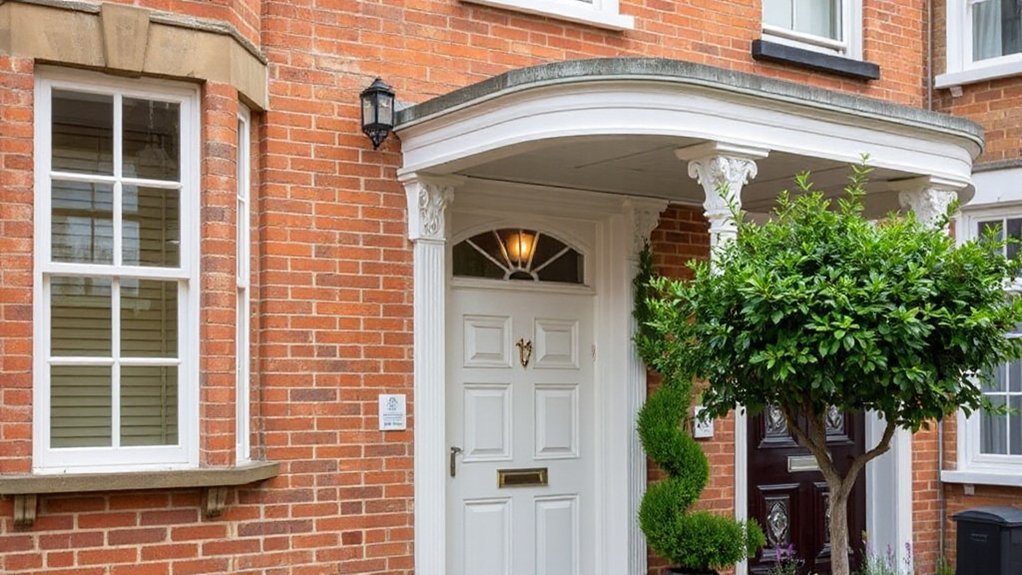
You can start by evaluating your doors and windows for period-accurate details that feel authentic to your street. Consider adding or restoring decorative transoms, multipane sashes, or porch trim to boost character without sacrificing efficiency.
A focused refresh—clean lines, aligned hardware, and subtle color accents—sets a clear, community-minded tone for the whole home.
Refresh Doors Details
Refresh doors, windows, and porches with period details by starting with a careful survey of what already exists and what the original character is trying to convey. You’ll then map authentic features—transom shapes, panel counts, and mouldings—to inform updates that stay true to the era.
Focus on door details that readers notice first: hardware positioning, screws, hinges, and lever designs should align with historical styles, not modern substitutes. Preserve proportion and scale when replacing components; avoid bulky modern fills.
When updating finishes, choose paint finishes that reproduce period sheen and depth, while ensuring durability for UK weather. You’ll document each choice, so neighbours can learn from your method.
The result is a cohesive, respectful heartbeat for your home’s entrance.
Refresh Windows Details
As with doors, opening up windows to their period character starts with a precise survey of what’s present and what the era demands. You’ll map original profiles, glazing patterns, and sash configurations, then identify safer, reversible upgrades that respect historic fabric.
Focus on window frame upgrades that reinforce weather performance while preserving detailing like bead profiles, cills, and architraves. Opt for sympathetic glazing, with slim profiles or period-accurate panes where feasible.
For sash window restoration, plan sash cords, weights, and fasteners to restore authentic movement rather than bulky replacements. Repaint with traditional palettes and durable finishes, then re-seal to deter drafts.
Document choices for community review, so neighbours see a shared commitment to character. Thoughtful restoration strengthens kerb appeal while supporting local heritage stewardship.
Timeless, Low-Maintenance Planting for Kerb Appeal
Timeless, low-maintenance planting avoids high upkeep while delivering lasting curb appeal, so you can enjoy a welcoming, neighbourhood-friendly front garden without constant tending.
You’ll choose hardy, drought-tolerant perennials and evergreen groundcovers that thrive in UK soils, reducing seasonal work while preserving structure. Layer textures: tall grasses, low shrubs, and flowering perennials provide year-round interest with minimal input.
Plant in cohesive swaths to minimize weeding and edge with clean lines for a tidy, timeless look. Use mulch to conserve moisture and suppress weeds, and group plants with similar water needs to simplify maintenance.
Incorporate thoughtful touches like flower arranging-inspired color harmonies and durable garden furniture to extend front-garden usability. This approach sustains charm without overpowering the street, supporting a connected, considerate community.
Boundary Treatments That Define, Not Dominate
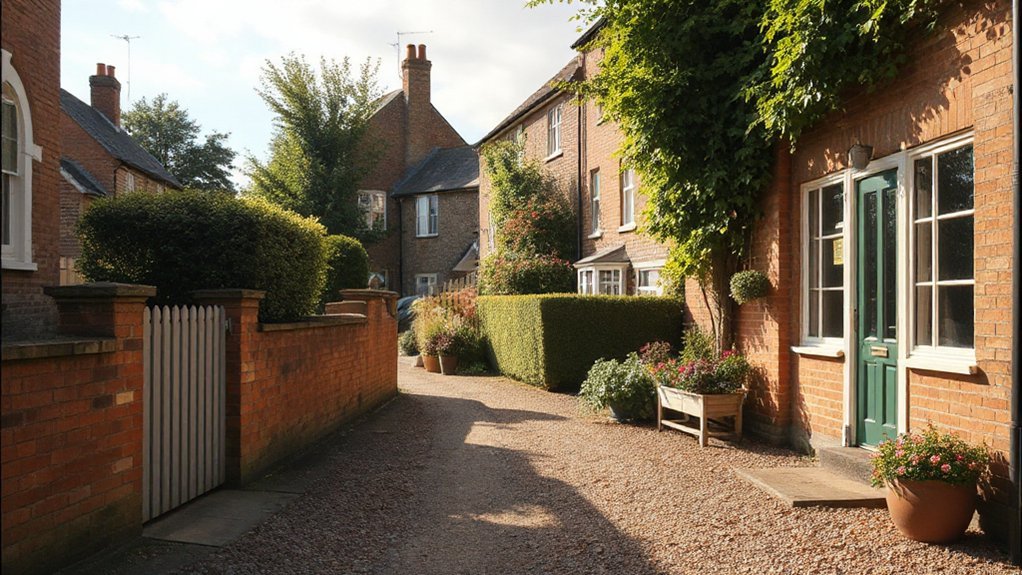
You can define the boundary with subtle materials that sit quietly against the street, letting the yard speak for itself.
Keep garden edges proportionate so boxes and beds read as a cohesive whole, not a wall. This approach balances tactility and openness, inviting neighbourly respect while preserving your home’s character.
Subtle Boundary Materials
Subtle boundary materials quietly shape the edge of a home without shouting for attention. When you choose low-profile options like timber sleepers, simple brick edging, or tight-grained gravel, you define space and encourage soft, legible front gardens.
You’re leveraging tactile texture and color nuance, not obstruction, so foot traffic reads boundaries at a glance. Subtle boundary materials keep sight lines open, integrate with existing hardscape, and reduce maintenance if you pick durable finishes.
Decorative boundary accents—such as slim coping, understated ironwork, or recessed planting slots—add refinement without dominance. This approach supports a cohesive streetscape, boosts curb appeal, and invites neighborly interaction, while preserving the architectural voice of older UK neighbourhoods.
Subtle boundary materials thrive when chosen with proportion, context, and careful drainage in mind.
Proportionate Garden Boundaries
Proportionate garden boundaries define your front yard without encroaching on it, using scale, materials, and alignment that read as quiet, intentional edges. You design around sightlines and rhythm, letting the boundary support the garden layout rather than shout over it.
Choose fencing materials that mirror the street’s character and age, avoiding clash with historic brick or cobblestones. Short, solid plinths or low, open rails create permeability while preserving privacy where needed.
Consider planting as part of the boundary: a row of dwarf shrubs or climbing vines softens hard edges without shrinking the space. Confirm gates align with doorways and driveways, reinforcing orderly movement.
Proportionate boundaries invite neighborly views, reduce maintenance, and maintain a cohesive streetscape that respects older neighbourhood textures.
Lighting for Safety and Charm
When dusk settles, well-placed lighting does more than illuminate— it guides, protects, and invites. You’ll want a layered approach: path lights to define steps, porch lanterns for actuation zones, and low-glow garden uplighters to reveal textures without glare.
Choose warm, color-accurate LEDs to render brick, timber, and foliage honestly. Motion sensors on entrances deter unwelcome visitors and conserve power, while timers keep routines predictable for neighbours.
Low-level lighting along boundaries improves safety without washing out night skies. Integrate garden furniture and decorative accents with subtle illumination to create focal points rather than hotspots.
Use shielded fixtures to minimize glare for pedestrians. Regularly test timers and clean lenses to maintain a consistent, welcoming ambience.
Maintenance Habits for Year-Round Curb Appeal
Think through a simple cadence: Seasonal Maintenance Cadence guides you to schedule tasks before each season, from pruning in spring to gutter checks in autumn.
Pair that with a Seasonal Planting Schedule to keep colour consistent without overloading one month, and a Routine Exterior Cleaning to preserve curb appeal between seasons.
Share your experiences with neighbours to refine these practices and keep the whole street looking deliberate and cared for.
Seasonal Maintenance Cadence
Seasonal maintenance cadence is your year-round plan for curb appeal, turning upkeep into a predictable, manageable routine. You map key tasks to each season, batching actions to save trips and energy.
In spring, you inspect and reseal as needed, clean gutters, and refresh thresholds to greet visitors.
Summer demands proactive watering, pest checks, and shielded plant care, with a focus on garden furniture to prevent weathering.
Autumn prompts leaf clearance, moss control, and drying storage strategies to protect surfaces.
Winter tasks center on frost sheltering for vulnerable features and monitoring driveway materials for salt damage.
Document dates, results, and costs so neighbours can audit progress together.
Tighten routines, share tips, and maintain clear sightlines to preserve communal charm.
Seasonal Planting Schedule
Moving from a year-round maintenance cadence to a seasonal planting schedule keeps curb appeal vibrant with minimal extra effort. You’ll align blooms with British seasons, selecting hardy perennials for succession and low-fuss annuals for quick colour bursts.
Plan spring bulbs for early impact, then layer summer foliage and autumn interest to carry you through frost. Use locally sourced plantings to sustain Victorian charm and reinforce community identity.
Keep soil healthy with mulching and light top-dressing, reducing weed pressure and irrigation needs. Group plants by sun exposure and height to maintain clean sightlines along sidewalks.
Schedule planting times around community events to reinforce neighbourhood pride, and swap in evergreen accents for year-round structure.
The result blends Victorian charm with Georgian elegance, quietly elevating kerb appeal.
Routine Exterior Cleaning
Routine exterior cleaning keeps your home inviting all year long. You’ll build curb appeal by establishing a simple, repeatable routine: dust off gutters, rinse walls, and sweep debris from path edges.
Focus on fascia, downpipes, and brickwork to prevent moisture issues that dull value. Use a soft-pressure cycle on painted surfaces to avoid scratches, and test cleaners on small areas first.
Schedule seasonal washes to maintain uniform shade and texture across materials. Incorporate landscape lighting to highlight clean lines at night and deter grime unnoticed.
Address driveway repairs promptly; cracks invite water ingress and slow the eye’s read of neatness. A tidy exterior communicates care, community, and readiness for neighbourly pride.
Quick Wins to Boost Value Without Erasing History
If you want a noticeable lift without sacrificing character, start with small, smart updates that honor the past while boosting curb appeal. You’ll focus on quick wins that add value without erasing history.
Begin with bold, respectful paint choices that echo heritage tones and contrast trim for modern clarity. Update lighting with warm LEDs and understated fittings that highlight features rather than overwhelm them.
Consider mechanical upgrades—weatherstripping, efficient doors, and simple insulation—that deliver comfort and utility, while staying discreet.
Reinvigorate borders with low-profile plantings and fencing that nods to original design.
Prioritize Historical preservation in planning discussions, and weave in modern upgrades where they enhance usability.
These steps create energy, cohesion, and a street-ready face that respects the community’s roots.
Frequently Asked Questions
How Can I Assess the Exact Period of a Property Quickly?
You can approximate the period quickly by starting with an architectural assessment, checking for key features, and cross-referencing records; combine historical accuracy notes with on-site measurements, then consult local archives for confirmation.
Which Permissions Are Needed for Typical Exterior Changes?
You’ll need planning permissions for most exterior changes and listed building consent if your home is listed; confirm local authority rules, submit plans, and respect conservation guidelines to protect character while you improve kerb appeal.
How Often Should Brick Repointing Be Done in Damp UK Climates?
Brick maintenance in damp UK climates usually needs repointing every 12–20 years, sooner if mortar shows cracking or moisture intrusion. Follow a conservative repointing schedule, inspecting annually to protect structural integrity and community aesthetics.
What Are Affordable, Period-Accurate Lighting Options?
You can choose affordable, period-appropriate lanterns or vintage street lamps, installing LED filaments for efficiency. You’ll preserve charm, meet modern safety codes, and foster community pride, while easily exchanging bulbs and maintaining authentic aesthetics with minimal disruption.
How Do I Prevent Modern Renovations From Eroding Character?
You guard architectural integrity by resisting flashy upgrades; instead, preserve historic preservation standards, consult experts, and integrate respectful tweaks. You’ll foster a community-minded approach, balancing function with tradition, ensuring modern renovations don’t erode the past.
Conclusion
You know your street best, so don’t outsource curb appeal to gimmicks. Preserve the brick, props, and provenance, while sneaking in modern rumblings—LEDs, weatherproof paints, tidy borders. If you chase drama, your neighbors will chase you with a broom. By honoring era, you quietly outshine trend-led façades and still welcome the future. The joke’s on sameness: your period charm, refreshed with care, becomes the community’s shared heartbeat—quiet, practical rebellion against forgettable façades.
About the Author