Imagine a narrow terraced hallway where a hidden wardrobe slides out from an alcove and a fold-out desk tucks away behind a door. You’ll find that built-in storage fits tight footprints without crowding the room, turning under-stair space into useful, seamless functions. You’ll want practical ideas, measurements, and material ideas to plan your own layouts—but there’s more to evaluate before you decide what fits best. Keep going to map out your options.
Why Built-In Storage Fits Terraced Homes (Pain Points & Benefits)
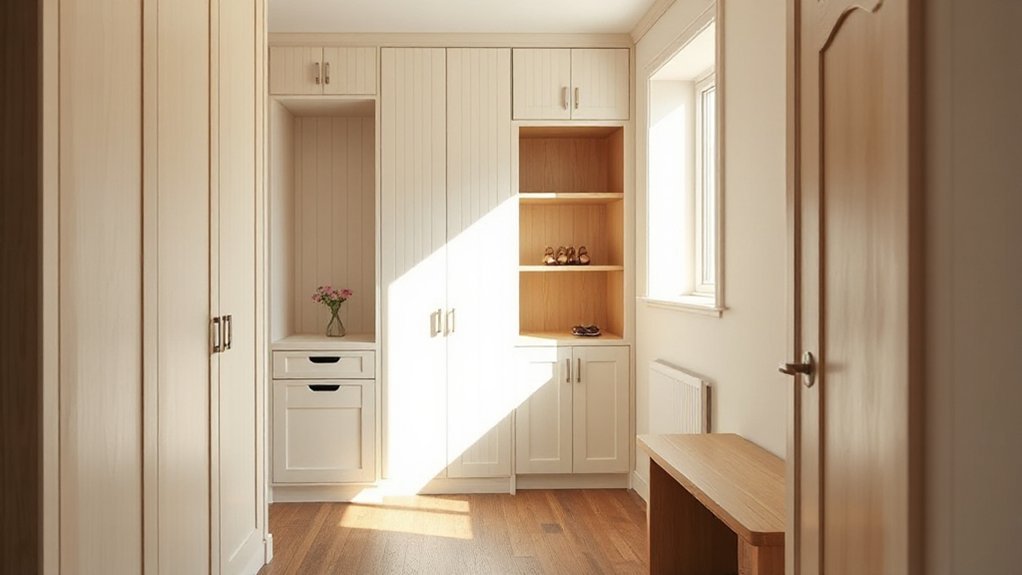
Terraced homes often suffer from cramped, awkward storage, but built-in solutions can reclaim every inch without eating into living space. You’ll gain practical organization that fits narrow footprints and awkward corners, reducing clutter without sacrificing floor area. Built-ins align with existing architecture, creating cohesive lines that feel spacious rather than cramped. You benefit from targeted storage: high shelves, shallow bins, and integrated hampers that stay out of sight yet within reach. Creative color schemes help differentiate zones and make units feel lighter, while reflective surfaces bounce light to brighten hallways and stair landings. Eco friendly materials keep your project responsible without sacrificing durability or style. The result is a tailored, low-maintenance system that yields more usable space, better flow, and a calmer, more functional home.
Under-Stairs and Alcove Solutions That Save Space
Under-stairs and alcove spaces are prime candidates for clever, space-saving solutions that don’t intrude on living areas. You can transform these gaps into functional storage without sacrificing style or flow, using smart layouts, adjustable shelves, and slim profiles that blend with your decor. Choose pieces that emphasize accessibility and tidy lines, so clutter never feels overwhelming. Creative color schemes help distinguish zones while keeping the room cohesive, and decorative storage accents add personality without bulk. With careful planning, every inch becomes usable, from pull-out drawers under the stairs to recessed alcove cabinets that hide everyday items.
- Install pull-out drawers under the stairs with labeled organizers
- Add shallow alcove shelving with decorative baskets
- Use a compact bench with hidden storage
- Incorporate a slim, multipurpose cabinet
- Highlight edges with a bold, cohesive color scheme
Hidden Wardrobes and Slender Cabinets for Narrow Layouts
Hidden wardrobes and slender cabinets are ideal for narrow layouts, offering full storage without crowding floorspace. You can maximize every inch by using tall, slimline units that blend with walls and corridors. Choose recessed or handleless doors to keep lines clean and visually expand the area. Hidden compartments inside these wardrobes add versatility: pull-out organizers, adjustable shelves, and discreet jewelry drawers keep items accessible yet concealed. In tight hallways, mount wardrobe interiors with mirrored panels to reflect light and create depth. Slimline units work well beside beds or beside seating, providing clothing storage or media concealment without imposing bulk. Select durable finishes and soft-close hardware to maintain a calm, organized look throughout the home.
Tuck-Away Multifunction Surfaces: Pop-Outs, Benches, and Desks
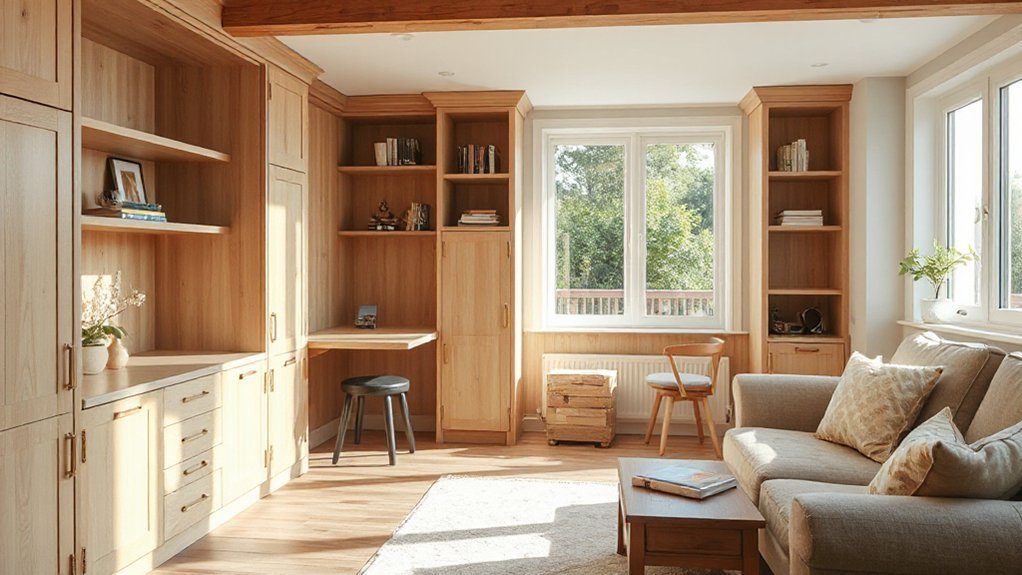
To maximize space without sacrificing function, tuck-away surfaces fold out when you need them and tuck away when you don’t. You’ll find pop-outs that become work surfaces, benches that hide under desks, and desks that slide into cabinetry, all designed for tight layouts. These pieces use convertible furniture concepts to adapt to daily needs and guest stays alike, keeping rooms open and uncluttered. Focus on modular compartments that snap into place, allowing you to customize depths and heights as your tasks shift.
- Pop-out counter extensions for kitchens or nooks
- Benches with integrated storage under seats
- Desks that collapse into wall panels
- Hidden charging stations within fold-out surfaces
- Sliding panels that reveal small workspaces or craft areas
Wall-to-Wall Shelving and Vertical Storage Strategies
Wall-to-wall shelving and vertical storage maximize every inch of a room by leveraging tall, uninterrupted wall space. You optimize a small footprint by stacking modular units from floor to ceiling, creating a cohesive library or display wall without intruding on floor area. Choose modular units that can reconfigure as needs change, so you’re never stuck with unused sections. Integrate decorative niches within the lineup to host plants, art, or daily essentials, adding texture without clutter. Use open shelving for accessibility and closed modules to tame visual noise. In tight terraces, run shelving along hallways or alcoves to guide traffic naturally. Keep cords hidden behind rails or panels, and guarantee sturdy mounting to support heavier items. This approach delivers flexible, streamlined storage with a clean, integrated look.
A Practical Plan: Measuring, Budgeting, and Choosing Materials
Before you pick a plan, measure twice and budget once to keep your project on track. You’ll set clear goals, sketch exact dimensions, and list must‑haves before choosing materials. A practical plan keeps scope tight and decisions deliberate, not reactive. Prioritize space efficiency, load paths, and finish options that suit terraced or semi‑detached layouts. When budgeting, factor installation time, contingencies, and delivery windows. Material durability guides your long‑term value, so compare warranties and performance in real use. Custom finishings add personality but require precise color, texture, and edge details to avoid mismatches down the line.
- Define exact measurements and tolerances for all modules
- Compare materials by durability, maintenance, and warranty
- Budget for labor, delivery, and contingencies
- Align finishes with overall interior style
- Plan phased installation to minimize disruption
Frequently Asked Questions
How Do Built-In Storage Options Affect Home Resale Value?
Storage customization can boost resale value, especially when you tailor layouts to your space. It improves flow and utility, and aesthetic integration helps buyers picture daily life, making features feel seamless rather than aftermarket.
Which Materials Are Best for Moisture-Prone Terraced Spaces?
Did you know 60% of moisture damage happens in terraced spaces? Use moisture resistant materials and humidity control solutions to keep built-ins durable, preventing warping and mold. You’ll enjoy safer storage that stays pristine in damp conditions.
Can Built-Ins Improve Acoustic Privacy in Thin-Wall Layouts?
Yes, they can help: you’ll block sounds with smart soundproofing techniques and choose wall insulation options that seal gaps, add mass, and dampen impact, making thin walls feel roomsier and more private without bulky layouts.
Are There Safety Considerations for Heavy or Tall Installations?
Yes—structural stability matters as you install tall or heavy units, and fire safety comes first. You balance weight with studs, anchors, and proper clearance, then seal edges to prevent gaps; otherwise, you risk failures, fires, or collapses.
How Long Does Installation Typically Disrupt Daily Living?
Installation timeline varies, but you’ll usually see a few days to a couple of weeks of disruption, depending on scope. You should factor in renovation planning: designate temporary storage, protect spaces, and schedule critical tasks around daily routines.
Conclusion
You’ve got the space, you just need to think vertically and convert corners into clever storage. Start with a practical plan, measure twice, budget once, choose durable materials. Let under-stairs nooks and alcoves breathe by concealing clutter with hidden wardrobes and slender cabinets. Fold-out desks and pull-out drawers keep surfaces clean, while wall-to-wall shelving scales with your needs. Think of your home as a well-organized canvas—every inch a brushstroke toward a calmer, more spacious you.
About the Author