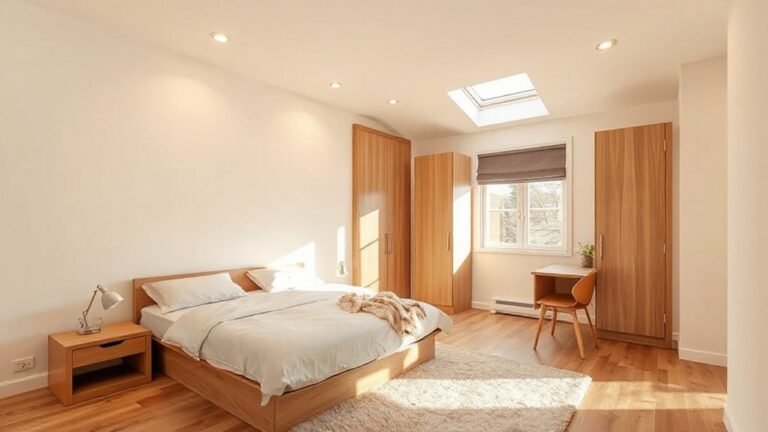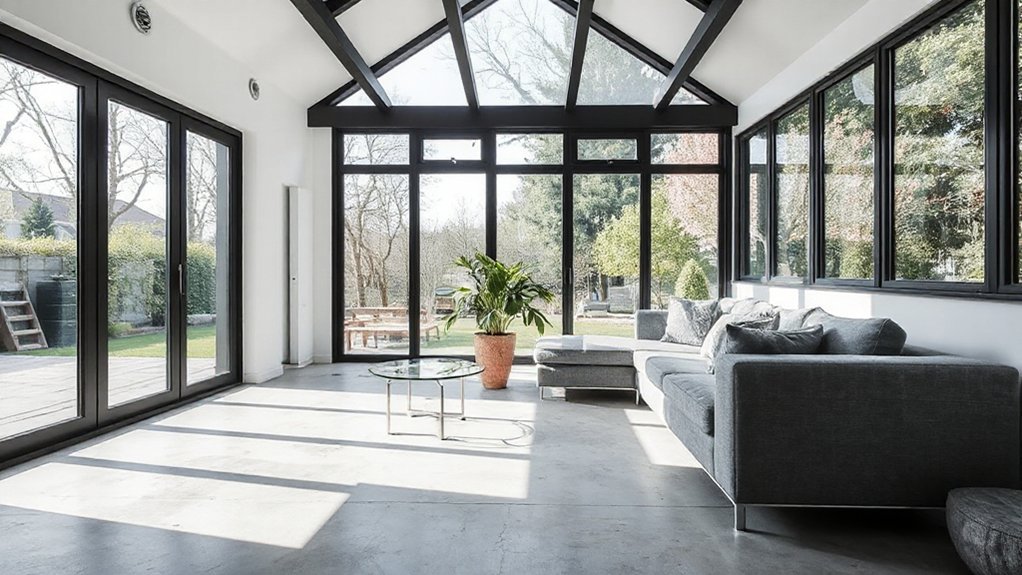
A modern, minimal conservatory hinges on a light, neutral palette, low-profile furniture, and ample vertical sightlines. You’ll keep surfaces clear with hidden storage and let natural light define the space, while restrained textures—linen, wool, concrete, and wood—add refinement without clutter. Plan open layouts that breathe, then add botanical accents to echo architectural lines. The balance you seek isn’t accidental; it’s deliberate, with every choice nudging you toward calm. Ready to start shaping it.
Is Minimalist Conservatory Living Right for You?
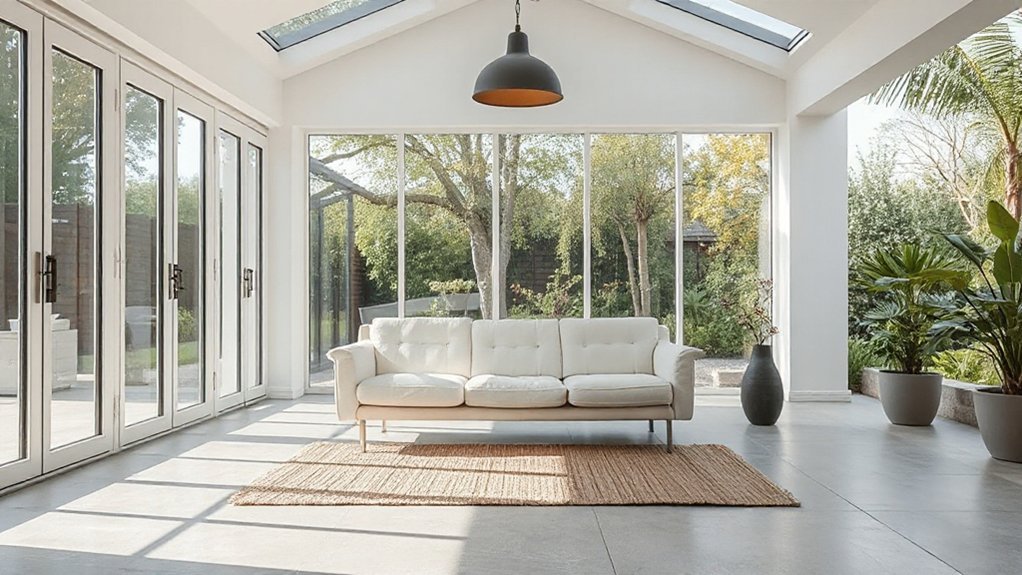
Is minimalist conservatory living right for you? You weigh light, openness, and function against your daily routines. If you crave uncluttered lines, easy maintenance, and spaces that blend with the outdoors, this approach fits.
Yet, consider how much natural light you tolerate and how you’ll handle seasonal variation. Color psychology matters: pale neutrals can feel calm; cooler tones may improve focus; warmer accents prevent sterility.
You’ll also assess furniture proportions—scale, footprint, and legibility of each piece affect room balance. Aim for a restrained set of essentials that serve multiple tasks.
If you value efficiency over ornament, and you’re prepared to edit continuously, minimalist conservatory living can deliver clarity, timelessness, and purposeful daily rhythm without sacrificing warmth.
Define a Light, Neutral Palette That Feels Airy
Start with an airy, light-neutral base that reflects natural daylight and keeps the space feeling open.
Pair quiet, airy neutrals with light-reflective surfaces to amplify brightness.
Then add a soft textural layer for subtle depth.
This balance prevents glare while preserving a clean, modern minimal vibe.
Airy Neutral Palettes
Airy neutral palettes define the mood of a modern conservatory: light walls, warm whites, and soft beiges that bounce natural light without settling into starkness. You curate space with restrained contrast, letting furniture silhouettes and architectural lines speak.
Choose finishes that echo dusk and daylight—matte plaster, chalky timber, and pale stone. Keep textiles lightweight and breathable, avoiding heavy patterns.
Where color enters, do so with purpose: bold accent pieces punctuate with clean, saturated notes, not overwhelm. Integrate statement lighting to sculpt atmosphere; a sculptural pendant or slim arc lamp frames scenes without shouting.
Maintain quiet spacing, so negative space breathes. The result feels effortless, polished, and expansive, inviting calm, focus, and a sense of effortless modern living.
Light Reflective Surfaces
Light reflects softly off surfaces to amplify daylight without glare. You curate light with restrained materials, keeping a light, neutral palette that feels airy. Mirrored surfaces bounce brightness while remaining understated, so corners stay calm and uncluttered.
Choose glossy finishes for furniture edges, tabletops, and cabinetry to catch glimpses of the room without shouting. Avoid heavy textures; let color and form lead. Keep palettes grayscale or pale with subtle warmth from wood or stone.
Consistent tones across walls, floors, and soft accents create cohesion, not contrast. Prioritize clean lines, simple silhouettes, and tangible quality. Reflective elements should feel intentional, not decorative clutter.
Pair mirrors and polished surfaces with ample natural light to sustain a serene, modern mood.
Soft Textural Layering
Texture underpins airiness. You define soft textural layering with a light, neutral palette that breathes space. Aim for tactile restraint: a mix of linen, bouclé, silk, and cotton in whites, creams, and pale grays.
Keep patterns minimal and scale small to preserve calm. Introduce subtle textural contrast via weave, nap, and sheen rather than bold color shifts. Pair fabrics and surfaces to reinforce color coordination across the room: a pale sofa, a textured throw, a woven rug, and ceramic accents in the same light spectrum.
Limit accessories to sculptural forms that repeat the palette. Let daylight reveal texture without crowded detail. This approach sustains an airy mood while guiding the eye through calm, cohesive layers.
Choose Low-Profile Furnishings to Preserve Sightlines
Low-profile furnishings keep sightlines clear and the conservatory feeling open. You’ll choose pieces that sit close to the floor, with slim profiles and simple silhouettes.
Prioritize low-back sofas, compact armchairs, and narrow coffee tables that don’t interrupt views of the outdoors. Opt for leggy frames and light-colored upholstery to minimize visual weight.
Avoid oversized storage or bulk-in shelving that crowd the room. In your furnishing choices, favor modular options that can retreat when not in use, preserving openness.
Keep surfaces streamlined, with hidden storage or wall-mounted units to reduce clutter. This approach supports sightline preservation while maintaining function.
The result is a calm, cohesive space where natural light dominates and the landscape remains legible.
Emphasize Texture: Linen, Wool, Concrete, and Wood
If you’ve kept sightlines clear with furniture that stays lean, you can begin to layer tactility without crowding the room. Emphasize texture by pairing linen, wool, concrete, and wood in deliberate, restrained ways. Let linen’s crisp touch offset wool’s warmth, then ground the scheme with cool concrete and organic wood grains.
This is about textural contrast executed with purpose, not clutter. Use material pairing to create subtle rhythm: a woven throw over a suede-backed chair, a concrete coffee table softened by a linen runner, solid wood shelving with wool felt accents.
Avoid competing finishes; choose a restrained palette to let each material breathe. The goal is cohesion through tactile variation, not ornament—every surface earns its place.
Plan Open, Circulation-Friendly Layouts
To keep the conservatory flowing, prioritize open sightlines and clear pathways that invite movement. Plan layouts that minimize obstructions and maximize function. Position furniture to encourage circulation, not crowd the room, with at least 60–90 cm of walking space between pieces.
Use modular, low-profile seating to maintain openness and flexibility for different activities. Align major focal points with sightlines toward indoor lighting and, where possible, toward outdoor views.
Create zones: a viewing nook, a work spot, and a small dining area, each with direct access to pathways. Favor paths that form gentle curves rather than sharp turns.
Avoid heavy thresholds or oversized rugs that interrupt flow. Keep clutter discreet to preserve calm, precise lines and a breathable, minimal atmosphere.
Bring in Nature: Plants and Natural Light
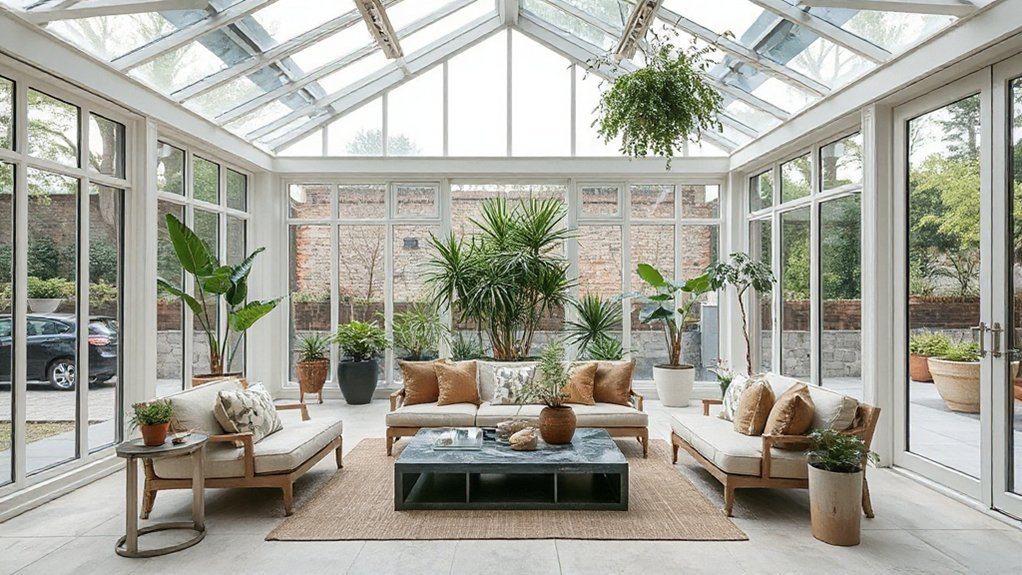
Natural light fuels the room, so position glazing and seating to maximize daylight without glare.
Place greenery where it thrives in bright indirect light, creating a focal rhythm that feels effortless.
Balance openness with greenery to keep the space calm, cohesive, and visually energizing.
Natural Light Maximization
Maximize the light that enters your conservatory by choosing expansive glazing and strategically placing plants to enhance brightness. Let the glass do the work: lean toward large panes, minimal frames, and clear views that reduce visual clutter.
Align seating and surfaces to catch sun across the day, avoiding deep shadows. Use light, reflective finishes on furniture to bounce illumination without adding bulk.
Introduce vintage accents sparingly—an aged mirror, a slim brass console, or a ceramic bowl—that catch and distribute daylight without overpowering the space.
For ambience, select statement lighting that complements daylight, such as a sleek pendant or linear fixture, keeping it visually lightweight.
Name neutrality in plant placement matters less than access to windows and open sightlines. Maintain restraint, let natural brightness define the room.
Lush Plant Placement
Placing lush plants in a conservatory isn’t about crowding; it’s about shaping microclimates. You map light pockets, then place specimens to vignette rather than fill.
Choose architectural species with architectural lines—monstera, ferns, and palms—so foliage reads as structure, not clutter. Pair larger leaves with slender stems to create visual rhythm that breathes, not competes.
Use botanical accents to cue the room’s tempo: a few high-impact focal plants, minimal soil, clean pots. Leverage vertical space by building a quiet vertical garden that doesn’t overwhelm sightlines, letting sunlight skim through foliage without casting harsh shadows.
Keep progressions seamless: plant groupings align with seating zones, so greenery enhances function. The result is a calm, curated ecosystem that feels intentional and refined, not busy.
Master Hidden Storage to Keep Surfaces Clear
Hidden storage is the backbone of a modern conservatory. You’ll declutter surfaces by choosing discreet solutions that blend with the room’s lines. Start with hidden compartments within seating benches, coffee tables, and built-ins, so everyday items stay out of sight.
Opt for concealed storage that maintains a clean silhouette without handles or gaps catching light. Choose lift‑top lids, hollow ottomans, and plinth drawers to minimize visual noise while maximizing accessibility.
Use uniform fronts in the same finish as surrounding cabinetry to preserve the minimalist mood. Integrate wireless charging, charging hubs, and low-profile baskets inside hidden compartments to keep tech and miscellany orderly.
Regularly assess what you truly need; rotate essentials to prevent overfilling.
Subtle Decor and Texture for Quiet, Elevated Style
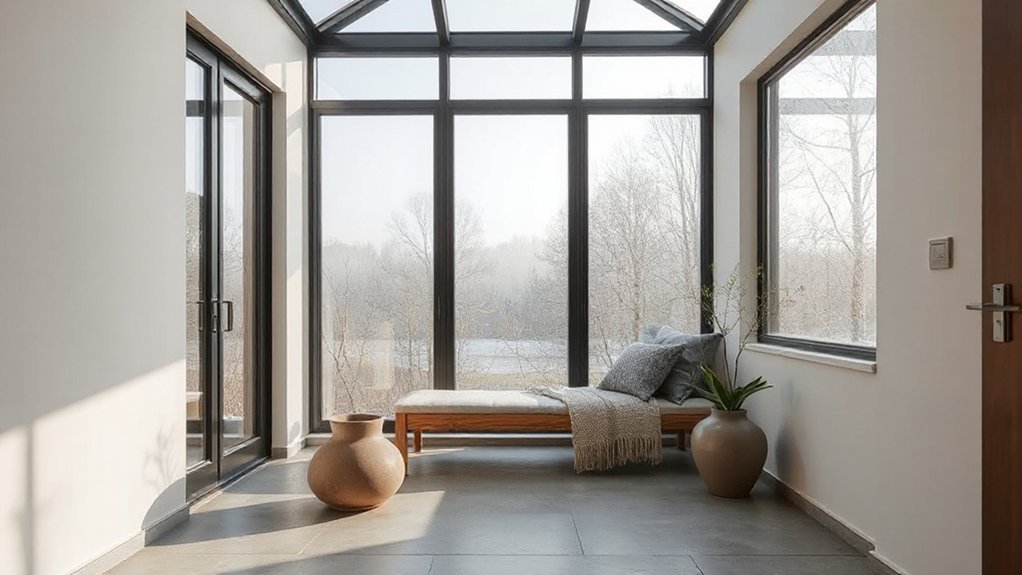
Textures and subtle decor elevate a modern conservatory without competing with its clean lines. You’ll lean into tactful texture: a matte rug, a linen throw, and a woven basket that adds depth without shouting.
Choose neutral tones as your base, then introduce color through cushions and small accessories, guided by color psychology to evoke calm or focus. Keep surfaces clear; let texture instead tell the story.
Wall art placement should be deliberate—one or two restrained pieces framed with generous negative space, hung at eye level to avoid visual clutter. Prioritize quality over quantity, and let light play across subtle materials to create quiet contrast.
Avoid busy patterns; aim for cohesion, refinement, and a sense of quiet, elevated restraint.
Frequently Asked Questions
How Can I Minimize Glare on Glass Surfaces?
Install window treatments and glare reducing films to minimize glare on glass surfaces. You’ll control light, preserve views, and keep spaces comfortable. Use layered shades with tinted films for ideal balance, reducing glare without washing out your decor.
What Lighting Layers Suit a Modern Conservatory?
Brighten with layered contemporary lighting, you should combine recessed ambient, task, and accent options. You’ll meet glare control with dimmers. Use sleek fixtures; focus beams, not spill. This approach feels contemporary, balanced, and precise for your conservatory.
Which Flooring Works Best With a Neutral Palette?
Neutral flooring works best; choose tones that harmonize with walls and furniture. Prioritize color coordination and thoughtful furniture placement, keeping lines clean and spacing breathable for a cohesive, modern feel that stays uncluttered.
How Do I Choose Durable, Low-Maintenance Textiles?
Durable, low-maintenance textiles? Opt for eco friendly fabrics and stain resistant textiles, you’ll stay chic and carefree. You choose easy-care fibers, machine-washable options, and tight weaves, so spills wipe away and colors stay vibrant, effortlessly.
Can I Integrate a Dining or Work Zone Without Clutter?
Yes—you can, by using multi functional furniture and concealed storage to form a dining or work zone without clutter. Choose doors, tucked shelves, and slim profiles; you’ll slide between tasks smoothly while keeping lines clean and calm.
Conclusion
A conservatory in blue-gray light feels like a quiet morning sculpture: clean lines, breathing space, barely-there texture. You move through it, sightlines open, plant life guiding your gaze toward the window’s glow. Soft wool, linen, and concrete whisper rather than shout, while hidden storage keeps the surface honest and calm. Nature leaks in gently, never crowded, never loud. Stay restrained, let light do the talking, and the room will feel elevated, effortless, intact.
About the Author