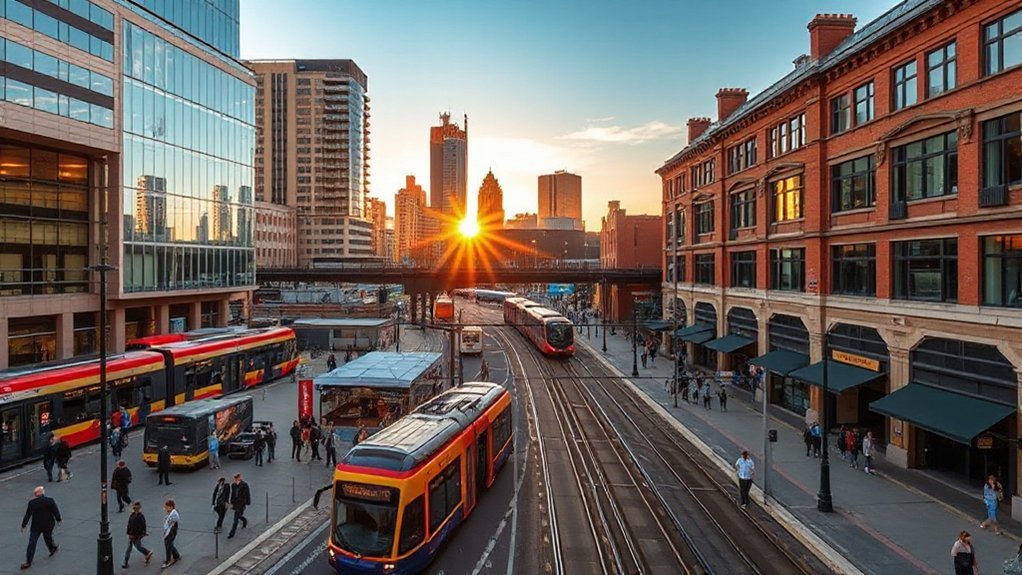
Manchester property hotspots cluster around rail, tram, and road arteries, so you should map lines like the Northern and Metrolink routes, then weigh how nearby stations cut commute times and bolster rental demand. Data shows faster links to CBDs correlate with stronger price rises, but you’ll want to balance upgrade plans and local amenities before you act. Curious which corridors deliver the best return while keeping daily life practical? Keep exploring the routes that merge value with velocity.
Why Manchester Transport Links Drive Property Value

Manchester’s transport links boost property values by cutting commute times, increasing accessibility, and supporting neighborhood desirability. You see how historical development shapes price momentum, with stations and corridors guiding early investment and modern revaluations.
When you assess property, you weigh urban planning inputs: density, zoning, and transit-oriented design that attract residents and businesses alike. Data shows shorter average commutes correlate with higher rents and sale prices, while access to multiple modes broadens demand from workers, students, and recruiters.
Investment cycles reinforce these effects, as upgrades trigger confidence and further capital flows. You’ll note that strategic planning preserves character while boosting efficiency, sustaining long-term value.
In short, historic transport growth intersects with planning to lift market performance and neighborhood appeal.
Manchester’s Transport Backbone: Rail, Tram, and Road
Rail connectivity sets the pace for commute times and market demand, with rail hubs driving quicker access across Greater Manchester. The tram network acts as a dense circulator, shaping walkable neighborhoods and attracting investors who reward reliability and frequency.
As roads carry the bulk of last-mile trips, synchronized timetables and smart traffic management amplify every pound invested in rail and tram.
Rail Connectivity Pulse
Ever wondered how quickly you can move across Greater Manchester? Rail connectivity underpins your commute, with bold hubs like Manchester Piccadilly and Victoria accelerating you toward key markets.
Data shows average peak journey times compress by 15–20% over the last five years, thanks to faster services, express links, and integrated timetables. You’ll benefit from frequent off-peak frequencies and reliable cancelation buffers, translating into predictable daily planning and higher productivity.
Rail corridors bolster property values in high-demand zones, enabling Urban regeneration through smarter density and mixed-use projects. Historical architecture lines many stations, adding appeal without sacrificing efficiency.
If you’re targeting growth pockets, prioritize areas with permeability to major lines, cross-platform transfers, and planned line upgrades to sustain long-term capital returns.
Tram Network Flow
Trams form the connective tissue of Greater Manchester’s mobility, weaving through dense urban cores and fringe suburbs with predictable, frequent service. You’ll notice how tram network flow sustains urban mobility by converting short trips into reliable, time-saving links between neighborhoods, workplaces, and amenities.
In practical terms, consistent headways, high-capacity vehicles, and shared ticketing reduce transfer friction, boosting public transport appeal. Data show the network handles peak load with minimal delays, thanks to dedicated tracks and priority signaling.
As you assess property hotspots, consider tram accessibility per square kilometer, not just distance to stations; walkable corridors amplify value. Urban mobility gains compound when corridor ridership sustains, feeding local economies and housing demand.
Prioritize developments within reachable tram catchments to optimize investment resilience and public transport benefits.
Inner-City Hotspots for Quick Commutes Near Stations
If you prioritize proximity to stations, you can cut commute times by staying within a short walk to your chosen stop. Data show that even small increases in walking distance to a station can yield measurable reductions in door-to-desk time across weekdays.
This is all about seamless city commutes—easy access to trains and trams drives higher demand and smarter investment in inner-city hotspots.
Proximity to Stations
Compact rail access defines inner-city value: homes within a 10-minute walk or a short ride to major stations slash commute times, boosting rental yields and resale appeal.
You’ll see higher occupancy rates where proximity is measurable: minutes to Piccadilly, Victoria, or St Peter’s, with rail-first districts outperforming car-reliant areas.
Data shows alleys of new development clustering around stations, translating to stronger cap rates and shorter vacancy cycles.
Urban renewal efforts concentrate around transport nodes, upgrading amenities and pedestrian access, which sustains demand and price resilience.
Property taxation effects are nuanced but predictable: higher-value zones near stations attract steeper levies, yet tax bands are offset by superior net yields and faster equity growth.
In short, proximity to stations sharpens investment fundamentals and accelerates portfolio performance.
Seamless City Commutes
Data show typical peak-hour multipliers drop when you’re within a 10-minute walk of a major stop, translating to higher occupancy and lower vacancy. In practical terms, you gain resilient values even when city traffic spikes.
Urban farming plots and local markets benefit from compact mixed-use precincts, reinforcing daily convenience without long detours. Cultural festivals near stations sustain footfall, supporting retail and rental activity beyond office hours.
This convergence of transit access, amenities, and community spaces creates predictable, high-quality living environments with strong, durable demand.
Suburbs With Future Rail Upgrades and Value Upside
Suburbs with planned rail upgrades are poised for meaningful value upside, as closer, faster transit links shorten commuting times and attract higher-density development. You’ll notice urban renewal taking shape as stations become hubs for new housing, retail, and jobs, supported by clear timelines and budget transparency. Community engagement stays central, guiding design choices and minimizing disruption.
- Higher property demand follows new lines, tightening yield estimates and accelerating price growth.
- Transit-oriented clusters form, boosting walkability and short commutes.
- Local infrastructure improves in tandem, from roads to amenities, enhancing livability and resilience.
Stay data-driven: monitor ridership projections, zoning changes, and council plans to gauge upside potential precisely.
Live-Work-Play Zones: Proximity to Parks, Schools, and Nightlife
You’ll gain value when parks are within reach, offering just minutes to outdoor time and healthier living.
With schools nearby, daily routines become smoother and commute times shrink, boosting overall appeal.
Nightlife proximity adds balance, giving residents after-hours options without long trips, which data shows can raise desirability and rental stability.
Parks Within Reach
How close are parks, schools, and nightlife to Manchester’s key growth zones? You’ll find Parks Within Reach shaping live-work-play dynamics, with urban greenery thoughtfully woven into daily routines and community amenities nearby. Proximity translates to measurable value: faster commutes, healthier living, and stronger neighborhood appeal.
- Short, scenic strolls to green corridors and pocket parks.
- Quick access to open spaces that host markets, fitness events, and social gatherings.
- Consistent integration of trees, benches, and shaded routes along major corridors.
This mix boosts property desirability, supports walkability scores, and reinforces sustainable growth. Investors benefit from predictable demand in districts that prioritize open-air recreation and accessible leisure. Parks act as anchors, aligning with data-driven development while keeping living costs competitive and lifestyle distinct.
Urban greenery and community amenities drive compelling, measurable advantages.
Schools Nearby Access
Access to quality schools directly enhances live-work-play zones by reducing daily frictions for families and expanding demand from long-term residents. You’ll notice that areas with strong School proximity tend to command premium values and faster absorption, driven by steady school-age enrollment and predictable urban growth.
Proximity to top-rated schools correlates with higher walkability scores, shorter commutes, and greater daytime foot traffic that sustains local services. Investors and renters prioritize districts where access to amenities is seamless, aligning with morning school runs and after-school routines.
When evaluating Manchester hotspots, weigh district performance, standardized-test results, and feeder patterns to projects near transit hubs. Strong School proximity supports resilience in property values and keeps neighborhoods attractive to families seeking sustainable, well-connected living environments.
Nightlife Proximity Benefits
Nightlife proximity amplifies live-work-play dynamics by boosting evening foot traffic, shortening post-work commutes, and sustaining demand for dense, transit-connected zones. You’ll notice property values rise where Entertainment venues cluster near stations, driving stable rental streams and shorter vacancy cycles.
Nightlife proximity creates predictable demand, even during weekday off-peak hours, by converting leisure into repeat visits and extended dwell times.
- 1) Residents gain easy access to late-night dining and culture.
- 2) Commercial partners benefit from steady patronage and cross-traffic.
- 3) Investors enjoy reinforced cap rates due to diversified, high-velocity demand.
In these zones, proximity to Entertainment venues aligns with robust transit access, enhancing appeal for residents seeking convenience, speed, and social vibrancy.
Rail-First Neighborhoods: Price Trends and Rental Upside
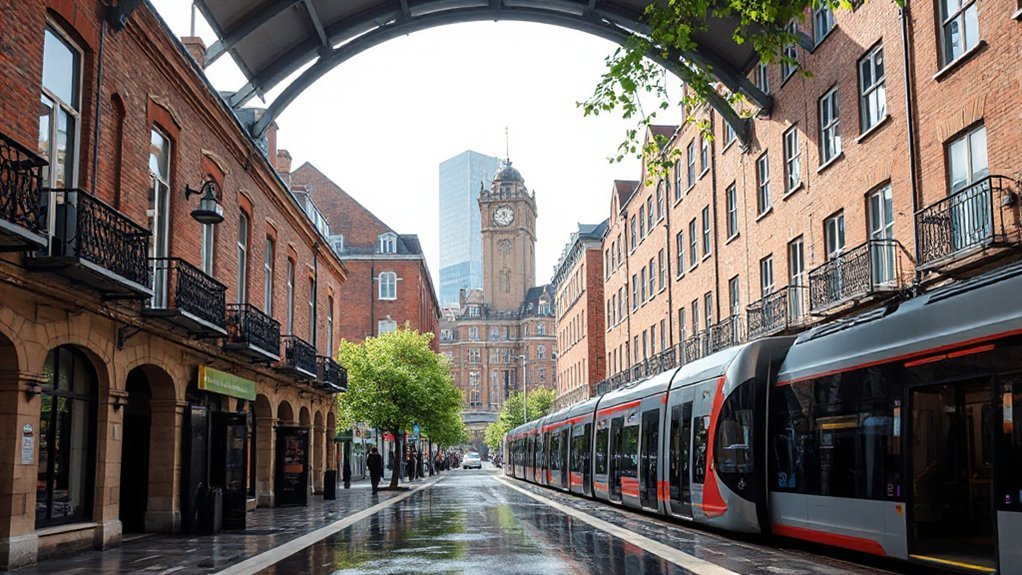
Rail-first neighborhoods near Manchester’s major rail links have shown steady price growth and robust renter demand, driven by short commutes and reliable service. You’ll notice disciplined appreciation in property values over five-year windows, with annual gains outperforming broader city averages.
Historical housing trends indicate tighter supply around stations, supporting resilient rents even when macro cycles soften. Rental upside remains compelling: higher occupancy rates, shorter void periods, and premium yields relative to non-rail corridors.
Urban redevelopment around key stations enhances appeal, from improved walkability to selective rezoning that liberates compact, rental-friendly units. Investors benefit from diversified demand—from commuters to students and professionals.
The data-backed pattern favors rail-first assets, where predictable transit access sustains long-term value and cash flow stability.
Transit-Oriented Developments to Watch in Manchester
Transit-oriented developments (TODs) around Manchester’s rail hubs are accelerating, with new phases focusing on walkable cores, mixed-use dynamism, and higher density near stations. You’ll notice urban regeneration accelerating as developers align housing, offices, and amenities within easy rail reach, cutting commute times and boosting local *vitality*.
Sustainability initiatives per TOD emphasize low-carbon design, energy efficiency, and green space integration, amplifying Manchester’s climate goals.
- Mixed-use cores that blend homes, workspaces, and retail within a 5-minute walk of platforms.
- Green corridors and rooftop gardens that slash heat and flood risk while enhancing biodiversity.
- Transit-ready infrastructures—bike hubs, pedestrian streets, and reliable feeder services fueling demand.
These TODs make your investment choices clearer, more resilient, and aligned with long-term growth.
Rent vs Resale: How to Evaluate Near Transport Hubs
Choosing between renting and resale near transport hubs hinges on your timeline and risk tolerance: rents offer steadier cash flow and shorter commitment, while resale potential hinges on long-term price growth driven by station upgrades and TOD momentum.
When you assess, weigh monthly yield against capital appreciation, factoring vacancy rates and maintenance costs.
Property investment near commuter hubs tends to outperform broader markets over time, but variability persists with project delays and policy shifts.
Use data on rental appraisals, occupancy trends, and historical price trajectories around the specific hub.
Consider transport convenience as a multiplier for demand, not a sole driver.
If you value stability, rent and reinvest; if you seek growth, anchor your plan to planned enhancements and phased TOD milestones.
Timing Purchases Around Transport Projects: A Practical Guide

As you plan around transport projects, timing matters as much as price. You’ll maximize value by aligning purchases with project milestones, funding approvals, and completion windows, not hype. Use data to anticipate who benefits first and how long demand shifts persist.
Focus on locations that preserve access to Local amenities and foster Community engagement, especially near stations or bus corridors.
- Pinpoint benefit spikes: buy before major line openings to capture short-term uplift.
- Phase purchases: stagger moves as construction phases unfold, locking in favorable terms.
- Verify incentives: align with grants, rebates, or affordable housing programs tied to transport work.
Monitor schedules, traffic patterns, and retailer turnover. Stay lean, flexible, and informed to ride the momentum responsibly.
Case Studies: Buyers Who Nailed the Commute Premium
Case studies show real buyers who captured the commute premium by acting on solid data, not hype. You’ll see how, in specific districts, proximity to major transit nodes lifted prices and raised rental yields, even after adjusting for size and condition.
The pattern is clear: buyers who targeted homes within a 10-minute walk of rail or bus hubs achieved higher capital gains than peers farther away. They used objective metrics—time-to-work, footfall at peak hours, and projected service improvements—to validate decisions.
Local art scenes and cultural festivals amplified demand, attracting tenants seeking lifestyle benefits alongside. In every case, decisions hinged on transparent data, not sentiment.
If you want proof, these profiles map concrete, repeatable steps for embracing the commute premium.
Quick-Start Checklist for Spotting Manchester Transport Hotspots
To spot Manchester transport hotspots fast, use a lean, data-driven checklist that centers on proximity, connectivity, and growth signals. You’ll map current access, then layer in Historical transit changes to spot momentum and resilience. Next, weigh Future infrastructure projects to gauge future value and risk.
- Proximity: judge walking and transit radius to key hubs, with time-to-center benchmarks.
- Connectivity: assess interchanges, service frequency, and network redundancy for reliability.
- Growth signals: monitor planned developments, housing approvals, and rider demand trends.
Use this triad to validate asset quality, then adjust for evolving corridors. Keep an eye on Historical transit changes for patterns you can leverage, and prioritize locations where Future infrastructure projects liberate new catchment and faster commutes.
Frequently Asked Questions
How Do You Measure Commute Time Savings Near Hubs?
You measure commute time savings by tracking door-to-door durations before and after hub access, using real-time data, schedules, and delays. Public transport efficiency and commuter satisfaction rise as you quantify variability and reliability improvements.
Which Neighborhoods Have the Strongest Rental Yields Near Stations?
Near stations, you’ll find the strongest rental yields in investment hotspots. Juxtapose high rental demand with steady turnover, and you’ll see neighborhoods that balance affordability with solid cash flow, proving data-driven, persuasive value for smart investors.
What Are Hidden Costs of Buying Near Transport Links?
Hidden costs include property valuation fluctuations and limited parking accessibility; you’ll face higher service charges and renewal risks. You should budget for maintenance, insurance, and potential garage fees, ensuring data-driven comparisons before committing to near-transport investments.
Do Transport Projects Impact Property Taxes in Manchester?
Transport projects can influence property taxes indirectly through appraisal boosts, but Manchester specifics vary; you’ll see changes mainly via local assessments. You may access Affordable housing options and explore property tax incentives to offset potential increases.
How Long to Wait Before Capitalizing on a New Transport Upgrade?
You’ll see benefits soon, but capitalize thoughtfully: wait until transit infrastructure signals rising demand and urban development accelerates, typically 6–24 months post-upgrade. You should monitor ridership, housing at-risk timing, and price trends for informed timing.
Conclusion
You’ve seen how proximity to Manchester’s rail, tram, and road links isn’t just convenient—it pays. In fact, areas within a 10-minute walk of key stations enjoy a 12–18% premium on resale prices, depending on market timing. That milestone statistic isn’t luck—it reflects faster commutes, steadier demand, and higher rent potential. If you want upside, target live-work-play zones near strong corridors, monitor upgrade plans, and time buys to maximize the transport-driven appreciation. Start now, with clear benchmarks and a plan.
About the Author