Looking At Property For Sale In Brighton — What Are Any Possible Pitfalls?
Brighton and Hove is one of the most consistently attractive property markets on the south coast of England — and one of the most distinctive. A city of 290,000 people, it offers London commuter appeal (just over an hour to Victoria or London Bridge), a cultural and lifestyle identity unlike any other British city, and a housing stock dominated by Victorian and Regency period architecture that buyers from across the country actively seek out.
The average property price in Brighton and Hove in 2025 sits at £440,000–£460,000, well above the UK national average, with Victorian and Edwardian terraces in sought-after areas like Hanover and Fiveways commanding £450,000–£550,000. It is not a cheap market, and the competition for well-presented properties in good locations is intense.
But Brighton’s property market carries specific pitfalls that are not always apparent from a viewing and are not adequately covered by a standard valuation. Its coastal location, its dense concentration of period properties — many converted into flats — its numerous conservation areas, its leasehold-heavy market, and the specific construction vulnerabilities of its Victorian and Edwardian stock all create a category of risks that buyers coming from other markets may not be adequately prepared for.
This guide covers the most important pitfalls to understand before you buy in Brighton — the issues that surveyors, solicitors, and experienced local buyers encounter repeatedly, and that are worth knowing about before you fall in love with a property and commit to a purchase.
1. The Leasehold Market and Its Specific Pitfalls
Brighton’s housing stock is heavily weighted toward Victorian and Edwardian terraces that have been converted into flats over decades, often by private landlords and small developers rather than by professional housing associations. This conversion history creates a leasehold flat market with characteristics that buyers — particularly those new to the city or coming from markets where houses dominate — find more complex than anticipated.
Lease length: The most immediately critical check for any flat purchase in Brighton. Leases below 80 years are a serious problem — the cost of extension rises sharply at this threshold (due to marriage value becoming payable to the freeholder), and many mortgage lenders will not lend on leases below 70–75 years. A surprising number of converted Victorian flats in Brighton were given relatively short leases at the time of conversion in the 1970s and 1980s, and those leases have been running down ever since. A lease that was 99 years in 1985 is 39 years in 2026. Always confirm the precise remaining term before viewing, and factor in lease extension cost if it is below 90 years.
Absentee freeholders: Many Brighton conversions were created by individual landlords who retain the freehold of the building and grant long leases on individual flats. These freeholders may now live abroad, may have died leaving the freehold in a contested estate, or may be entirely uncontactable. An unresponsive freeholder creates practical problems: service charge disputes cannot be resolved, consents required under the lease (for alterations, subletting, pets) cannot be obtained, and a statutory lease extension — to which leaseholders are legally entitled — requires serving formal notices on the freeholder. An untraceable freeholder makes this process significantly more complex and expensive.
Service charges and building maintenance: The service charge regime for converted Victorian terraces is often informal, disputed, and poorly documented. Unlike a purpose-built block managed by a professional managing agent with audited accounts, a three-flat conversion in Hanover may be managed by a residents’ committee with no formal structure, no reserve fund, and no transparent accounting. When the roof needs replacing or the external brickwork needs repointing — both of which will eventually be required — the cost allocation between leaseholders can become contentious. Request three years of service charge accounts before proceeding with any flat purchase and ask specifically about the building’s maintenance history and planned major works.
Building safety for taller blocks: The Building Safety Act 2022 has created significant compliance obligations and mortgage difficulties for leaseholders in blocks above 11 metres, particularly those with historic cladding. Brighton has a number of postwar tower blocks — including the large panel system (LPS) construction blocks in Hollingdean, Whitehawk, and Kemp Town that Brighton and Hove City Council has been buying back due to structural concerns related to Grenfell-era building safety reviews. Before purchasing any flat in a block above 11 metres, confirm the EWS1 position and the building’s registration with the Building Safety Regulator. For LPS-construction blocks in particular, exercise extreme caution — some are effectively unmortgageable.
2. Damp: Brighton’s Most Pervasive Property Problem
Damp is among the most common property defects in the UK, but in Brighton it takes on additional dimensions because of the coastal climate, the density of solid-wall Victorian construction, and the specific vulnerabilities of converted basement flats.
Coastal exposure and solid wall construction: Brighton’s Victorian terraces are built of solid masonry — typically London stock brick or local flint and brick — without the cavity that modern construction uses to break the path of moisture through the wall. In prolonged wet weather, the masonry absorbs moisture that can penetrate to the internal surface. This is compounded by Brighton’s coastal location: salt-laden sea air and persistent driving rain from the south-west create a more aggressive moisture environment than inland locations experience. Where brickwork has spalled or pointing has loosened — common in unremaintained Victorian properties — the risk of penetrating damp increases substantially.
Rising damp: Victorian properties often have damp proof courses of slate, lead, or low-absorption brick at low level. These original DPCs, now 130 or more years old, can be compromised by structural movement (which cracks slate DPCs), by the bridging of the DPC by raised ground levels or later construction, or by new extensions added without adequate connection to the existing DPC. Rising damp — the upward migration of ground moisture through capillary action — is a chronic issue in Brighton Victorian properties and can be expensive to address properly. Over 60% of period properties in the region still depend on original walls and damp proof courses that are either missing or fatigued from more than a century of wear.
Basement flats: Brighton has an unusually high density of basement and lower-ground-floor flats, particularly in the Regency and early-Victorian terraces of Kemp Town, Hove, and the central areas. These flats present specific and substantial damp risks. The structural waterproofing of Victorian basement construction was typically minimal — these spaces were coal cellars and domestic service areas, not habitable rooms — and many conversion basement flats suffer from chronic groundwater ingress, inadequate drainage, and condensation problems that are expensive and technically challenging to resolve properly.
A damp report flagged by a surveyor regularly knocks 5–20% off the asking price in competitive local markets, but this is not a reason to seek out a discounted property with damp — it is a warning that you need to understand the nature and extent of any moisture problem before committing to a purchase. Never buy a Brighton property with any moisture indication without a specialist damp survey from an independent damp surveyor (not a damp-proofing company, whose commercial interest lies in recommending treatment).
3. Structural Issues Specific to Brighton’s Victorian Stock
The structural characteristics of Victorian terrace construction create specific vulnerabilities that buyers should understand — and that a competent Level 3 (Full Building Survey) will assess but a Level 2 (HomeBuyer Report) or mortgage valuation may not identify.
Shallow foundations and subsidence: Victorian and Edwardian terraces typically have shallow brick foundations — often no more than 300–600mm deep — rather than the deep concrete strip or piled foundations of modern construction. These shallow foundations are more susceptible to differential settlement, particularly where drainage has failed and ground moisture has eroded the soil around the foundations over time. Cracked drainage is one of the most common causes of foundation movement in Brighton’s dense Victorian terrace stock — a hairline crack in a drain can release water that erodes the soil supporting the foundations over years, eventually causing differential settlement.
Look specifically for diagonal cracking at corners, above doors and windows, and in stairwell walls. These can indicate ongoing settlement — but they can also indicate historic movement that has now stabilised. The key distinction requires professional assessment: most old buildings show some evidence of past movement, and the critical question is whether it is active or historic.
Wall tie failure in postwar and interwar properties: Properties built between approximately 1920 and 1980 — including many of Brighton’s interwar semis and postwar blocks — used metal cavity wall ties that corrode and fail over time, particularly in the aggressive coastal marine environment. Corroded wall ties lose their structural function, allowing the external and internal leaves of a cavity wall to separate and bow. This is invisible from the interior and from casual external inspection — it requires a specialist survey using a ferrous scanner. Over 65% of regional lender downgrades and failed building insurance claims in coastal Brighton tie back to combined structural and moisture failure in this category of property.
Bowed and leaning end walls: End-of-terrace properties are particularly vulnerable to bowing side walls because, unlike front and rear walls which are connected to floor joists, side walls in Victorian terraces often have limited lateral support. Cast-iron spreader plates and tie bars were commonly inserted to restrain leaning walls — these are often visible externally as circular or elongated iron plates on the brickwork and are not necessarily a cause for alarm (they may represent a successful historic repair), but they warrant investigation.
Chimney stacks and flaunching: Victorian terraces have multiple chimney stacks, often with deteriorating lead flashings, cracked flaunching (the mortar cap), and failed pointing. Failed flashings and flaunching allow water ingress at the roof junction — one of the most common sources of internal damp in Brighton Victorian properties. The condition of chimney stacks is rarely visible from ground level at a viewing and requires either binoculars, a drone survey, or a roofer’s ladder inspection to assess properly.
4. Conservation Area and Planning Restrictions
Brighton and Hove has an extensive network of conservation areas covering large parts of the city — including almost all of the Victorian and Regency terraces that buyers are most attracted to. Conservation area designation imposes additional constraints on what you can do to a property without planning permission.
In a conservation area, works that would ordinarily fall within Permitted Development rights — certain extensions, alterations to windows and doors, external cladding — require a specific form of planning consent (Conservation Area Consent) or a prior approval process. Permitted Development rights are also removed by Article 4 Directions, which Brighton and Hove City Council has applied across several areas to protect the architectural character of the city’s Victorian and Regency streets.
What this means for buyers:
- Replacing windows requires planning permission in most of Brighton’s conservation areas. UPVC is almost invariably refused; timber sash windows closely matching the original style are the required standard, and the cost difference matters when budgeting a refurbishment.
- External alterations — adding rooflights to the front elevation, changing the front door style, painting previously unpainted brickwork, rendering — all require consent and may be refused.
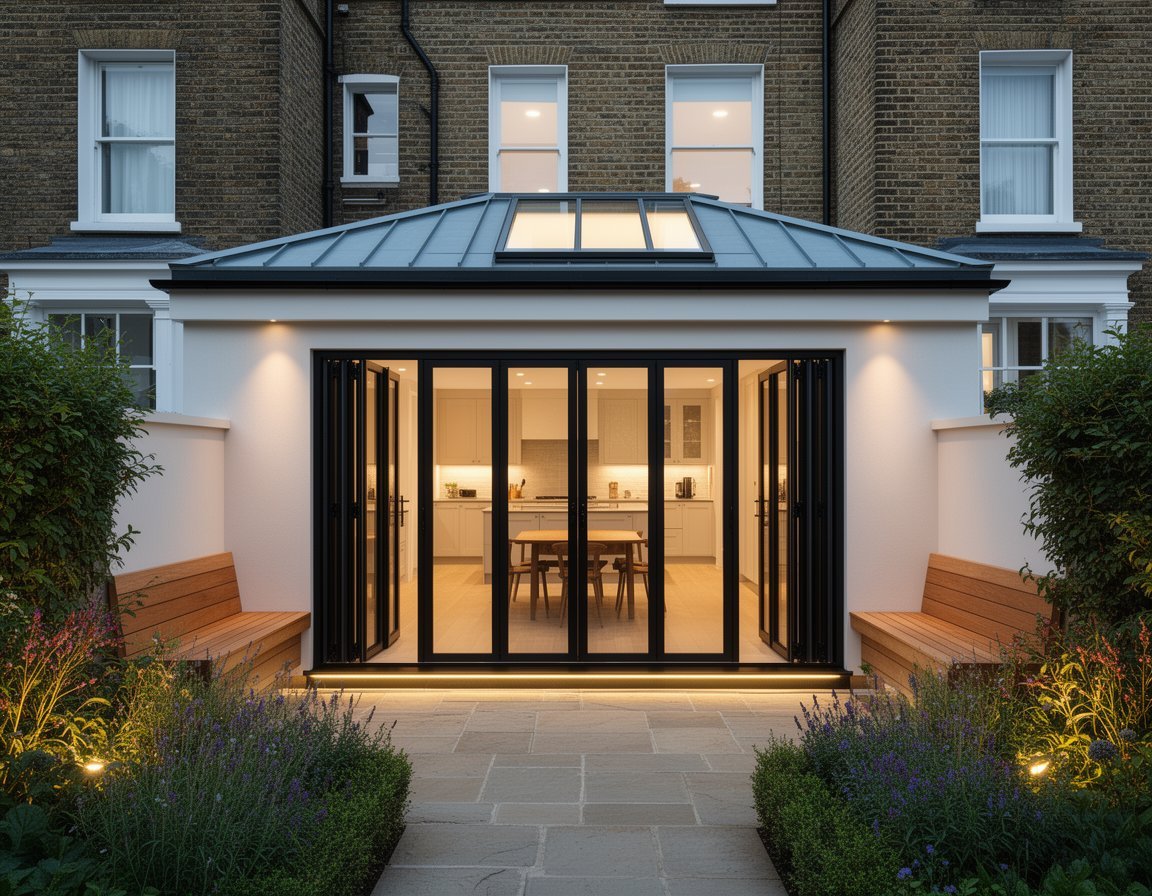
- Side and rear extensions are possible in conservation areas but require design quality and material specification that the planning authority’s conservation officer will scrutinise carefully. Pre-application advice from the council’s planning department before purchasing a property with extension intentions is strongly recommended.
- Solar panels on the front elevation of a listed or conservation area property are typically refused. Rear-facing panels may be acceptable subject to design and visibility assessment.
For properties in conservation areas, confirm the specific Article 4 Direction scope with the council before proceeding. The Brighton and Hove City Council planning portal shows conservation area boundaries and current Article 4 Directions.
Listed buildings are a further category — English Heritage lists approximately 1,500 buildings in Brighton and Hove at Grade I, II*, or II. A listed building requires listed building consent for internal and external alterations that affect its character. The obligations and costs of listing are significant, and the potential for listed building enforcement action (which carries criminal penalties) is real if work is undertaken without consent.
5. The Party Wall Dimension
In Brighton’s densely packed Victorian terraces, the party wall between your property and your neighbours’ is a frequent source of complication during purchase — both because of works that have already been carried out by previous owners and because of works that you or your neighbours may want to carry out in the future.
Previous works without party wall agreements: If the previous owner or any earlier owner extended at the rear, excavated a basement, or carried out structural work affecting the party wall without the required Party Wall Award, those works may have been done without adequate protection for the neighbouring properties. This can create liability and insurance issues that only emerge during conveyancing. Your solicitor should ask specifically about any works affecting the party wall and request confirmation of whether a Party Wall Award was obtained.
Neighbours’ works: If a neighbour is planning a rear extension, loft conversion, or basement excavation, you will receive a Party Wall Act notice requiring you to consent or dissent. Dissenting triggers a Party Wall Award process that protects both parties — and which costs money. Buyers in Brighton should check whether any Party Wall notices have been served or received relating to the property being purchased and understand the implications.
Basement conversions: A particular concern in central Brighton, where basement conversions of Victorian terraces have been prevalent and where — in some cases — excavation has been carried out to a depth that undermines party wall foundations. More concerning is when neighbours carry out illegal basement conversions, thereby undermining party walls and causing dangerous structural cracking in adjoining houses. The Party Wall Act is specifically designed to prevent this, but enforcement after the fact is slow and expensive.
6. Short-Term Let and Licensing Issues
Brighton has one of the most active short-term let and holiday rental markets outside London — and a regulatory environment that is evolving in response to concerns about the impact of Airbnb-style letting on the housing stock and on neighbour amenity.
For buyers intending to purchase for investment purposes with short-term letting in mind, several considerations apply:
Leasehold restrictions: Many Brighton flat leases contain restrictions on subletting for periods of less than six months. Using a leasehold flat for Airbnb without checking and complying with the lease terms is a breach of the lease that can ultimately result in forfeiture — the loss of the lease itself.
Planning consent: Changing the use of a residential property to short-term holiday letting may require planning permission as a change of use (from C3 residential to C1 hotel/guest house), depending on the frequency and nature of the letting. Brighton and Hove City Council has been actively considering Article 4 Directions to control short-term letting in certain residential areas.
Mortgage terms: Most residential mortgages do not permit short-term letting. If you are purchasing with a residential mortgage and intending to use the property for Airbnb, you are almost certainly in breach of your mortgage terms.
7. Parking, Permit Zones, and Car Ownership
Brighton’s council has made urban design and sustainable transport a policy priority, which in practice means that parking for residents in most of central Brighton is tightly controlled, expensive, and — for new buyers — not always guaranteed.
Brighton operates an extensive network of Resident Parking Zones (RPZs) covering most of the Victorian terrace areas most popular with buyers. A resident parking permit allows you to park in your zone’s designated bays — but the permits are annual, subject to availability, and not automatically available in all zones (some areas are oversubscribed). The key point is that a parking permit is not guaranteed simply by virtue of living in the zone; check availability specifically for the property you are considering.
For buyers considering flats in new-build developments or converted properties, note that many developments are “car-free” — meaning the council has conditions the planning permission on the basis that residents will not be issued parking permits. Buying a flat in a car-free development while owning a car creates a practical problem with no easy solution.
8. Getting the Right Survey
Given the specific risks described in this guide, the standard Level 2 HomeBuyer Report is unlikely to be adequate for any Victorian or Edwardian property in Brighton — and is certainly not adequate for a basement flat, a leasehold flat with moisture concerns, or any property with visible structural movement.
A Level 3 Full Building Survey is strongly recommended for:
- Any Victorian or Edwardian terrace or semi-detached house
- Any basement or lower-ground-floor flat
- Any property with visible cracks, moisture stains, or evidence of previous structural work
- Any property that has been extended, converted, or significantly altered
Brighton and Hove has a number of RICS-registered surveyors with specific experience of the city’s Victorian and coastal construction stock. Choosing a surveyor with this local expertise — who can identify whether a crack pattern is typical of Brighton’s particular geological and construction conditions or represents a genuine cause for concern — is more valuable than simply instructing the cheapest available surveyor.
A specialist damp survey from an independent damp surveyor (not a damp-proofing company) should be commissioned separately if the building survey identifies any moisture concerns.
The Brighton Market in Context
None of the pitfalls described in this guide should be read as a reason not to buy in Brighton. The city’s property market continues to attract strong buyer demand, and the combination of period character, coastal lifestyle, and London accessibility makes it one of the most compelling residential environments in the UK.
But Brighton is not a market that rewards the unprepared buyer. Its leasehold stock is complex, its Victorian construction requires knowledgeable assessment, its coastal environment creates moisture challenges specific to the location, and its conservation area and planning context imposes constraints that buyers from other markets may not expect. The buyers who do best in Brighton are those who invest in proper professional advice — a RICS Level 3 surveyor, a solicitor experienced in local conveyancing, and in relevant cases a specialist damp surveyor — before committing their money.
The pitfalls are real, well-documented, and largely avoidable with adequate preparation. The properties are often genuinely wonderful. Approaching the market with both enthusiasm and rigour is the right combination.
About the Author