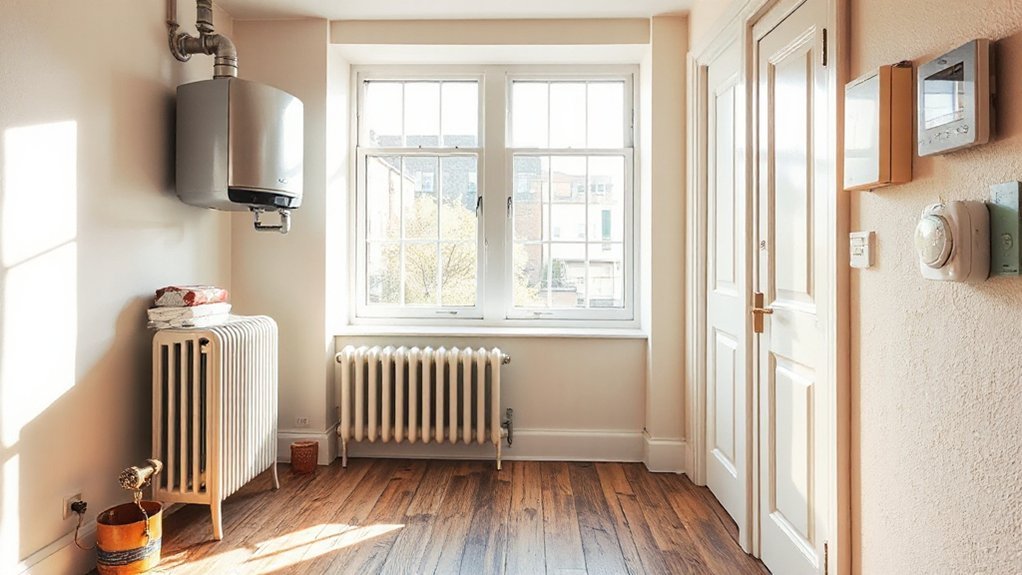
Last winter, you found one corner of your flat stayed chilly while the rest warmed unevenly. You’ll weigh electric heat pumps versus hydronic radiators, then balance cost, history, and comfort with targeted insulation and draft-proofing. The choices aren’t just about tech—they’re about compatibility with older structures and future-proofing. There’s a practical path that keeps the building’s character and your bills in check, but you’ll want to weigh each step before you decide.
Why Older Flats Are Tricky to Heat
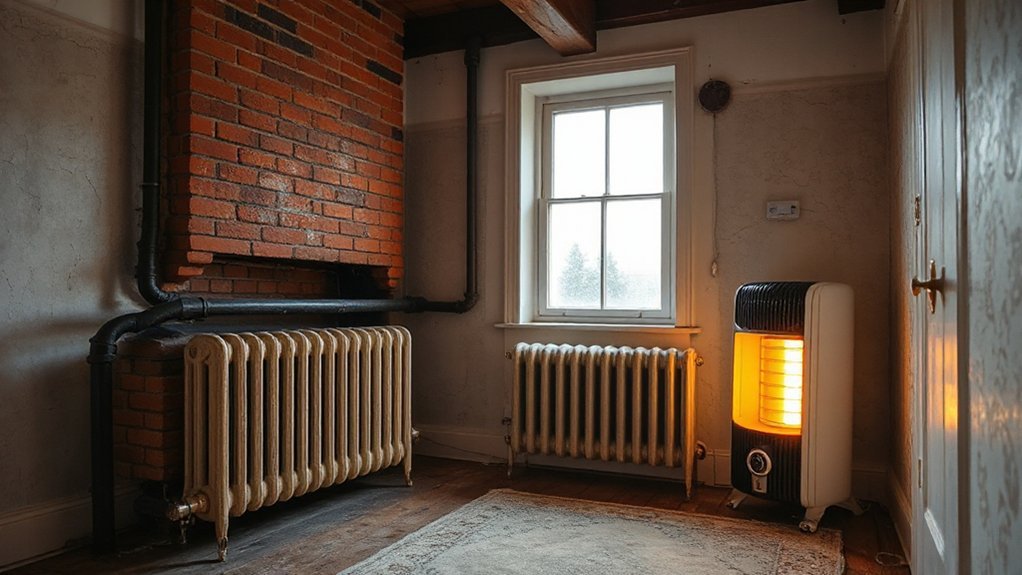
Older flats present unique heating challenges because their construction often prioritizes insulation and airtightness differently than modern buildings. You’ll notice thick walls and small windows conserve heat, but historic layouts complicate airflow and zoning.
Historic preservation limits structural alterations, so you can’t just retrofit every wall cavity or run new ductwork without approvals. You’ll also encounter uneven heat distribution caused by uneven insulation and parquet floors that radiate cold.
Structural challenges arise from aging piles, compromised joists, and settled foundations, which can shift radiators out of alignment or create draft paths. You’ll need careful assessment of existing systems, prioritizing incremental, reversible improvements.
Plan with a professional to balance comfort, energy use, and preservation requirements, ensuring reliable heat without damaging historic fabric.
Compare Core Heating Options: Electric Heat Pumps vs. Hydronic Radiators
When you’re choosing how to heat an older flat, comparing electric heat pumps and hydronic radiators helps you weigh efficiency, comfort, and retrofit practicality.
Electric heat pumps excel in baseline efficiency, especially with smart thermostats that optimize temperatures and seasonal adjustments. They deliver rapid space heating and work with renewable energy sources if you pair them with clean electricity, reducing running costs over time.
Hydronic radiators offer steady, zone-controlled warmth and low thermal inertia, which suits prewar layouts with brick walls. Installation is invasive but can be prioritized by room, minimizing disruption.
Consider climate, insulation, and existing boiler compatibility. For renewables, heat pumps align with future-proofing, while radiators may require boiler conversion.
Balance upfront costs, long-term savings, and your desired comfort profile.
How to Choose Quickly: Criteria for Older Buildings
To pick quickly, focus on four core criteria: insulation quality, existing heating setup, space layout, and retrofit feasibility.
You assess insulation first, because gaps and drafts dictate every future decision. Check wall and ceiling integrity, window performance, and infiltration rates to estimate heat retention and demand.
Then map your current heating system—fuel type, controls, and radiators or convectors—and note compatibility with upgrades.
Analyze space layout: room sizes, corridor abstracts, and outlet distribution, which influence placement of new equipment and thermostats.
Finally, judge retrofit feasibility: structural limits, electrical load, and permitting needs.
Prioritize solutions that enable Smart thermostats and Renewable energy integration without excessive disruption. Seek options that reduce seasonal peaks, simplify maintenance, and align with long-term efficiency goals.
Practical Insulation Upgrades to Cut Heat Loss
Effective insulation upgrades start with targeting the biggest heat drains first: exterior walls, ceilings, and around windows and doors. You’ll prioritize areas with the highest heat flux, then plan incremental improvements that fit budget and housing regulations.
Begin with window sealing to stop creeping drafts at sash joints and frames; this often yields noticeable gains without invasive work. Next, assess attic and ceiling gaps, sealing vent penetrations and using proper insulation depth to meet recommended R-values.
Draft proofing doors, floor penetrations, and shared-wall interfaces reduces heat loss paths you might overlook. Use airtight membranes where practical, then install continuous insulation boards or fill gaps with mineral wool to boost overall performance.
Finally, recheck, retest, and document results to guide future upgrades.
Safety, Noise, and Building Compatibility You Must Check
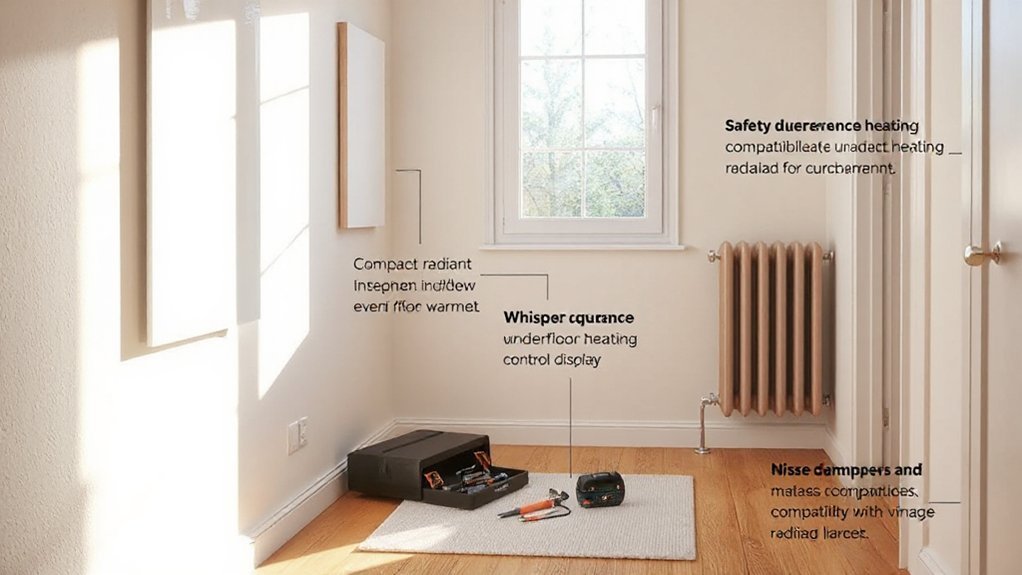
Before making any heating upgrades, you must check safety, noise, and building compatibility requirements to avoid unintended hazards or regulatory issues. You’ll assess fire safety implications, including clearances, combustible material distances, and compliance with local codes.
Verify electrical capacity and venting needs, ensuring circuits and chimney or flue access won’t overload the system. Inspect shared walls and building management rules for permitted equipment types and installation routes.
Plan for noise mitigation by selecting appliances with low vibration and proper mounting, and locate units away from sleeping areas. Confirm compatibility with existing heating zones and thermostat control to prevent conflicts.
Document installation steps, required permits, and post‑install testing to confirm safe, compliant operation.
Costs, Timelines, and Long-Term Savings by Option
Costs vary by option, but you’ll see clear tradeoffs between upfront price and ongoing bills.
Over time, you can quantify savings from efficiency or fuel shifts to determine the most economical choice for your building.
We’ll outline each option’s cost profile and long-term impact so you can compare timelines and returns with confidence.
Costs Overview
How do the upfront prices, project timelines, and long-term savings compare across heating options for older buildings? In this Costs Overview, you’ll compare costs methodically.
Base installations vary: retrofit boilers and radiators, heat pumps, and electric options each have distinct price bands, labor needs, and permitting steps. Expect energy efficient appliances to push initial outlays higher, but they can reduce operating costs quickly.
Smart thermostats add a modest upfront premium while delivering precise control and potential utility rebates.
Timelines depend on building access, existing systems, and zoning; simple upgrades finish faster, complex retrofits take longer.
Long-term savings hinge on efficiency, maintenance, and usage patterns; prioritize options with consistent performance, scalable controls, and durable components.
Long-Term Savings
Long-term savings depend on how efficiently you run the system, the reliability of components, and the upfront choice you make. Your goal is predictable costs, steady performance, and durable performance over years.
Start with the most cost-effective option for your building type and climate, then estimate annual fuel or energy bills, maintenance, and replacement cycles.
Smart thermostats reduce energy waste by aligning heating with occupancy and use patterns, delivering ongoing bill reductions when configured properly.
Compare upfront capital against long-term payback, factoring installation complexity, warranty terms, and potential zoning improvements.
Eco friendly fuels can lower emissions and fuel costs if a local supply is steady and prices are favorable.
Timelines hinge on securing permits, contractor scheduling, and equipment lead times, so plan buffers into your project schedule.
Room-by-Room Setups for Vintage Layouts
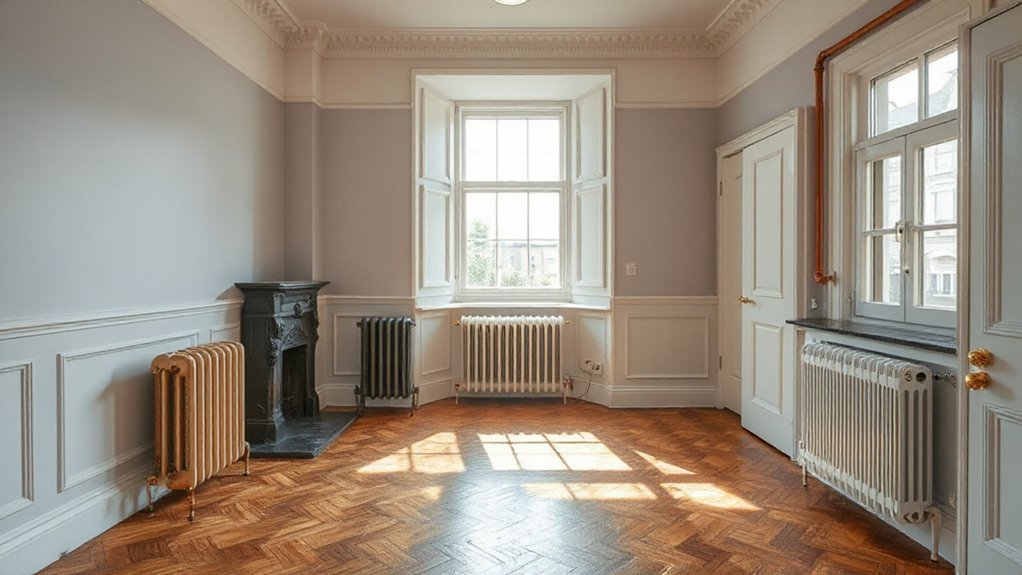
In vintage layouts, room-by-room setups must reflect the building’s quirks while delivering reliable heating. You map heat sources to each space, prioritizing comfort without overhauling architectural constraints.
Begin with a compact core: a central radiator or heat pump, complemented by zone controls for bedrooms, living areas, and kitchens.
In rooms with odd alcoves or thick walls, mount slim radiators low to the floor and use reflective panels to boost perceived warmth.
For hallways and stairs, employ corridor heaters or vents that minimize drafts while maintaining safety.
Choose thermostatic controls that respect original doors and frames, preserving vintage decor aesthetics.
Guarantee ventilation remains balanced, avoiding dampness.
Plan for maintenance access and easy filter changes to sustain efficiency.
Architectural constraints guide, not restrict, your practical setup.
A Simple Decision Framework for Choosing Your Solution
To choose the right heating solution, start with a clear decision frame: define your goals, assess the space, and match constraints to options. Frame decisions around comfort, cost, and disruption.
Next, audit the building: radiator sizing, insulation gaps, window drafts, and electrical capacity. Identify nonnegotiables, like quiet operation or programmable schedules.
Compare solutions by efficiency, installability, and maintenance, not just upfront price. Prioritize compatibility with existing systems and future upgrades.
Consider a Smart thermostat to optimize control, monitor usage, and reduce waste.
Evaluate renewable energy options for long-term savings, such as heat pumps or solar-assisted systems, while noting climate and load requirements.
Document a short list of viable paths, then test scenarios, measuring payback, comfort, and ease of implementation.
Conclude with a concise, actionable choice.
Frequently Asked Questions
Can I Install Modern Heating Without Disrupting Historic Plaster or Wallpaper?
Yes, you can install modern heating without disrupting historic plaster or wallpaper. Prioritize wall access via noninvasive routes, monitor wall integrity, and coordinate with specialists to preserve historic preservation standards while minimizing disruption to finishes.
What Is the Typical Downtime for Re-Piping or Retrofitting Radiators?
Downtime for re-piping or retrofit varies, typically 1–3 days for a single flat, longer for shared systems. Plan for temporary heat loss. Expect Piping lifespan impacted by materials; anticipate Retrofitting challenges and guarantee access, permits, and protections.
Are There Renewable Options Suitable for Small, Listed Flats?
You can retire skepticism: about 70% of listed flats can host renewable options. You could install solar panels and wind turbines on suitable roofs, balancing aesthetics with efficiency, cost, and consent, ensuring practicality and minimal disruption to occupants.
How Do Maintenance Needs Differ for Older Building Systems?
Maintenance for older building systems requires regular inspections, prompt wear-replace cycles, and careful balancing, you’ll prioritize Historical preservation and Energy efficiency, documenting every adjustment so you sustain performance without compromising historic materials.
Which Subsidies or Incentives Apply to Upgrading Historic Flats?
Sure thing: you can tap historic preservation grants and tax incentives, plus utility rebates, to upgrade; you’ll access subsidies tied to energy efficiency. Pragmatic steps: document needs, apply early, compare programs, and track expenditures for financial incentives.
Conclusion
You deserve warmth that fits your space, not one-size-fits-all grief. Picture a plan that walks you through each room, trimming drafts, pairing a quiet heat pump with smart controls, or coaxing radiators to glow without shouting. It’s a method you can trust: measure, test, refine. With patience, your flat becomes a coherent orchestra of comfort—steady, efficient, and faithful to its character. Ready to start? Let’s map your path to lasting coziness.
About the Author