
As winter loosens its grip, you can start by surveying frost damage, clearing debris, and pruning deadwood—then move on to sifting compost into the beds and sharpening drainage. Plan early blooms and hardy edibles, shield tender shoots with cloches, and edge borders for a tidy frame. Mulch to lock in moisture, monitor pests, and build a low-maintenance routine that keeps plants resilient as spring progresses. The next steps will shape a healthier, more reliable garden—if you’re ready, you can proceed.
Spring Garden Goals for UK Gardens

Spring is prime time to reset your UK garden: set clear goals, define priorities, and map out the season’s tasks. You begin by outlining three actionable aims: healthful soil, reliable blooms, and low-maintenance structure.
Gauge sunlight patterns, then assign bed rotations and plant groups that suit your site. Prioritize soil improvement with compost and mulch, so roots gain resilience against spring fluctuations.
Choose a focused palette—succession flowering, evergreen structure, and a practical herb area—to reduce maintenance. Incorporate resilient perennials and smart timing for sowing and division.
Plan pest prevention alongside beneficial feedback loops, noting garden pests and their thresholds. Create wildlife habitats with shallow water, native plantings, and brush for shelter, ensuring continuous interest from early spring onward.
Execute with monthly checkpoints to stay on track.
Start With a Spring Garden Checkup
Begin with a quick, practical spring garden checkup: walk the beds, note any winter damage, and note obvious gaps or issues that demand attention this season. You’ll map what survived, what needs replacing, and where soil needs refreshment.
Check borders for loose edging, tangled debris, and compaction; rake lightly to restore drainage.
Inspect shrubs and perennials for frost heaves, dieback, or pests, and prune only when appropriate for species.
Make a simple to-do list: gaps to fill, damaged mulch to refresh, and needs for compost or mulch depth.
Plan garden pest control measures with minimal disruption to beneficial insects, and assess lighting needs; if paths or entrances lack light, note where garden lighting could improve visibility and safety.
Finish by prioritizing tasks for a steady, early-spring routine.
Plan Smart Planting for UK Spring Weather
You’ll time soil prep, seed-bed readiness, and compost on a practical footing to match UK spring.
Check frost risk and map planting windows so you’re not catching late freezes or hot snaps by surprise.
Align soil work with a clear timeline for every crop, from bed prep to first transplant, so your garden stays productive through changing weather.
Soil Preparation Timeline
If you’re planning smart planting for UK spring, start with the soil: test and refresh it now so beds warm evenly and roots get a solid start.
In this Soil Preparation Timeline, map your steps from late winter to early spring. Begin with soil testing to gauge pH and nutrient levels, then target amendments.
If tests show acidity or imbalances, apply lime or sulfur as needed and re-test after a few weeks. Incorporate compost application to boost organic matter, improve structure, and feed forthcoming growth.
Use a manure-free, well-rotted compost for vegetable beds and a lighter mix for borders.
Clear debris, weed thoroughly, and rake to a fine tilth.
Plan in blocks—test, amend, mulch—so you’re ready for sowing when soils reach workable warmth.
Frost Risk Assessment
Frost risk can derail early spring plans, so assess it now and plan around cold snaps. You’ll start by checking long-range forecasts and local minima, then map a three-week window where frost is most likely.
Identify frost pockets in your garden—low-lying beds, borders, and containers near walls—so you know where protection matters most.
Implement Frost protection measures ahead of expected dips: cover sensitive plants with breathable fabric, mulch roots to preserve warmth, and relocate vulnerable pots indoors if a sudden freeze looms.
Set up simple temperature monitoring, placing a probe near young transplants and near ground level, to alert you to approaching lows.
Use these readings to trigger action, strengthening resilience and ensuring a steadier spring start.
Planting Windows Planning
With frost risk identified and tracked, you can lock in planting windows that suit UK spring weather. Plan smart by noting late frosts, typical last frost dates, and your local microclimate.
Create a flexible calendar: sow hardy crops first, then tender varieties after a gradual warm-up. Prioritize bed preparation, soil amendment, and mulch to conserve moisture and extend soil warmth.
Align pruning tasks with plant responses—timing Seasonal pruning to reduce stress and encourage robust growth.
Schedule protection for vulnerable seedlings, using cloches or cold frames when forecasts shift.
Build wildlife habitats near borders to encourage beneficial insects and birds, aiding natural pest control.
Review irrigation needs and adjust for rainfall patterns, ensuring steady establishment without overwatering.
Revisit weekly forecasts and adjust plans accordingly.
Test and Improve Your Soil Health
What does your soil need to perform best this spring, and how can you find out quickly? You test basic soil health in minutes with a simple starter kit, then interpret the results.
Begin with a soil test to gauge pH, nutrient levels, and texture; this tells you what to adjust first. If pH is off, lime or sulfur can correct it gradually, not abruptly.
Then add compost, a steady supply of organic matter that feeds soil life and improves structure. Compost addition should be steady but not overwhelming—aim for a layer of worn, crumbly material worked into the top 5–10 cm.
Re-test after a season to verify gains, and keep other tasks tight and seasonal: minimal disturbance, targeted amendments, and timely planting.
Choose Low-Maintenance Plantings for UK Spring
Choosing low-maintenance plantings for UK spring starts with quick wins: select robust perennials and hardy annuals that tolerate cool temps, shorter days, and variable rainfall.
You’ll favor drought resistant varieties that cope with occasional dry spells and low irrigation. Pick compact, low-care shrubs or edging plants to reduce mowing and upkeep.
Prioritize grasses and a few evergreen groundcovers to maintain year-round structure. Use native or well-adapted species that thrive in UK spring conditions, minimizing disease risk and watering needs.
Group plants with similar water and light needs to simplify care. Mulch heavily to conserve moisture and suppress weeds, then adjust feeding sparingly—prefer slow-release options.
Install a simple, layered mix of foliage, flowers, and texture for ongoing interest with minimal intervention.
Revive Perennials With Pruning and Division
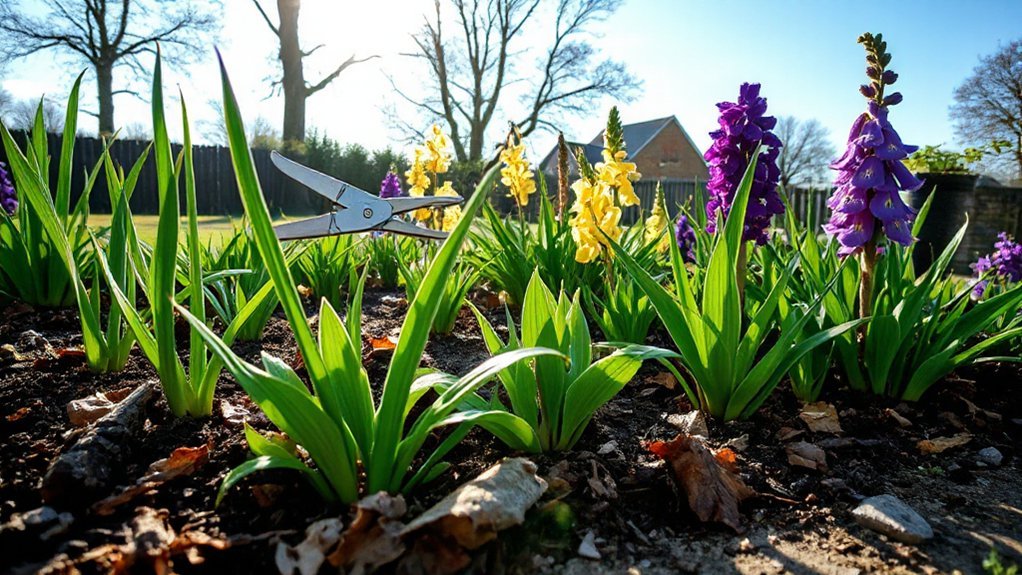
Start with pruning to give your perennials clean structure and airflow.
Divide overcrowded clumps now to multiply plants and keep them vigorous for spring growth.
Use timely cuts and sharp tools, focusing on the right timing for each species to keep your garden tidy and productive.
Prune For Structure
Prune for structure now to revive perennials with pruning and division: cut back older, crowded stems to reveal the plant’s framework. Then divide congested clumps to boost vigor and flowering.
You’ll shape a tidy backbone, removing wispy, shaded growth to improve air flow and reduce disease risk. Target faded flowering stems after a light frost pass, keeping sturdy, outward-facing shoots for full later display.
Use clean, sharp tools and make clean cuts above outward-facing buds. After pruning, apply a light mulch to conserve moisture and suppress weeds around garden furniture and seating areas.
Divide dense clumps in spring, replant spaced for air circulation, watering deeply to settle roots.
Keep pests controlled with targeted methods, avoiding broad-spectrum products that disrupt beneficials. Monitor plants weekly for signs of stress or aphids.
Divide To Multiply
Divide to multiply by splitting crowded clumps now to renew vigor and boost blooms. You’ll gently lift clumps with a spade, then separate the crown into fresh divisions, each with several shoots. Remove spent foliage and any aging runners to reduce disease risk.
Replant divisions at the same depth, spacing to suit mature size, and firm the soil around them. Water well and mulch lightly to conserve moisture. This pruning helps perennials establish strong roots before summer heat.
Use sharp, clean tools to minimize damage and prevent disease transfer. Composting techniques can nourish beds after division; mix a handful of mature compost into planting holes.
Keep paths neat for garden decor, and label new divisions to track growth and bloom times. Maintain consistent moisture until roots reestablish.
Timing And Tools
Timing and tools matter when reviving perennials with pruning and division. You’ll plan for early spring growth, choosing sharp bypass pruners, a clean hand saw, and sturdy gloves. Gather a spade, a kneeling pad, and a sharp knife for dividing crowded clumps.
Start with a light cut to remove dead stems, then prune to shape and encourage sturdy new shoots. For division, loosen soil around roots, lift plants, and separate with clean cuts, replanting each division at the same depth.
Label entries to ease watering schedules and monitor soil moisture. Use tidy margins to reduce stress, water thoroughly after planting, and inspect for garden pests. Keep a close eye on emerging shoots and adjust care as temperatures rise.
Edge, Mulch, and Weed for Polished Borders
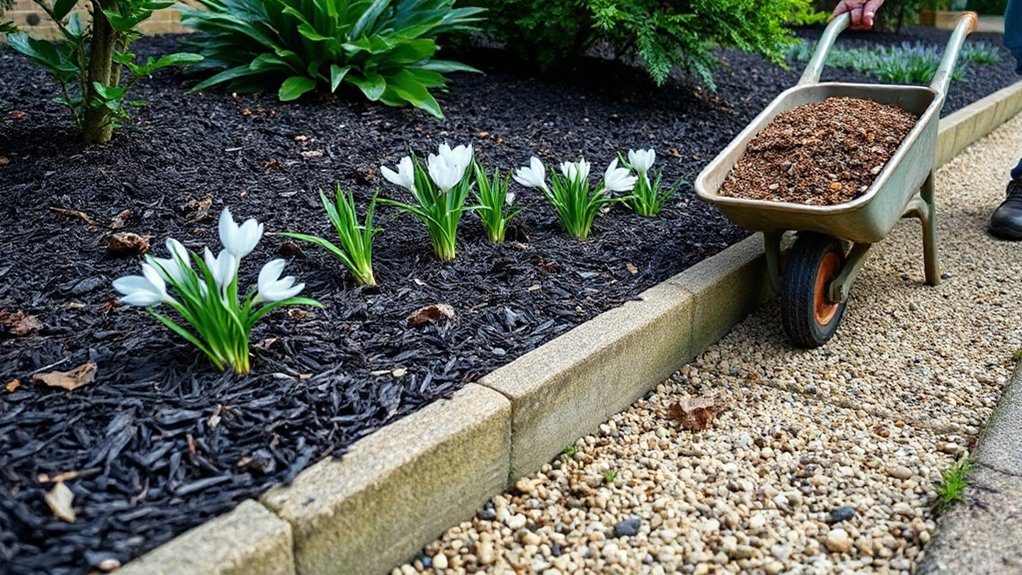
Edge the borders to define the bed and keep gravel or lawn from creeping in; a clean, sharp line makes spring changes look immediate and intentional. You’ll want firm, tidy edges before mulching. Use a half-moon edger or spade to cut a consistent line, then install a narrow timber or plastic edging to hold mulch in place.
Next, apply border edging and prepare for mulch application by removing stray weeds and loosening the topsoil. Rake to level, then lay a 2–3 cm mulch layer, avoiding the crown of any plants.
Mulch suppresses weeds and conserves moisture during UK spring. Focus on even coverage, especially at bed margins, and refresh annually. Check for gaps after rainfall and reseed any thin spots promptly.
Maintain neat borders for a polished, ready-for-growth look.
Add Color With Climbing Vines and Edibles
Climbing vines bring color and texture to walls and trellises, while edible climbers add both beauty and harvest.
Choose frost-hardy options for UK springs, like sweet peas for foliage or beans that climb and bloom early.
Keep supports sturdy and train new growth to maximize color and edible yield as the season warms.
Climbing Vines: Colorful Foliage
Could a few colorful climbers transform a bare wall or fence this spring? Yes. Choose vigorous yet manageable options such as climbing hydrangea, clematis, or Virginia creeper for colorful foliage that lasts into autumn.
Before planting, assess sun exposure, soil type, and available space, then prune to encourage bushy growth. Train shoots along wires or a sturdy trellis, using soft ties to avoid bark damage.
Water deeply during dry spells, and mulch to conserve moisture. For vine maintenance, remove dead wood in late winter and refresh supports as plants grow.
Feed lightly with a balanced fertilizer in spring, then monitor for pests like aphids. Expect blossoms or bold foliage within weeks, delivering seasonal color without overgrowth.
Edibles for Garden Flair
Edibles can add color and flavor to your garden, especially when you pair vertical interest with climbing crops. You’ll choose climbers that also yield, like peas, beans, and squash, to maximize space without crowding paths.
Train sturdy espalier branches along trellises near fruit trees or herb gardens for a compact, productive display. In spring, select fast-growing varieties and stagger sowings to maintain ongoing harvests.
Use compact rosemary, thyme, and oregano at base level to scent beds and deter pests. For visual contrast, let black garlic chives bloom beside bright nasturtium leaves.
Guarantee irrigation is consistent; mulch to conserve moisture. Prune climbers after fruit set to maintain airflow.
This approach blends ornament with utility, delivering both beauty and edible rewards.
Nurture Early-Spring Pollinators With Native Picks
Spring is the moment to welcome early pollinators by choosing native plants that thrive in UK conditions. To start, pick a small, staged display of native pollinators-friendly options that bloom early. Include foxglove, pulmonaria, and primrose to deliver nectar where few others appear.
Mix in early blooms like honesty and bluebell varieties to attract bees and hoverflies sooner. Group plants by sun exposure: sunny spots favor native thymes and rockroses; shaded corners support primroses and wild violets.
Use bare, weed-free soil and mulch lightly to conserve moisture while roots establish. Water deeply at dawn, not midday, during dry spells.
Avoid invasive species and synthetic fertilizers; opt for compost to sustain steady growth and resilient pollinator resources. Regularly check for pests, then prune after flowering to encourage continued vigor.
Create a Simple Spring Maintenance Routine
To keep your garden on track all season, set up a simple spring maintenance routine you can follow weekly. Begin with quick tidy-ups: remove winter debris, sweep paths, and prune any damaged stems.
Check soil moisture and adjust irrigation, aiming for evenly damp but not soggy beds.
Inspect Garden furniture for splitting or rust; wipe surfaces and treat as needed to extend lifespan.
Examine Water features for algae buildup, clean filters, and top up pumps to keep circulation steady.
Plan a brief feed—compost or balanced fertilizer—around new growth zones, avoiding overfeeding.
Mulch newly exposed beds to suppress weeds and retain moisture.
Record tasks in a light calendar to stay consistent, and adjust weekly based on rainfall and seasonal shifts.
Frequently Asked Questions
When Is the Best Time to Prune Spring-Flowering Shrubs in the UK?
You should prune spring-flowering shrubs right after they finish flowering, typically late spring. Use proper pruning techniques to avoid cutting back flowering wood, and monitor shrub health, removing dead or diseased branches promptly for best results.
How Can I Avoid Frost Damage on New Spring Plantings?
Just start with frost protection; you cover tender plant care by mulching, insulating wraps, and choosing frost-tardy varieties. You water early, monitor forecasts, and move vulnerable pots indoors at night, reducing damage from unexpected cold snaps.
Which Uk-Native Perennials Rebloom in Early Spring?
You’ll find early-spring reblooming UK natives like native bulbs and woodland plants, including snowdrops and primroses; plant them in sun to partial shade and mulch lightly, ensuring moisture, so you enjoy steady color through late winter into spring.
What’s the Quickest Way to Green up a Tired Lawn?
Jetpacks aside, you’ll quickly green up your tired lawn by core aerating first, then lawn fertilization, watering deeply. Do soil aeration now, apply fertilizer this season, and keep blades sharp to boost growth and resilience.
How Often Should I Water Spring Containers in the UK?
Water spring containers about every 2-4 days during growth, adjusting for warmth and rainfall. Check soil moisture, avoid soggy roots, and prioritize even watering. Guarantee proper container drainage to prevent standing water and root rot.
Conclusion
If you’re convinced this theory will transform your spring, prove it in your garden: start with a quick check, then act. Regular tidy-ups, smart planting, and soil tweaks pay off season after season. See how a modest mulch or a hardy climber nudges your borders from drab to vibrant. The truth is simple: small, consistent actions beat big, sporadic efforts. Commit now, and your UK garden will prove the theory—spring freshness is built, not waited for.
About the Author