Did you know you can dramatically refresh a semi-detached home without a full gut renovation? You can start by identifying the few high-impact fixes that fit your budget, then plan small, clever updates that boost curb appeal and daily comfort. You’ll keep costs in check by prioritizing efficiency and DIY tweaks, but there’s a smarter sequence to follow that reveals where to invest first and how to stretch every dollar—and you’ll want to see where that leads next.
Identify Budget Priorities for a Semi-Detached Home
When you’re revitalizing a semi-detached home on a budget, start by identifying your top priorities. Begin with the spaces you use most: entry, kitchen, living area, and bathrooms. List what needs updating now versus what can wait.
Garden landscaping is a smart starting point for curb appeal that doesn’t break the bank; choose low-maintenance borders, native plants, and simple planters to create a welcoming first impression.
Next, assess structural and safety basics: roof, plumbing, and electricals, then address flooring and paint in high-traffic areas.
Consider how Smart home technology can add efficiency without overspending—smart thermostats, energy-saving lighting, and basic security features.
Align costs with your household routines, set a realistic timeline, and document decisions to keep everyone on the same page. Belonging grows from thoughtful, shared progress.
Build a Budget-Driven Renovation Plan
Start by identifying your core updates that add the most value first, so you know what must happen before anything else.
Then allocate your budget smartly by zone, focusing funds where you’ll live most and where wear is highest.
Finally, map the work into phases, so you can complete the plan in affordable steps without overspending.
Prioritize Core Updates
Prioritize core updates first to anchor your budget and prevent scope creep. You’ll identify non‑negotiables—systems, safety, and layout—that release long‑term value without overreaching. Start with essential repairs, then bundle improvements that protect the home’s structure and comfort.
Embrace a practical, affordable mindset: pick improvements that yield immediate gains in daily living and energy bills. Historical preservation matters when you’re deciding which finishes or fixtures to keep or restore; preserving character can save money and add a sense of belonging.
Prioritize energy efficiency where it counts—insulation, sealing gaps, efficient lighting—so future updates feel manageable, not overwhelming.
Create a simple, phased timeline with clear cost ranges, milestones, and owner‑performed tasks to stay motivated and united.
Allocate Smartly By Zone
Allocate smartly by zone to turn a budget plan into real progress. Start by grouping rooms by function and traffic: living areas, bedrooms, service zones. This zone allocation keeps you focused on cost-impacting tasks first, so you see tangible improvements fast.
Do a quick walk-through to map each space’s needs, then assign a budget tier per zone—high-impact areas get a bit more, but stay within overall limits. Prioritize space planning that maximizes flow, daylight, and storage, minimizing costly reconfigurations later.
Keep materials and finishes consistent within zones to simplify sourcing and installation. Track progress with a simple list, noting completed items and forthcoming steps.
Phase the Renovation Plan
To phase the renovation plan, translate your budget into a clear sequence of tasks tied to zones and seasons, so you can see what to do first and what to defer.
Start with a master timeline that links costs to room groups, then map each task to a season when labor and materials are most affordable.
Prioritize essential updates—plumbing, electrical, insulation—and designate nice‑to‑have improvements for later phases.
Build in historical preservation where feasible, preserving character while upgrading systems.
Use a flexible path: set a cap for each phase and reallocate if bids come in under or over.
Consider Feng shui integration to create flow and balance as you progress.
Regularly review progress with neighbors for accountability and shared pride.
Boost Curb Appeal With Budget-Friendly Exterior Updates
A quick, inexpensive way to boost your curb appeal is to start with clean, fresh exteriors: wash the siding or brick, rinse away grime from windows, and sweep the pathway.
Then choose practical updates you can do this weekend. Tidy the entry with a fresh door mat, a potted plant, and a bright seasonal wreath to feel welcome without overhauling the space.
Add contrast by repainting the front door or shutters in a durable, fading-proof color. Consider inexpensive lighting along the walkway to improve safety and mood after dusk.
Integrate exterior landscaping with low-maintenance plants, mulch, and edging for polish that lasts.
Check roofing repairs as needed to prevent leaks and stains, preserving the look you’re building.
These steps invite belonging and keep costs predictable.
Refine Your Layout for Light, Flow, and Privacy
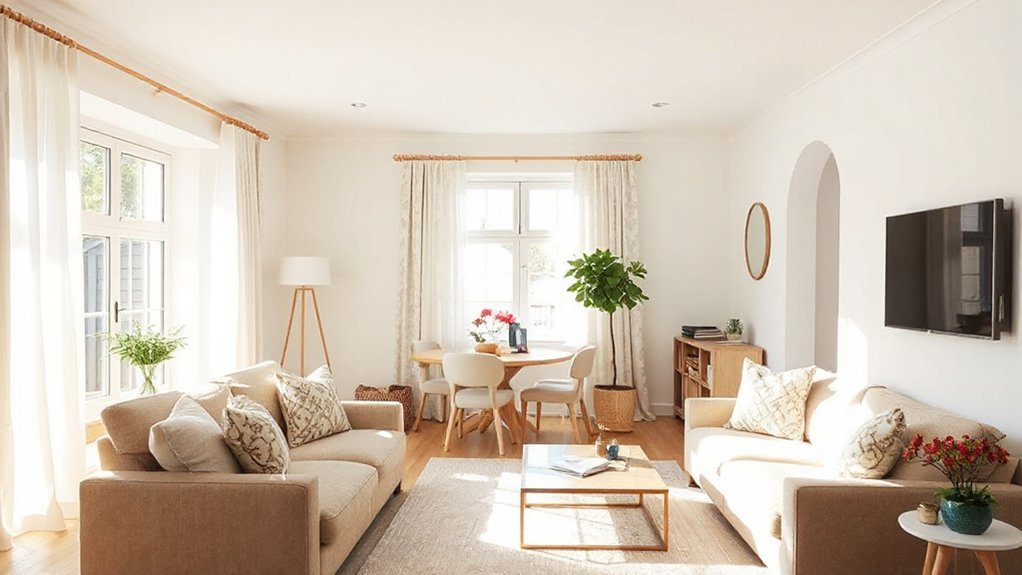
Maximize natural light by rethinking room placement and using light-colored walls and mirrors to bounce daylight where it’s needed.
Create a logical flow with clear sightlines and open pathways, so rooms feel connected without sacrificing privacy.
Use simple zoning—public versus private—through furniture placement and subtle partitions to keep noise and activity in check.
Natural Light Flow
If you want more daylight without costly add-ons, start by rearranging furniture to lines of sight that invite in natural light and make traffic flow naturally. Place seating to face windows and avoid blocking radiance with tall pieces.
Use mirrors to bounce light off walls and ceilings, amplifying what you already have. Consider opening up pathways with lighter, uncluttered layouts that feel inviting and inclusive.
For interior color, choose soft neutrals and warm accents that reflect daylight rather than soak it up. Window treatments should be lightweight and in airy fabrics or simple blinds you can raise fully during the day.
Keep consistency across rooms to nurture a cohesive, belonging-filled vibe while staying within budget.
Privacy Through Zoning
Zoning is your budget-friendly privacy tool: by smartly dividing spaces, you can enjoy open light and flow while keeping everyday noise at bay. You’ll map daily routines to zones: a quiet retreat near bedrooms, a lively family hub away from it, and a passage area for entry and circulation.
Use partial walls, bookcases, or screens to carve zones without closing off air or sightlines. Add door seals or draft guards to reduce sound leakage between rooms, improving garden privacy without expensive construction.
Choose furniture placement that creates visual barriers and buffers sound, like a sofa with a tall back or cabinets along shared walls. Implement soundproofing solutions where needed, and respect shared boundaries for a harmonious, affordable home.
Refresh Walls and Finishes on a Budget

You don’t need a full gut to refresh walls and finishes on a budget: start with a plan, pick a few high-impact updates, and do the work yourself. Begin with color choices that unite rooms, swapping warm neutrals or soft greens for cohesion and comfort.
Consider wall textures and finish materials that add character without a full remodel—peel-and-stick shiplap accents, a bold feature wall, or reclaimed paneling for texture without heavy labor.
Refresh trim and doors with affordable paint to brighten spaces and create contrast. Tackle prep: clean surfaces, mend cracks, and use quality primer.
Use rollers and brushes sized to the task to avoid waste. End with consistent ceiling and wall tones for a polished, welcoming feel that invites belonging.
Upgrade Lighting for Impact and Efficiency
Upgrading lighting is one of the fastest, most affordable ways to refresh a semi-detached home. You’ll transform spaces without major renovations by targeting brightness, mood, and task needs.
Start with a simple plan: identify rooms that feel dim and map suitable lighting layers—ambient, task, and accent. Choose cooler temperatures for kitchens and bathrooms to improve clarity, and warmer tones for living areas to foster coziness.
Swap old bulbs for energy-efficient LEDs, and use dimmers where practical to dial mood without wasting power.
Focus on practical placement: under-cabinet lighting in kitchens, wall sconces beside seating, and ceiling fixtures that distribute even light.
This not only enhances daily comfort but also supports energy savings and a sense of belonging through thoughtful design. Lighting design matters.
Choose Cost-Effective Flooring Options
When choosing flooring on a budget, start with practical, durable options that handle everyday wear in a semi-detached home. Prioritize materials that survive spills, traffic, and pets, then balance cost against long-term maintenance.
Area rugs can protect high-traffic zones, add warmth, and tie rooms together without breaking the bank. Choose low-pile carpets or affordable vinyl options for easy cleaning and resilience.
Vinyl planks mimic hardwood look with water resistance and quick installation, often at a fraction of the price. Consider underlayment for sound and warmth, and lay out a practical pattern that hides dirt.
Measure rooms accurately, buy extra for mistakes, and install cleanly with minimal tools. With smart choices, your floors feel cohesive, inviting, and budget-friendly.
DIY Projects That Add Value Fast
Smart, small-scale fixes can boost curb appeal and resale value fast by focusing on what buyers notice first: entryways, kitchens, and baths. You’ll tackle quick upgrades that feel purposeful without breaking the bank.
Begin with bright, neutral colors on walls and doors, then swap outdated hardware for brushed nickel or matte black to refresh the vibe.
In the kitchen, add a peel-and-stick backsplash or install new faucet and inexpensive under‑cabinet lighting for a brighter look.
In baths, update mirrors and vanity hardware, and seal grout for a cleaner finish.
Embrace home automation features like smart lights and programmable thermostats to convey modern living.
Prioritize energy conservation: LED bulbs, smart power strips, and efficient weatherstripping.
Small, intentional changes create lasting impact.
Plan Maintenance to Preserve Your Refresh
A plan keeps your refresh from slipping back into its old habits. To maintain momentum, set a simple, repeatable schedule that fits your week, not a luxury calendar.
Block 15 minutes every Sunday to inspect touchpoints: seals, weatherstripping, and caulk on doors and windows. Document changes in a shared note so everyone knows what’s been done and what’s next.
Budget-friendly upkeep should emphasize consistency over extravagance, so pick a few dependable habits you’ll actually keep—rinse exterior surfaces, refresh landscaping ideas with low-maintenance plants, and touch up spots before they deteriorate.
When you’re ready to refresh again, consider exterior paint options that align with your curb appeal plus long-term durability.
Small, steady steps protect your investment and strengthen your sense of belonging in your home.
Frequently Asked Questions
How Can I Maximize Resale Value on a Tight Budget?
You can maximize resale value on a tight budget by prioritizing curb appeal and cohesive interiors: invest in Landscaping upgrades that look polished, update Interior decor with affordable, timeless pieces, and maintain a warm, inviting vibe for buyers.
What Are the Fastest ROI Updates for a Semi-Detached Home?
You’ll see the fastest ROI with targeted updates: outdoor landscaping and interior lighting. Tidy the curb appeal, plant low-cost greenery, and install efficient LEDs. You’ll feel connected, practical, and supported while boosting value without overspending.
Which Materials Balance Cost, Durability, and Look?
Two facts: you’ll save 15% over five years with durable materials. For balanced cost, durability, and look, choose wall paint and flooring options that blend moisture resistance with easy maintenance, like mid-range acrylic paints and laminate flooring.
How Can I Reduce Renovation Disruption for Neighbors?
You can reduce renovation disruption by planning quiet windows, scheduling heavy work midday, and using dust barriers. Communicate openly with neighbors, share timelines, and offer advance notifications. Practice noise mitigation, stay courteous, and build a sense of community around your project.
Are There Grants or Loans for Budget Home Refreshes?
Yes, there are government incentives, loans, and grants you can explore. You’ll access DIY tips and step-by-step guidance, ensuring affordable choices. You’ll feel supported, belong, and empowered as you budget-smartly and apply practical, shared-sense solutions.
Conclusion
So you don’t break the bank, you’ll balance big upgrades with small wins. You’ll ignore flashy trends in favor of durable basics, and you’ll see progress faster than you fear. On one hand, a fresh coat and new grips; on the other, a durable vinyl floor and LED glare-free lighting. On one hand, curb appeal that invites; on the other, practical layout tweaks that save space. It’s the contrast that makes your semi‑detached feel thoughtfully refreshed and affordable.
About the Author