Buying Property: Comparing the Peak District vs the Lake District
They are England’s two most visited national parks, both magnets for buyers who want to live somewhere genuinely beautiful, and both carrying the particular complications that come with buying a home in a nationally protected landscape. But the Peak District and the Lake District are remarkably different propositions for the property buyer — different in price, different in accessibility, different in character, and different in what they offer on an ordinary Tuesday rather than a Bank Holiday weekend.
This guide sets out an honest comparison across the dimensions that matter most.
Property Prices: Closer Than You Might Expect
The instinctive assumption is that the Lake District — with its global recognition and celebrity status — commands a significantly higher premium than the Peak District. The reality is more nuanced, and the right comparison depends on which part of each park you are looking at.
The Lake District carries an average house price of approximately £455,711 within the National Park boundary — more than double the Cumbrian county average of £227,000. The most sought-after locations — Windermere, Ambleside, Grasmere, Hawkshead — push considerably above this average, with quality family homes requiring £600,000–£1 million or more. The premium is driven by both genuine lifestyle demand from primary buyers and sustained competition from the holiday let and second home market, which absorbs a significant proportion of available housing stock and keeps prices in the most desirable villages elevated.
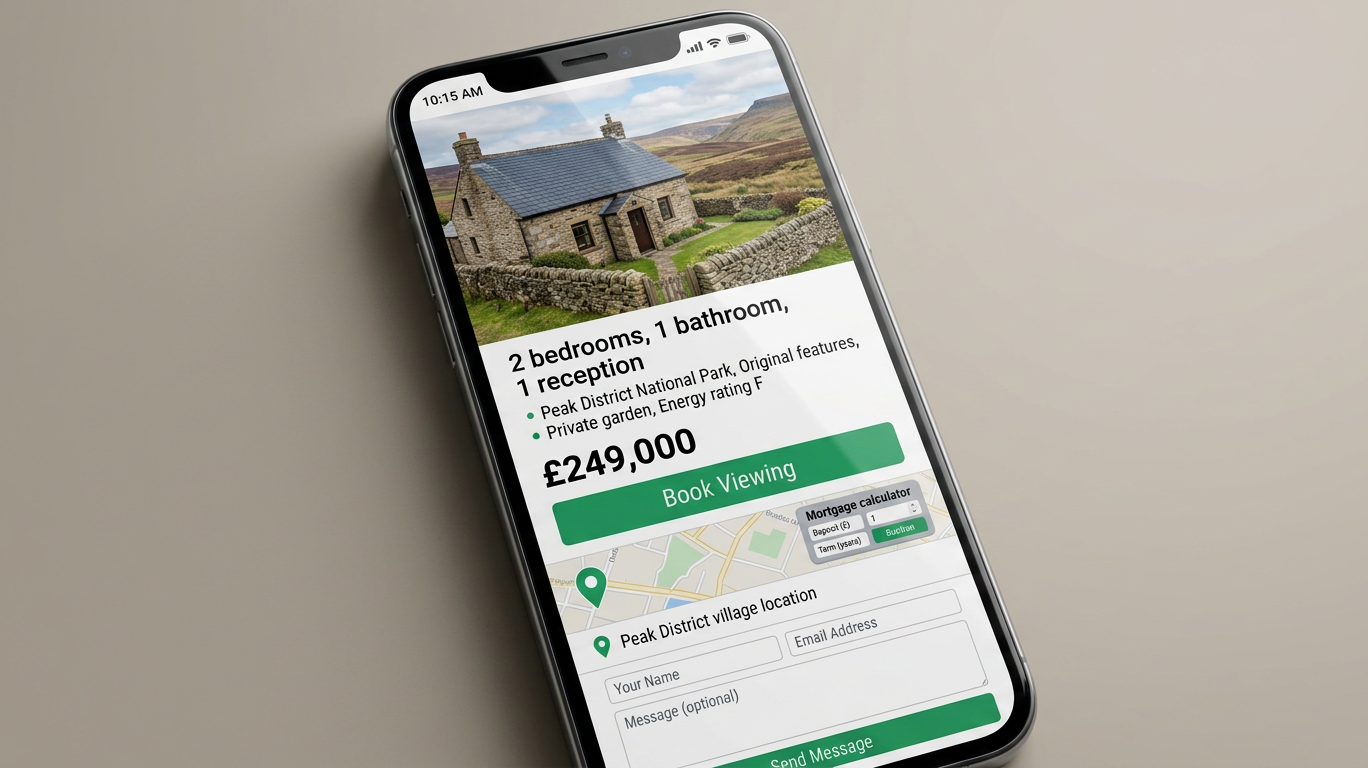
The Peak District is broader and more internally varied in its pricing. The average sold house price across the national park runs at approximately £316,000–£322,000 — materially lower than the Lake District average. However, this overall figure masks significant variation by location. The villages of the Hope Valley — Hathersage, Castleton, Hope — and the popular honeypot areas around Bakewell command significant premiums over the broader average, with detached stone properties in these locations regularly reaching £500,000–£700,000.
The High Peak district, which covers the northern and eastern parts of the national park, has an average house price of approximately £257,000 — considerably more accessible and representing the working-community end of the Peak District market, with first-time buyers in High Peak paying an average of £222,000 in October 2025.
The verdict on price: The Peak District offers a wider range of accessible price points than the Lake District, and more of the national park is within reach of buyers without multi-million-pound budgets. The Lake District’s best locations carry a premium that the equivalent Peak District location does not impose. However, at the very top of the market — for exceptional period farmhouses or unique properties in the most scenic settings — prices in both parks can be broadly comparable.
Location and Connectivity: The Peak District’s Strongest Card
This is where the comparison diverges most dramatically, and for buyers who retain any professional connection to an urban centre, it is the single most important dimension.
The Peak District is surrounded by major cities. Sheffield sits immediately to the east, with access to Hathersage and the Hope Valley in 30 minutes by road or by direct train. Manchester is roughly 45 minutes to the west, with easy road access to Glossop, Hayfield, and the Cheshire Peak fringe via the Snake Pass or the A6. Derby, Nottingham, and Stoke are all within an hour or less. The Peak District has a train line through it — the Hope Valley line, running from Sheffield through Hope and Bamford to Manchester Piccadilly — which makes it genuinely commutable to two major cities from a single address in a way that is rare for a national park.
The practical consequence is significant. A buyer working two or three days a week in Manchester or Sheffield can live in a stone-built cottage in the Hope Valley and manage their commute without heroics. This commutability sustains demand across a broad range of buyers — professionals who have not fully left the city economy, families who need the breadth of urban amenity at weekends, younger buyers who want rural living without complete professional isolation.
The Lake District does not offer this. The national park sits at the western edge of the Pennines, shielded from the motorway network by geography. Oxenholme (on the West Coast Main Line) and Penrith are the nearest mainline rail connections, neither of which serves the heart of the park. Manchester is 90 minutes by road in favourable conditions and considerably more in traffic or poor weather. The A591 — the main artery through the park from Windermere to Keswick — is notoriously congested in summer and does not provide the reliable journey times that commuters require.
Living in the Lake District is a lifestyle choice that requires genuine commitment to rural life. This is not a criticism — it is a description of what many buyers actively want. But buyers who imagine that the Lake District will work as a commuter destination for occasional city visits should spend time on the A591 on a Friday afternoon in August before committing.
Landscape Character: Two Very Different Kinds of Beautiful
Both parks offer exceptional landscape, but they feel nothing like each other on the ground.
The Peak District divides clearly into two distinct zones. The Dark Peak — the northern and eastern moorland, characterised by millstone grit edges, wide plateau moorland, and the dramatic escarpments of Stanage, Curbar, and Froggatt Edges — is austere, muscular, and magnificent. It is landscape that rewards walkers, climbers, cyclists, and anyone who responds to high, open country under a wide sky. The White Peak — the southern limestone plateau, with its dry stone walls, dale meadows, and villages of honey-coloured stone — is gentler, more pastoral, and softer in its beauty. Bakewell, Tideswell, and Youlgreave sit in this landscape; Hathersage and Hope in the transition between the two.
The Peak District is England’s most accessible national park precisely because of its geographic position — surrounded by major cities and their populations. This accessibility is both an asset and a limitation. The most popular spots — Mam Tor, Stanage Edge, Dovedale, Chatsworth — can be very busy on weekends and holidays, and the park has struggled for years with the management of visitor pressure. Living inside it, rather than visiting it, insulates you from some of this but not all.
The Lake District is on a different register of landscape drama. The combination of high fells — Scafell Pike, Helvellyn, the Langdale Pikes — with deep glacial lakes and the particular quality of light and weather that prevails in the north-west of England produces something that is genuinely without equivalent elsewhere in England. It is a World Heritage Site because it is exceptional, and that designation reflects a reality that anyone who has walked above the clouds on a clear autumn day above Ullswater or looked down the length of Coniston from the Old Man will not dispute.
For buyers for whom landscape is the primary draw, the Lake District is the stronger proposition on pure scenic grounds. The scale of the fells, the depth of the lakes, the sense of space in the quieter valleys — these are qualities the Peak District, for all its attractions, does not fully replicate.
Tourism Pressure and Year-Round Living
This is the dimension that most surprises buyers who fall in love with either park on a beautiful weekend and then move in to discover the full reality.
The Peak District manages approximately 26 million visits per year — more than any other national park in England. The pressure this creates in the most popular locations is real and occasionally intense. However, the park is large enough and varied enough that villages just a mile or two from the hotspots can feel entirely peaceful. Chapel-en-le-Frith, Great Hucklow, Foolow, Taddington — these are working communities that tourists barely reach, even in high summer. The proximity of major cities also means that tourist pressure is more evenly spread across the year rather than peaking intensively in school holidays.
The Lake District receives approximately 19 million visits per year to a smaller geographic area, and the visitor pressure concentrates more heavily in the most famous locations. Windermere, Bowness, Ambleside, and Keswick in July and August are genuinely congested — roads, car parks, and footpaths all operating under significant strain. The economy of these towns is structured around the visitor — accommodation, food, outdoor gear, experiences — which means the shops and services available to residents are calibrated for tourists rather than working communities.
The quieter parts of the Lake District — the Duddon Valley, the western coast around Ravenglass, the Caldbeck fells — feel nothing like Windermere in August. But buyers must be clear-eyed about which part of the park they are buying in.
Community and Schools
The Peak District has strong schooling options, particularly in the Sheffield fringe. The Hope Valley area benefits from proximity to Sheffield’s secondary school offer, and the Derbyshire edge of the park includes well-regarded secondary schools. The market towns adjacent to the park — Bakewell, Matlock, Buxton, Glossop — are functioning communities with full ranges of services and schools.
The Lake District has thinner provision in the most desired locations. The villages within the national park boundaries are small, and secondary school provision is at some distance from many of them. Kendal and Penrith provide the nearest functioning town centre amenities and secondary schooling for much of the park’s southern and eastern fringe respectively.
Which Is Right for You?
The Peak District makes the strongest case for:
- Buyers who retain professional or personal ties to Manchester, Sheffield, or the Midlands
- Families who need accessible schooling and town centre services within reasonable reach
- Buyers working to a budget that the Lake District’s premium locations cannot accommodate
- Buyers who want a choice of landscape character — moorland or limestone dale — within a single national park
The Lake District makes the strongest case for:
- Buyers for whom landscape is the overriding consideration and who are prepared to pay its premium
- Buyers who have fully decoupled from urban commuting and professional connectivity requirements
- Buyers who want the specific drama of high fells and glacial lakes that is simply not replicated elsewhere in England
- Buyers at a higher budget who can access the most beautiful and least compromised parts of the park
Both parks are exceptional places to live and both will challenge the idealised expectations of anyone who has only ever visited on a fine day. The best advice is the same as always: stay for a week in October, not a weekend in June. Drive the roads at 8am on a Monday. Walk to the shops in the rain. Talk to people who actually live there.
The national park that still feels right after that is the one you should buy in.
About the Author