Did you know that well-planned insulation can cut a 1930s semi’s heating bill by up to 40%? You’ll start by setting a tight budget, then target high-impact, low-cost upgrades that respect heritage. You’ll balance modern comfort with authentic finishes, prune drafts, and sequence tasks to avoid costly backtracks. Keep the pace steady and the scope focused—there’s a practical path here, blending efficiency with character, if you’re prepared to prioritize the right moves and stay the course.
Frame Your Budget for Maximum Impact on a 1930s Semi
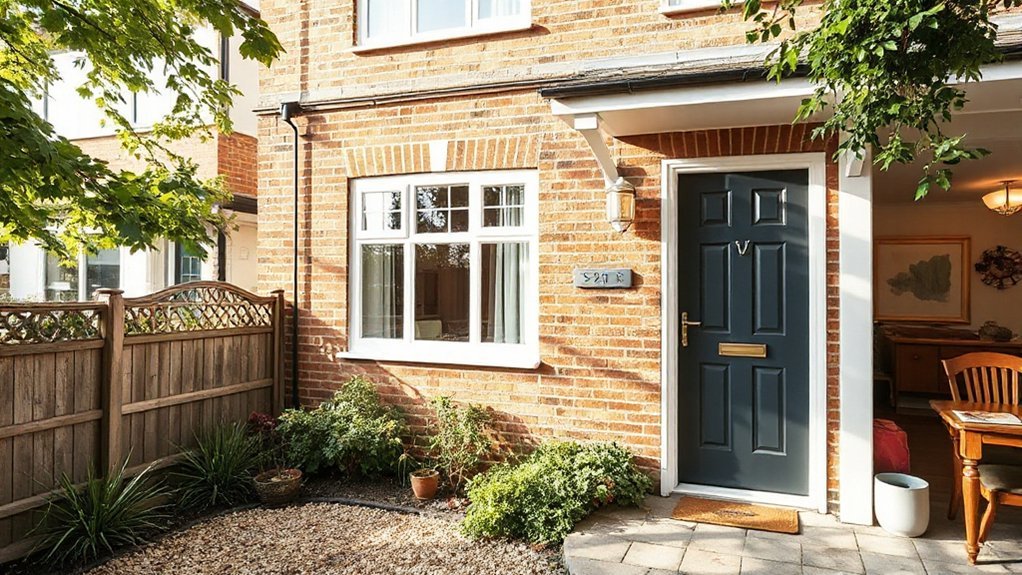
To frame your budget for maximum impact on a 1930s semi, start by defining clear performance goals—what must improve (heating efficiency, comfort, aesthetics) and what can wait. You’ll map costs against tangible outcomes, prioritizing systems with compound value.
Set thresholds for payback, maintenance, and disruption, and reserve a contingency that respects the era’s craft. Allocate initial funds to high-efficiency measures that preserve character, like draft reduction, insulation, and sensible upgrades to windows and doors.
Garden landscaping decisions should enhance energy corridors and microclimates, while smart home integration can coordinate comfort without overpowering period details.
Document choices with constraints and milestones, review quarterly, and stay aligned with a shared vision of belonging—where modern performance respects and sustains the home’s heritage.
What Makes a 1930s Semi Feel Timeless and Livable
A 1930s semi earns timeless livability through a precise balance of proportion, material honesty, and adaptable layout. You feel this when room proportions respect human scale, doors align with corridors, and daylight carves quiet routes through common spaces.
Historic architecture informs restraint: ornament is sparse, craftsmanship deliberate, and fixtures recycled with care. You sense belonging in rooms that adapt—a dining area that becomes a study, stairs that lead you without imposing.
The appeal rests on honest materials: timber, brick, plaster, slate, chosen for durability and patina. Vintage charm emerges from retained details—timber rafters, a tiled fireplace, original cabinetry—reinterpreted to serve modern life without shouting renovation.
Timelessness isn’t nostalgia; it’s an honest, presentable welcome to daily living.
Prioritize Insulation for Warmth, Comfort, and Savings
Prioritise insulation as the first line of defence against heat loss, so your home stays warmer with less energy use.
You’ll balance comfort with cost by choosing targeted, budget-smart upgrades that respect the house’s 1930s fabric and breathable systems.
Start with measurable goals for warmth and heat retention, then compare payback and performance to guide steady, informed improvements.
Insulation for Comfort
Insulation is key to making a 1930s semi-detached home comfortable and economical, since the envelope often compromises warmth in older walls and roofs. You’ll prioritize materials and details that respect historical preservation while delivering measurable gains in comfort.
Target continuous, well-sealed cavities and correctly installed batts or mineral wool to reduce drafts without compromising architectural integrity. Consider breathable external and internal layers that manage moisture and avoid condensation risks indoors.
In areas with traditional timber framing, guarantee insulation interfaces align with existing structural members to prevent thermal bridging. Schedule airtightness tests to verify performance, then document improvements for future owners.
The aim is steady warmth, reduced boiler cycles, and a durable, historically informed home that remains welcoming to all occupants.
Heat Loss Reduction
Could you cut heat loss in a 1930s semi by focusing on insulation that works now and for the long term? You’ll pursue proven materials, continuous air barriers, and junction detailing that respect historical features while delivering modern performance.
Prioritise thermal envelopes around sashes, floors, and roofs, minimizing thermal bridges with stepped-upon solutions rather than band-aid fixes. Use dense sheathing, appropriate underfloor insulation, and carefully placed top‑up insulation at the attic entry.
Combine that with window treatments that reduce drafts without erasing character. Integrate HVAC upgrades that support efficient zoning and gentle reheat, avoiding oversizing.
Balance is key: maintain comfort, curb heat loss, and preserve proportionate spaces. The aim is warmth with restraint, belonging through dependable, long‑lasting performance.
Budget-Smart Upgrades
Have you considered where the quickest warmth gains come from in a 1930s semi, and how to stretch every pound you spend? Prioritise insulation as your first line of defence: loft and cavity wall fillings, drafts sealed at skirts and sills, and robust door sweeps. These measures deliver measurable comfort with minimal ongoing cost, aligning with a disciplined budgeting approach.
Complement them with targeted glazing upgrades and smart thermostat logic to maintain stable temperatures without waste. When planning, map landscaping ideas that encourage passive warmth—sunlit, sheltered zones and windbreaks—without compromising period character.
Integrate smart home technology to monitor consumption, alert you to anomalies, and automate controls. This disciplined blend yields lasting warmth, efficiency, and a sense of belonging within a thoughtfully modernised home.
Refresh Lighting and Outlets With a Period-Friendly Modern Twist
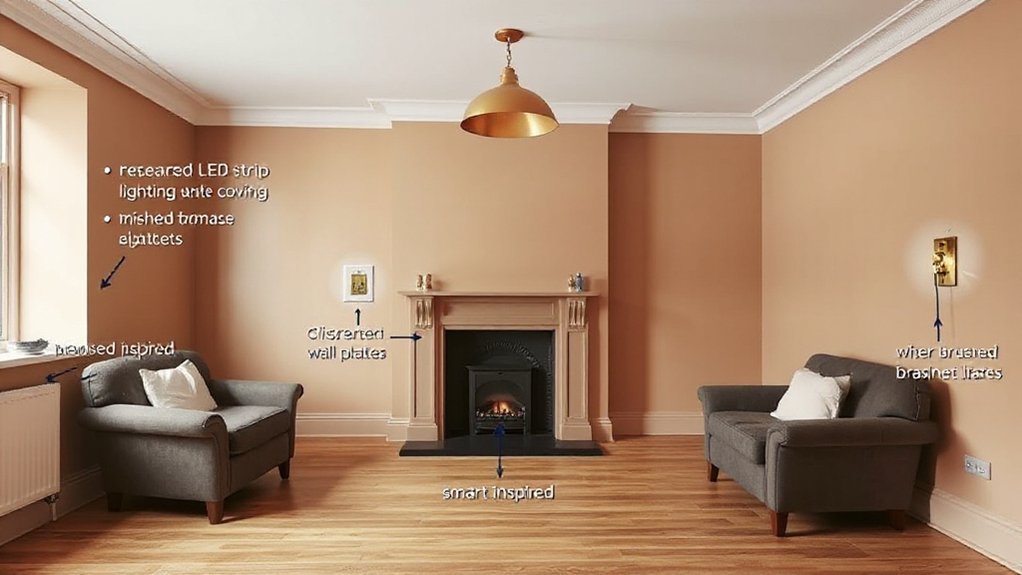
To refresh lighting and outlets in a 1930s semi, focus on blending period-appropriate aesthetics with modern reliability. You’ll select lighting fixtures that echo vintage charm while delivering consistent, safe performance.
Prioritize discreet wiring upgrades, using conduit or surface routes that respect plaster finishes and reveal minimal disruption.
Install outlets in traditional heights but with tamper-resistant protection and upgraded grounding.
Choose switch gear with soft-closing mechanisms and subdued finishes—brushed brass, satin nickel, or aged bronze—to harmonize with existing trim.
Layer lighting by combining ambient, task, and accent sources, ensuring dimmable control for mood and energy savings.
Document each change for future owners, maintaining a respectful pedigree.
This approach honors history, fosters belonging, and keeps your home reliably bright.
Improve Layout: Flow Tweaks That Preserve Character
Small layout tweaks can improve flow without erasing a home’s character; start by prioritizing door positions and circulation paths that align with original sightlines and room sizes. You map a floor plan that preserves legacy scales while supporting modern use, ensuring entries foster intuitive movement between social and private zones.
Use recessed reveals and strategic door swings to maintain brightness and access without heavy reconstruction. Natural light remains central: align openings with existing windows, keep dark corners minimal, and respect historic window proportions.
Choose temporary partitions or partial walls that guide traffic without claustrophobia, allowing adaptable living spaces. Documented, purposeful tweaks reinforce belonging, enabling you to enjoy cohesive spaces that feel both authentic and livable.
Choose Durable, Authentic Finishes That Endure
Durable, authentic finishes ground a 1930s semi in its original character while meeting today’s demands for wear and maintenance. You choose materials that age gracefully, resisting trend-driven obsolescence. Prioritize genuine textures—wood, plaster, tile—with proven durability and ease of care.
Balance historic reference with modern practicality: select finishes that patina rather than require frequent replacement. Incorporate antique fixtures thoughtfully, ensuring they harmonize with updated interiors without overpowering ambience.
Consider vintage wallpapers that echo period motifs while using stable substrates and fade-resistant inks. Maintenance should be predictable, accessible, and low-cost, so you can enjoy lasting appeal without constant upkeep.
Document choices for future restorations, preserving provenance while enabling sensible upgrades. The result is cohesive, legible storytelling through tactful surface decisions.
Affordable Kitchen and Bathroom Upgrades That Boost Value
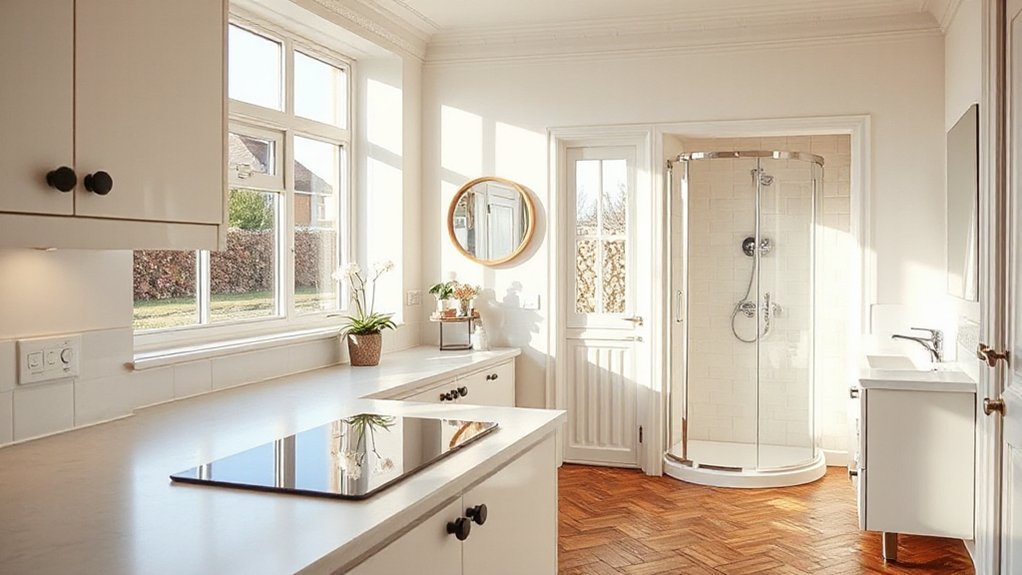
If you’re upgrading a 1930s semi on a sensible budget, focus on changes that deliver measurable value without erasing period character. In kitchens and baths, target durable, low-cost updates that improve function and perception of quality.
Prioritize efficient fittings, like retro-style taps and compliant, water-saving fixtures, that nod to vintage charm while meeting modern standards. Choose sustainable materials for cabinet doors, countertops, and tiling where feasible, ensuring long life and reduced waste.
Refinish rather than replace where structural integrity remains solid, preserving original layouts and plasterwork. Select neutrals with warm undertones and restrained hardware to maintain cohesion with existing trims.
Quick wins include improved lighting layers, and easy-to-clean surfaces that elevate daily use without overwhelming the space or its history.
Create a Cohesive Color and Material Palette
You’ll build a cohesive palette by harmonising materials across spaces and selecting finishes that read as a single, deliberate system.
Start with a restrained color core and pair it with measured accents that reinforce period details without competing with them.
Prioritise consistency in textures and tonal range to unify the 1930s fabric with contemporary practicality.
Harmonise Materials Palette
To harmonise a materials palette, you begin by defining a unifying color story and selecting textures that reflect the house’s 1930s character while meeting modern demands. You map finishes to rooms with respect for proportions, weighting materials toward longevity, low glare, and tactile warmth.
Choose neutral bases—limestone, plaster, or warm timber—then layer with controlled accents that evoke Vintage charm without tipping into nostalgia. Material harmony emerges when sheens, grains, and patinas align: matte plaster, satin wood, and restrained metals.
Test for daylight response and durability, documenting how each choice ages together. Maintain consistency in joints, profiles, and installation methods to ensure a cohesive reading of space.
The result feels anchored, contemporary, and inclusive, inviting ownership and belonging.
Selective Color Pairings
Selective color pairings anchor the palette by tying hues to each material—stone, plaster, timber, and metal—while preserving the 1930s character. You select chromatic roles that respect historical context, avoiding flamboyance yet enabling visual cohesion across rooms and exterior elevations.
Pair stone with cool neutrals and restrained warms to emphasize mass and texture; let plaster read as a soft, enduring field that moderates contrast. Timber earns depth with deliberate, amber-tinted accents; metal provides utilitarian highlights that sharpen edges without shouting.
Maintain a regulated saturation ladder to sustain legibility and rhythm, ensuring progression feels intentional rather than incidental. This approach supports vintage charm through architectural restoration principles, guiding placement, lighting, and finishes so every space whispers belonging and continuity.
A Room-By-Room Modernization Plan With a Realistic Timeline
A room-by-room modernization plan starts with a realistic timeline that accounts for structural checks, permit processes, and supplier lead times, rather than rushing decisions. You map each space against function, risk, and care for historical preservation, ensuring the house’s story informs practical upgrades.
Begin with a documented survey to confirm structural integrity, then sequence tasks to minimize disruption and preserve essential fabric. Allow for permit review buffers and material lead times, choosing durable, compatible finishes that echo the era without nostalgia excess.
Prioritize low-impact updates—insulation, ventilation, lighting—before cosmetic changes, aligning with a quiet, respectful pace. This approach fosters belonging by inviting collaboration with trades, inspectors, and neighbors, while safeguarding long-term value and the home’s heritage.
Frequently Asked Questions
How to Balance Cost Vs Value in a 1930S Semi Renovation?
You balance cost versus value by prioritizing classic, durable finishes and targeted updates, aligning with vintage finishes and modern aesthetics, while preserving period details; you monitor ROI, avoid over-personalization, and cultivate a cohesive, belonging-forward design philosophy.
What Legal Permits Are Needed for Period Updates?
Granted a “gentle hush” of caution, you need to check historic regulations and permit requirements before any period updates; your plan should align with neighbors and authorities, ensuring compliant, respectful renovations that don’t breach conservation rules.
Which Trades Are Essential for Minimal Disruption?
To minimize disruption, prioritize electricians, carpenters, and plasterers early, coordinating around trades harmoniously while you relocate furniture, align lighting design, and preserve period detailing; you’ll feel grounded as each space flows with thoughtful furniture placement.
How to Preserve Original Features During Upgrades?
Preserve period authenticity by cataloging original features, then plan discreet upgrades. You’ll prioritize interior preservation, reuse materials, and respect craftsmanship, avoiding invasive changes. Maintain rhythm and light, leveraging sympathetic finishes for a quiet, belonging-filled modern living.
Can Smart Tech Be Retrofitted Without Clashing With Period Style?
Smart integration can be retrofitted with care, you’ll preserve period cues while enabling modern comfort, ensuring aesthetic harmony. You adopt a restrained, technically rigorous approach, creating belonging through thoughtful placement, tasteful finishes, and consistent wiring standards.
Conclusion
You’ll gain modern comfort without erasing history, by sticking to a tight plan, prioritising insulation, draft sealing, and durable, authentic finishes. You’ll keep vintage charm intact while upgrading lighting, layouts, and storage with careful, cost-conscious choices. Execute with a clear timeline and steady collaboration with trades, ensuring every decision respects the era’s character. Remember: choose cohesive palettes and honest materials, because true value ages well—like a classic car with a fresh engine, timeless yet unmistakably yours.
About the Author