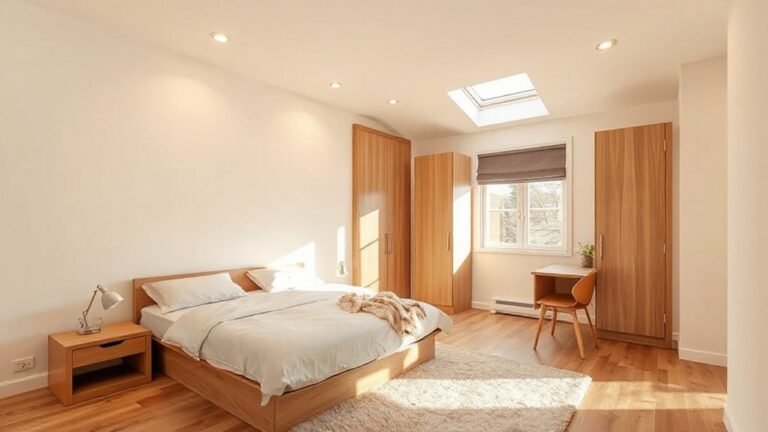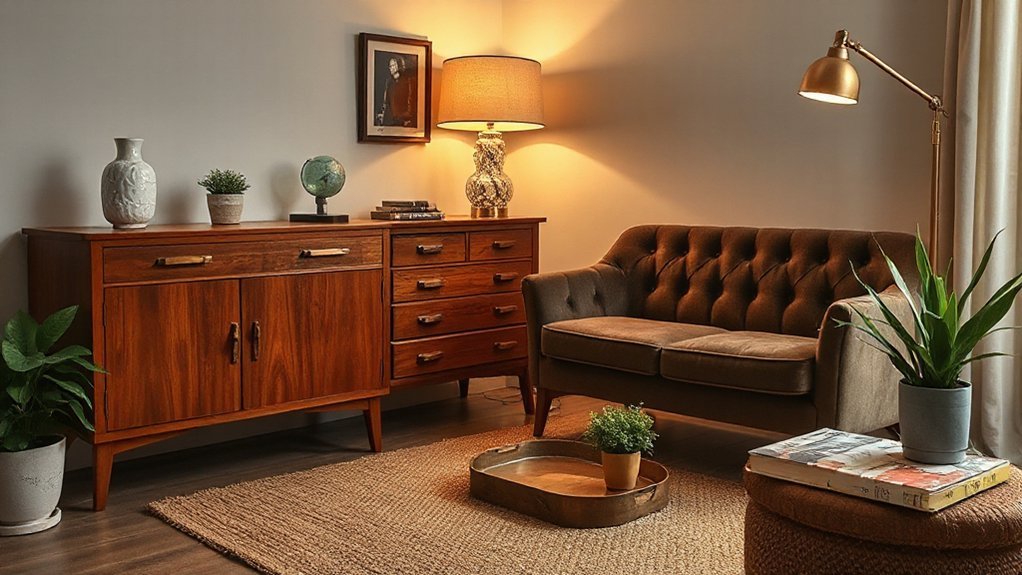
Vintage furniture styling starts with a quiet clash: old, refined pieces meeting clean, modern lines. You’ll layer textures—velvet, kilim, linen—while letting a single antique piece anchor the room. Balance patina with contemporary prints, so warmth doesn’t feel dated. As you mix eras, keep scale in check and let your focal pieces breathe. There’s more to harmonizing hardware, color, and placement, and a few heirloom notes are all that stand between charm and clutter—you’ll know them when you feel the invitation.
Start With the Showpieces: Which Vintage Pieces Deliver the Most Impact
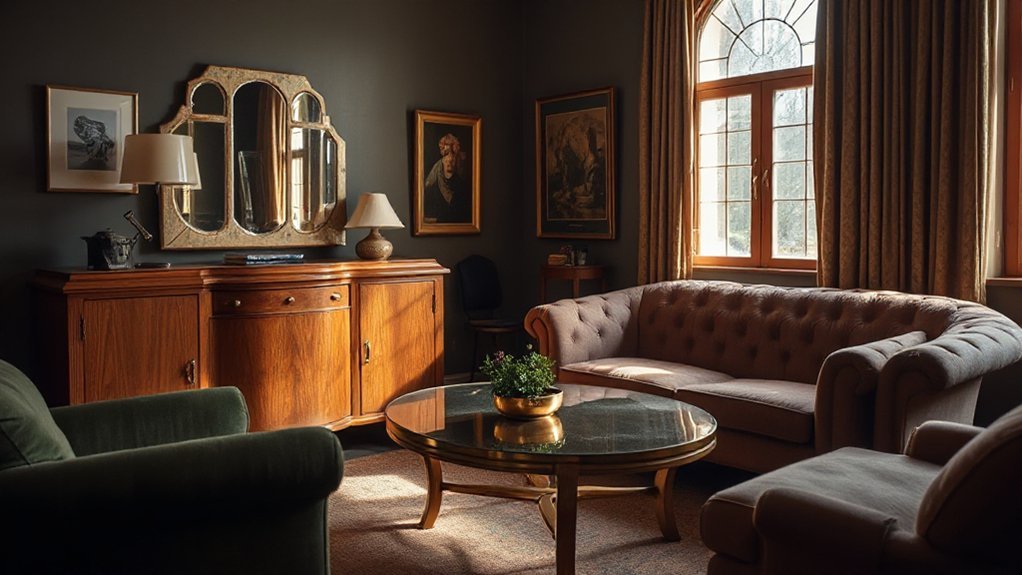
Start with the showpieces: the vintage pieces that instantly set the tone and draw the eye. You select two or three anchors—an Antique lighting fixture that casts warm glow, a statement cabinet, and a well-loved chair—as your foundation. Let these pieces dictate color, texture, and proportion, so everything else falls into place with intention. When you choose, consider craftsmanship, patina, and story, not perfection. Then weave in Vintage textiles: a throw, a cushion, or a rug that echoes the era without overpowering the space. Balance is tactile as much as visual; you want contrast without chaos. Your room becomes handcrafted, curated, and intimate, with showpieces guiding the mood, while invisible details—hardware, spacing, and lighting—hold the composition together.
Balance Patina With Modern Prints for Everyday Elegance
You balance patina with bold prints to keep spaces lively, not worn. Pair vintage textures with crisp modern patterns to create harmony between old charm and fresh energy. This conversation starts with choosing prints that echo your patina’s story without overpowering it.
Balance With Bold Prints
Bold prints can anchor a space that feels both lived-in and fresh; balance them with patinaed furniture to keep the room from tipping into shouting. You pair bold prints with reverent patina, letting aged wood and softened surfaces temper energy. Choose a single dominant pattern—floral, geometric, or abstract—and echo it through Vintage textiles in cushions, throws, or a weighted rug. Let the rest of the room stay restrained: solid walls, understated lighting, unadorned surfaces. This creates a curated rhythm where contrast feels deliberate, not chaotic. You’re inviting memory and modern ease to share the same frame. The result is tactile, soulful, and easy to live with, a testament to thoughtful layering rather than loud repetition. Bold prints anchor; restraint preserves harmony.
Harmony Of Vintage And Modern
Patina isn’t a finish you apply once; it’s a patient partner that ages with your space. You’ll balance timeworn charm with fresh, restrained lines, letting patina whisper through modern prints. Think vintage contrasts in a quiet room: a carved chest softened by a sleek, glass-top table, or a weathered chair paired with a toned-down sofa. You’ll lean into modern minimalism—clean silhouettes, monochrome palettes—so the eye can roam freely without competing textures. Place a single, bold print as a focal point, then echo it with small repeats across decorative accents. Your curated balance feels intentional, not contrived, inviting daily use. The result is everyday elegance: collected, purposeful, and calm enough for living.
Choose a Cohesive Color Palette for Mixed-Era Rooms
You start by choosing coordinated color families that weave every era together. Balance warm and cool tones so antiques and modern pieces speak the same language, then reserve an accent piece to anchor the room. With a single, well-curated palette, you guide the eye and keep mixed-era accents feeling intentional, not chaotic.
Coordinated Color Families
When mixing eras, start with a cohesive color family and let it guide every piece you bring in. You’ll create a quiet thread that stitches disparate eras into one room, a feeling of Color coordination that never shouts. Let Vintage harmony inform texture, pattern, and scale, so each item nods to the others.
- Pick a core tone and echo it in linens, wood finishes, and art frames to unify the space.
- Use lighter neutrals as a shared backdrop, letting jewelry-toned accents breathe without chaos.
- Balance saturated color with softer surfaces to maintain depth and warmth, not distraction.
This approach feels handcrafted, curated, and intimate, like a room that tells a single story.
Balance Warm And Cool
Balance warm and cool tones by starting with a cohesive palette that feels intentional, not opinionated. You blend vintage accessories with modern neutrals to anchor mixed-era rooms, then layer depth through restrained color coordination. Begin with a dominant warmth—amber woods, terracotta, aged brass—so the space breathes invitation. Introduce cool notes—sage, charcoal, pale blues—in selective accents to temper richness and prevent overwhelm. Keep fabrics and finishes matte or softly reflective to maintain harmony between eras. Let a single, unifying undertone run through upholstery, rugs, and art, so disparate pieces feel curated rather than collaged. Use repetition: two or three recurring hues across lighting, textiles, and small decor. The result is a balanced, timeless environment that honors history while staying personable.
Accent Piece Strategy
Choose a cohesive color palette as your guiding thread, then let a single accent piece anchor the room. When you pair mixed-era furniture, keep hues consistent and let texture do the talking, so the space feels intentional rather than forced. The right accent piece should embody Vintage authenticity and respect furniture proportions, signaling a clear era without shouting.
- Select an anchor that echoes your dominant tone, not every shade in the spectrum.
- Pull supporting pieces from the same family, balancing scale and silhouette for harmony.
- Let patina, grain, and upholstery craft the narrative, so the room feels curated yet lived-in.
The result is a timeless vignette—crafted, cohesive, and quietly confident.
Layer Textures for Warmth: Velvet, Linen, Kilim, and More
Texture layers transform a room from flat to enveloping. You’ll invite depth by mixing velvet’s velour glow with linen’s crisp soothe, then anchor it with kilim’s sunlit geometry. Think in tactile pairs: soft and structured, warm and breathable, glossy and matte. Textured fabrics rise when you balance scale, color, and rhythm, so you don’t overwhelm the eye. Layered textiles create invitation: a velvet sofa with linen drapes, a kilim pouf beside a leather chair, a wool throw folded on the arm. Keep hardware and surfaces quiet to let the textures lead. Choose palettes that echo, not match, and let patina tell stories. This approach feels handcrafted, curated, and lived-in, delivering warmth without clutter.
Harmonize Hardware and Finishes Across Eras
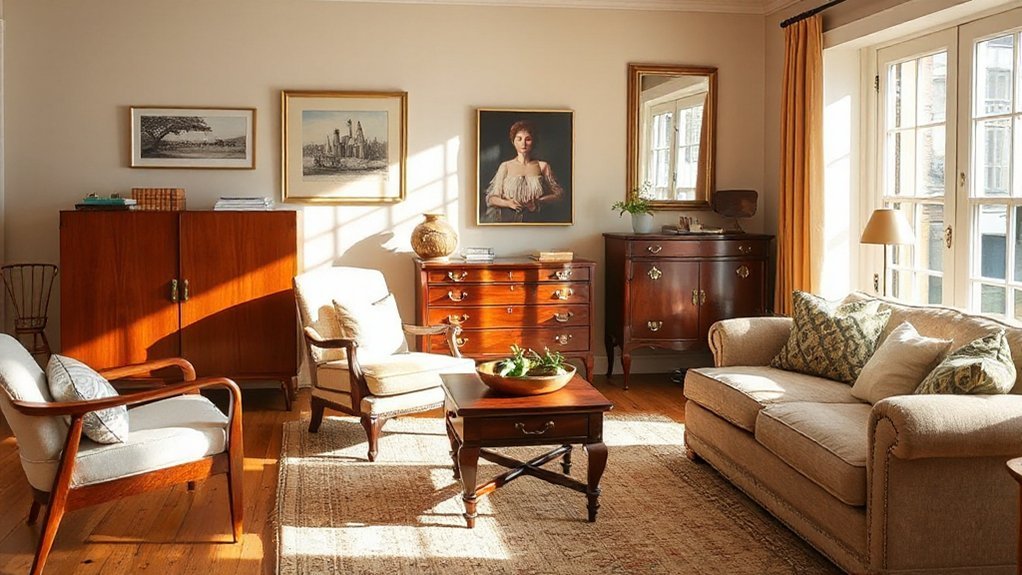
You’ll start by harmonizing metal finishes across eras, letting brass, nickel, and antique patina tell a cohesive story. Mix era-accurate hardware with a few modern accents, balancing subtle contrasts to keep things fresh yet timeless. Think curated touches that feel deliberate, not matched-by-accident, and you’ll invite a seamless dialogue between past and present.
Harmonize Metal Finishes
When you mix metals, the goal isn’t matchy-matchy sameness but a lived-in harmony that feels deliberate. You curate a rhythm where metal pairing guides the eye, and finish coordination unifies textures into one story.
- Embrace contrast: pair warm brass with cool chrome to carve depth without shouting.
- Build a center anchor: choose a dominant metal for fixtures, then layer accents in secondary finishes.
- Balance scale and patina: vary heights and aging so each piece breathes without competing.
The result is a handcrafted vignette that feels timeless, not trendy. You’re crafting a room with intention, where hardware reads as one continuous narrative rather than isolated accents. Finish coordination becomes the quiet conductor, guiding light, shadow, and touch across surfaces.
Mixed Era Hardware
Mixing eras can feel like a treasure hunt: you pull hardware from different decades until they sing in a single, quiet key. You curate with intention, balancing patina and polish so each piece reflects silhouette, weight, and story. Start by picking a unifying element—a knob shape, a screw pattern, or a metal tone—and let it thread through your pieces. Pair antique hardware with cleaner lines from midcentury chunks, then soften with warm finishes to avoid jarring contrasts. Introduce antique lighting accents or discreetly matched pulls to create a cohesive chorus rather than a chorus of clashing notes. Let Retro textiles perch near brass or iron accents to echo warmth. The goal: a lived-in, timeless feel where every detail nods to the past without shouting.
Subtle Contrast Techniques
Subtle contrast is where harmony lives: you blend hardware and finishes from different eras with intention, not accident. You craft balance by pairing a sleek brass pull with a weathered oak drawer front, letting color harmony emerge from restraint. Texture layering deepens the story, as matte paints meet glossy metals, and soft waxed surfaces counter sharp edges.
- Select one unifying color family and let it flow across hardware, trim, and accents.
- Alternate finishes in small doses to create rhythm without shouting.
- Weave old world patina with modern lines to tell a curated, lived-in tale.
The result feels handcrafted, not forced: a room that reads as a single, curated collection, where each piece nods to its era while speaking to today.
Smart Updates That Preserve Character and Add Practicality
Smart updates respect the room’s history while boosting daily use, so you’ll get better storage, safer materials, and smarter lighting without sacrificing charm. You’ll tune classic silhouettes with practical upgrades that feel inevitable, not jarring. Start by swapping harsh hardware for brushed metal or patinaed brass, preserving form while improving grip and longevity. Integrate under-cabinet lighting and dimmable options to highlight wood grain and handiwork without shouting, and choose Antique lighting pieces that glow with warmth rather than glare. Introduce hidden storage solutions—pull-out trays, labeled bins, and hinged tops—that keep clutter off surfaces while honoring provenance. Layer in Vintage textiles for texture and color, using durable weaves that endure daily use. Finish with a controlled color palette to unify old and new in a curated, timeless way.
Scale and Proportion: Fit Vintage Pieces Into Modern Layouts
Scale and proportion aren’t afterthoughts; they’re the frame that lets vintage pieces breathe in a modern layout. You shape a room by balancing scale with space, letting vintage textiles and Antique lighting tell the rhythm. Measure, then adjust until harmony feels effortless.
- Choose a single statement piece and let surrounding items step back.
- Pair compact antiques with clean lines to prevent clutter from shouting.
- Align furniture legs and rug edges to create a seamless, curated flow.
You’ll notice how restraint elevates charm, how the texture of Vintage textiles warms the air, and how Antique lighting casts stories across surfaces. When proportions read true, every piece feels invited, never crowded, and the room breathes like a handcrafted vignette.
Placement That Lets the Focal Pieces Sing
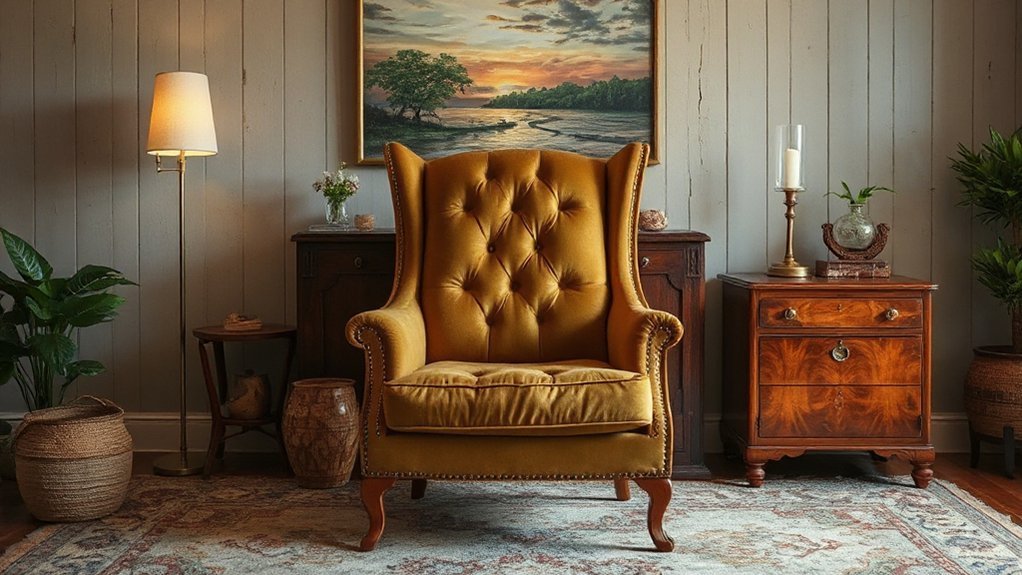
Placement isn’t about cramming pieces into the room; it’s about inviting them to perform. When you position focal pieces, give them centers of attention with purposeful angles and eye-catching sightlines. Let a vintage chair anchor a seating zone, or a bold sideboard lead the dining area without shouting over the room’s rhythm. Build a stage with deliberate negative space so a single console can glow at dusk. Color coordination guides the audience, linking textiles, wood tones, and metal accents into a cohesive story. Texture layering adds depth—pair velvets with linen, polished wood with woven rattan, and a patinaed brass lamp for warmth. Resist overcrowding; clarity keeps the performance memorable, and every surface earns a quiet standing ovation.
Care, Restoration, and Material Preservation Tips
Careful care is the backbone of vintage charm: small, deliberate steps keep patina, wood, and textiles singing for decades. You safeguard what’s aged and luminous by mindful habits, not harsh hacks. Your routine blends restraint with reverence, and every action feels like a careful handshake with history.
- Cleaning routines: dust with a soft cloth, wipe spills promptly, and test gentleness on discreet edges before broader use.
- Surface care: apply light, compatible cleaners; avoid silicone-heavy products that dull character.
- Protective coatings: seal high-traffic areas, reapply as recommended, and choose breathable finishes that celebrate texture.
Treat each piece as a living archive, restoring balance without erasing memory, preserving color, grain, and craft for future hands.
Real-Life Styling: Showcasing Heirlooms in Modern Rooms
There’s something quietly radical about slipping an heirloom into a modern room: a single piece can anchor the space, tell a story, and invite conversation without shouting. You curate thoughtfully, letting contrasts do the talking. Place vintage accessories where they can be discovered—on a dresser, above a console, beside a contemporary sculpture—so their history breathes alongside clean lines. Let antique lighting cast warm, intimate glow, shaping mood without overpowering the form. Pair textures: a lacquered chair with a faded patina, a glass case with a modern coffee table, a woven rug grounding metal and wood. Keep networks of balance: scale, color, and two or three deliberate accents. The result feels intentional, lived-in, and distinctly yours, proof that heritage can elevate today’s space without clashing.
Frequently Asked Questions
How Do I Identify Genuine Antique Versus Vintage Furniture?
Yes—look for Authenticity markers like period-appropriate hardware and maker stamps, and note Restoration signs such as uneven finishes or modern screws. You assess character, weight, joints, and patina, trusting your eye to yearn for true craftsmanship.
What Common Restoration Mistakes Should I Avoid?
If you restore a dresser with aggressive sanding, you’ll ruin grain and value. You’ll want patient, precise work using restorations techniques, avoiding common pitfalls like over-bleaching, mismatched stains, and poor veneer repairs; plan, test, and seal thoroughly.
How Can I Mix Eras Without Mismatching Style?
You can mix eras by focusing on color coordination and accessory pairing, balancing finishes, silhouettes, and textures. Trust curated contrasts, repeat a unifying motif, and layer with thoughtful accents to keep each piece feeling intentional, cohesive, and timeless.
Which Fabrics Best Protect Historic Pieces in Daily Use?
Upholstery durability matters; choose tightly woven blends and treated fabrics that resist daily wear. You protect history with regular vacuuming, gentle fabric cleaning techniques, and a throw. You’ll feel anchored, as linen and leather soften, telling curated stories.
How Do I Price and Insure Heirloom Furniture?
To price and insure heirloom furniture, research comparable Art Deco and Mid Century pieces, appraise condition, provenance, and market trends, then obtain formal written appraisals; insure for replacement value, not purchase price, and review coverage annually for evolving value.
Conclusion
You keep wandering rooms and stumbling on the same thread: a vintage piece that just belongs. It surfaces where you least expect it, like a brass lamp catching dusk or a kilim peeking from a stairwell—coincidence guiding your eye to balance and warmth. When you trust the showpieces, the patina feels deliberate, the textures feel earned, and the whole home feels handmade, timeless, and irresistibly curated. Coincidence, then, becomes your quiet, stylish co-pilot.
About the Author