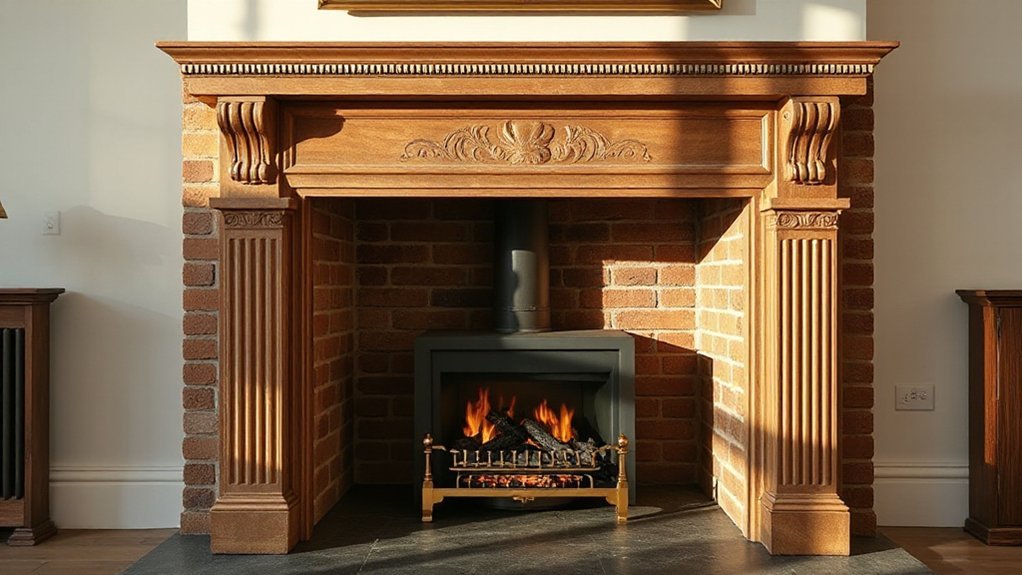
You can integrate modern inserts for Georgian fireplaces without losing period charm by choosing inserts that echo Georgian proportions, profiles, and motifs while using discreet wiring and aged finishes. Aim for restrained ornament and soft firelight reflections to preserve authenticity, and select fuels and venting that suit period rooms. Plan installation to avoid altering the surround, then consider mantels and alcoves for cohesive styling. The key is balancing efficiency with a timeless silhouette that invites careful, ongoing refinement. You’ll want to see how far you can push this harmony before committing.
Define Georgian Charm: Scale, Profiles, Motifs
Georgian charm hinges on three guiding elements: scale, profiles, and motifs. You assess scale by matching room proportions and the fireplace opening, ensuring you don’t overwhelm or underplay surrounding architecture. Profiles describe the silhouette of mantels and surrounds; you gravitate toward clean mantels with balanced cornices and vertical rhythm that echo period proportions. Motifs anchor character through repeated floral or geometric accents, so you select carvings and inlays that feel authentic, not decorative novelty. Historical accuracy guides every choice, limiting modern reinterpretation when it distorts lineage. For period restoration, you verify measurements, material finishes, and joinery against archival references. You prioritize cohesive lineage over trend, preserving original intent while accommodating safe, modern use. You achieve a restored essence without compromising integrity.
Pick Georgian-Scale Inserts and Profiles
When selecting inserts and profiles, aim for a scale that harmonizes with surrounding architecture and the fireplace opening, avoiding crowding or emptiness. You’ll weigh Georgian-era proportions against modern tolerances, prioritizing clean lines that echo the room without overpowering it. Choose inserts that read as compact stage-setting—not bulky, not skimpy—so they sit comfortably within the opening’s verticality. Favor profiles with modest cornice details and restrained infill, ensuring unity with architrave or mantel molding. Victorian influence appears in refined trims, but keep it purposeful, not fussy. Art Deco details can appear as subtle geometric accents, enhancing symmetry without shouting. Test-fit in daylight and lampshade glow, confirming balanced negative space around the surround. Your goal: timeless coherence, precise scale, enduring Georgian character.
Ember and Flame Visuals for a Classical Read
You’ll notice how ember texture harmonizes with the surrounding hearthscape, reinforcing a classical read without overpowering the geometry. The flame scale aesthetics should complement Georgian profiles, providing a subtle cadence between flicker and form. Consider how these visuals align with proportion and material, ensuring a refined, understated glow.
Ember Texture Harmony
Ember texture should reinforce a classical fireplace’s mood by aligning the coals, ash, and glow with the flame’s rhythm. You pursue harmony by selecting ash bed design and charcoal tones that read as deliberate, not accidental.
1) Calibrate the ash bed to create a subtle gradient, ensuring the base supports the flame without dominating the view.
2) Choose ember hues that mirror the fireplace color, so warmth travels seamlessly from firebox to mantel.
3) Vary coal sizes sparingly to mimic a natural bed while maintaining a controlled glow.
4) Maintain consistent glow intensity across the ember layer to preserve timeless silhouettes and avoid modern contrasts.
Flame Scale Aesthetics
Flame scale aesthetics shape how a classical read is read at a glance, balancing ember glow with the flame’s height and momentum. You judge proportion by the visual weight of the fire, ensuring the flame’s rise echoes the room’s horizontals without overpowering mantel details. Ember glow should thread through the flame’s arc, adding depth without muddying the silhouette. Precision matters: too-bright accents read as modern, too-muted as inert. Consider color coordination across the inserts to keep a coherent period feel, avoiding stark neon so the scale remains tempered. Material selection anchors this balance; choose hearth-safe metals and glass that reflect firelight without creating glare. Your goal is a faithful, restrained glow, where scale informs mood and underpins the room’s architectural cadence.
Fuel Options for Period Rooms
You’ll weigh gas versus coal options for period rooms, balancing convenience, heat output, and installation realities. Real flame versus electric options matter for authenticity, safety, and maintenance in a Georgian context. This contrast sets the stage for practical choices that honor the room’s atmosphere while meeting modern standards.
Gas vs Coal Options
When choosing between gas and coal for Georgian-style rooms, the decision hinges on authenticity, convenience, and heat output. You weigh how closely each option mirrors historical restoration goals while prioritizing modern safety. Gas delivers clean ignition and steady control, yet can feel less characterful. Coal provides weight, fragrance, and visual heft, but demands more ventilation and maintenance. Your choice should reflect the room’s period cues, not just efficiency.
- Authenticity balance: gas for clean lines, coal for tactile presence
- Ventilation and safety considerations in retrofit planning
- Maintenance cadence and long‑term costs
- Local regulations and insurer requirements
Precision settles the outcome: select the fuel that honors context, minimizes risk, and preserves period charm.
Real Flame vs Electric
Real flame options bring tactile drama and traditional feel to Georgian rooms, but electric emulation can deliver clean lines, consistent heat, and safer retrofits without venting. You should compare heat output, maintenance, and installation ease, noting that real flames demand venting, fuel storage, and ongoing care. Electric inserts offer quick starts, programmable thermostats, and minimal emissions, supporting a quieter integration with period walls. In practice, choose based on room use and stylistic intent: Real flames accentuate texture and a focal glow, while electric units preserve windowed vistas and preserve antique plasterwork. Consider color schemes to harmonize with mantels and upholsteries, then plan furniture placement to keep sightlines clear. If you prioritize authenticity, opt for gas or coal substitutes; otherwise, electric remains prudent for modern living.
Ventilation and Draft Control for Ambience
Ventilation and draft control are essential for ambience, ensuring a steady flame and comfortable room temperature without excess smoke. You’ll balance historical accuracy with modern convenience, preserving Georgian charm while maximizing comfort.
- Optimize flue setup to vent smoke without overpowering drafts, preserving period aesthetics.
- Choose air vents that blend in with molding profiles, offering discreet control.
- Use a properly sized hearth insert to maintain stable ignition and minimal ash.
- position room openings to promote even air flow, reducing hot spots and drafts.
This approach keeps the look precise and contextual, yet practical. You gain reliable performance without sacrificing period feel, aligning historical accuracy with today’s convenience through careful design choices and restrained, purposeful adjustments.
Install Without Harming the Surround
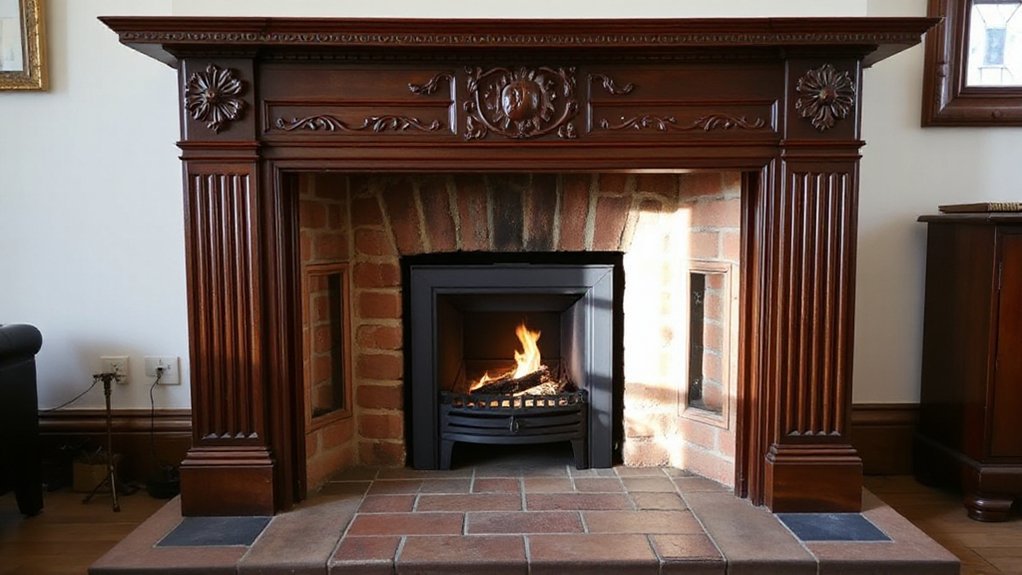
Careful installation protects the surround while preserving the fireplace’s Georgian character. You approach inserting a modern insert with measurement discipline: confirm the opening, note wall thickness, and respect historic fabric. Choose a unit that fits the hearth’s depth and maintains clearances to avoid heat stress on surrounding plaster or timber. Prioritize historical accuracy in finish and bezel style, matching arched profiles and subtle ornamentation where present. Use a compatible mounting system that transfers loads without forcing masonry to crack. Check flue compatibility and vent routing to prevent condensation or backdrafts that could stain the surround. Material compatibility matters: select noncorrosive fasteners and heat-resistant framing. Document alignment, ensure clean contact points, and seal joints to deter drafts while preserving the room’s period coherence.
Mantels, Alcoves, and Accessory Styling
Mantels, alcoves, and accessory styling should reinforce the fireplace’s Georgian character while accommodating modern inserts. You balance line, proportion, and ornament to preserve symmetry while integrating contemporary needs. Focus on restraint: avoid over-matching, yet allow modern technology to read as deliberate. Choose mantels with classical profiles and clean edges to echo period forms, then carefully curate alcove lighting and display areas. Contemporary materials can appear as authentic if finished to match patina and scale. Use subtle contrasts that highlight craftsmanship rather than shout modernity. Accessorize with restrained mirrors, brass or bronze hardware, and stone or wood accents that echo Georgian palettes.
- Align mantel height and depth with room proportions
- Integrate concealed wiring and discrete lighting
- Select finishes that mature with age
- Pair period shapes with modern technology-aware elements
Budgeting for Period-Faithful Upgrades
Budgeting for period-faithful upgrades requires clear alignment between your Georgian-influenced goals and the cost realities of modern inserts. You’ll balance historical accuracy with practical limits, prioritizing elements that preserve character without overreaching budgets. Begin with a precise scope: identify which features matter most for the room’s rhythm and proportion, then compare insert options that maintain true forms, profiles, and finish options. Plan for material sourcing challenges, noting lead times, availability, and acceptable substitutes that won’t betray the era’s look. Build a realistic contingency, typically 10–15%, to cover unforeseen needs in installation or adaptation. Document costs alongside design decisions to track drift from your original vision. Keep documentation organized, so choices stay faithful without inflating expenses or sacrificing essential details.
Long-Term Care and Maintenance
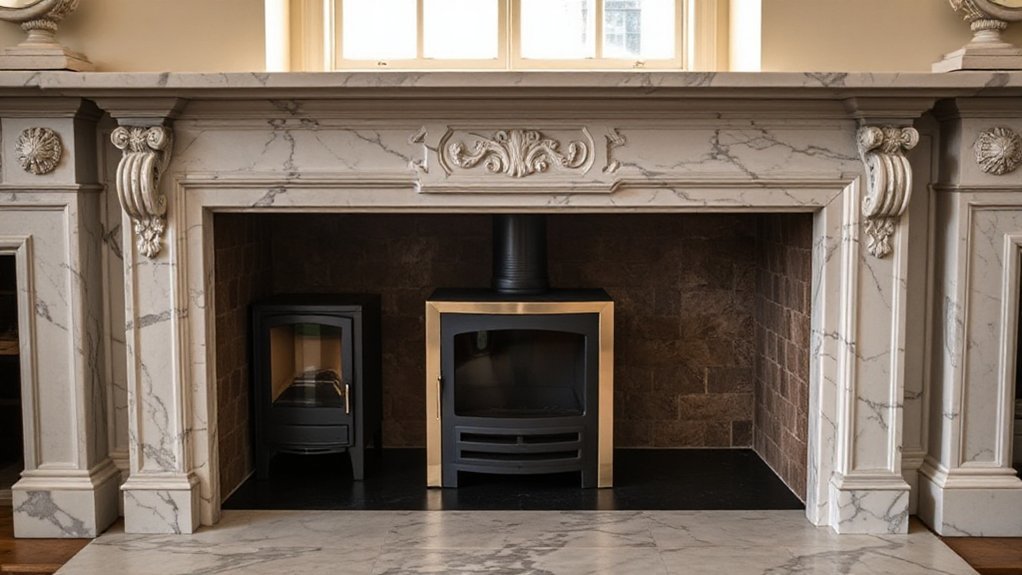
What does long-term care look like for a Georgian-inspired fireplace insert, once installation is complete? You safeguard its period charm by scheduling steady, targeted upkeep that respects the mechanism and surrounding marble. Regular attention prevents unsightly wear and preserves value.
- Marble preservation: wipe with a soft cloth after use, avoid harsh cleaners, and seal periodically to minimize staining.
- Fireplace cleaning: remove ashes safely, inspect vents, and clear obstructions to maintain efficient draft.
- Component checks: test on/off function, inspect gaskets, and note any unusual sounds for prompt action.
- Seasonal maintenance: schedule professional servicing every 1–2 years to verify efficiency and address minor faults before they grow.
Frequently Asked Questions
How Do Inserts Affect Historical Wall Finishes and Plasterwork?
Inserts can affect plaster and finishes by requiring flush mounting and heat management; you avoid damage with fire resistant coatings, careful detailing, and ventilation. You preserve historical accuracy while maintaining wall integrity and honest, precise restoration standards.
Can Modern Inserts Meet Fire Safety Without Altering the Mantle?
Can modern inserts meet fire safety without altering the mantle? Yes, you can, using fireproof materials and modern ventilation, while juxtaposing sleek efficiency with timeless charm to preserve context, precision-oriented, conserving, and resist altering period finishes.
Do Fuel Types Impact Authenticity and Room Scents?
Yes, fuel variety can affect authenticity and room scents. You’ll notice aroma shifts with different fuels, so prioritize scent preservation by matching your fuel to your hearth and selecting hearth-safe, low-odor options.
Are There Maintenance Steps to Preserve Original Brickwork?
Yes. You should perform brick cleaning carefully, and schedule mortar restoration as needed to preserve original brickwork. Regular dusting, gentle brushing, and avoiding harsh chemicals protect patina while keeping the structure stable and aesthetically aligned with your Georgian heritage.
What Permits or Permissions Are Required for Period Rooms?
Permits vary, but you’ll typically need.Building codes compliance and Historic approvals before work begins; check with local planning and preservation bodies. You inspect requirements, document historic features, and secure permissions, ensuring every alteration respects period integrity and timelines.
Conclusion
You can enjoy modern efficiency without surrendering Georgian grace. Choose inserts that mirror scale, profiles, and motifs, and hide wiring behind discreet finishes. Favor ember-led flames and fuel options that feel period-appropriate, while steering airflow for comfort. Install thoughtfully to protect the surround, and accessorize with mantels and alcoves that echo the era. With careful budgeting and steady maintenance, you keep the heart of your room beating—quilting time-worn charm with contemporary ease, like a lantern guiding a measured journey.
About the Author