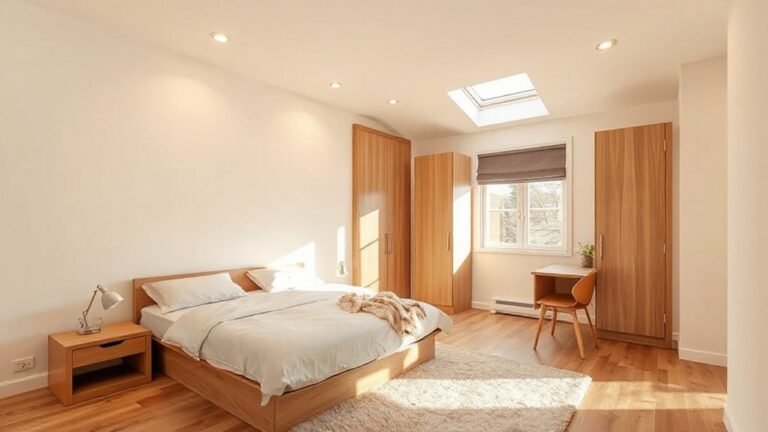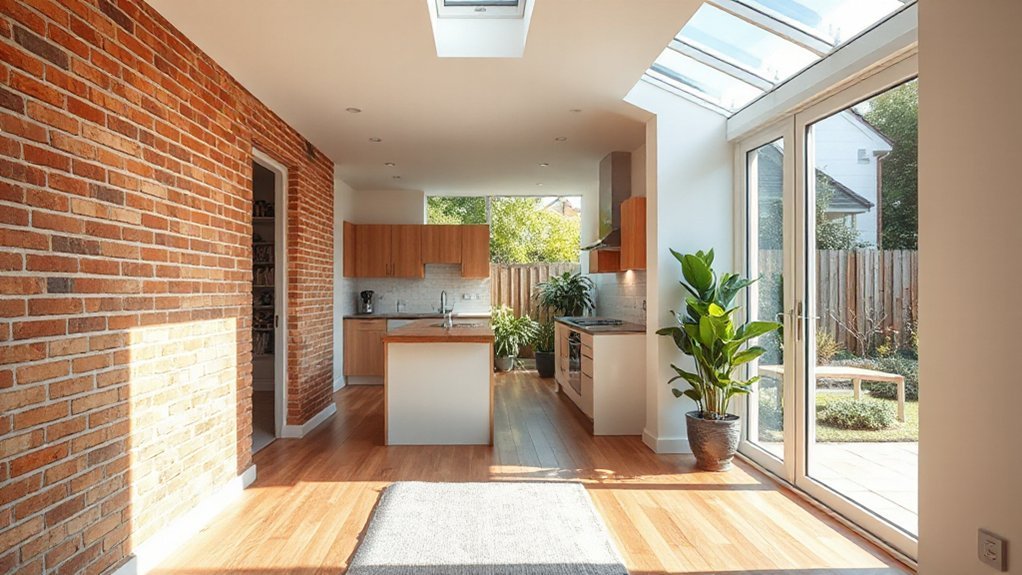
Side return extensions transform narrow homes by stitching brighter, more ventilated space onto the core plan. You’ll want layouts that maximize daylight while preserving circulation, with precise proportions and reflective finishes that bounce light deep into the footprint. Consider how zoning, privacy, and flow interact across parallel or L-shaped schemes, then weigh materials and shifts for durability and cohesion. The proven configurations below offer practical balance—yet the best choice hinges on your site constraints, system tolerances, and long-term use.
How a Side Return Brightens Your Home
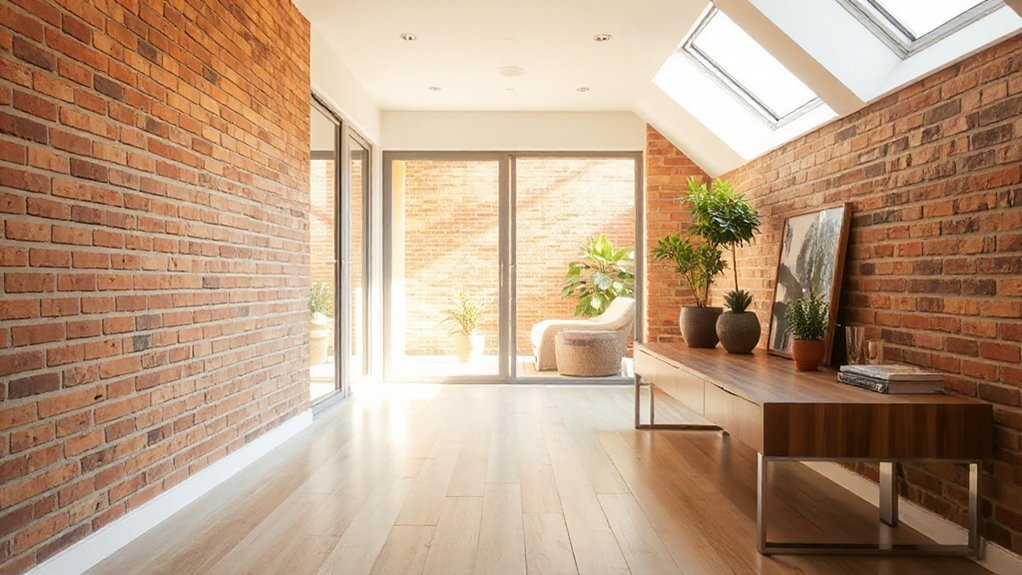
A side return can dramatically brighten a home by introducing abundant natural light and improved air circulation. You’ll notice how window placements, glazing quality, and interior finishes maximize daylight without glare, supporting energy efficiency. Natural light enters from multiple angles, creating a dynamic illumination scheme that reduces artificial lighting needs during the day. This enhancement also contributes to spatial harmony, as reflected light broadens perceived room depth and clarifies boundary relationships between living zones. Precision in glazing specs, eave overhangs, and mullion spacing ensures consistent daylight distribution across seasons. You’ll plan layouts that avoid visual clutter, aligning furniture with light sources to maintain clear sightlines. The result is a more inviting, balanced interior whose brightness reinforces functional zoning and comfort. Spatial harmony emerges from controlled, intentional daylight integration.
Smart Layouts for Narrow Footprints
Adapting side-return spaces to constrained widths demands purposeful planning of shape, circulation, and connectivity. When you design for narrow footprints, you prioritize efficiency without sacrificing daylight or function. Precision junctions and modular connections minimize wasted area, while clear sightlines help you navigate the corridor and rooms beyond. You’ll integrate creative storage within vertical planes, freeing floor space for useable areas. Architectural accents punctuate the slim plan, giving depth and character without bulk.
- Optimize circulation with a single, continuous path and strategically placed openings.
- Employ tight, stackable storage solutions that run along walls and in alcoves.
- Use light-weight, scalable partitions and reflective surfaces to visually expand the footprint.
This approach preserves usability, enhances material efficiency, and maintains architectural clarity.
Zoning for Daylight, Privacy, and Flow
Daylight, privacy, and flow must be zoned deliberately to balance openness with enclosure and to guide occupants through the space efficiently. You design zones that optimize natural ventilation by aligning openings with prevailing breezes and shading devices to prevent overheating. Prioritize sightlines so private areas stay visually shielded from public views while living zones capture generous daylight without glare. Use transitional buffers—short corridors, setback pockets, or partially shared spaces—to steer movement without abrupt changes in function. Clear zoning improves acoustics, reduces cross-traffic, and enhances exterior aesthetics by ensuring windows and openings relate to the street and garden publicly visible portions. Document zones with measurable criteria: window size, setback, and thermal breaks. Regularly verify daylight distribution and privacy impacts during varying sun angles and occupancy.
Materials, Proportions, and Finishes
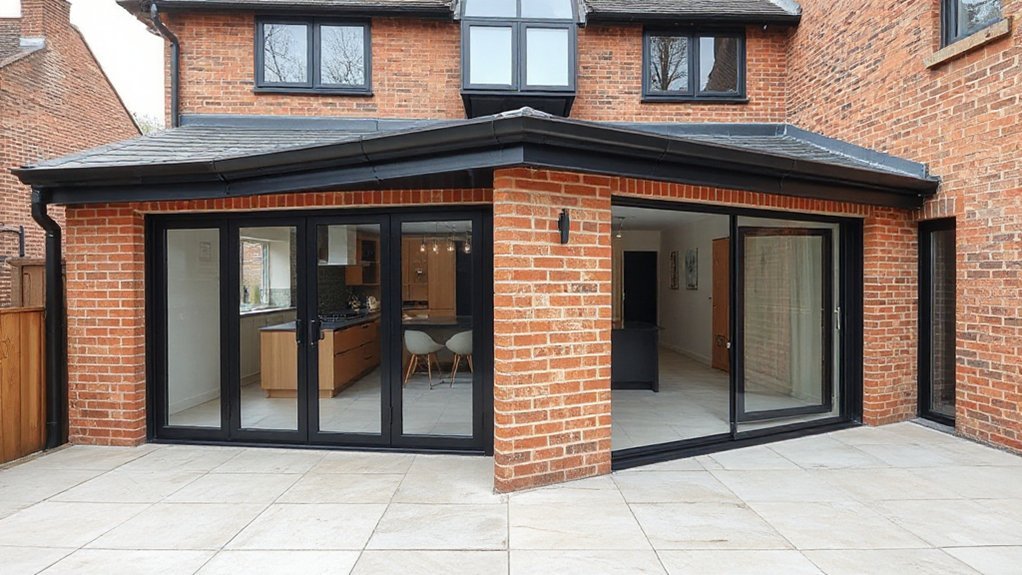
Materials, proportions, and finishes must be selected to support durable performance, coherent aesthetics, and efficient construction.
You optimize material textures and finish options to balance maintenance, moisture resistance, and visual scale across the extended footprint. Focus on material compatibility between exterior and interior layers, and align thickness with structural demands to prevent thermal bridging. Proportions hinge on clear sightlines and service routing, avoiding oversized spans that complicate fastening and finish detailing. Choose finish options that resist weathering while preserving material character, and specify edge treatments that reduce impact damage in tight spaces.
- Material textures and finish options should be harmonized for both exterior exposure and interior use.
- Proportions optimize daylight, circulation, and load paths without excessive mass.
- Detailing emphasizes seamless transitions, screed tolerances, and airtight joints.
Five Tested Configurations for Small Plots
What five configurations reliably maximize space, light, and utility on tight plots? Here, you test parallel, L-shaped, courtyard-anchored, mezzanine-lift, and cantilevered layouts. Each configuration prioritizes circulation efficiency, daylight penetration, and adaptable zones. In parallel arrangements, you gain continuous sightlines and compact service cores, while open-to-garden or glass-bay connections boost natural illumination. The L-shaped option optimizes corner areas, creating sheltered outdoor rooms and improved cross-ventilation. Courtyard-anchored schemes emphasize garden integration, shrinking interior corridors but expanding perceived roominess. A mezzanine lift adds vertical utility without footprint expansion, and cantilevered extensions maximize exterior area without overstepping boundaries. Structural considerations, material compatibility, and drainage continuity must align with load paths. Garden integration and structural considerations guide detailing, anchoring performance across every tested configuration. Continuous evaluation guarantees practical, durable outcomes.
Frequently Asked Questions
How Much Does a Side Return Extension Typically Cost?
A typical side return extension costs between £40,000 and £120,000, depending on size, materials, and complexity. You should gather cost estimates early to inform budget planning, contractor fees, and potential structural or planning constraints for precise budgeting.
Do Side Returns Require Planning Permission in Urban Areas?
Yes, you generally need permission only if it affects building regulations compliance or triggers neighborhood restrictions; for example, a hypothetical semi-detached home would squarely fall under local planner review.
Can Side Returns Be Used as a Home Office Space?
Yes, you can use side returns as a home office space. You’ll optimize with home office ideas and a creative layout, ensuring natural light, quiet zones, and efficient acoustics for productive, focused work.
What Maintenance Is Needed for Extended Side Walls?
You’ll need regular inspections for extended side walls: check for cracks, moisture, and movement, plus guarantee roof durability and wall insulation remain effective. Schedule annual maintenance, reseal joints, and clean gutters to prevent water intrusion and energy loss.
How Long Can a Side Return Addition Safely Extend?
You can safely extend a side return up to about 3–4 meters, depending on footprint and loads. Design flexibility remains, but structural considerations dictate beam spans, tie-ins, and waterproofing to preserve stability and performance.
Conclusion
You’ve learned that light, flow, and privacy aren’t accidents but engineered outcomes—how quaint. So, you’ll embrace side returns with ruthless precision: align windows to chase sunlight, carve zones that breathe without blasting through walls, and finish with materials that quietly whisper durability. Irony is on your side: the narrower the footprint, the grander the result. Yet you’ll still measure, tweak, and document every soffit, glare, and glow until daylight behaves exactly as designed. Efficiency masquerades as charm, and you’re its committed practitioner.
About the Author